University of Phayao integrates knowledge of ecosystems, biodiversity, natural resource conservation, soil management, the environment, and sustainable agriculture into its teaching and learning, to develop students with both scientific knowledge, an understanding of the relationship between humans and ecosystems, and the ability to apply knowledge to solve environmental and natural resource problems.
Programs linked to SDG 15 include:
- School of Energy and Environment
Bachelor of Science Program in Energy and Environmental Management
Bachelor of Engineering Program in Environmental Engineering
- School of Agriculture and Natural Resources
Bachelor of Science Program in Agriculture
- School of Science
Bachelor of Science Program in Biology
Learning is not limited to the classroom, but is linked to studying and making use of real areas. The university has natural forest areas covering dry dipterocarp forest and mixed deciduous forest ecosystems, which have been continuously surveyed, researched, and conserved for plant genetic resources and biodiversity under the Plant Genetic Conservation Project under the Royal Initiative of Her Royal Highness Princess Maha Chakri Sirindhorn, University of Phayao (RSPG-UP).
Figure : The Plant Genetic Conservation Project under the Royal Initiative, University of Phayao (RSPG-UP)
In addition, the university also extends ecosystem learning to society through the University of Phayao Natural History Museum, a learning resource on biodiversity, wildlife, and natural ecosystems for students, youth, schools, and the general public, particularly knowledge about the Thai peafowl, covering biology, ecology, genetics, habitat, and threats to the species.
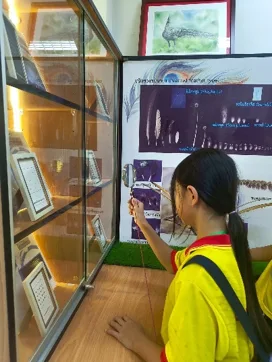
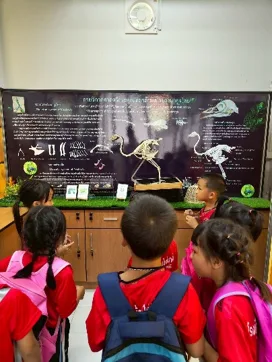
Figure : University of Phayao Natural History Museum
The university also carries out the Local Resource Base Project under RSPG-UP, to build community capacity in surveying, documenting, conserving, and sustainably using biological resources, and works together with the Phayao Provincial Education Office to drive the School Botanical Garden Project, to encourage schools, teachers, and youth to learn about the diversity of local plants and participate in conserving plant genetic resources.
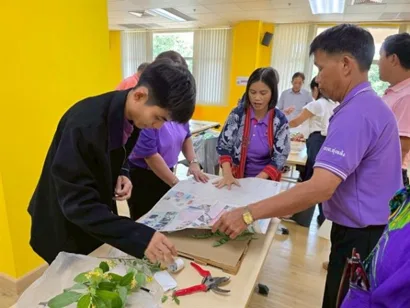
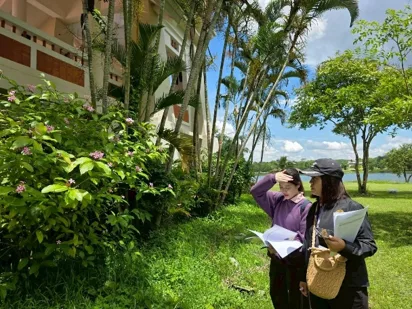
Figure : Training workshop on local resource base work
This approach reflects an education model that links academic knowledge, natural areas, hands-on learning, and social participation, in order to develop the knowledge, awareness, and capacity of the younger generation to care for ecosystems and biodiversity in the long term.