Implementation of Sustainability Programs through the Utilization of ICT
University of Phayao strategically leverages Information and Communication Technology (ICT) as a core enabler to drive, monitor, and optimize its campus-wide sustainability programs, aligned with the UI GreenMetric criteria.Section A — ICT for Sustainability Management
University of Phayao has established a centralized Online Sustainability Reporting Portal. In terms of energy and climate change, the university utilizes an Energy & Carbon Monitoring System to track monthly electricity bills and energy consumption trends online via dedicated dashboards, integrated with renewable energy data from solar arrays. For air quality monitoring, a 117-meter micrometeorological mast (UP Tower) captures real-time PM2.5 and AQI data, pushing insights directly to the UP-CESM platform. Resource management is fully digitalized: waste metrics (general, chemical, and infectious) are monitored via the Building-Waste Dashboard and UP Waste Track (ESPReL standard), while trash container locations are mapped via Google My Maps for high accessibility. Water governance is driven by a computerized SCADA system, which monitors automated tap water production (accounting for 79% of internal usage), ensures online pH/NTU quality, and features instant leak detection alerts. Green transportation is optimized using the UP Smart transit application alongside 55-inch interactive smart screens at all bus stations, tracking electric shuttle routes with 1-second real-time GPS updates while computing carbon footprint savings. Academic governance is managed via the UPRM platform, tracking Scopus sustainability publications (reaching 607 in 2025) and monitoring the post-graduation employment profiles of green campus alumni. Campus infrastructure stays sustainable via the Building System and digital landscape dashboards for managing facility upkeep and green zone expansion.| No | Initiative | Function | Brief Description | Screenshot or Link of Evidence |
|---|---|---|---|---|
| 1 | Energy & Carbon Monitoring System | Monitoring | Deploys the PEA Energy Trend Dashboard and solar energy generation analytics (Growatt Server) to monitor electricity consumption patterns and effectively minimize the university's carbon footprint. | http://45.91.132.63/monitoring/Login.aspx |
| 2 | Online Air Quality Tracker Platform | Monitoring | Consolidates data from the 117-meter micrometeorological mast (UP Tower) to display and monitor real-time Air Quality Index (AQI) and PM2.5 concentrations across campus zones via the UP-CESM platform. | https://cesm.up.ac.th/ iqair.com (PKY Building) iqair.com (SATIT UP) |
| 3 | Smart Waste & Hazardous Waste Tracking System | Implementation & Monitoring | Incorporates the Building-Waste Dashboard to record general, infectious, and hazardous chemical wastes, running parallel with the UP Waste Track system (ESPReL standard) and digital waste bin mapping via Google My Maps. | labsafety.up.ac.th/wastetrack |
| 4 | Smart Water Management & SCADA System | Planning & Implementation | Deploys a computerized SCADA network to control internal tap water production (producing 79% of campus supply), manage online chemical quality tracking (pH/NTU), and execute real-time digital pipeline leak alerts. | building.up.ac.th/Smart-Waterv.1 |
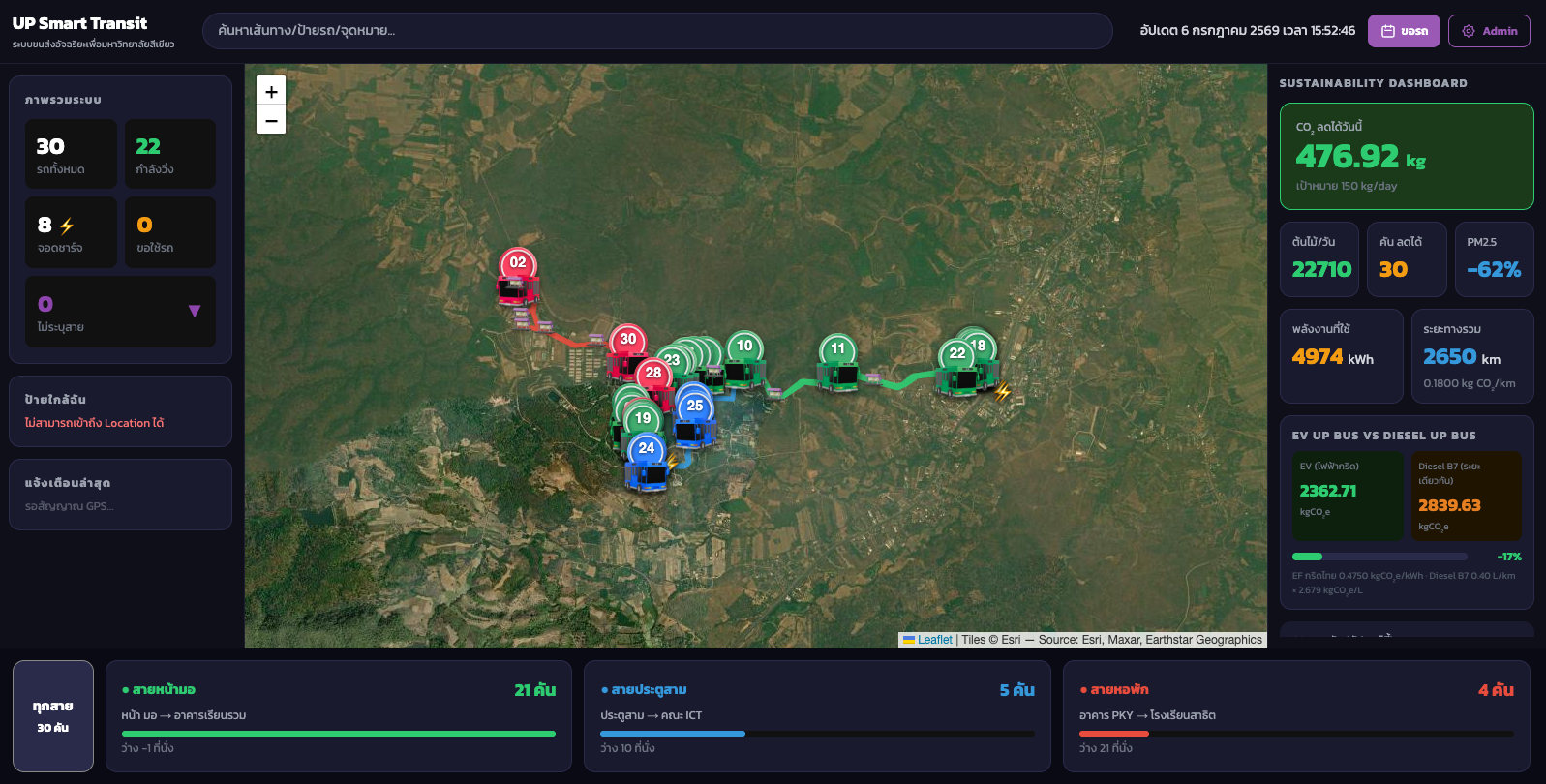
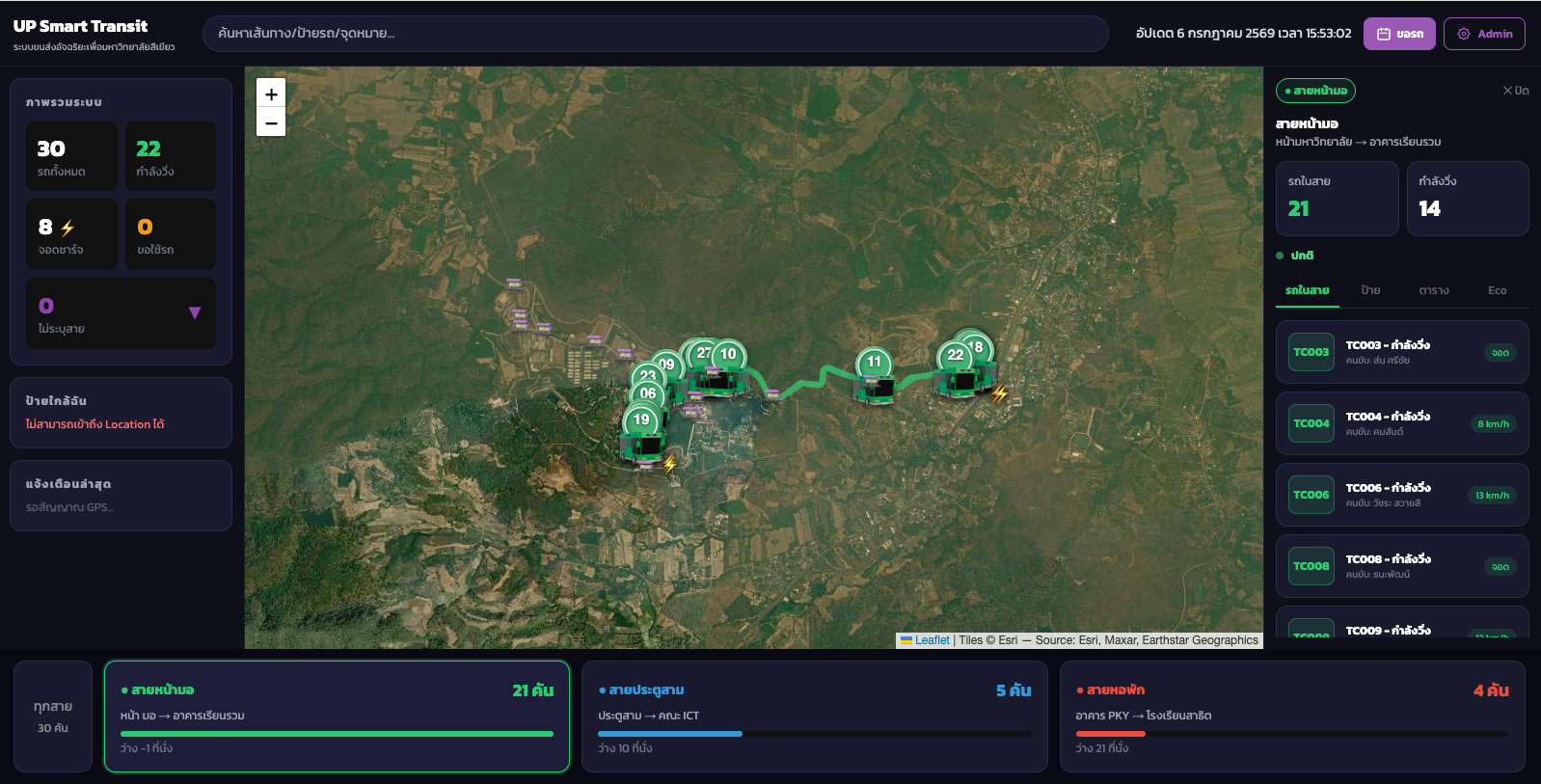
| 5 | Real-Time Intelligent Transportation System | Implementation & Monitoring | Deploys the Bustransit Smart UP app and 55" interactive bus stop screens to show real-time electric shuttle bus routes with 1-second GPS updates, passenger counters, and track carbon footprint metrics. | bustransit.up.ac.th |
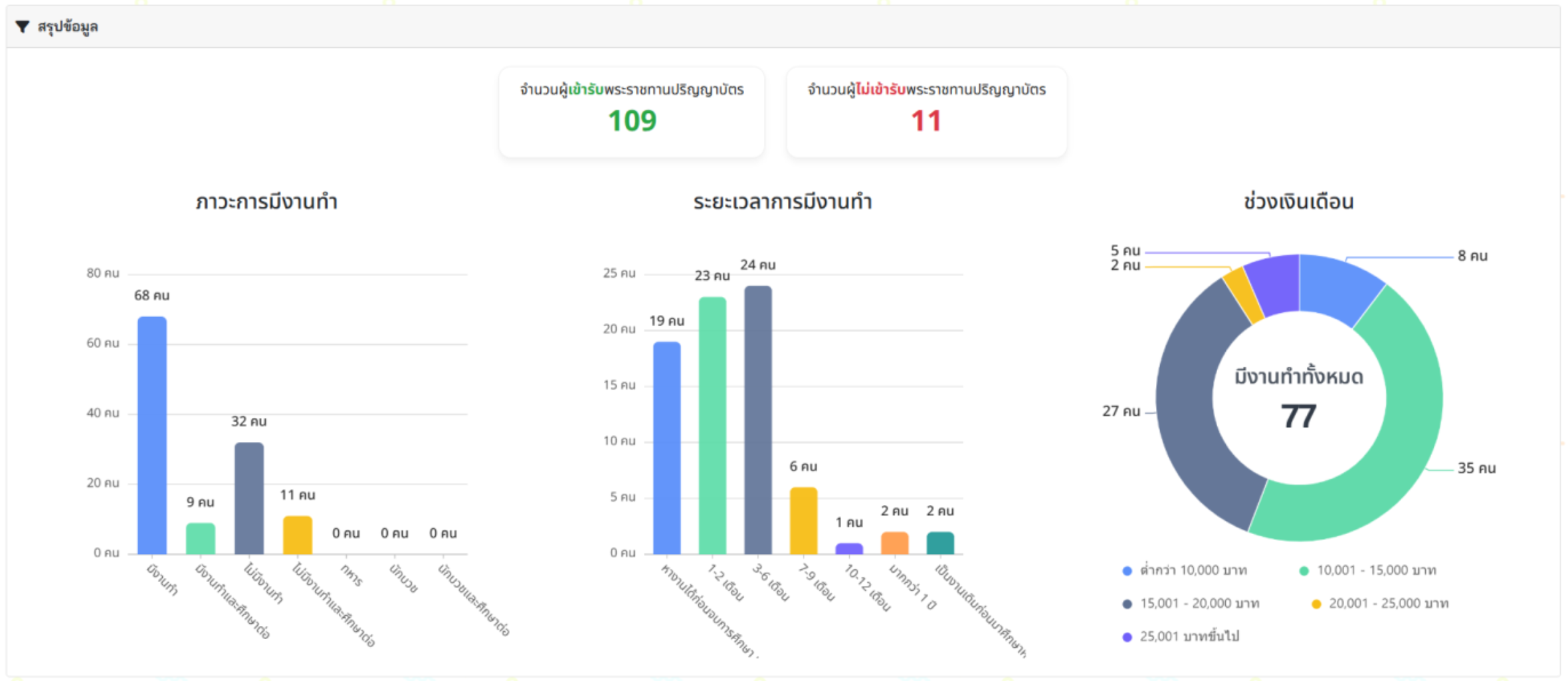
| 6 | UP Research Management & Graduate Register System | Planning, Monitoring & Evaluation | Tracks sustainability-focused research funds, Scopus-indexed publication progress (reaching 607 in 2025), and runs an online database evaluating green employment status among university graduates. | graduate-register.up.ac.th sustainability.up.ac.th |
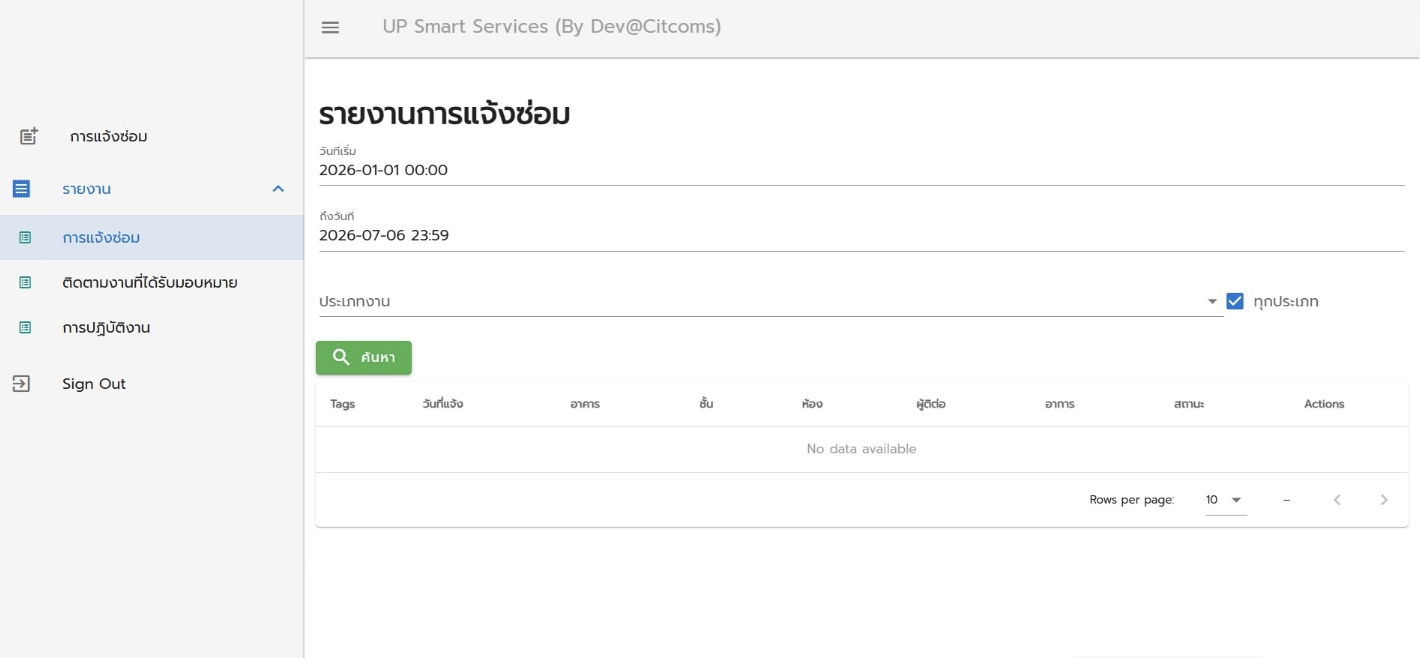
| 7 | Building & Landscape Maintenance System | Monitoring & Evaluation | Operates a centralized Building System portal for tracking utility repair workflow alongside a dedicated digital dashboard to log and evaluate tree-trimming and open green space preservation requests. | smartservices.up.ac.th |
Section B — Connectivity Readiness
To support seamless telemetry from environmental sensors and uninterrupted operations of reporting systems, the Center of Information Technology and Communication Services (CITCOM) maintains robust campus-wide Wi-Fi infrastructure (UP-WiFi). The entire network framework is overseen via the UP Network Monitor tool, which delivers real-time connection uptime statistics. This infrastructure is reinforced with Redundant Internet Connectivity (Dual ISP) configurations to ensure maximum stability and zero downtime for continuous reporting.| No | Initiative | Function | Brief Description | Screenshot or Link of Evidence |
|---|---|---|---|---|
| 1 | Campus-Wide Wi-Fi Infrastructure (UP-WiFi) | Implementation Support | Seamless high-speed Wi-Fi coverage across academic, administrative, and residential areas to support IoT environmental sensors. | citcoms.up.ac.th/UPWiFi |
| 2 | Network Monitoring Tool (UP Network Monitor) | Monitoring & Continuity | Dedicated network operation systems providing real-time uptime analytics of network devices and links to prevent data loss. | noc.citcoms.up.ac.th speedtest.citcoms.up.ac.th |
| 3 | Redundant Internet Connectivity | Continuity | Dual ISP configuration to ensure 24/7 uninterrupted connectivity for all online tracking systems and the sustainability portal. | 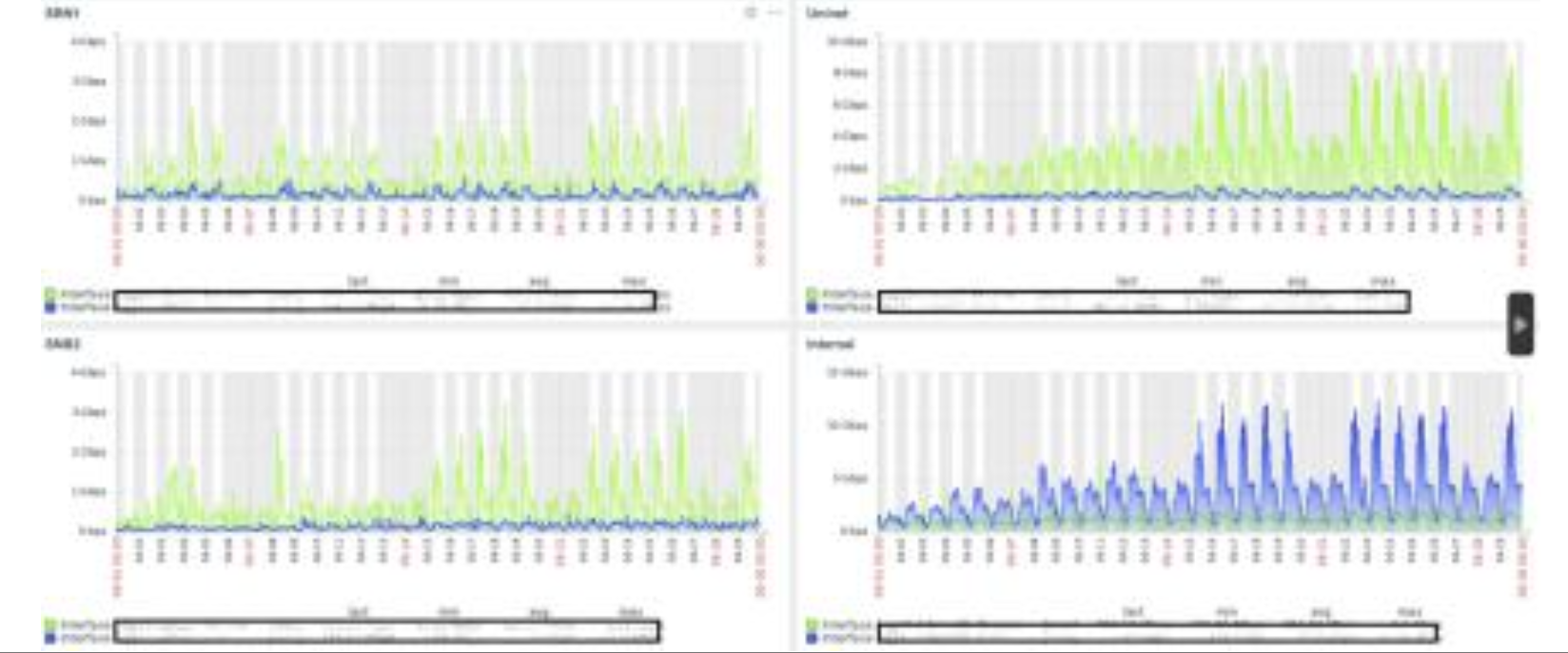 |
Section C — Infrastructure Reliability and Security
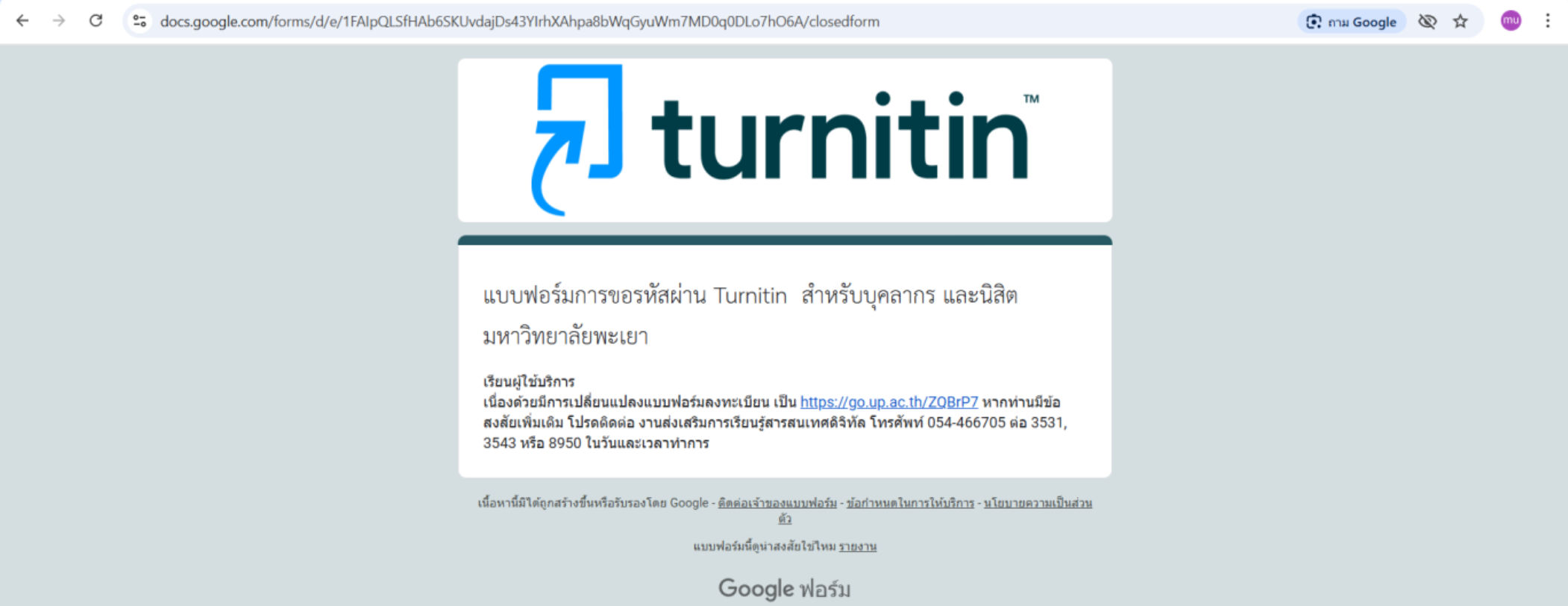
Data integrity and system trust are heavily prioritized. University of Phayao implements a rigorous Role-Based Access Control (RBAC) mechanism tied to centralized authentication screens across all operational sub-systems (Energy, Waste, Water, and Research tracking) to guard sensitive logs against unauthorized tampering. Research integrity is verified online via Turnitin plagiarism integration systems to secure the quality of green innovations. Furthermore, all sustainability indicators and operational datasets undergo automated daily data backup and disaster recovery schedules, alongside annual software updates, ensuring complete reliability in its long-term digital transition toward a sustainable green university.| No | Initiative | Function | Brief Description | Screenshot or Link of Evidence |
|---|---|---|---|---|
| 1 | Centralized Role-Based Access Control | Governance & Data Integrity | Secure authentication interfaces deployed across all sub-systems (Energy, Waste, Water, UPRM) ensuring strict data log integrity. | intra.up.ac.th/account multi-factor-authentication |
| 2 | Annual ICT System Review & Academic Governance | Evaluation & Improvement | Ongoing digital evaluation updates including Turnitin plagiarism integration for green research and app interface optimizations. | shorturl.asia/Kfm27 turnitin.com |
| 3 | Data Backup & Disaster Recovery System | Continuity | Automated daily data synchronization and backup procedures to secure critical long-term climate, energy, and resource datasets. | Backup procedure guide (PDF) |
Setting and Infrastructure through the Utilization of ICT
Planning: Development of a Digital Campus Master Plan
Activities/Programs: The campus sets out to create a comprehensive digital master plan, identifying needs, setting objectives, and developing strategies for ICT integration across campus infrastructure.ICT Utilization: Project management software (e.g., Microsoft Project, Asana) and digital collaboration tools (e.g., Slack, Microsoft Teams) are used to coordinate planning activities, document discussions, and manage timelines.
Evidence: Project proposals outlining the scope and objectives of the master plan, minutes from planning meetings, and digital documents that encapsulate the master plan.
Timeline: Nov 2024 – Mar 2025 | Responsible Team/Department: Division of Buildings and Facilities
Implementation: Installation of Smart Classroom Technology
Activities/Programs: Deploying new technologies within classrooms to enhance the teaching and learning experience, including interactive whiteboards, digital projectors, and video conferencing systems.ICT Utilization: Interactive whiteboards (e.g., SMART Boards), digital projectors, and video conferencing systems (e.g., Zoom, Microsoft Teams).
Evidence: Purchase orders for new technology, installation reports, and user manuals for the new equipment.
Timeline: Jul 2022 – Ongoing | Responsible Team/Department: Division of Educational Service
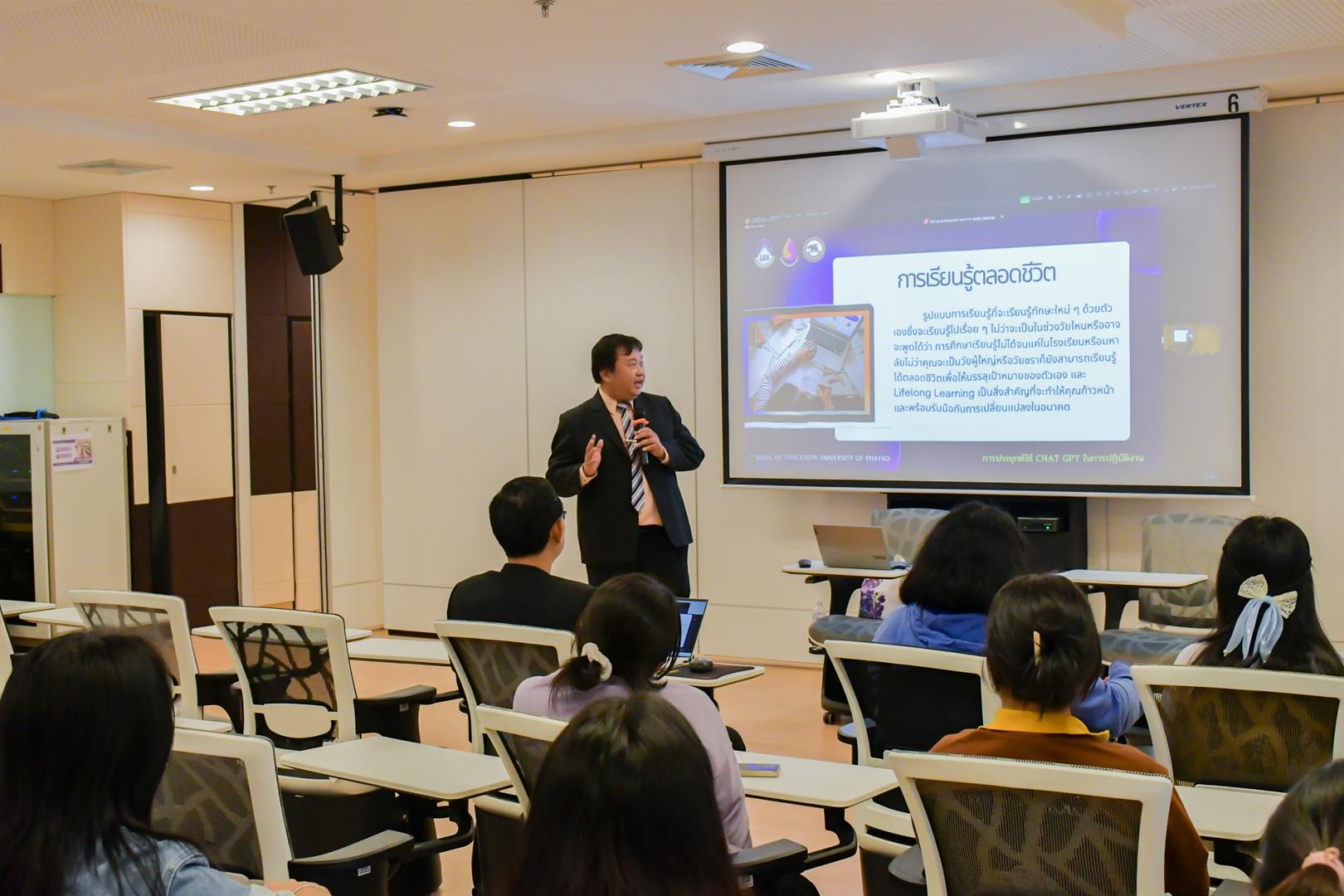
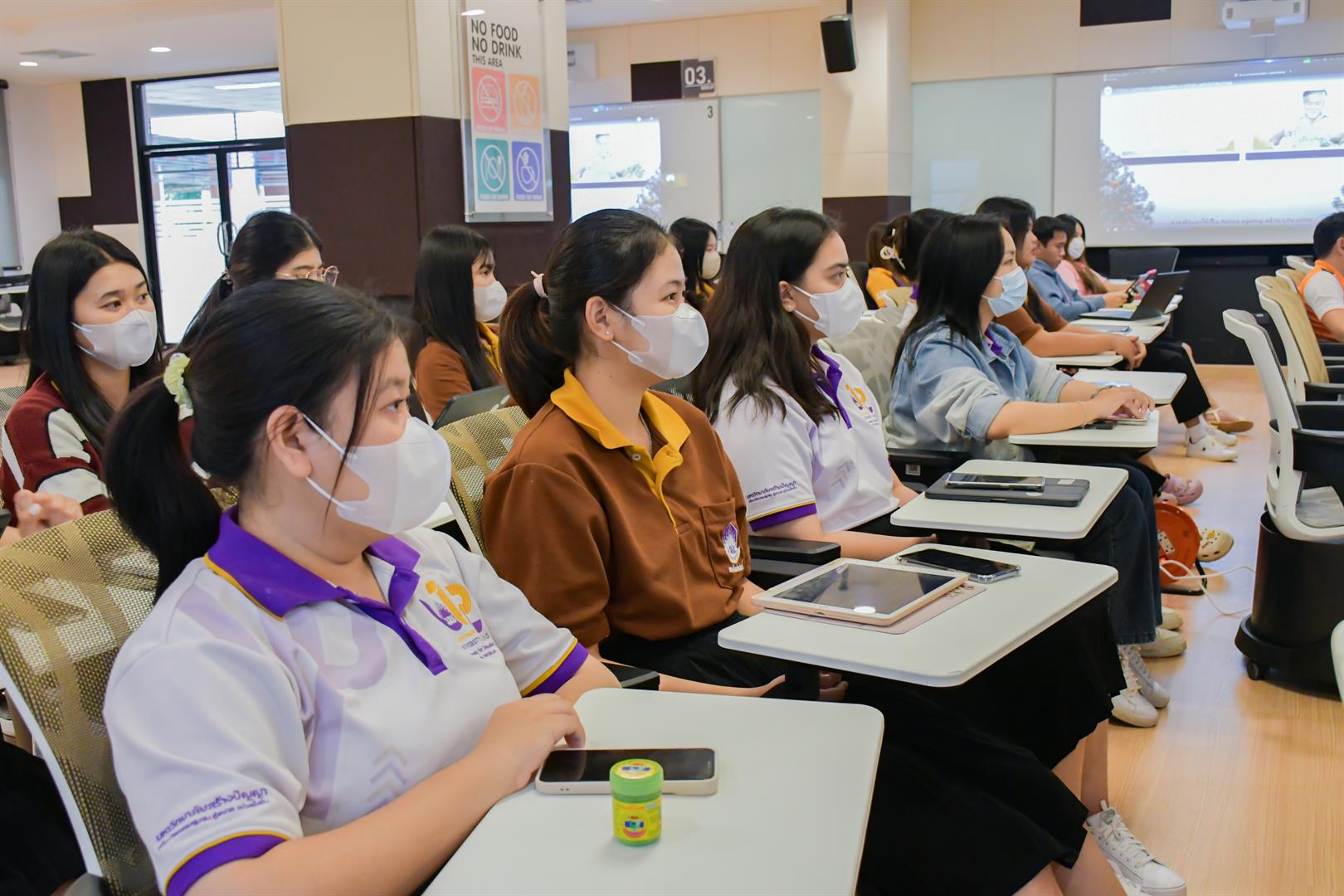
A Smart Classroom is a properly organized learning environment — including classroom location, desks, electrical systems, audio, and air conditioning systems — that participates in various learning activities such as small group activities, lectures, project work, and presentations, so that students can develop their own learning and research skills. It refers to a classroom or learning resource created in a unique way, emphasizing collaborative learning interactions through a variety of technologies, including audiovisual media, contributing to both regular and out-of-class distance learning.
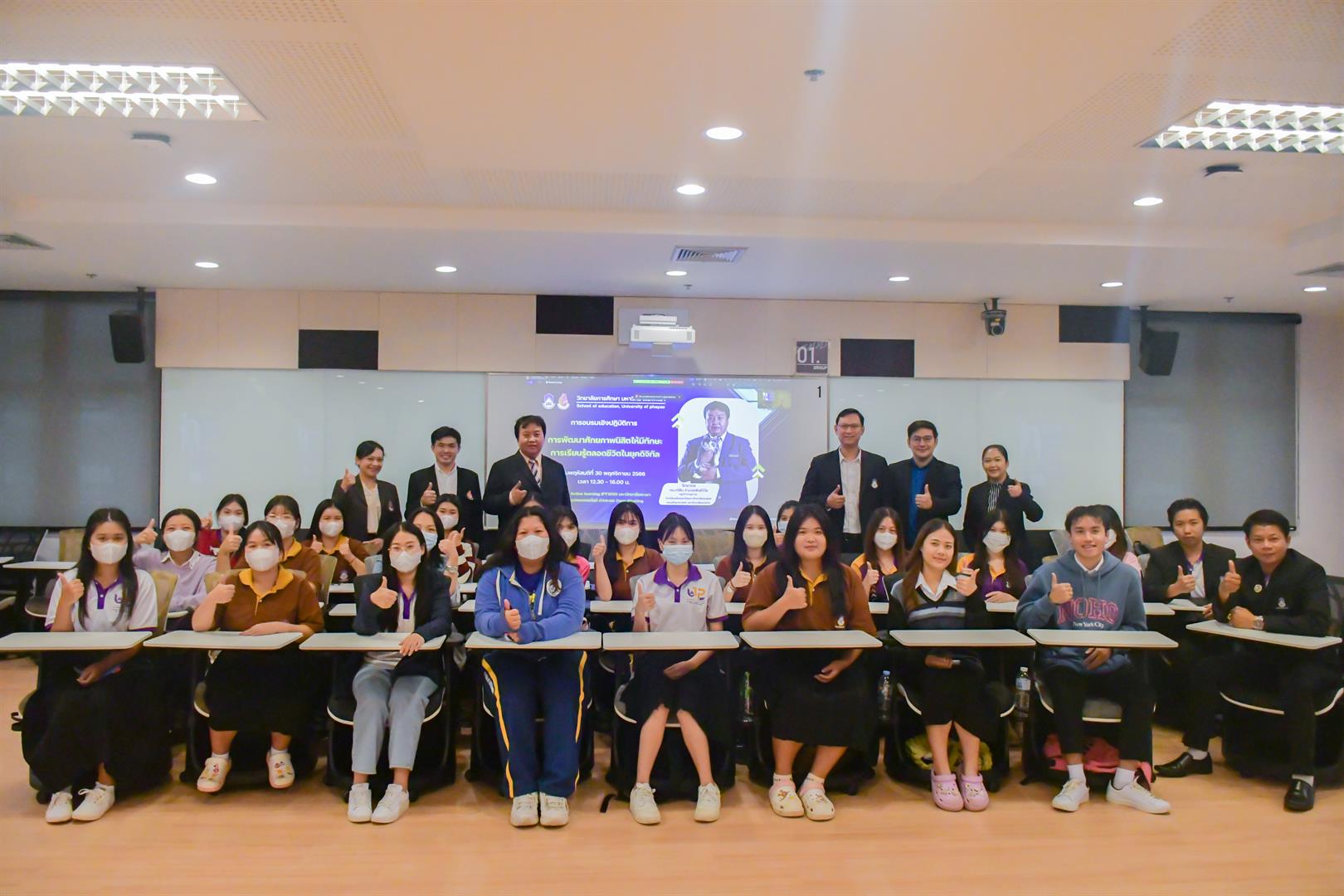
Active learning Classroom & IClassroom
These classrooms support active learning by emphasizing teacher-learner interaction in the form of small group activities, using information technology (audiovisual and audio support) to connect a variety of devices such as notebook computers, tablets, smartphones, and touch monitors, accommodating up to 35–50 students.Implementation: Installation of Security Infrastructure (CCTV, Panic Button)
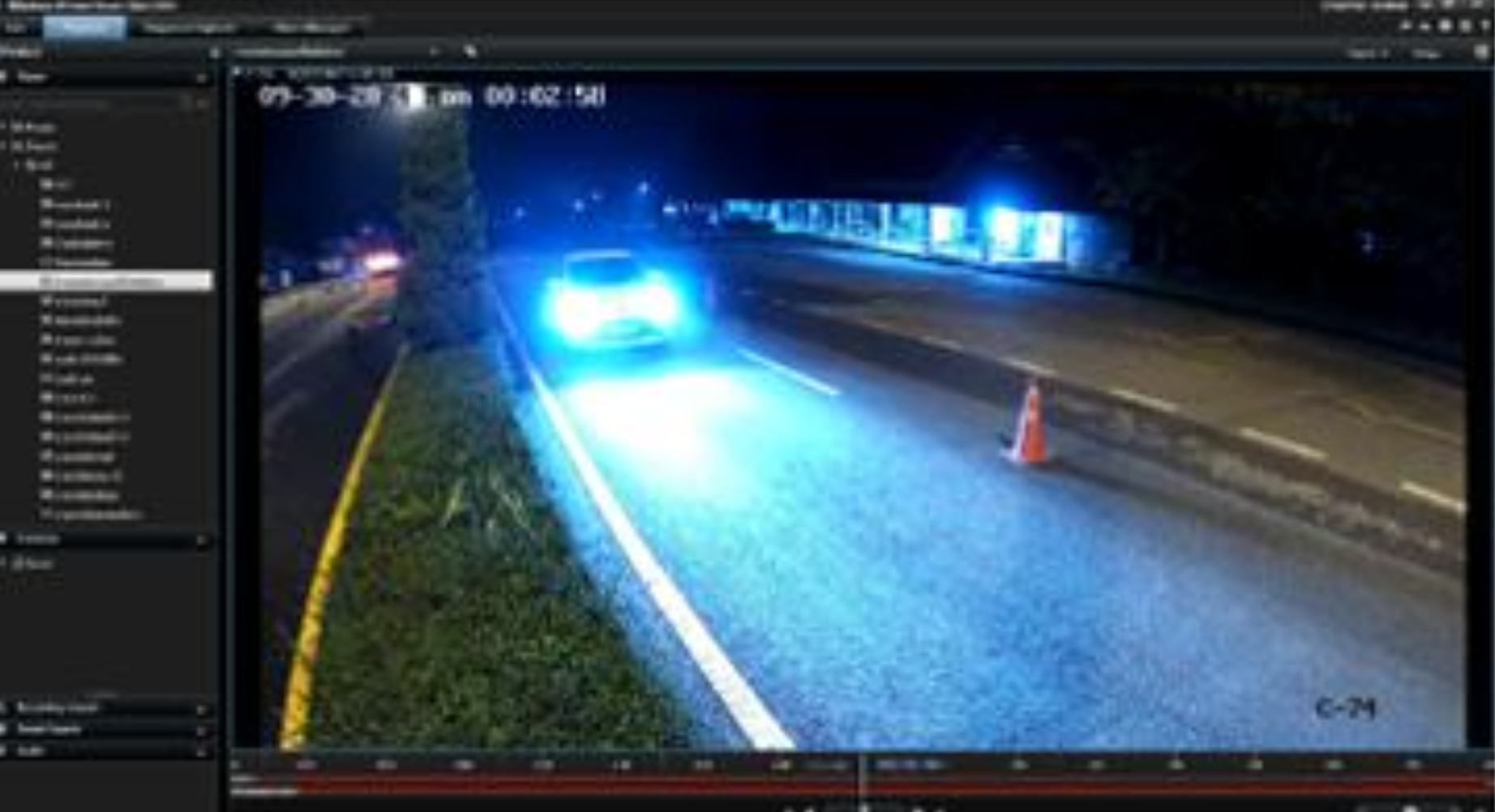
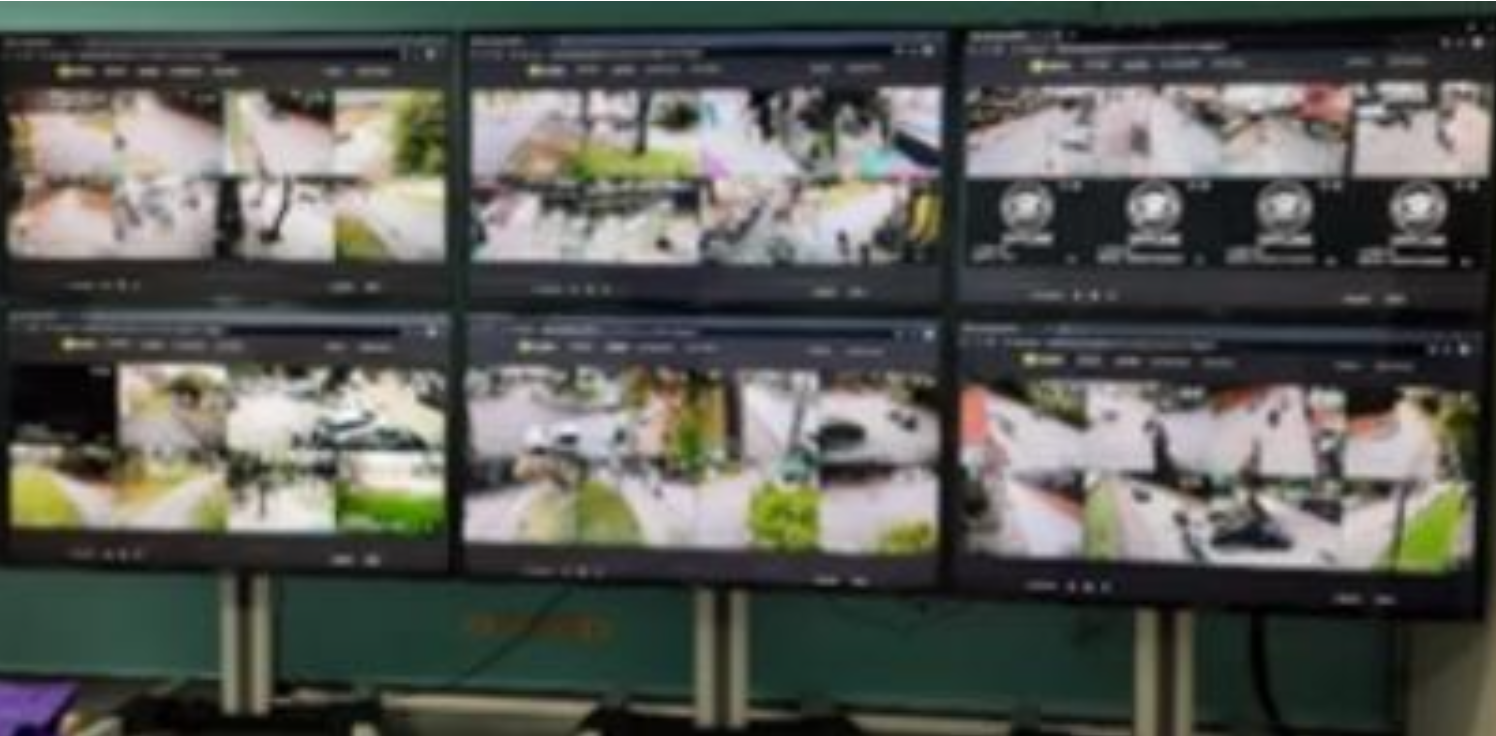
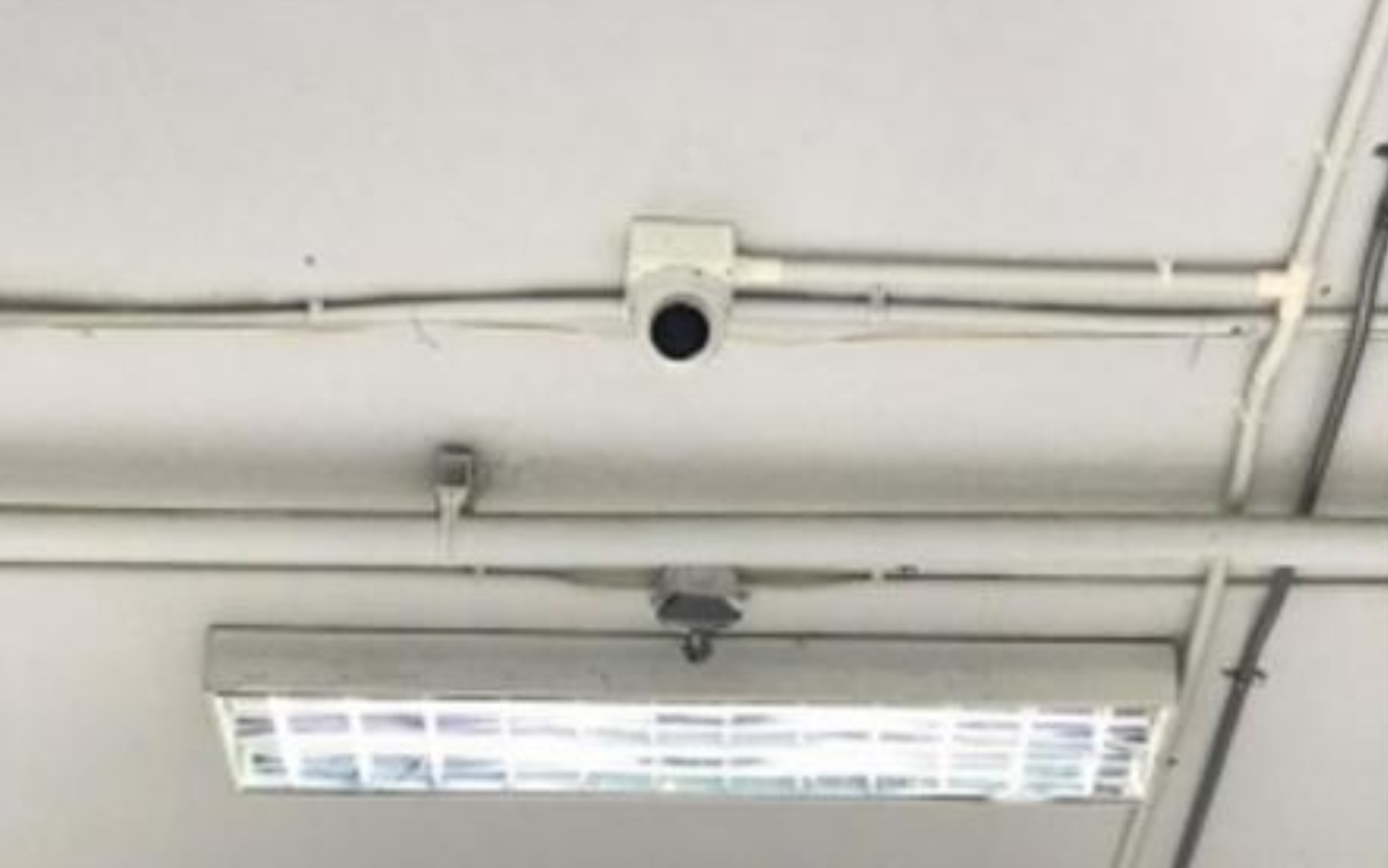
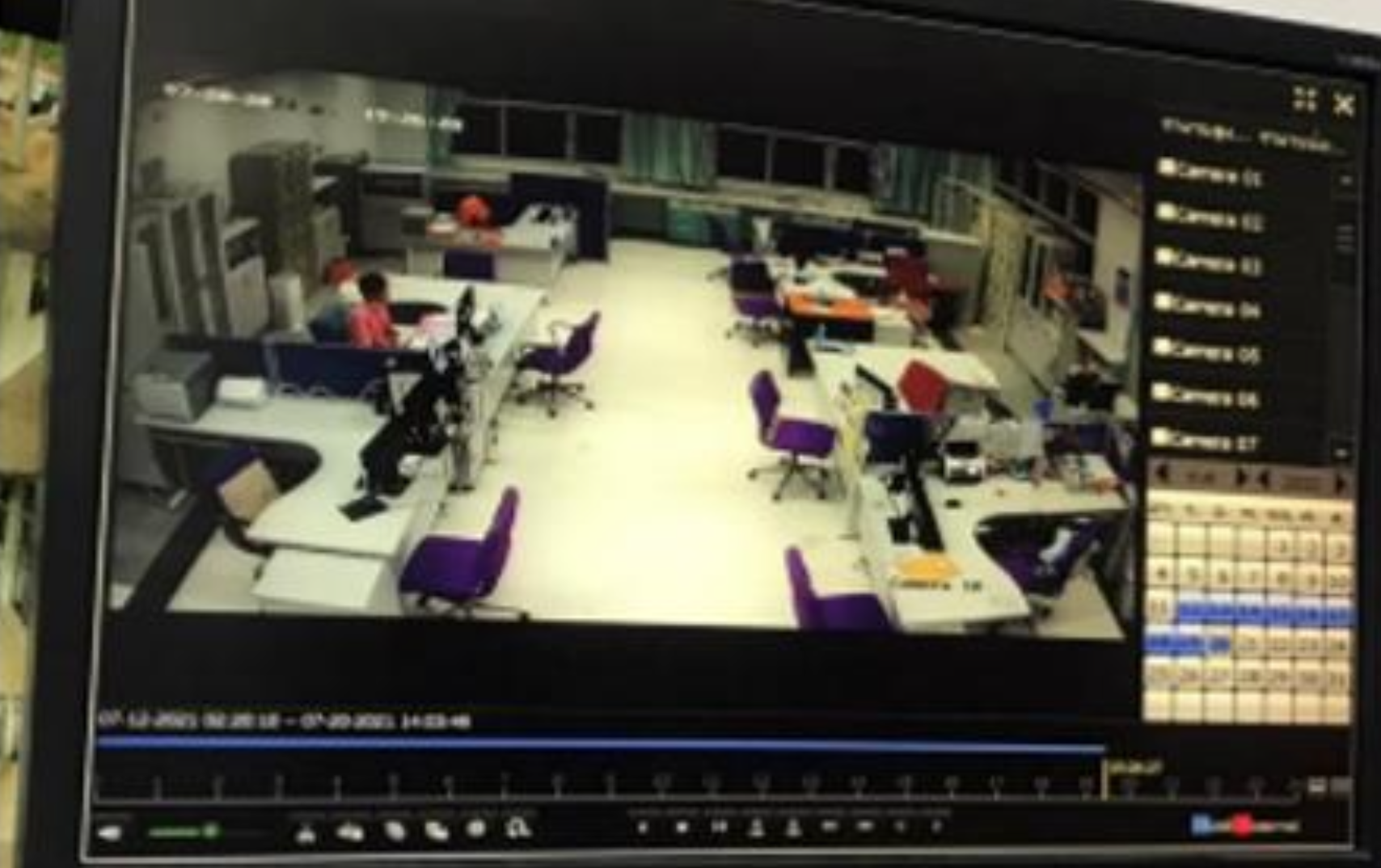
Activities/Programs: Deploying CCTV cameras to monitor the safety of life and property along pedestrian paths, bicycle paths, road paths, and parking spaces.ICT Utilization: A system for counting the number of cars entering the university using the Milestone XProtect Smart Client 2014 system.
Evidence: Purchase orders, installation reports, and user manuals for the new equipment.
Timeline: Nov 2020 – Ongoing | Responsible Team/Department: Division of Buildings and Facilities
With many students, staff, teachers, parents, and visitors on campus — including University of Phayao Demonstration School students from elementary to secondary level, undergraduate, master's, and PhD students, and international students — the university has undertaken a project to install CCTV cameras, along with a CCTV control room, to monitor the safety of life and property in pedestrian paths, bicycle paths, road paths, and surrounding parking spaces.
Monitoring: Regular Audits of Network Infrastructure and Classroom Technology Usage
Activities/Programs: Continuously monitoring the university's network infrastructure and building maintenance technology to ensure optimal performance and identify areas for improvement.ICT Utilization: Network monitoring tools (e.g., UP Network Monitor) and usage analytics software (e.g., Google Analytics).
Evidence: Regular audit reports, network performance indicators showing maintenance downtime, and usage statistics from building maintenance technologies.
Timeline: July 2024 – Ongoing | Responsible Team/Department: Division of Buildings and Facilities
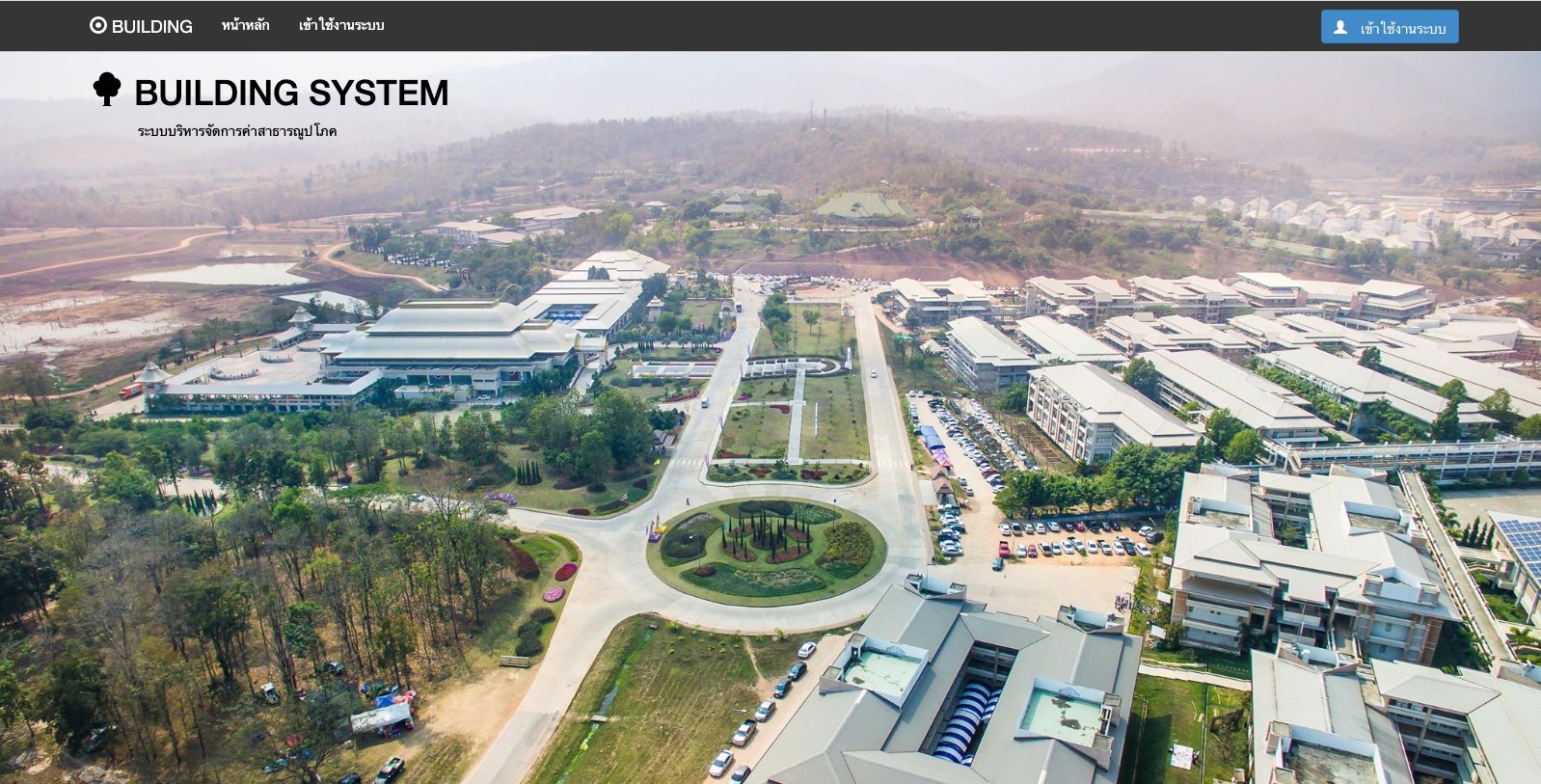
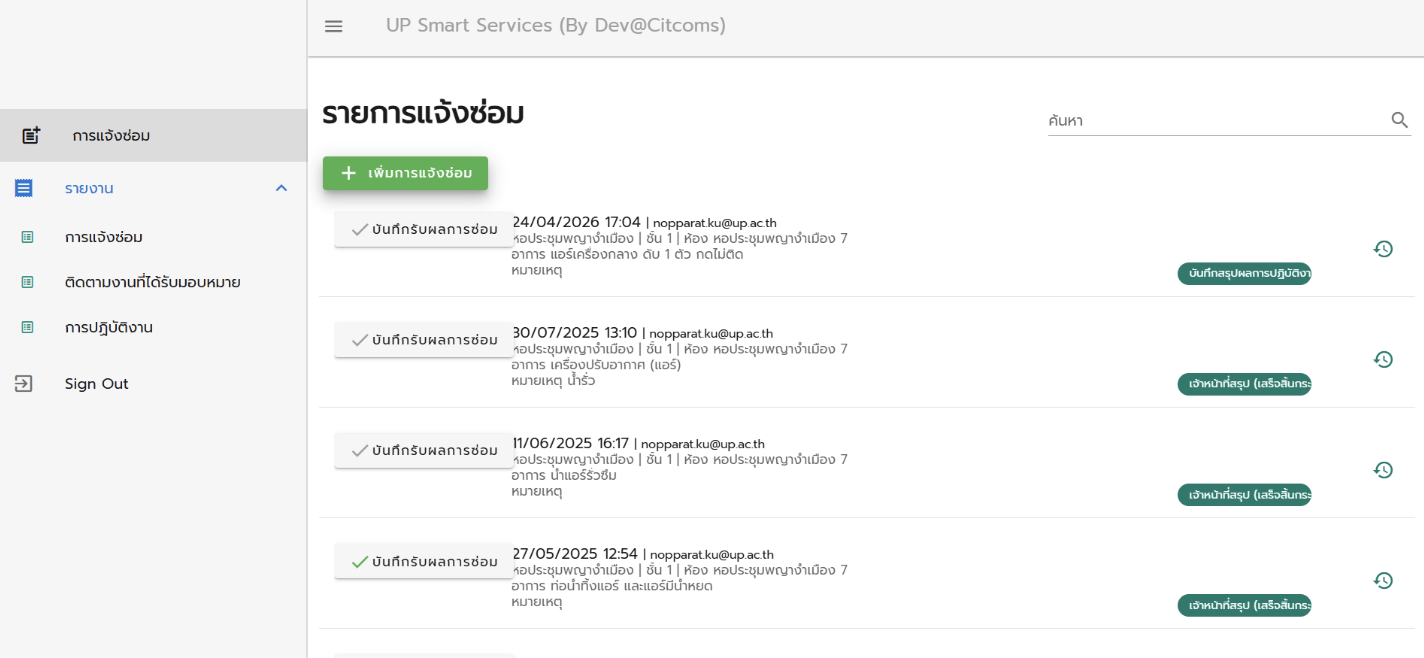
Building repair and maintenance notification system
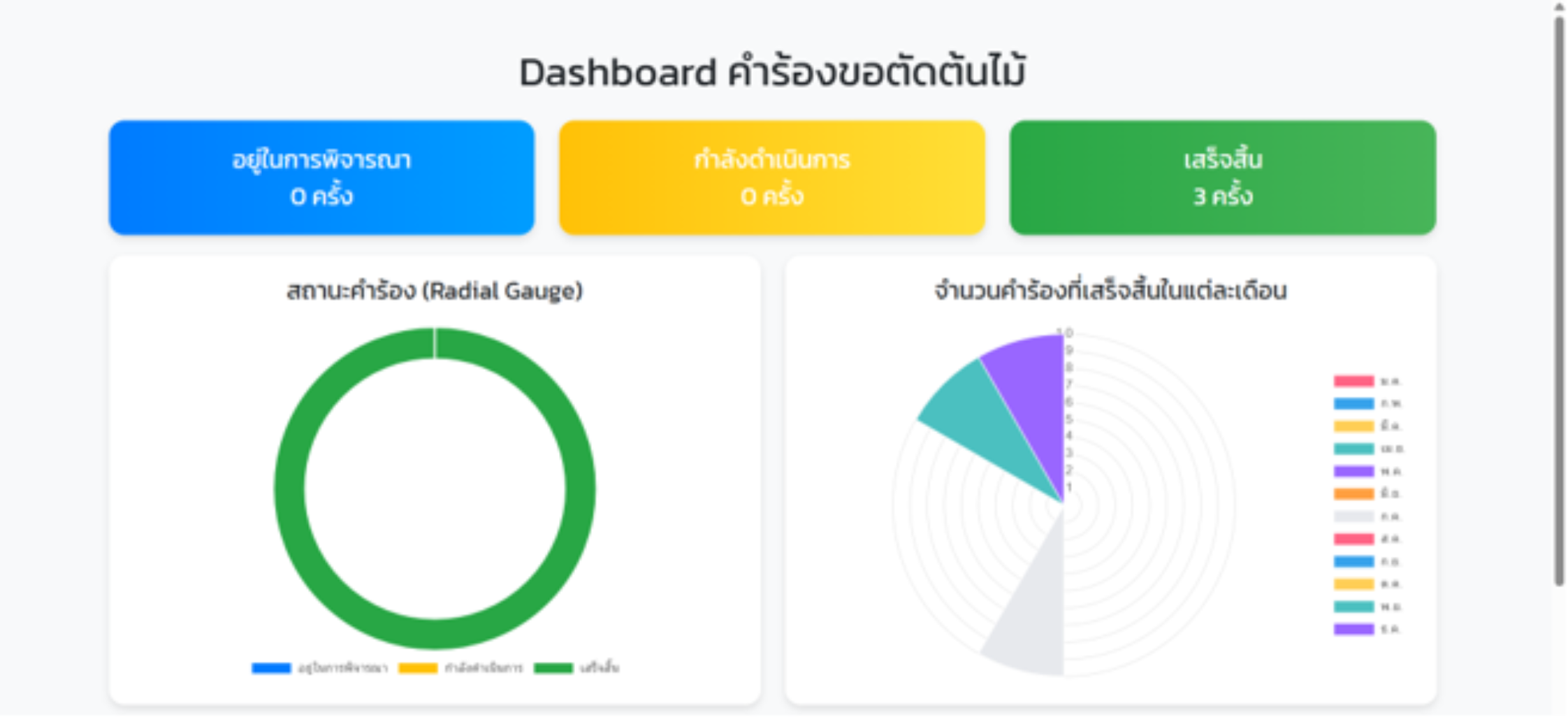
Dashboard for tree-trimming requests
Evaluation: Assessment of ICT Impact on Teaching and Learning Outcomes
Activities/Programs: Evaluating the effectiveness of implemented ICT solutions in enhancing educational outcomes by collecting stakeholder feedback and analyzing academic performance data.ICT Utilization: Surveys and feedback forms distributed via digital platforms (e.g., Google Forms, SurveyMonkey), and data analysis tools (e.g., SPSS, Excel).
Evidence: Survey results on the perception of new technology by students and faculty, feedback summaries, and academic performance data comparing results before and after implementation.
Timeline: Dec 2024 – Ongoing | Responsible Team/Department: Division of Educational Service
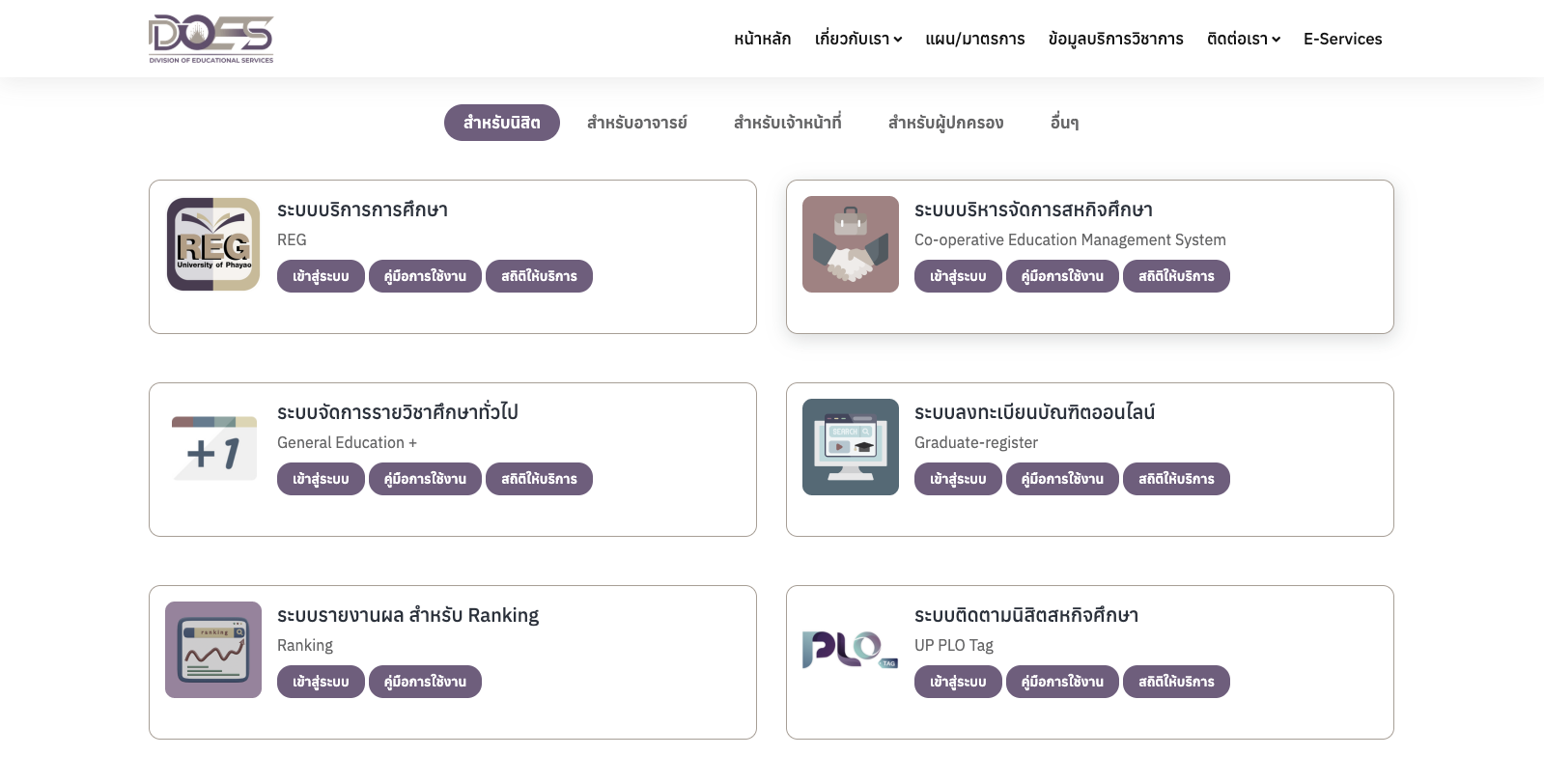
Energy and Climate Change through the Utilization of ICT
Number of Renewable Energy Sources on Campus
Planning: Conduct feasibility studies using GIS mapping and renewable energy simulation software to assess potential sites for renewable energy installations.Implementation: Oversee the installation of renewable energy sources like solar panels and wind turbines, tracking progress with project management tools.
Monitoring: Use renewable energy monitoring systems to track energy production, generating performance reports and analytics.
Micrometeorological Station
Planning: University of Phayao has established a system for utilizing and presenting air quality data, integrating information from meteorological stations to support environmental monitoring and decision-making.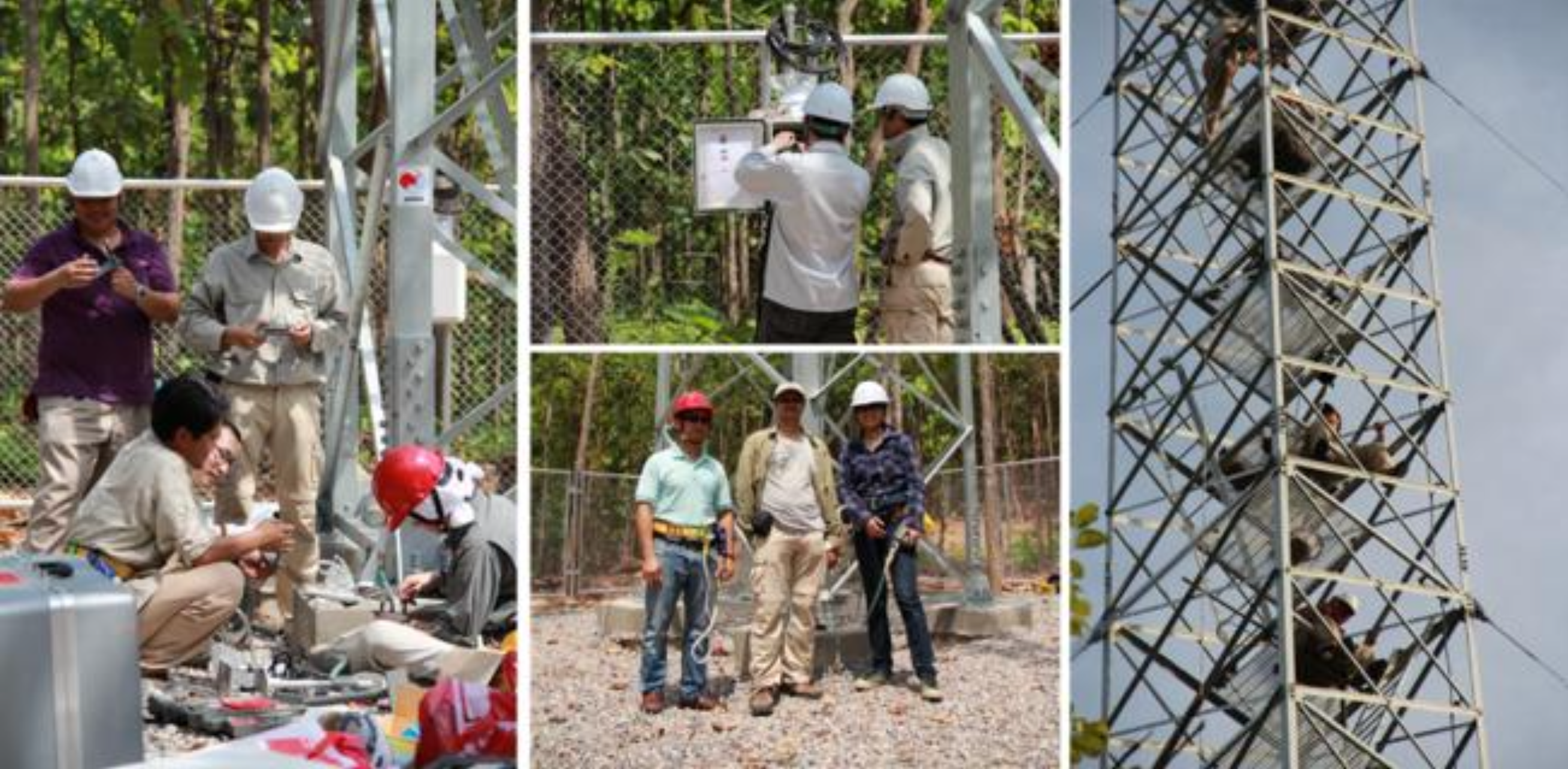
Monitoring: Air quality data is continuously tracked through the Air Quality Tracker Online platform, enabling real-time monitoring and public access to environmental information. Link: https://cesm.up.ac.th/
Monthly Report on Electricity Charges and Current Estimates
Planning: As a non-profit educational institution, University of Phayao places importance on cost management — electricity charges account for approximately 28%–35% of the operating budget, or 18%–25% of the university's total expenditures.Implementation: Electricity consumption data is collected from two main sources — the Provincial Electricity Authority (PEA) central system, and internal agency systems that record electricity usage per unit via the university's information system.
Monitoring: Monthly electricity usage is monitored and compared online via the platform: http://45.91.132.63/monitoring/Login.aspx
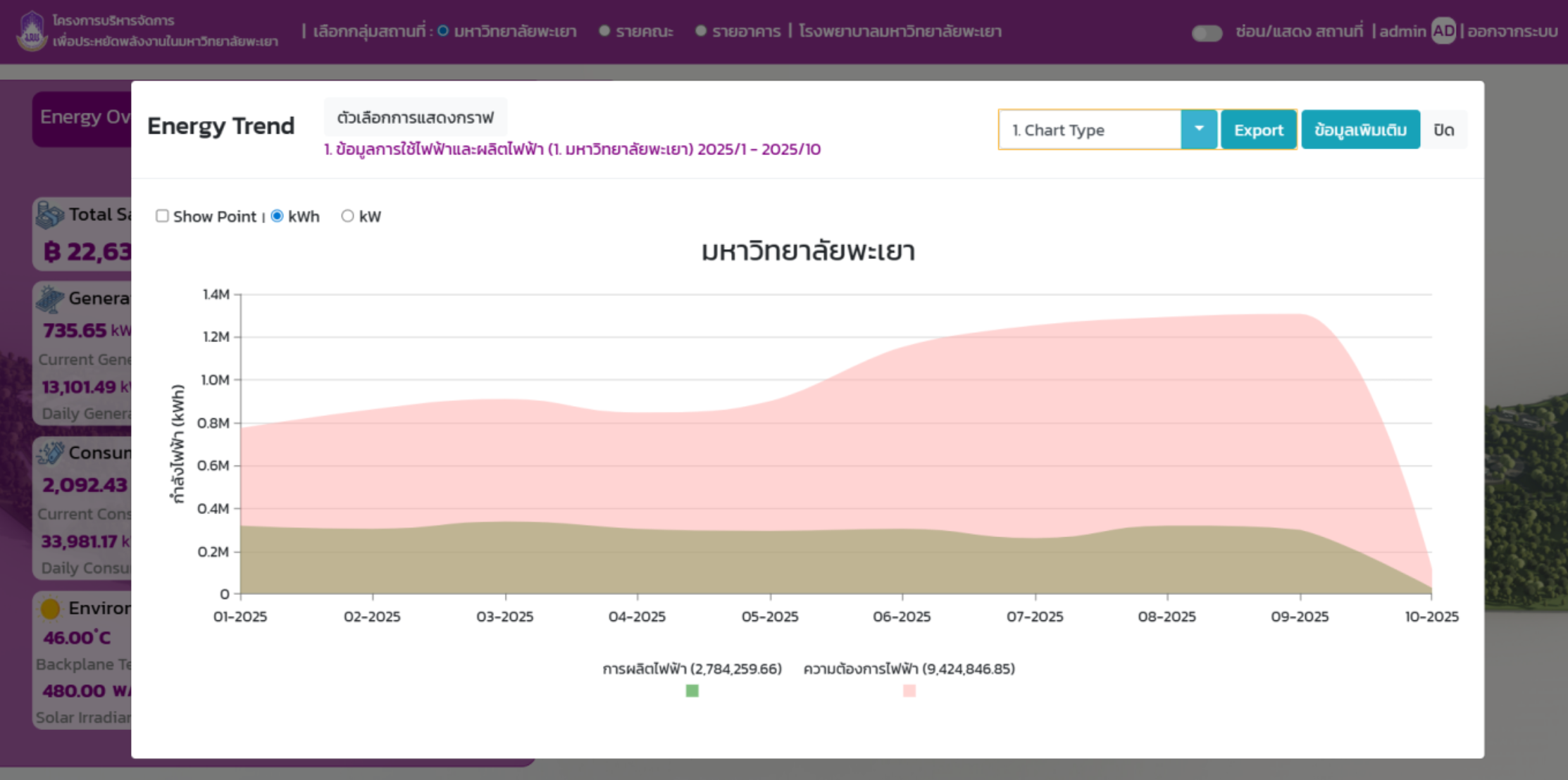
"The UP Carbon" — ICT Approaches for Energy and Climate Change
"The UP Carbon" involves utilizing technology to efficiently manage energy and resources, reducing energy consumption, greenhouse gas emissions, and mitigating climate change impacts. Key approaches include:- Smart Energy Management Systems — using sensors for automatic energy detection and lighting control in classrooms and offices to minimize unnecessary energy use.
- Big Data and IUP (Internet of UP) for Energy Forecasting — installing sensors in buildings to monitor electricity, water, and other resources for precise energy demand forecasting.
- Energy Management Apps — allowing students and staff to track personal energy use, showing real-time energy usage in classrooms or dormitories with energy-saving tips.
- E-Learning for Sustainability — online courses on renewable energy and environmental conservation accessible to students and the community.
- ICT for Clean Energy Research Programs — leading research and development of clean energy technologies, including AI for efficient resource management.
- AI and Machine Learning for Climate Forecasting — analyzing climate data to predict future changes and manage natural resources and energy more effectively.
- Smart Grid Integration — efficiently controlling electricity production and use, enabling balanced integration of renewable energy into the grid.
- Smart Green Transportation Programs — IoT technology and real-time data for low-carbon transportation planning, such as electric buses and smart bike-sharing systems.
- Smart Water Management Programs — automatic water monitoring and control systems, such as smart water sensors in restrooms and green spaces.
- ICT Platforms for Collaborative Energy and Environmental Projects — digital platforms supporting collaboration among students, faculty, and the community, with an online database to share knowledge on energy management and renewable energy research.
Air Quality Monitoring
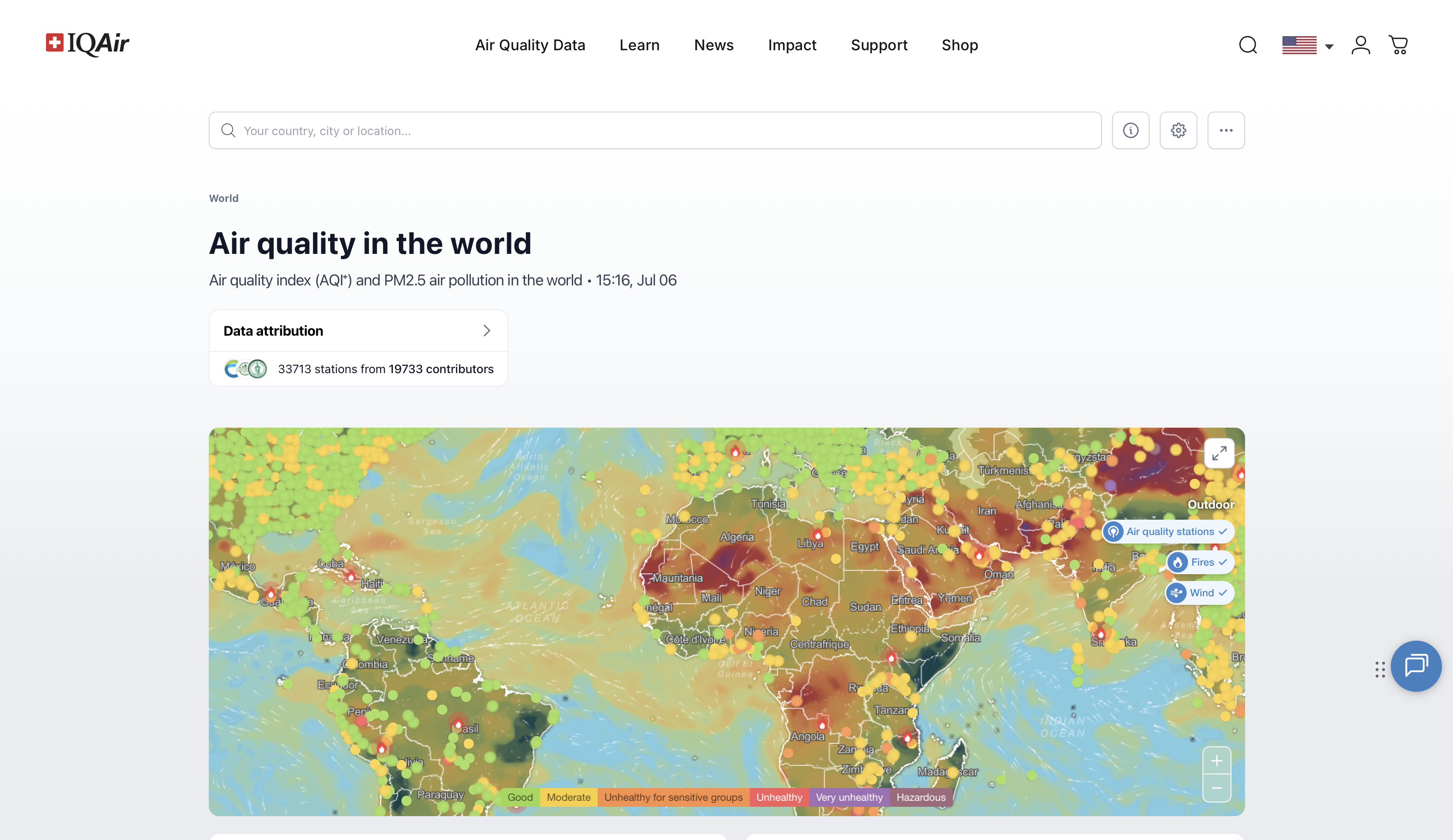
Air Quality Index (AQI⁺) and PM2.5 air pollution levels at University of Phayao are tracked in real time and published via the CESM platform, alongside the global IQAir monitoring network. Reference: https://www.iqair.com/world-air-quality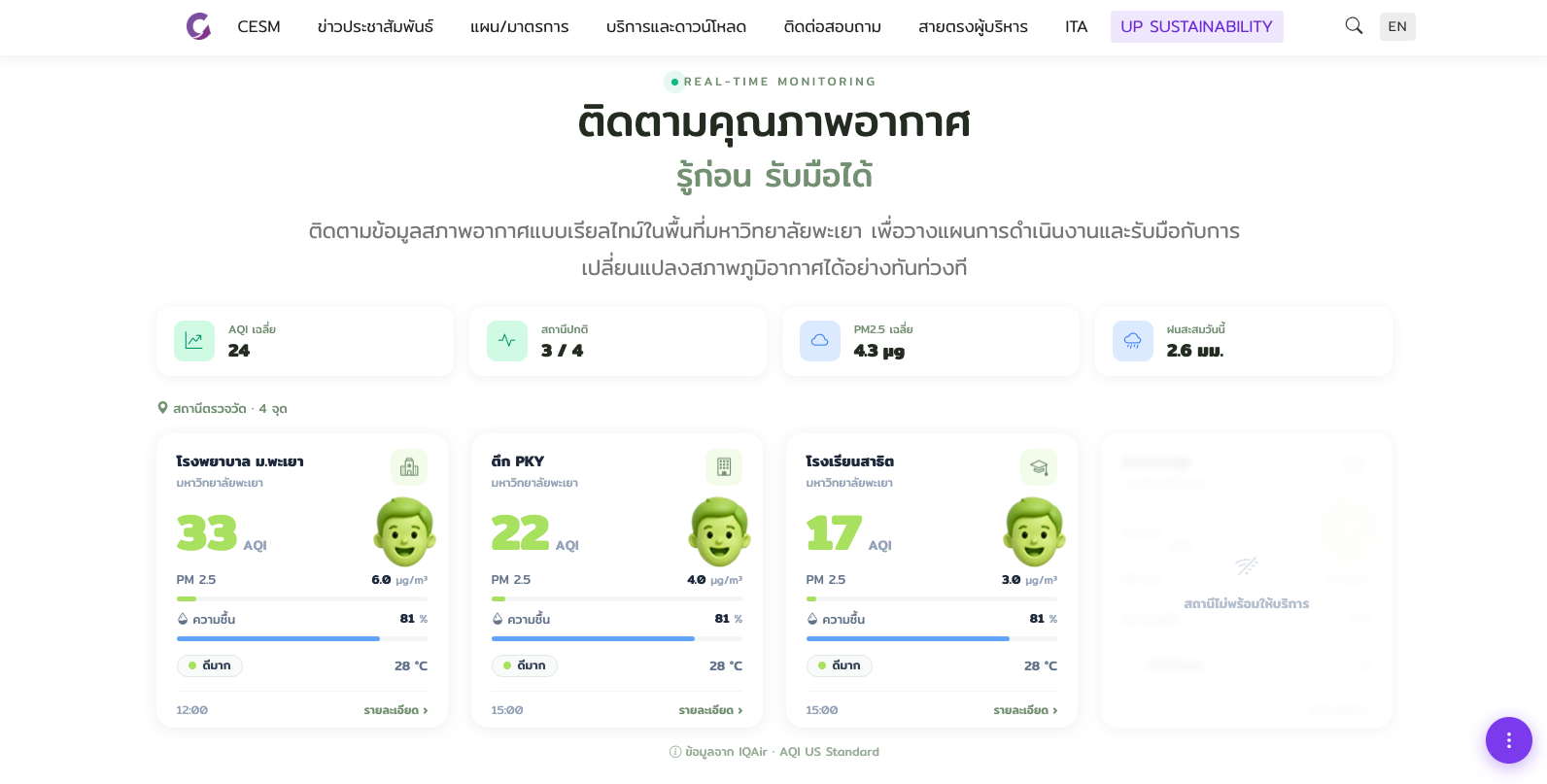
Waste Management through the Utilization of ICT
Planning: Develop a comprehensive 3R strategy and set measurable targets for waste reduction, using waste audit software and data analytics tools to analyze current waste generation and identify areas for improvement.Implementation: Install recycling bins across the campus and initiate waste segregation programs, employing RFID tags for bins to monitor usage and waste management software to track waste segregation.
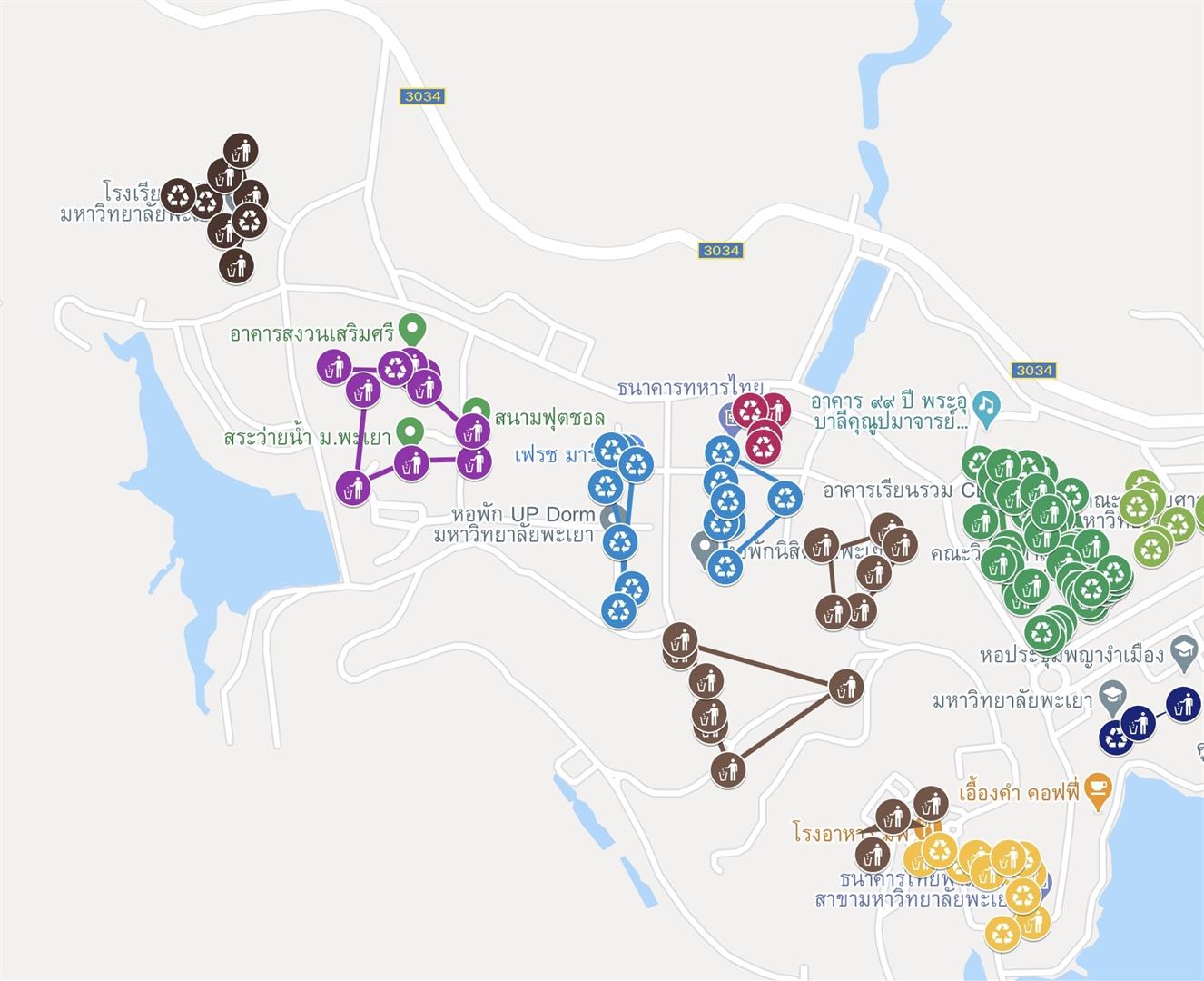
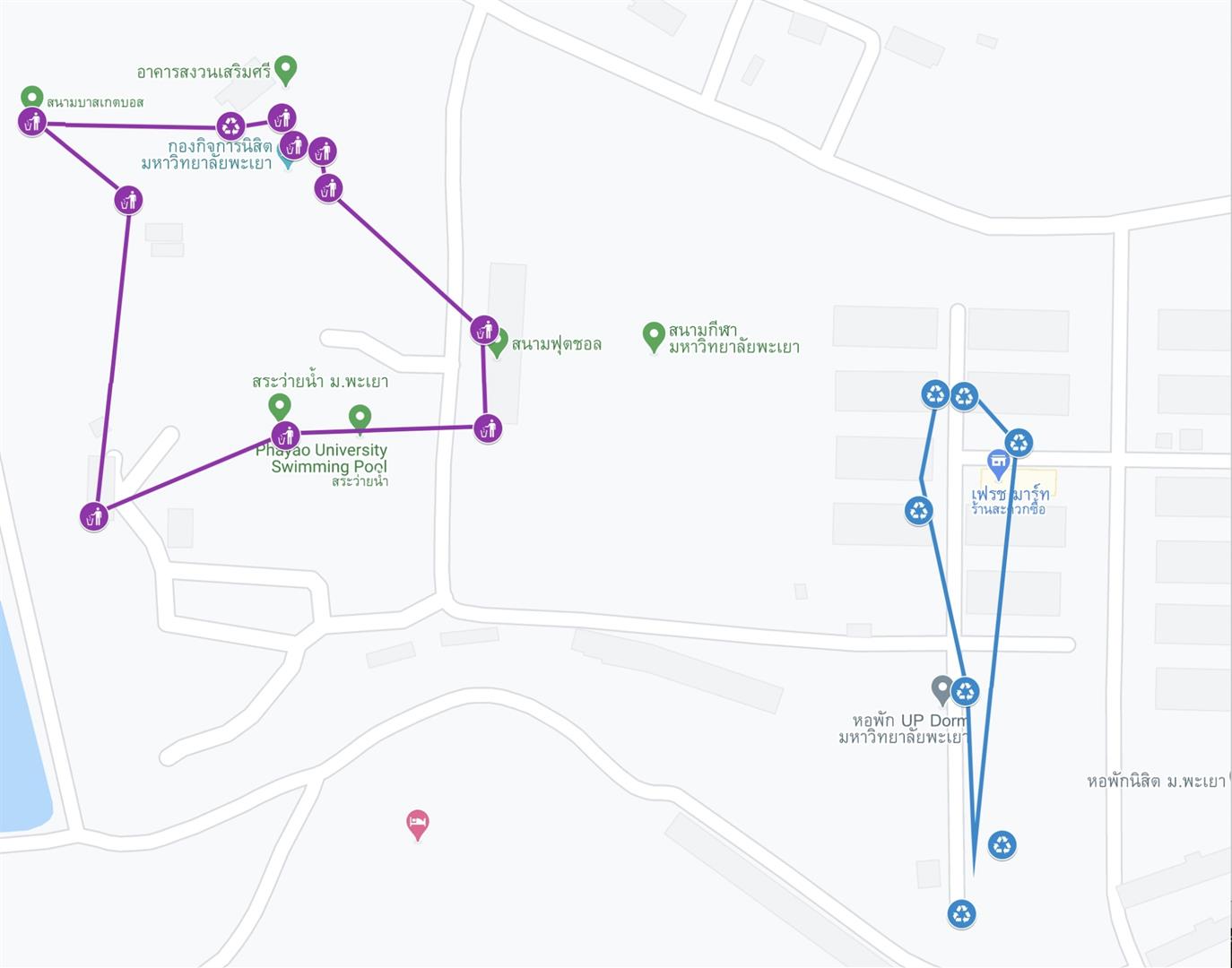
University of Phayao has developed an information system that pinpoints waste disposal locations on campus via Google My Maps, facilitating access to waste disposal locations and reducing inappropriate littering. Waste separation is explained through symbols and coloured bins. Link: https://www.up.ac.th/NewsRead.aspx?itemID=22564
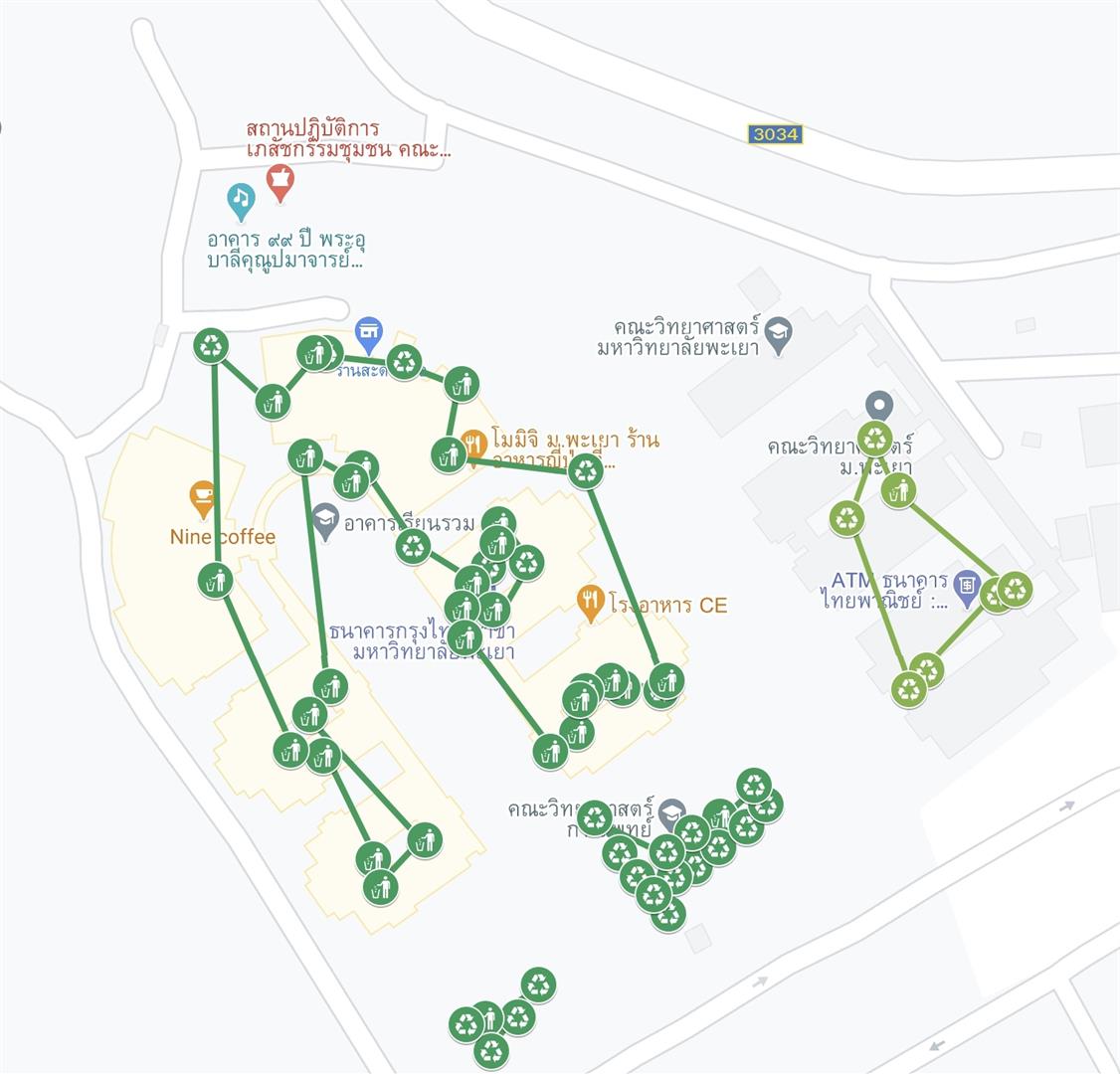
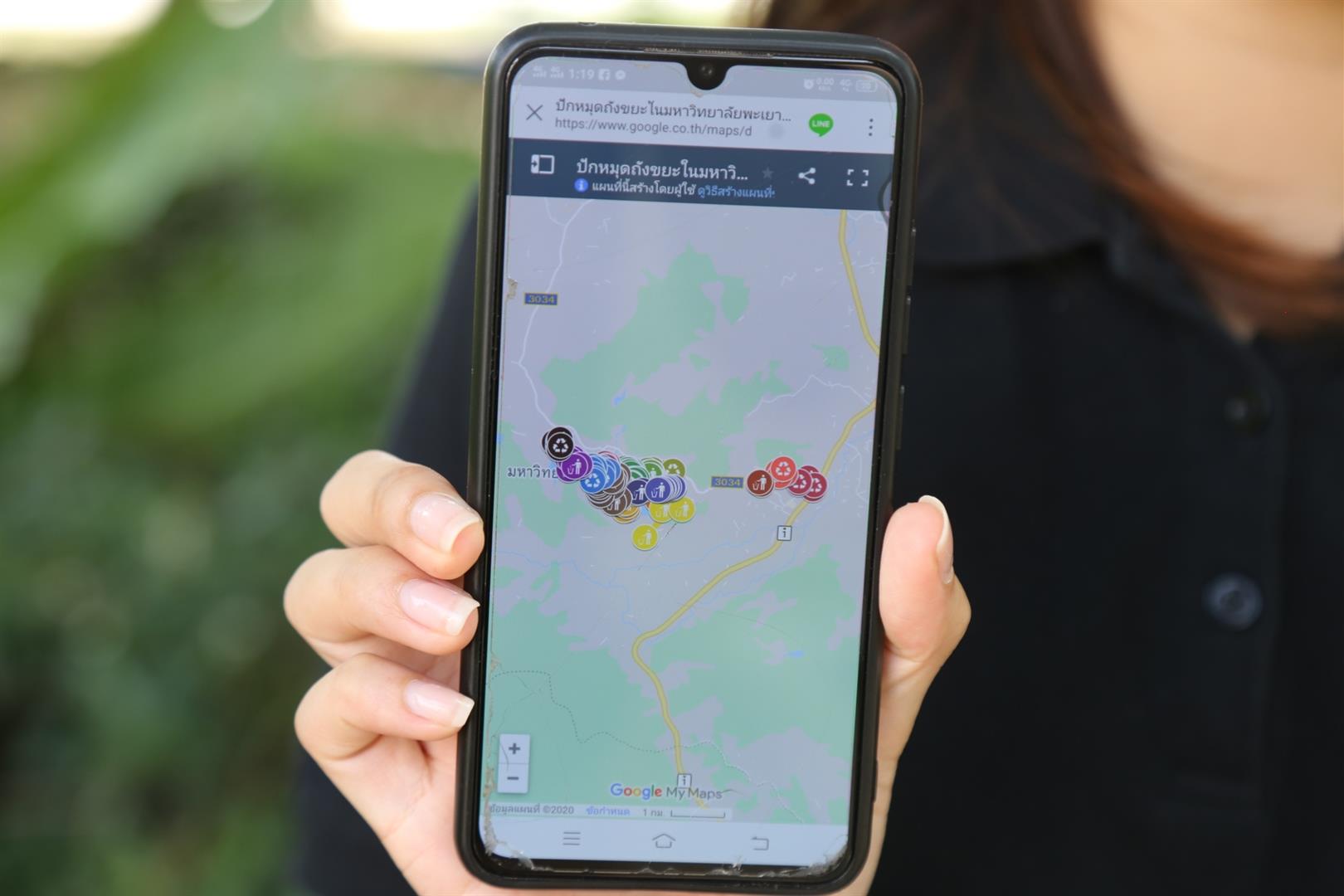
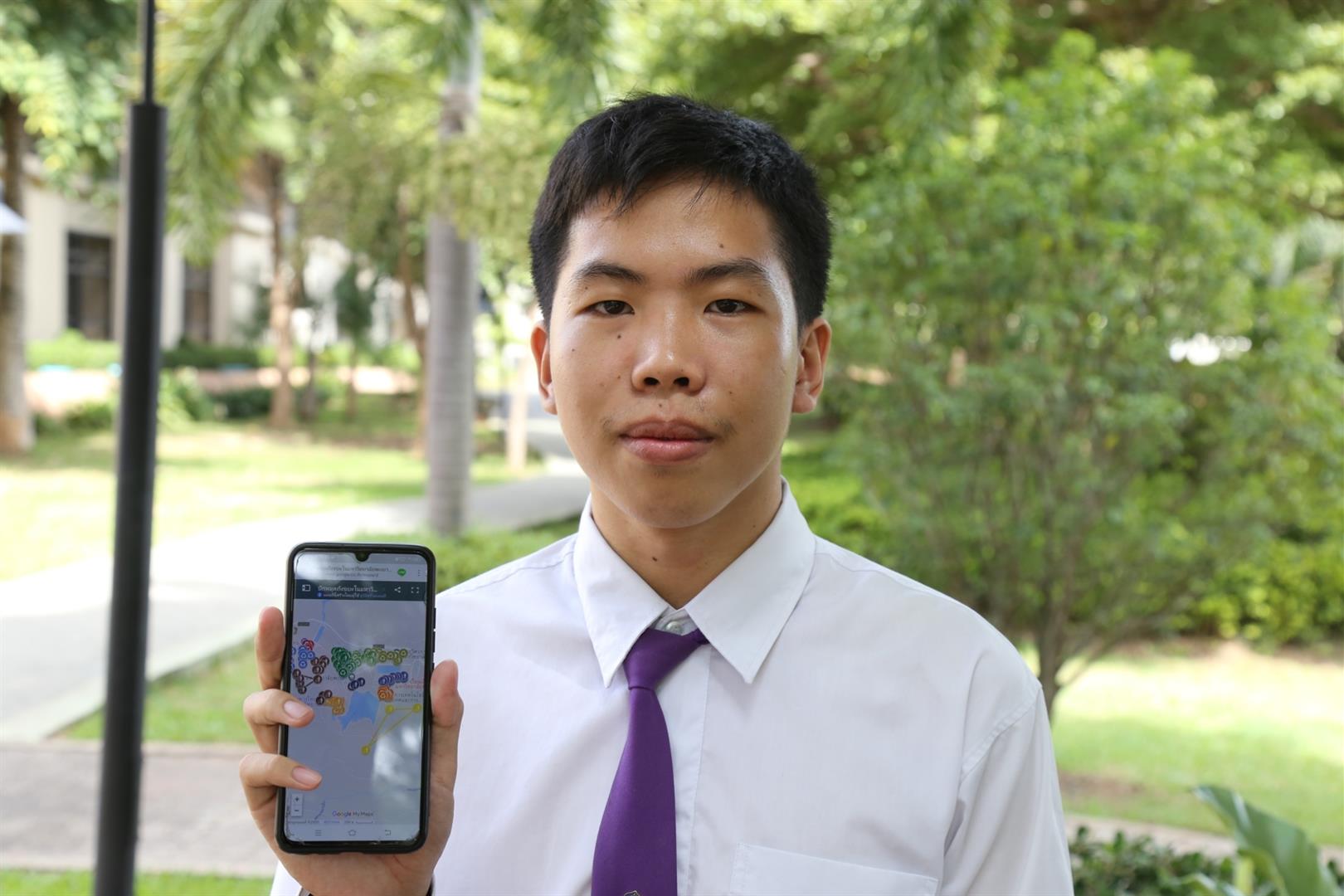
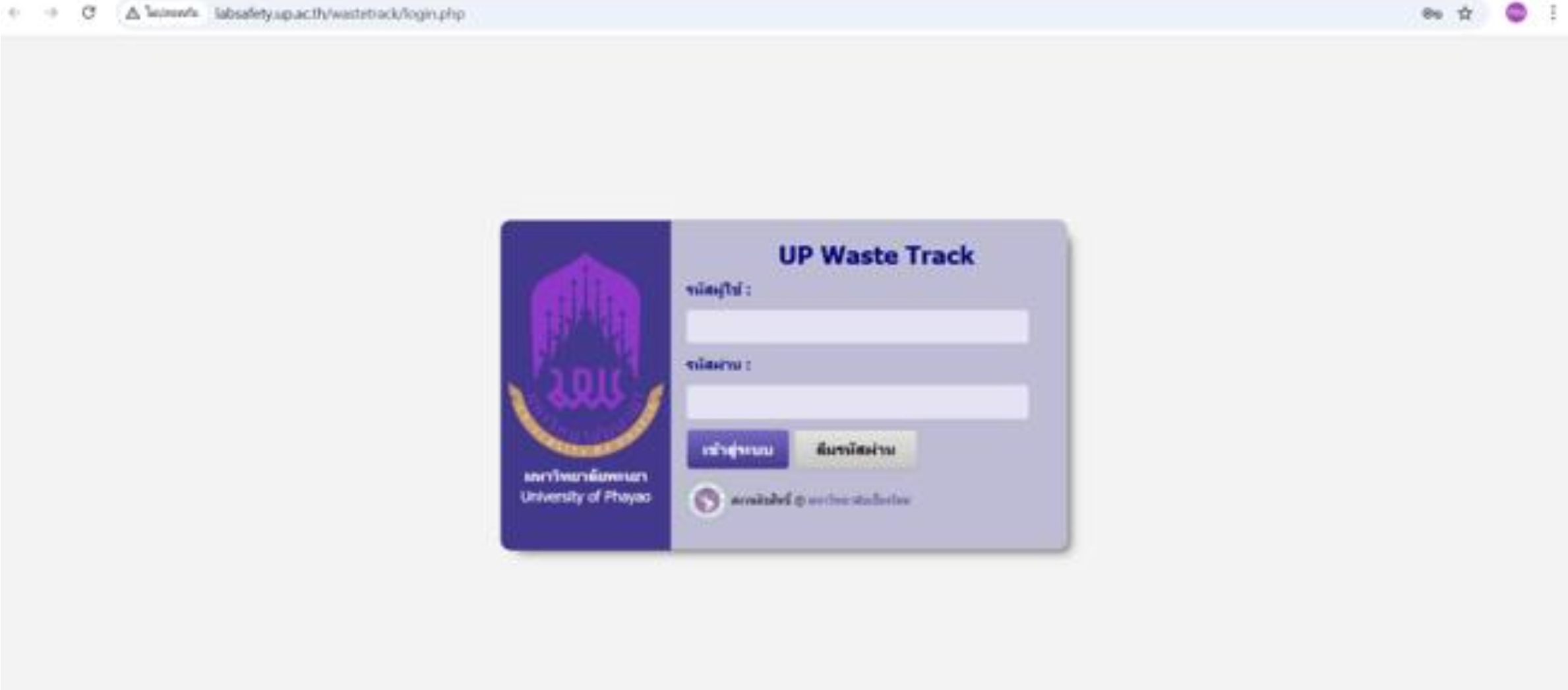
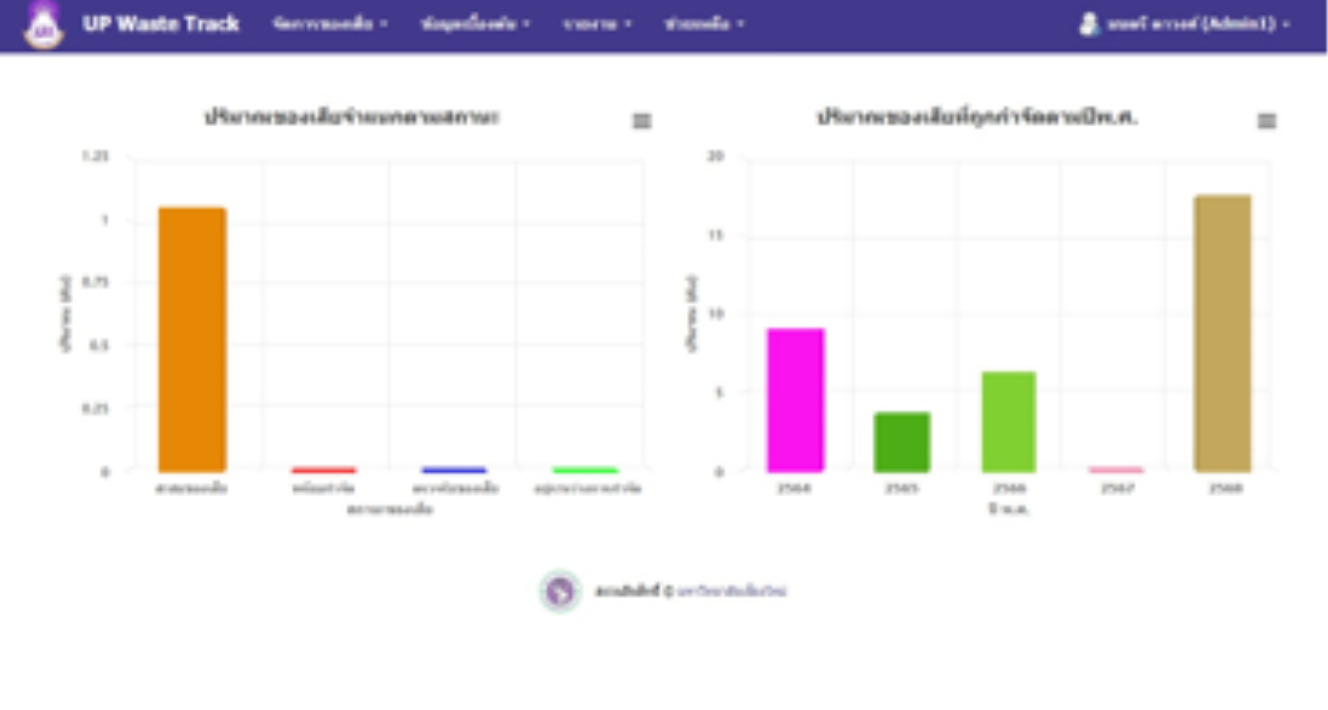
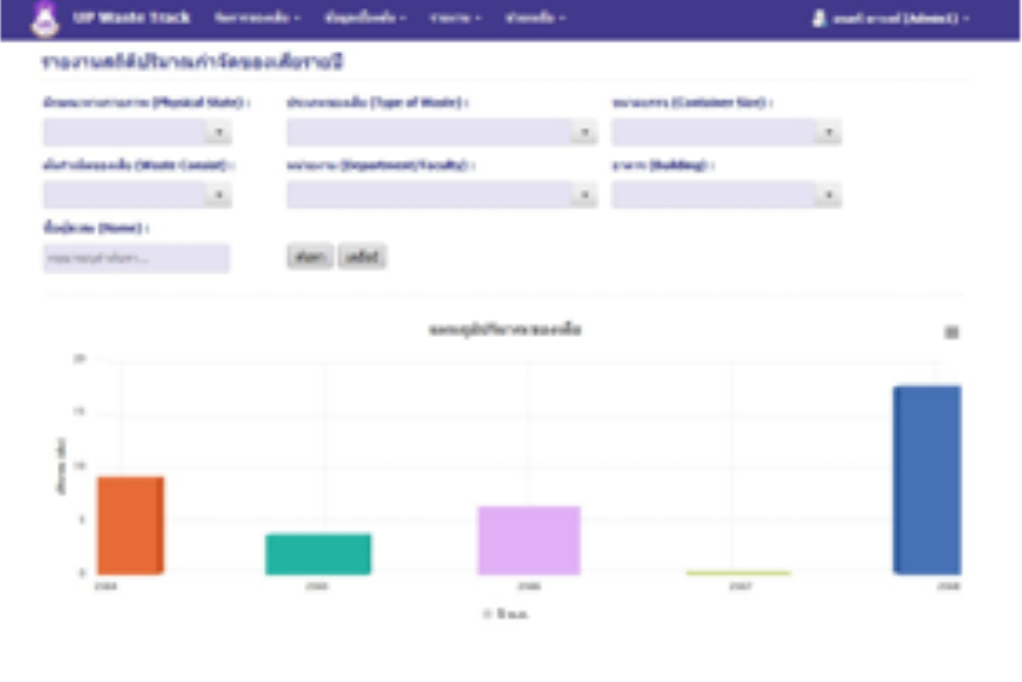
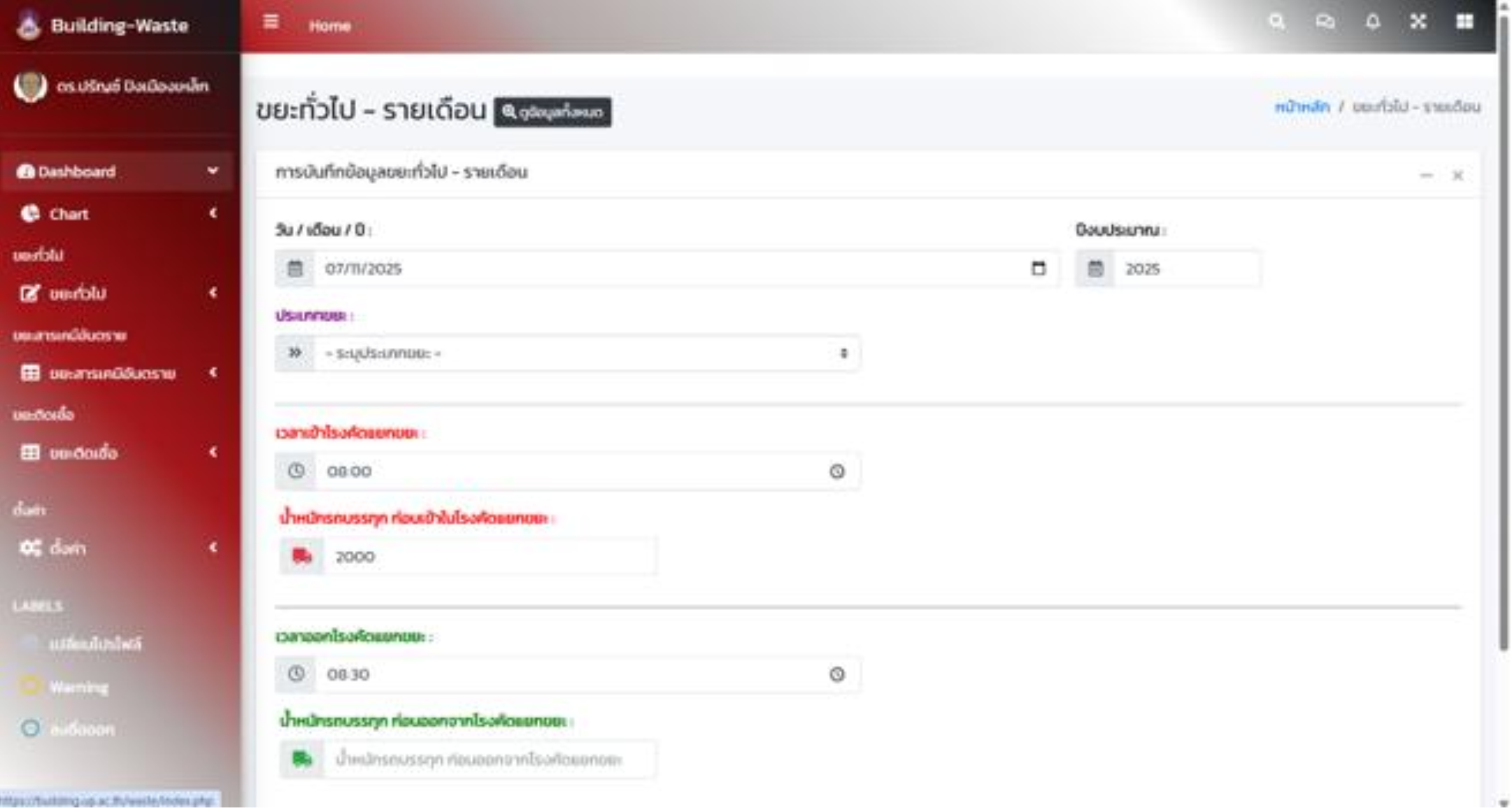
Daily waste tracking system
Water Management through the Utilization of ICT
Planning: Develop a comprehensive water conservation strategy and set measurable targets for water savings, using water usage analytics software to analyze current consumption and identify potential savings.Implementation: Install water-saving fixtures (e.g., low-flow taps and toilets) across campus and promote water conservation awareness, employing smart meters and a water-saving app to educate and engage the campus community.
According to fiscal year 2025 data, University of Phayao produces tap water accounting for 79% of the total amount used (377,572 cubic meters), while external tap water from the Provincial Waterworks Authority accounts for 21% (102,748 cubic meters). A SCADA computer system controls the water production system, displays water quality online, and analyzes historical and real-time data remotely. The water production system supplies users with an average of 1,818 cubic meters per day, or an average of 54,541 cubic meters per month.
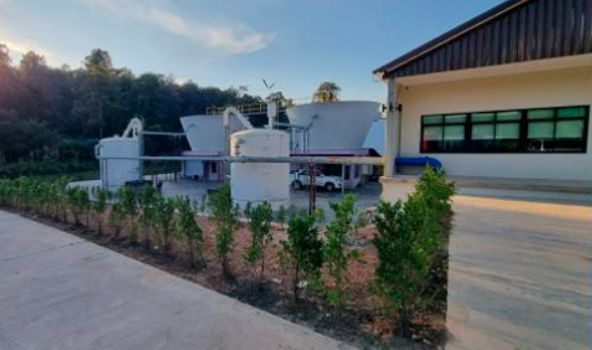
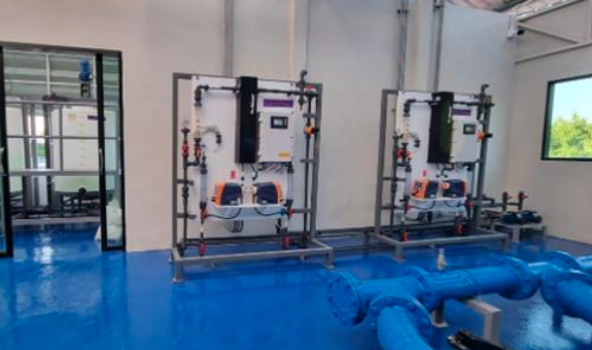
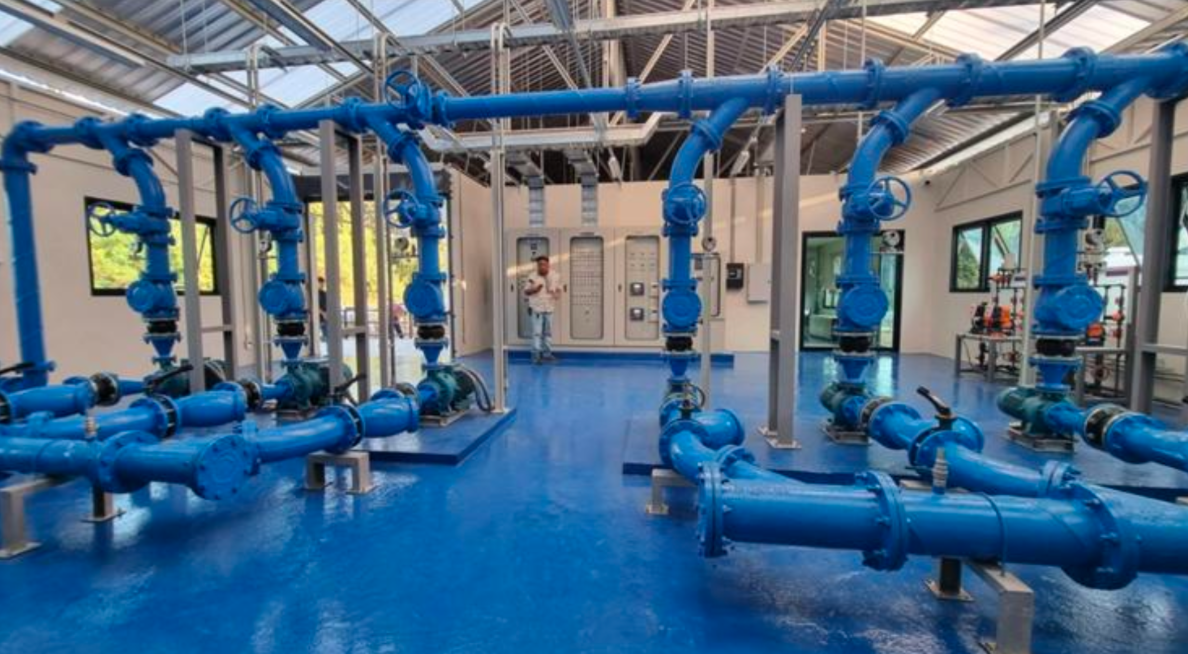
Water production plant of the University of Phayao
Monitoring: Track water usage and calculate water savings from conservation measures using real-time monitoring software. The university's digital water supply system monitors usage at every location and determines whether water meters are functioning properly, notifying officials immediately of anomalous operations such as broken or leaky pipes for immediate repair.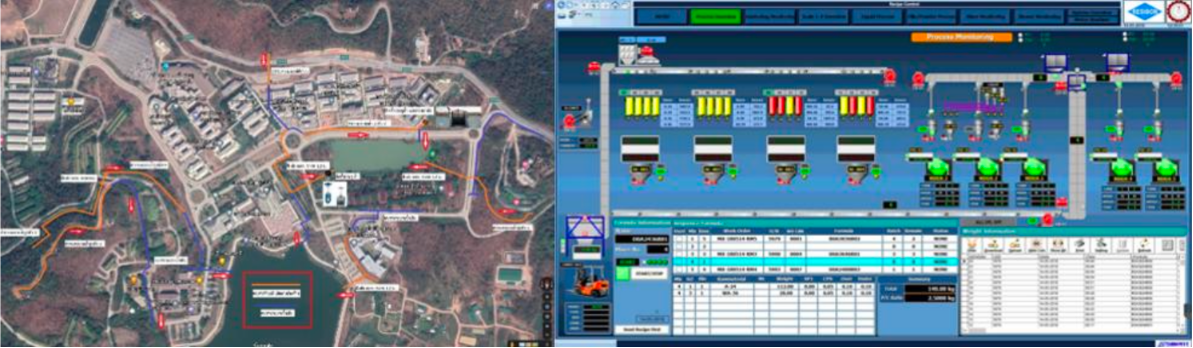
A SCADA computer system controls the water production system
Evaluation: Assess the effectiveness of water conservation programs using data analysis tools and feedback systems through the Smart Water management platform.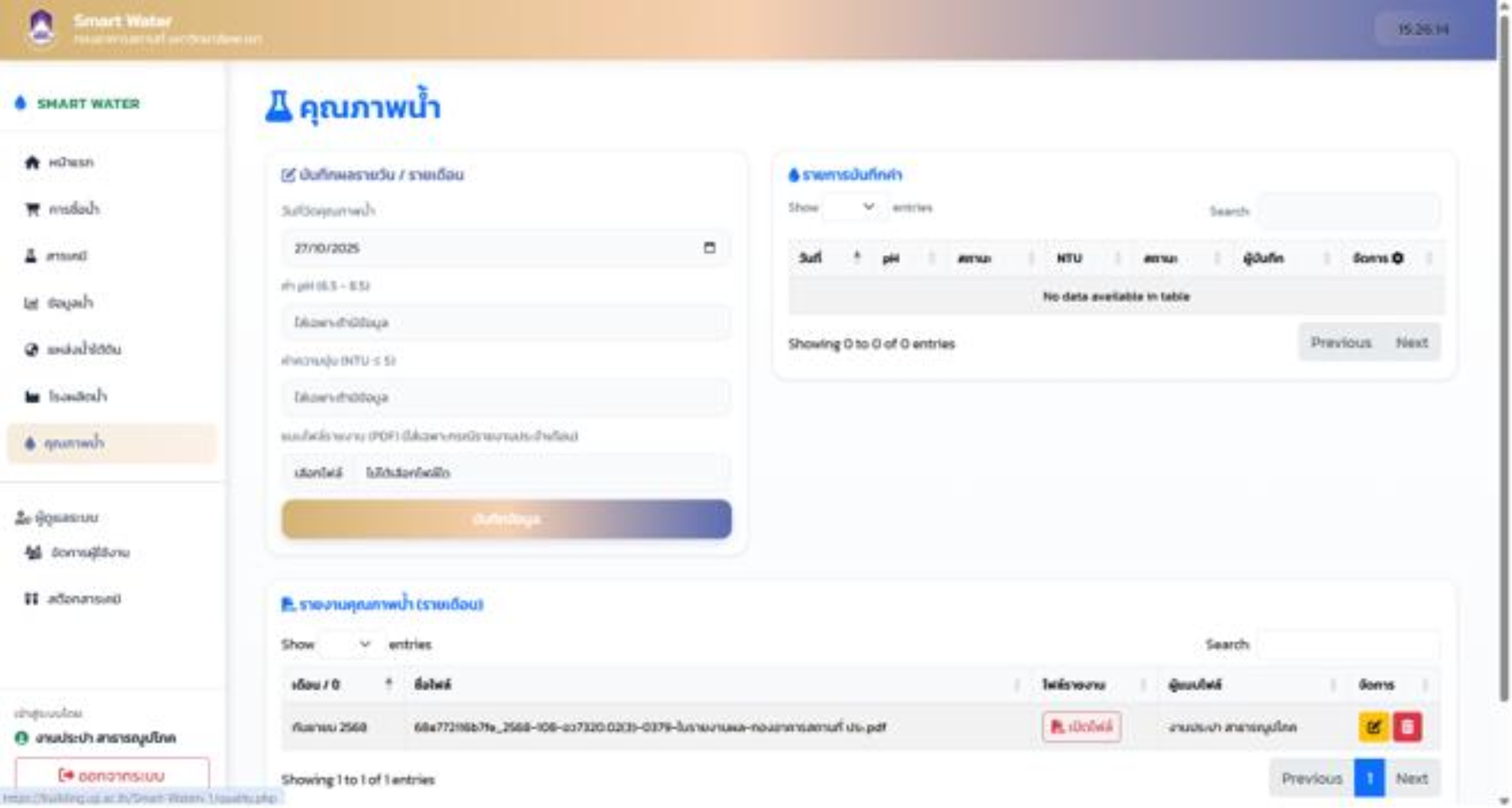
Transportation through the Utilization of ICT
Planning: Assess the transportation needs of the campus community and plan efficient shuttle routes using transport planning software to analyze campus traffic, schedules, and optimal routes.Implementation: Deploy shuttle services according to planned routes and launch a mobile app for real-time shuttle information, using GPS tracking and a shuttle scheduling app to provide real-time updates to users.
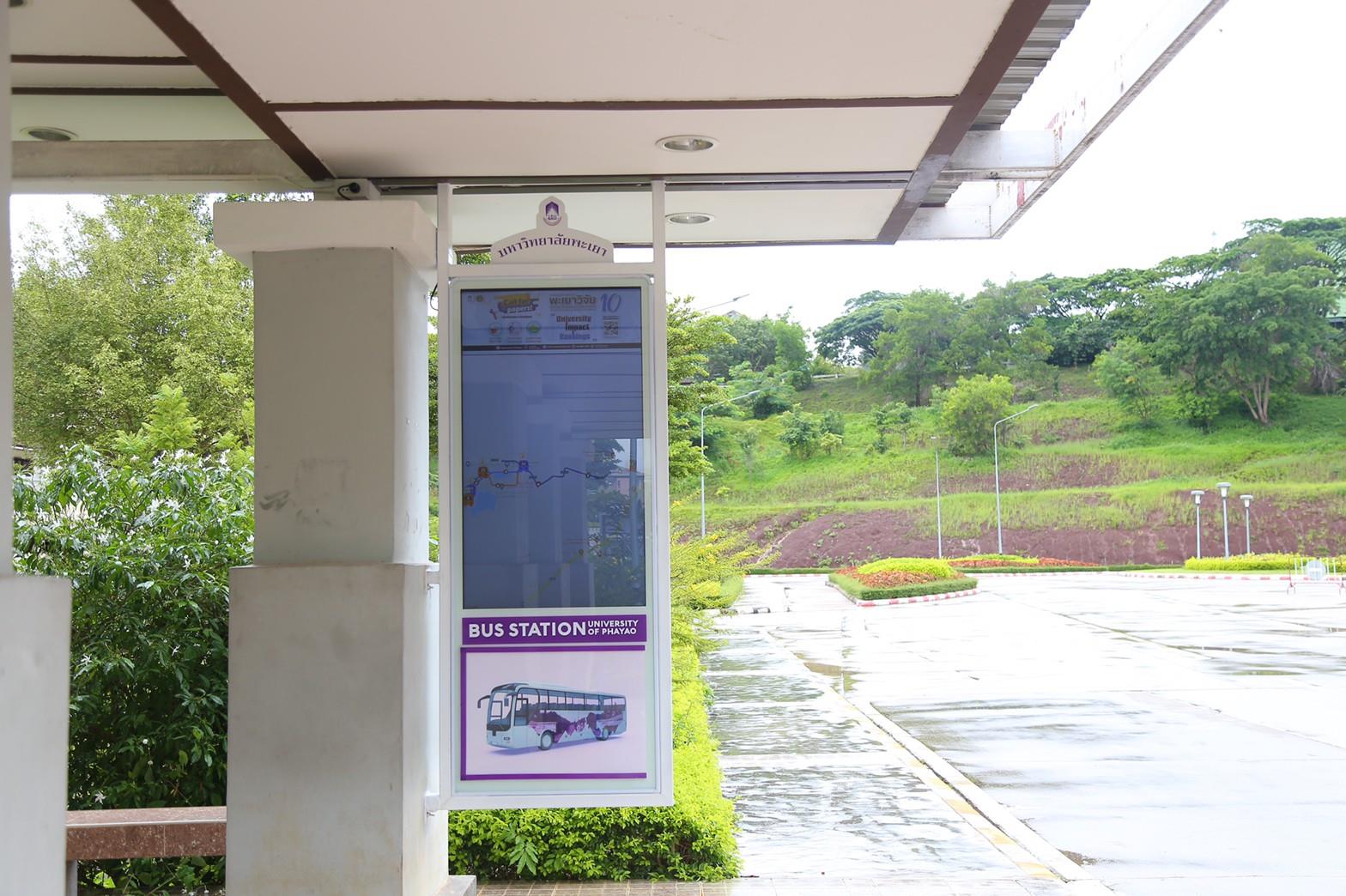
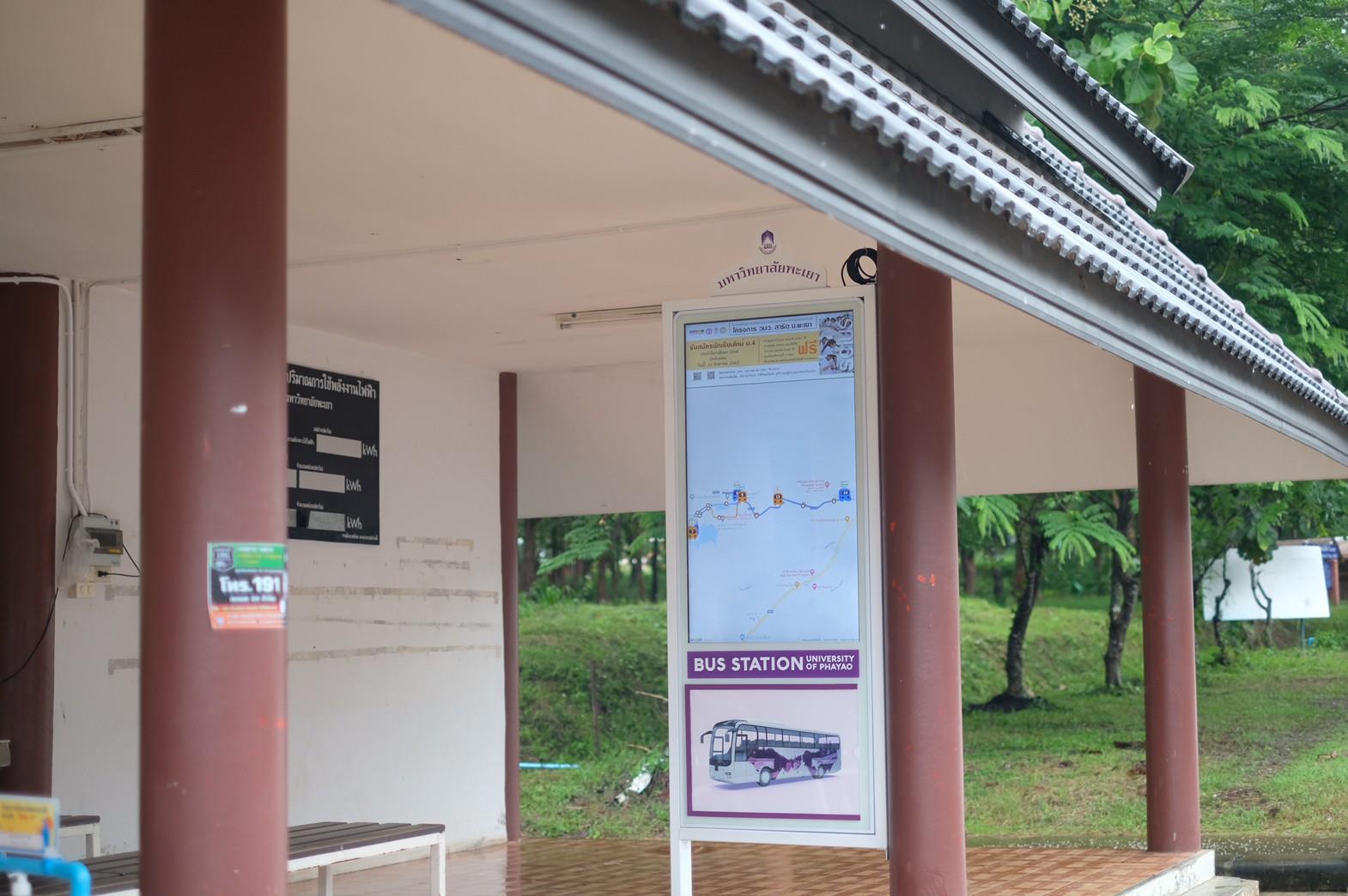
University of Phayao has installed a real-time bus tracker at university bus stops, featuring a 55-inch screen for facilitating transportation. This screen is installed at all bus stops and shows the real-time bus position on a map, updating every second, with different colors representing bus routes, duty numbers, and passenger counts. Users can access this system via http://bustransit.up.ac.th/ or the Smart UP application on Android and iOS, developed by the Center for Information Technology and Communication Services.
University Governance through the Utilization of ICT
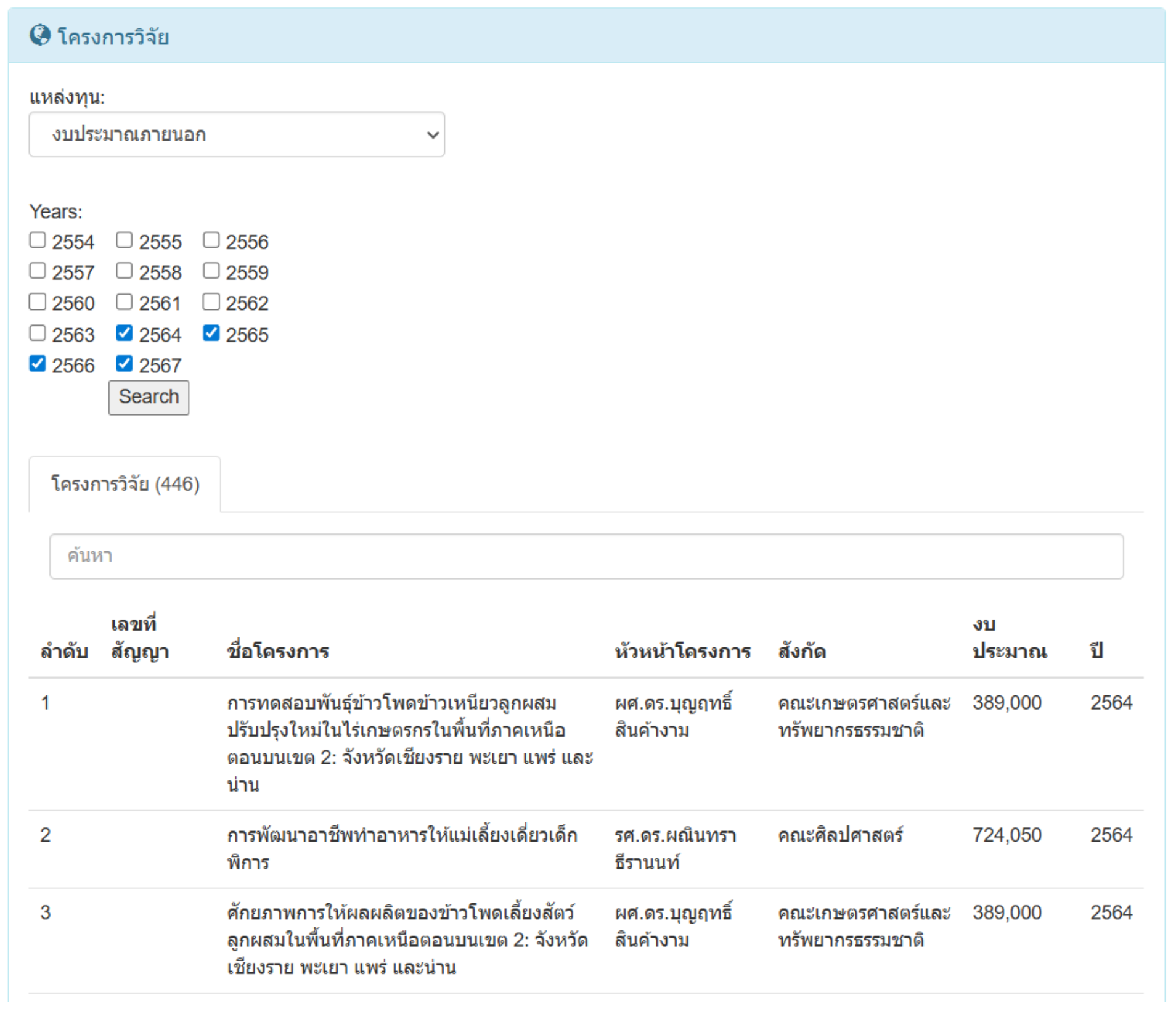
Planning: Identify key areas of sustainability research to focus on and secure funding, using research management software to organize and plan research activities, manage funding proposals, and ensure alignment with sustainability goals. Three core research programs are supported:- Program 1: Knowledge Creation through Science, Research, and Innovation for Academic Excellence. (List of researchers: http://wwmms.up.ac.th/research/files/FF67-path2.pdf)
- Program 2: Developing Science, Research, and Innovation for Area-Based Development with Knowledge for Internationalization (Frontier Area-Based Research). (List of researchers: http://wwmms.up.ac.th/research/files/FF67-path2.pdf)
- Program 3: Developing Science, Research, and Innovation for Sustainable Community, Social, and Economic Development. (List of researchers: http://wwmms.up.ac.th/research/files/FF67-path2.pdf)
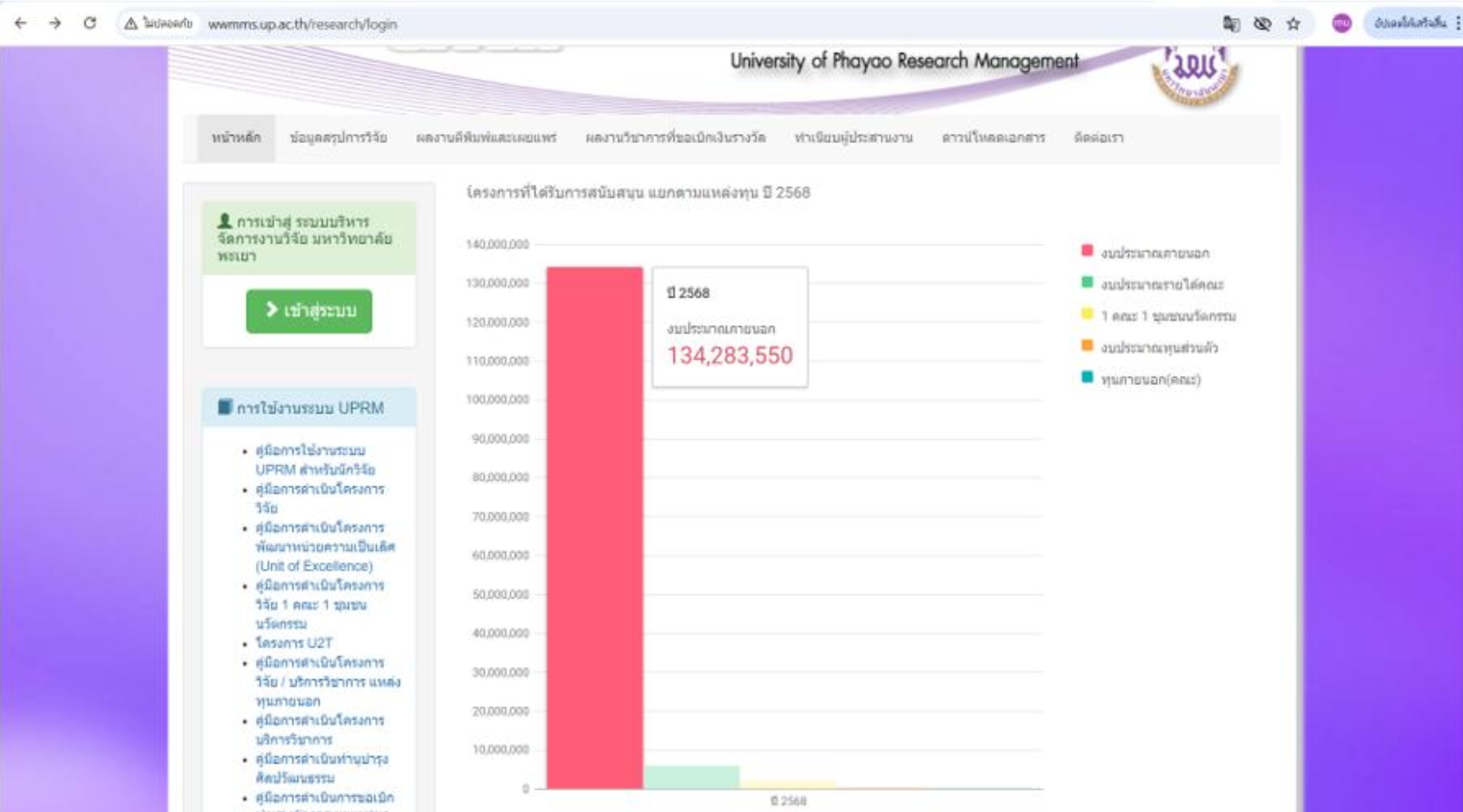
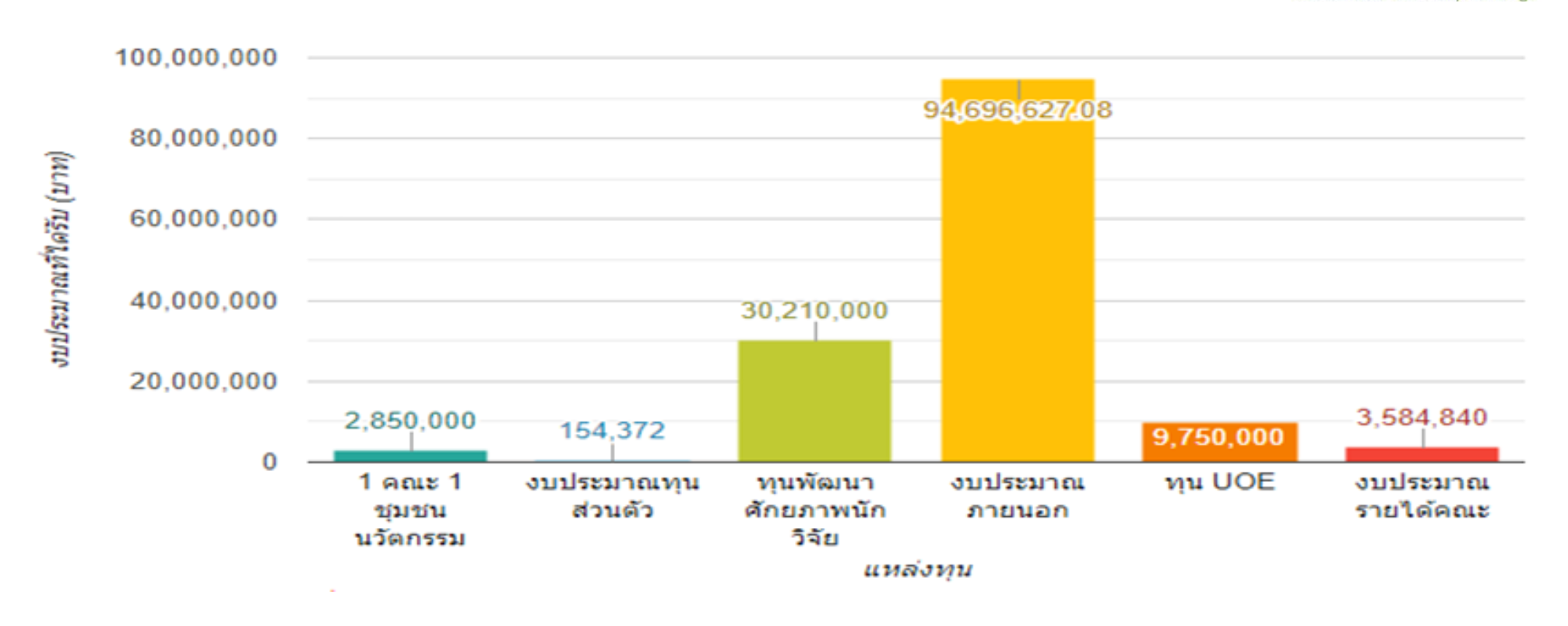
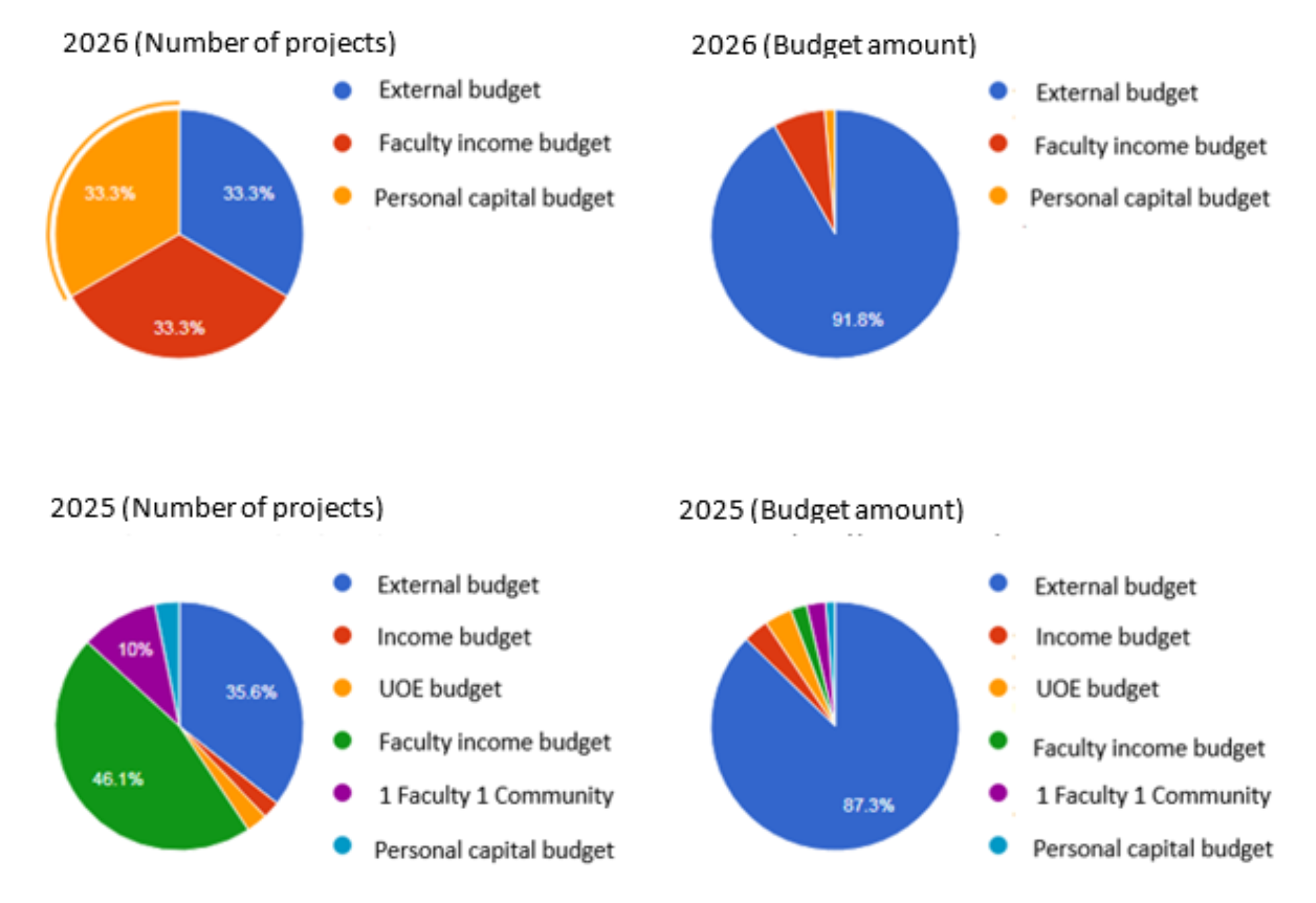
Grant Management System — funding sources by number of projects and budget amount (2025–2026)
Monitoring: Track the progress of sustainability research and the number of scholarly publications produced using research tracking tools.Link: http://wwmms.up.ac.th/research/uprm/graphprotfolio (Monitoring Management System)
Link: http://wwmms.up.ac.th/research/uprm/researchdata
https://graduate-register.up.ac.th/home
https://reg.up.ac.th/app/rpt/rpt_std_present_fac_group/preview/all