Target: 50% of water recycle usage on campus by 2024.
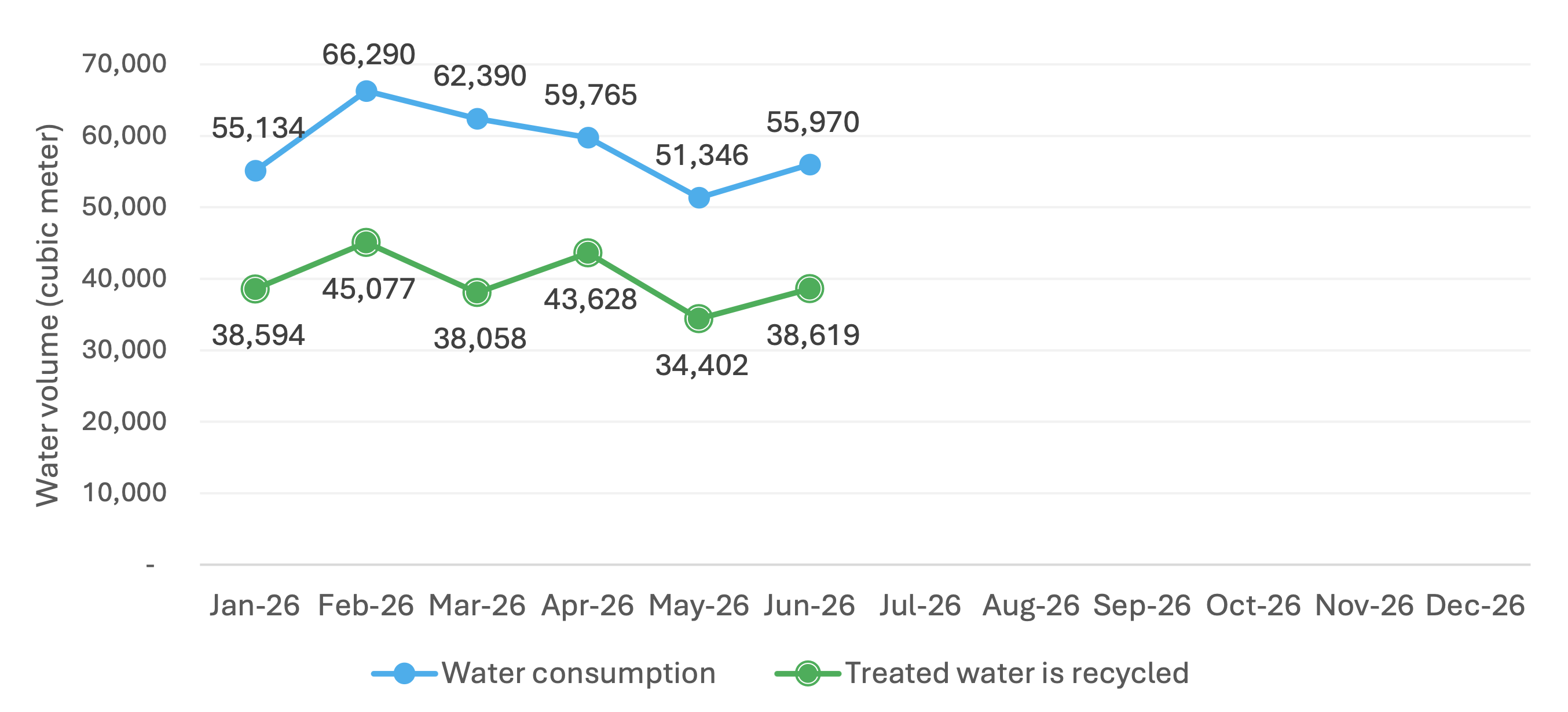
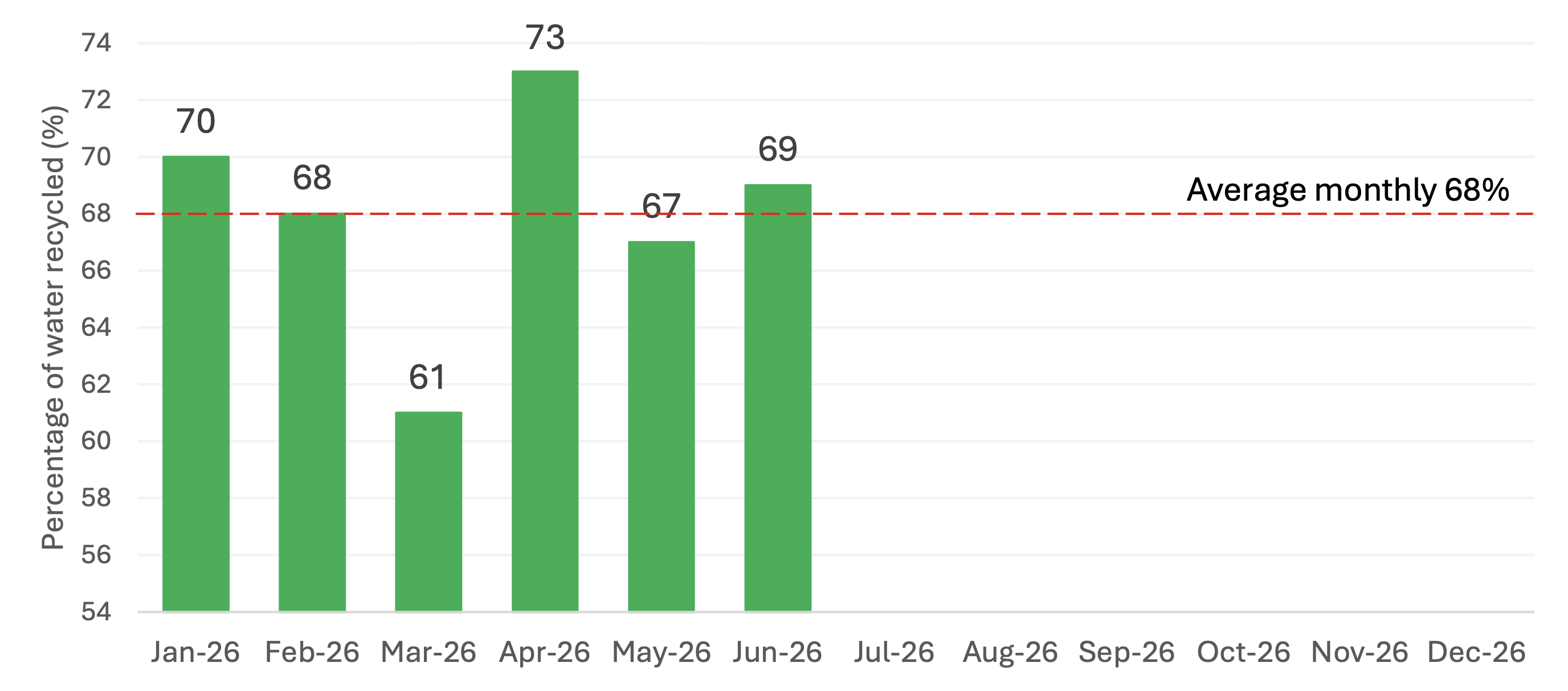
Result: In 2026, 68% of water recycle usage on campus.
University of Phayao's water-recycling program is now nearly 90 percent installed, evolving from letting precious water run down the drain to recycling water across the campus. In 2018, only a wastewater treatment plant was operated to treat wastewater before discharging it back to the community, and most activities such as gardening, road cleaning, and toilet flushing relied solely on tap water. By 2020, University of Phayao became more serious about water conservation and sustainable water management, aiming to minimize the effects of drought and water shortages while also making water available for recreational purposes. A green building with a water recycling system was operated as a result, producing a substantial reduction in water consumption and water bills. By 2030, full implementation of the water recycling program at University of Phayao is expected to reach 100%.
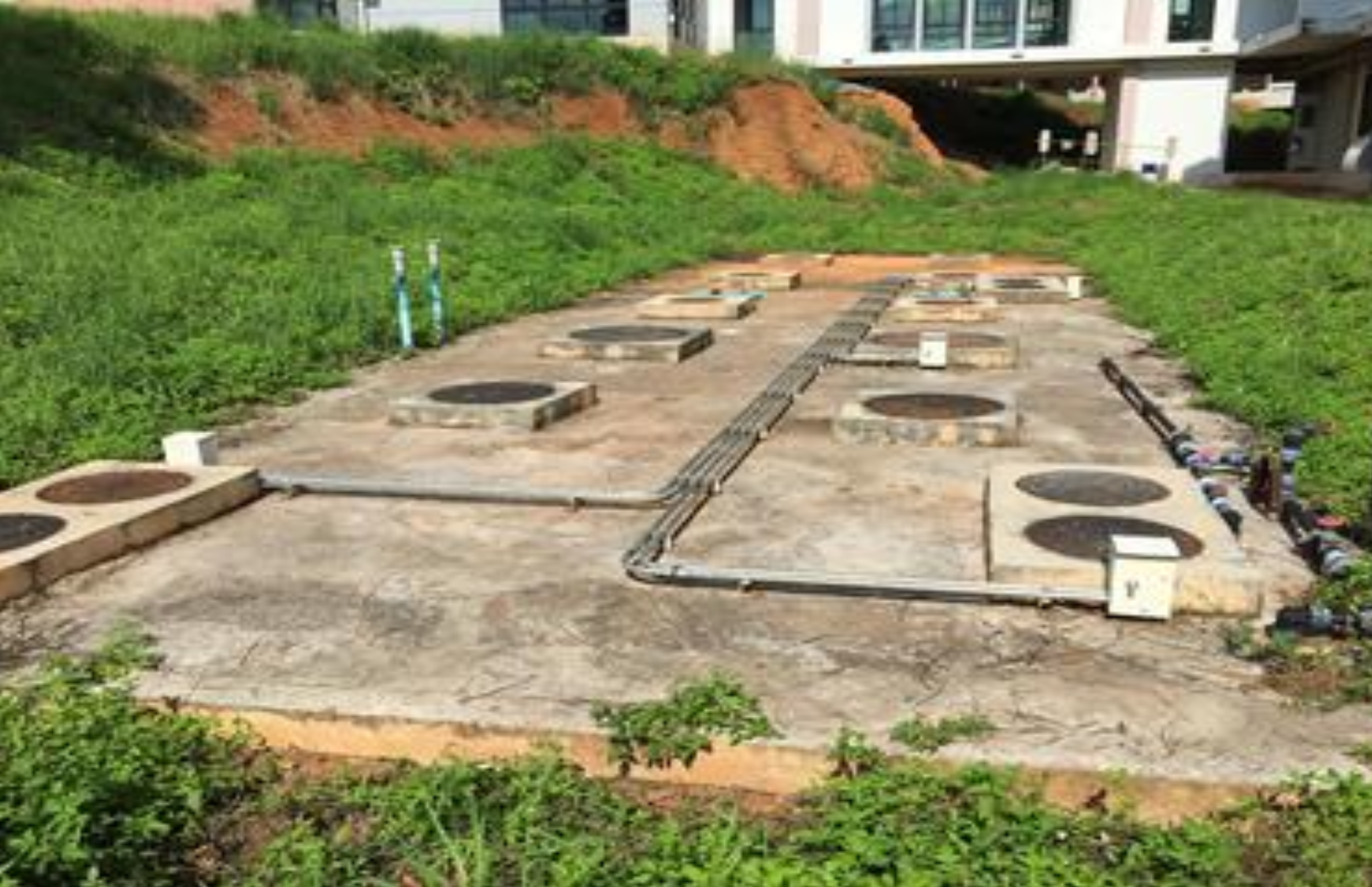
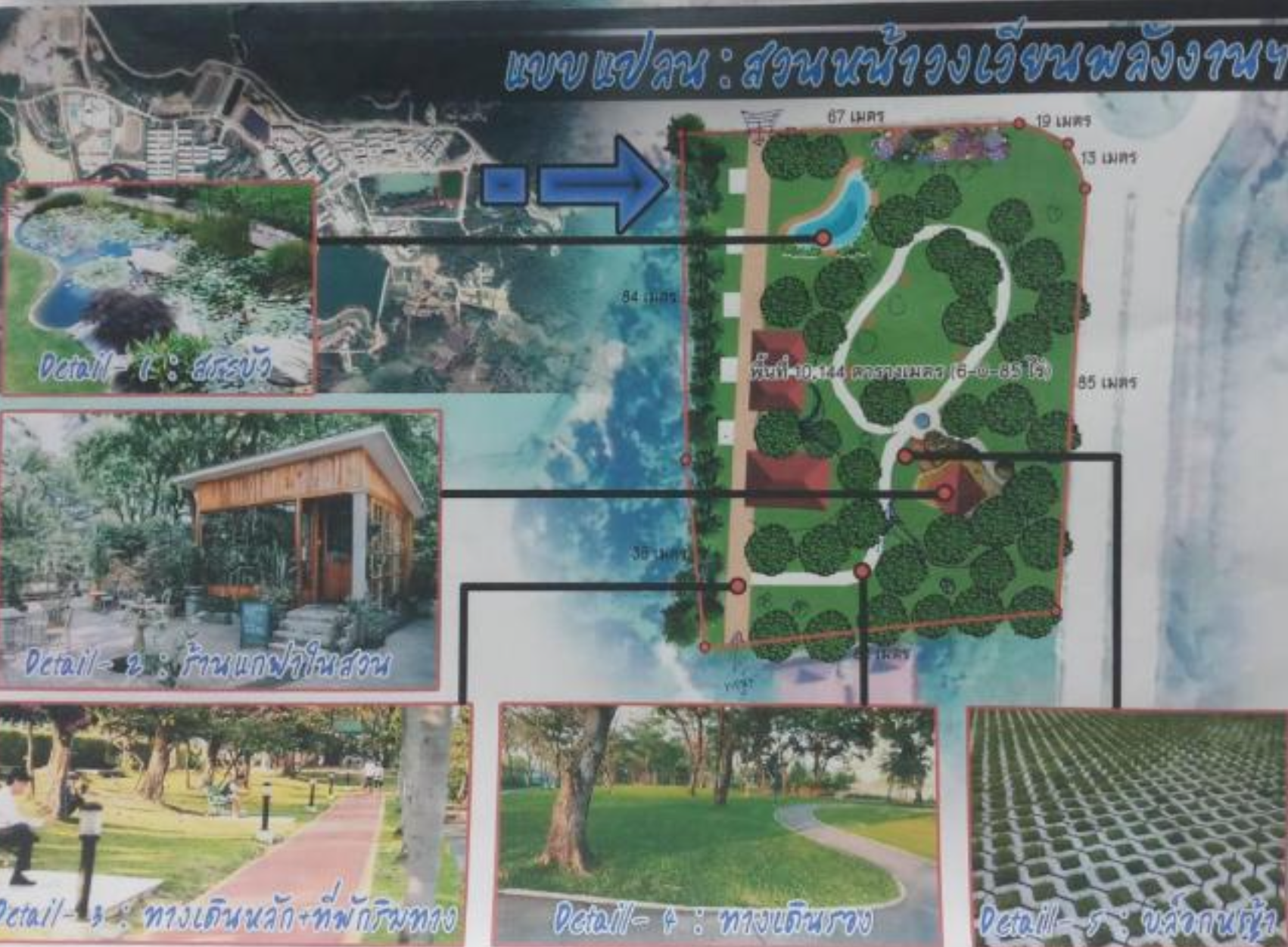
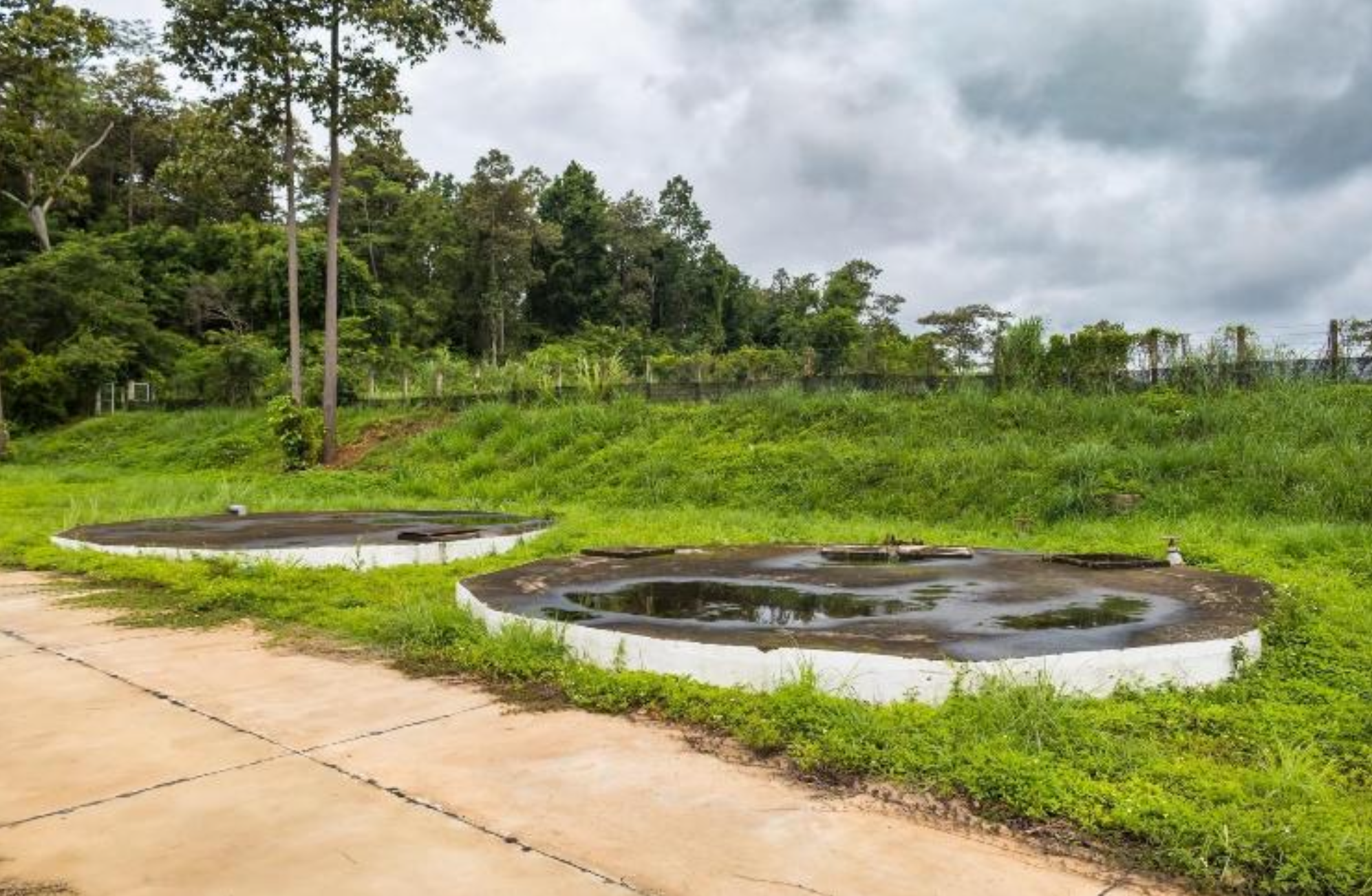
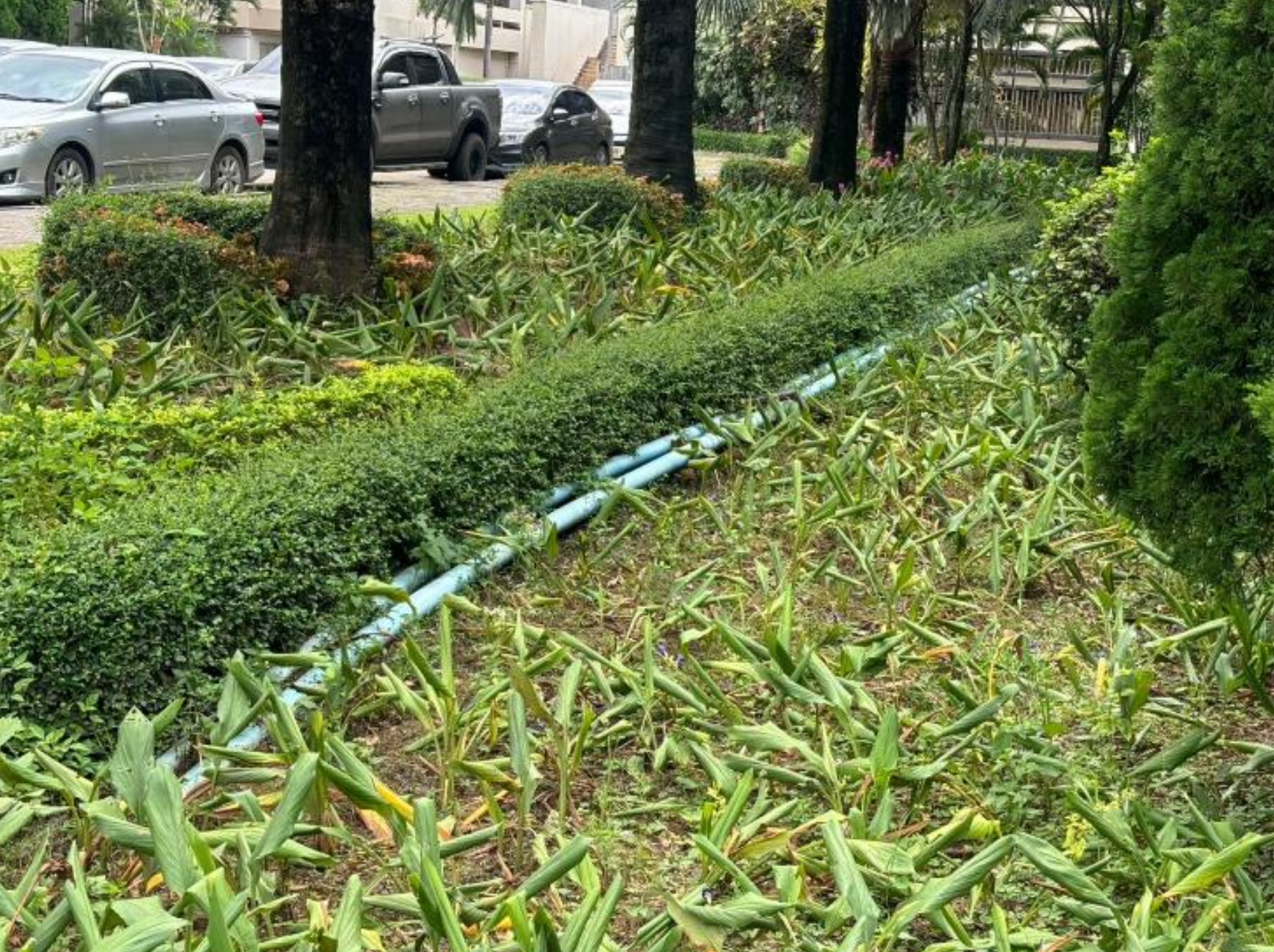
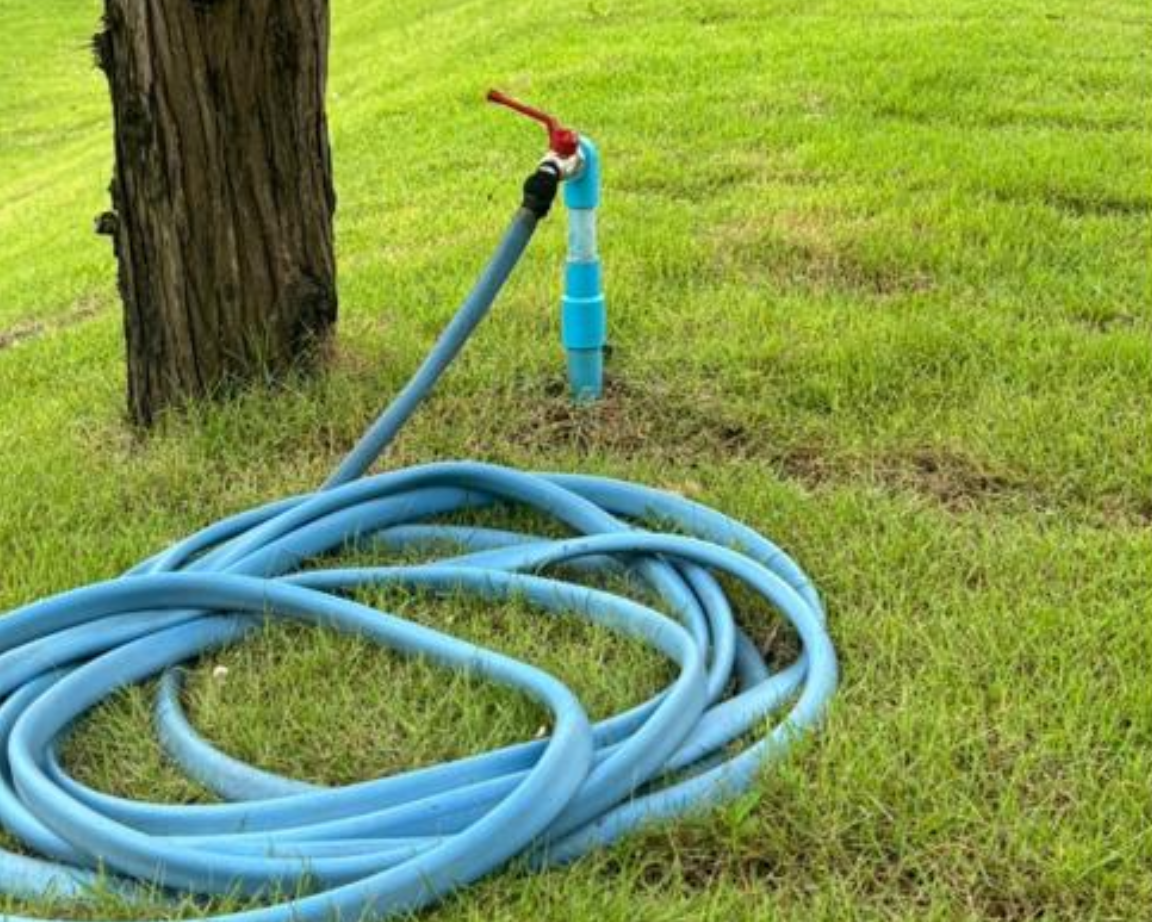
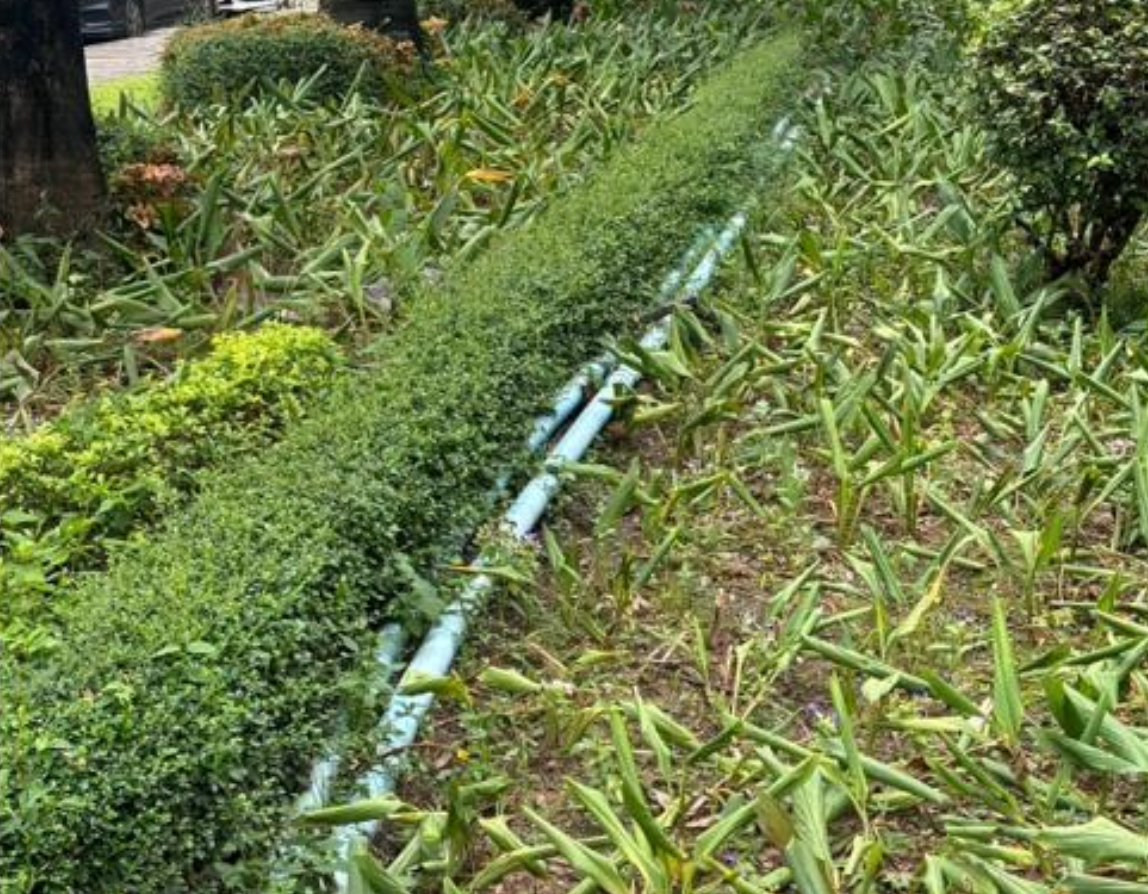 A water meter is installed to measure the amount of rainwater that has been used. The recycled water is also used for the garden sprinkler system, toilet flushing, cooling systems, aquaponics, and fish ponds, and the university uses treated water to water its plants.
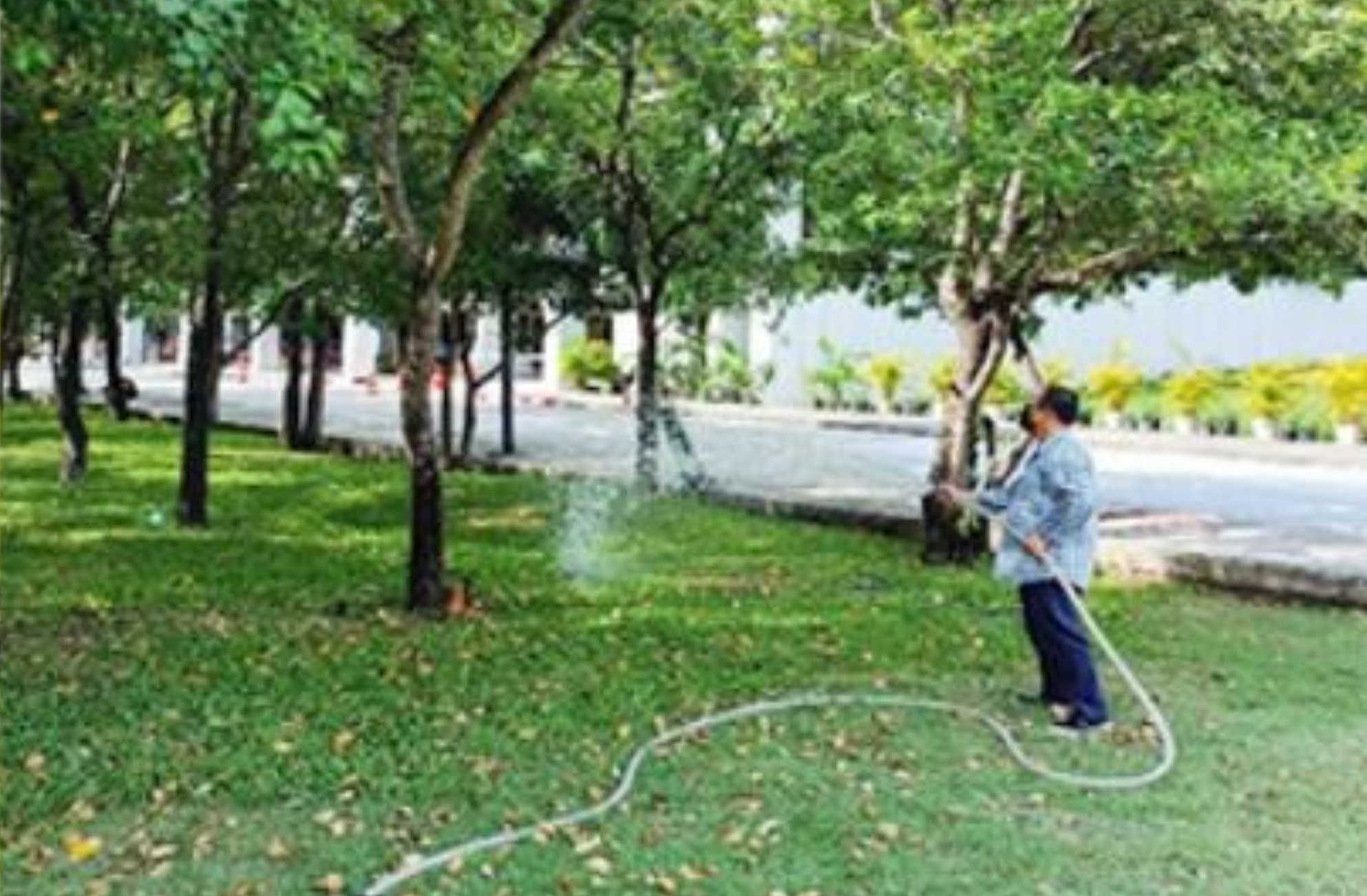 University of Phayao has a policy to use water efficiently by treating water from various sources for reuse in multiple forms, such as watering plants and washing building floors. In 2026, the university will be able to reuse more than 68 percent of all treated water from tap water.
University of Phayao can manage water by reusing 68% of wastewater, reusing it for agriculture and gardening.
At University of Phayao, grey water and black water are completely separated during the wastewater treatment process. Wastewater from baths, sinks, washing machines, and other kitchen appliances is defined as grey water, while wastewater from toilets, which is likely to contain pathogens, is defined as black water. For the campus water recycling program, grey water is taken into recycling schemes, and the recycled water is used for non-portable (not for drinking) purposes such as gardening, toilet flushing, floor cleaning, bike cleaning, and construction activities such as concrete mixing. By recycling water, the campus can reduce the volume of water used in these activities by up to 190,500 m³ per year.
 Other activities at University of Phayao promote and encourage university personnel to reuse water in their daily lives.
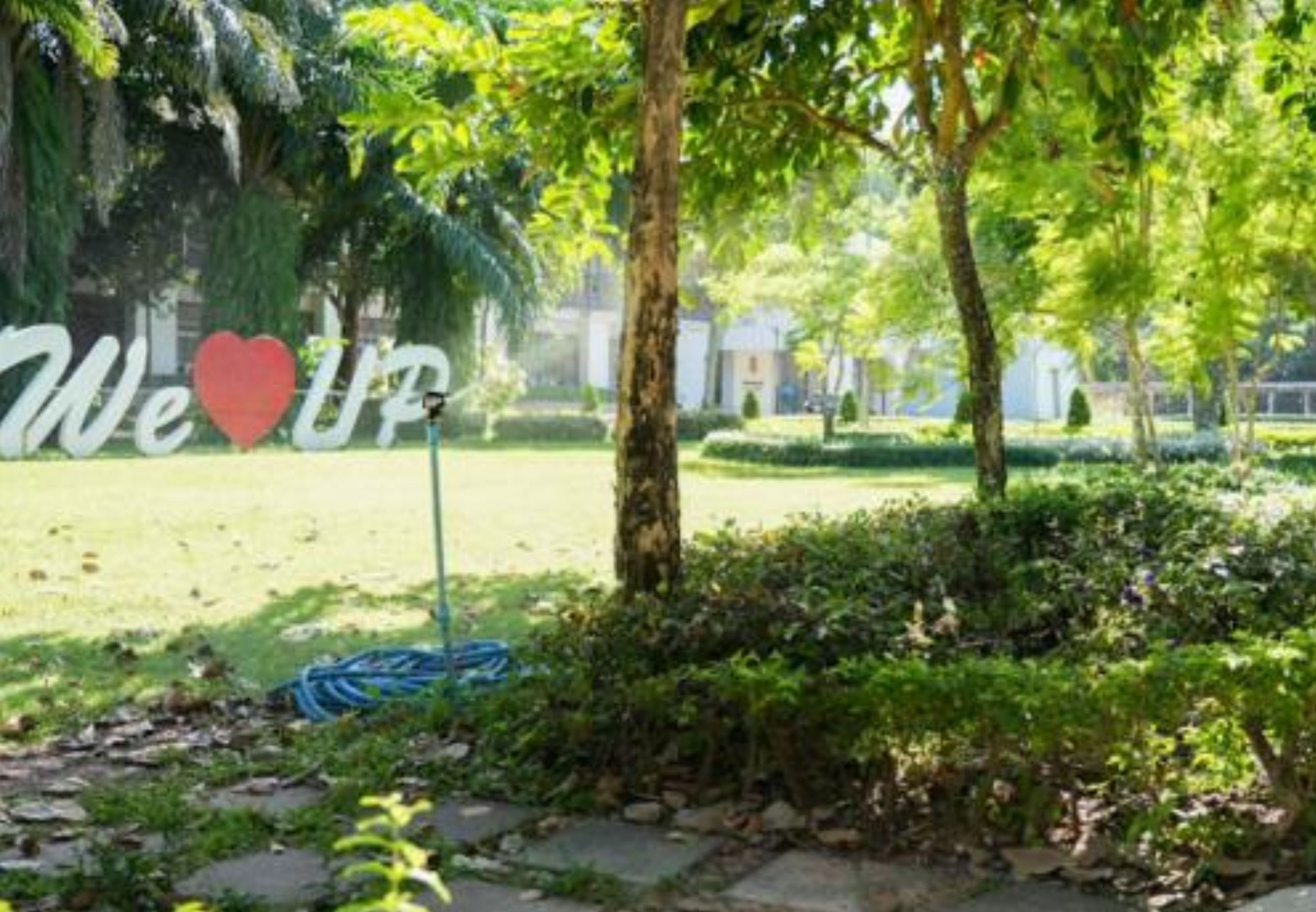
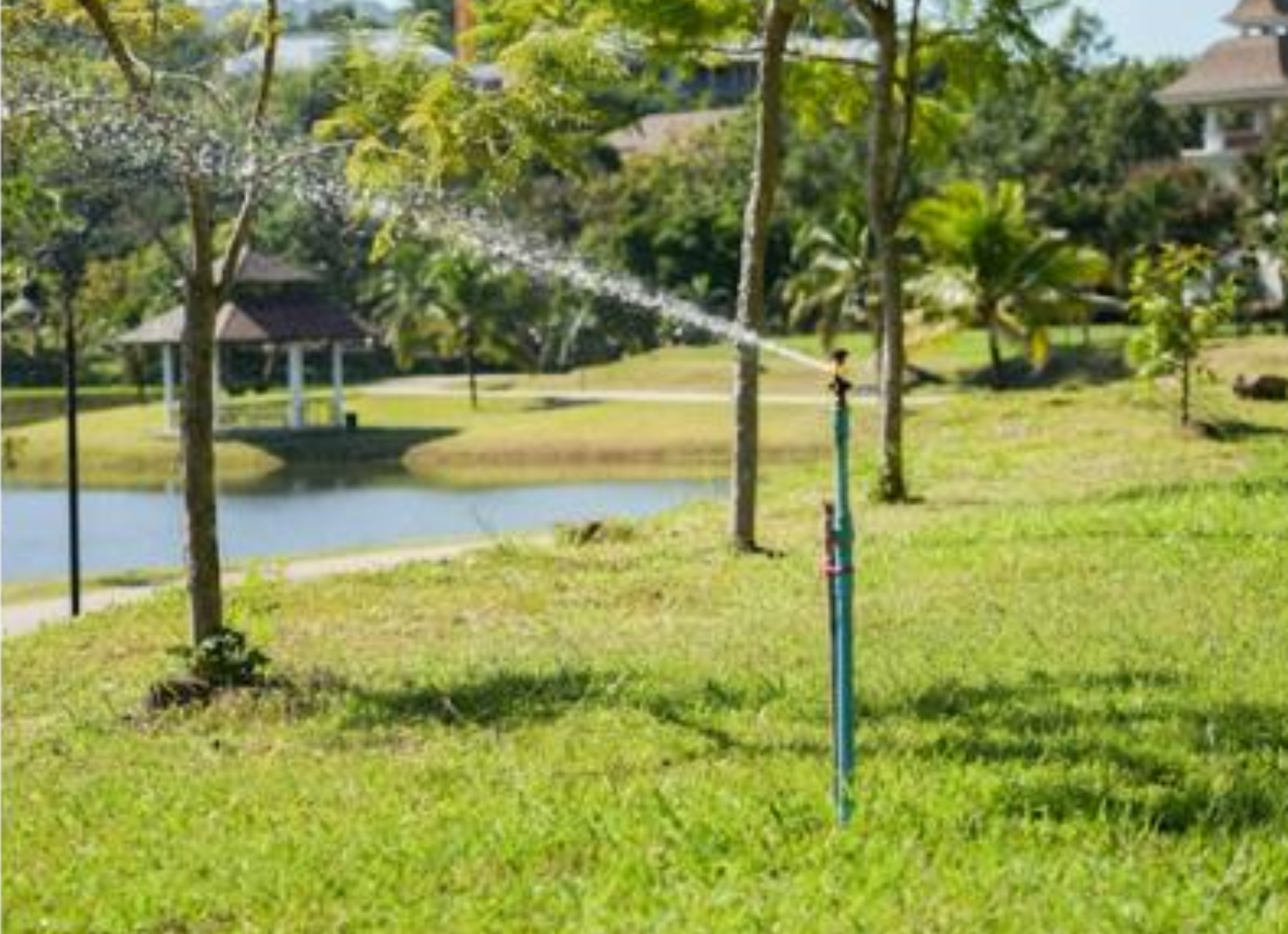
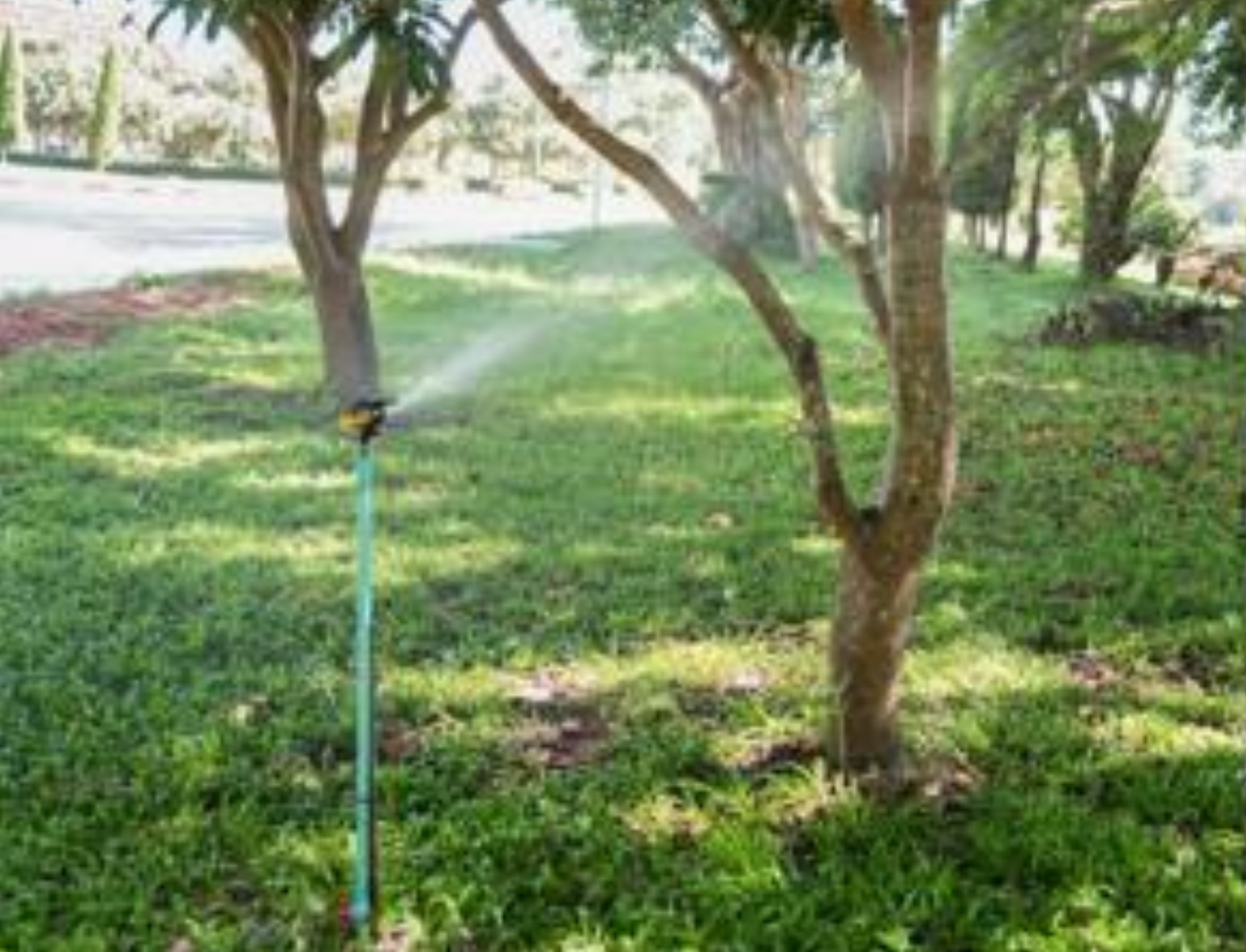
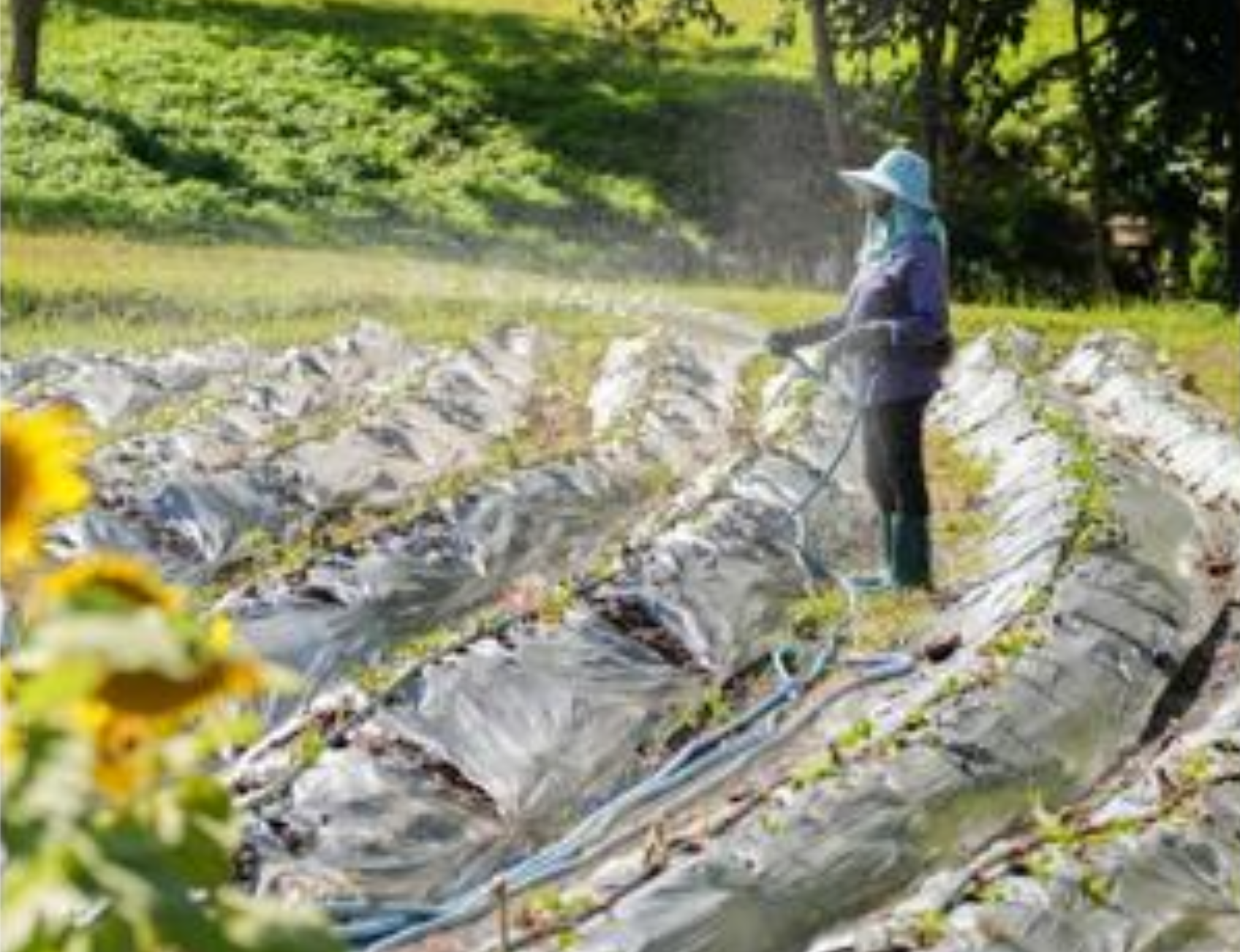
Use treated water to water plants in the university gardens instead of using tap water.
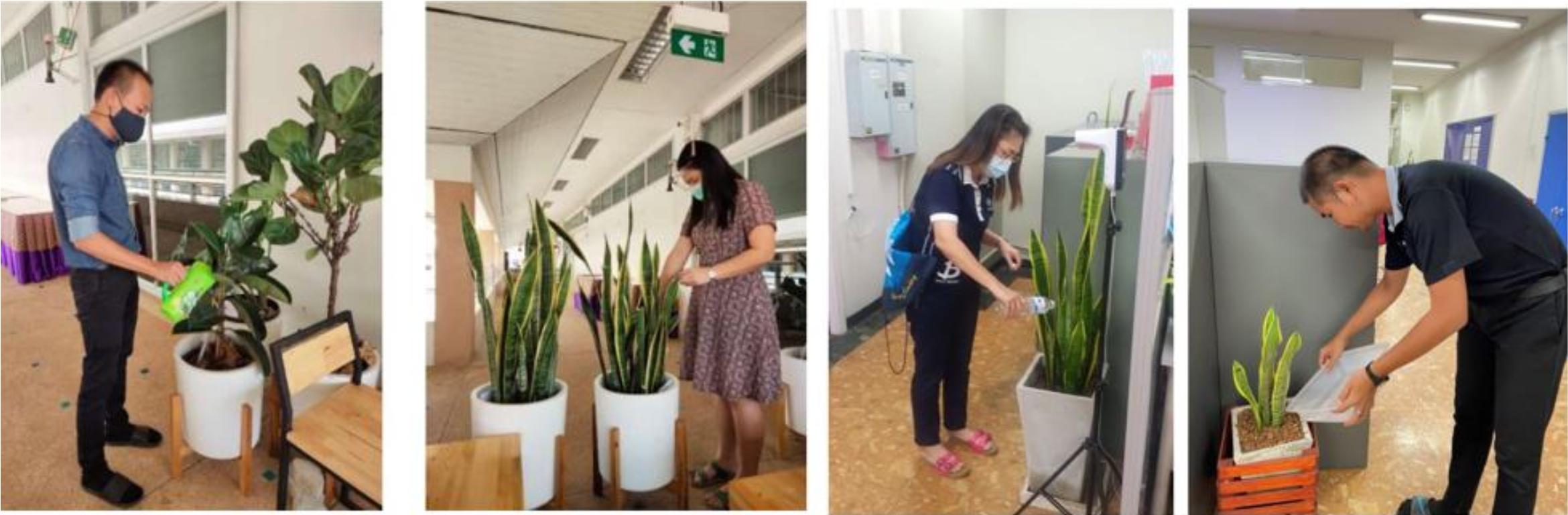
 Use water from sources in buildings to water plants instead of using tap water.
Goal: 45% of rainwater conservation for usage on campus by 2030.
Current Status: In 2026, 40.78% of rainwater conservation for usage on campus.
 University of Phayao undertook a contract to repair and improve the wastewater treatment system, and also provides maintenance services for the wastewater treatment system in buildings every month to ensure the served areas are effectively drained, including provision for the emptying of sewers through sewage treatment works or, where appropriate, through discharges direct to watercourses.
All wastewater is collected at the central wastewater treatment system for treatment according to the procedure, improving water quality and checking it before releasing it into the water source. Treated water is then transferred through treated-water pipes for use inside University of Phayao.
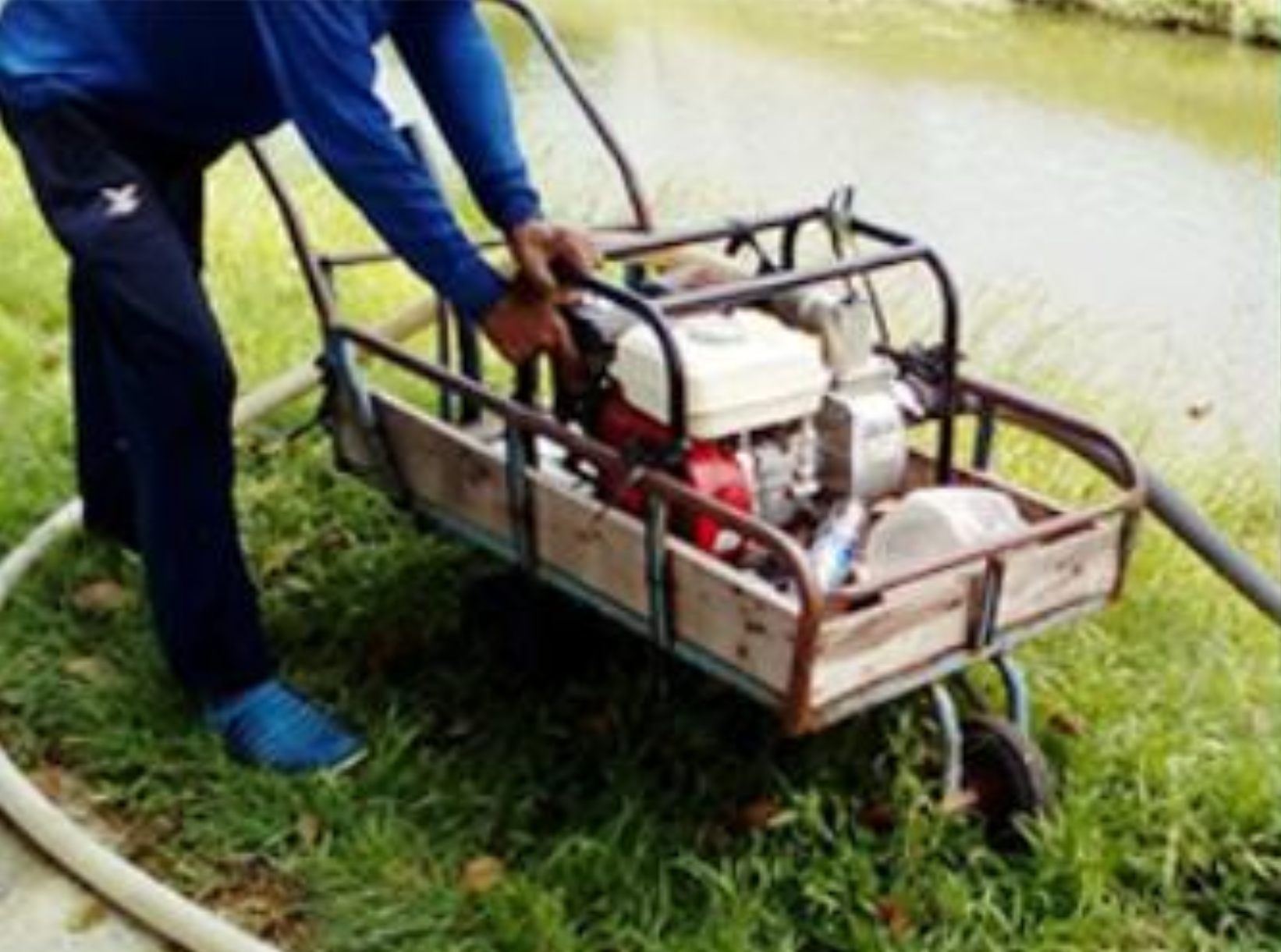
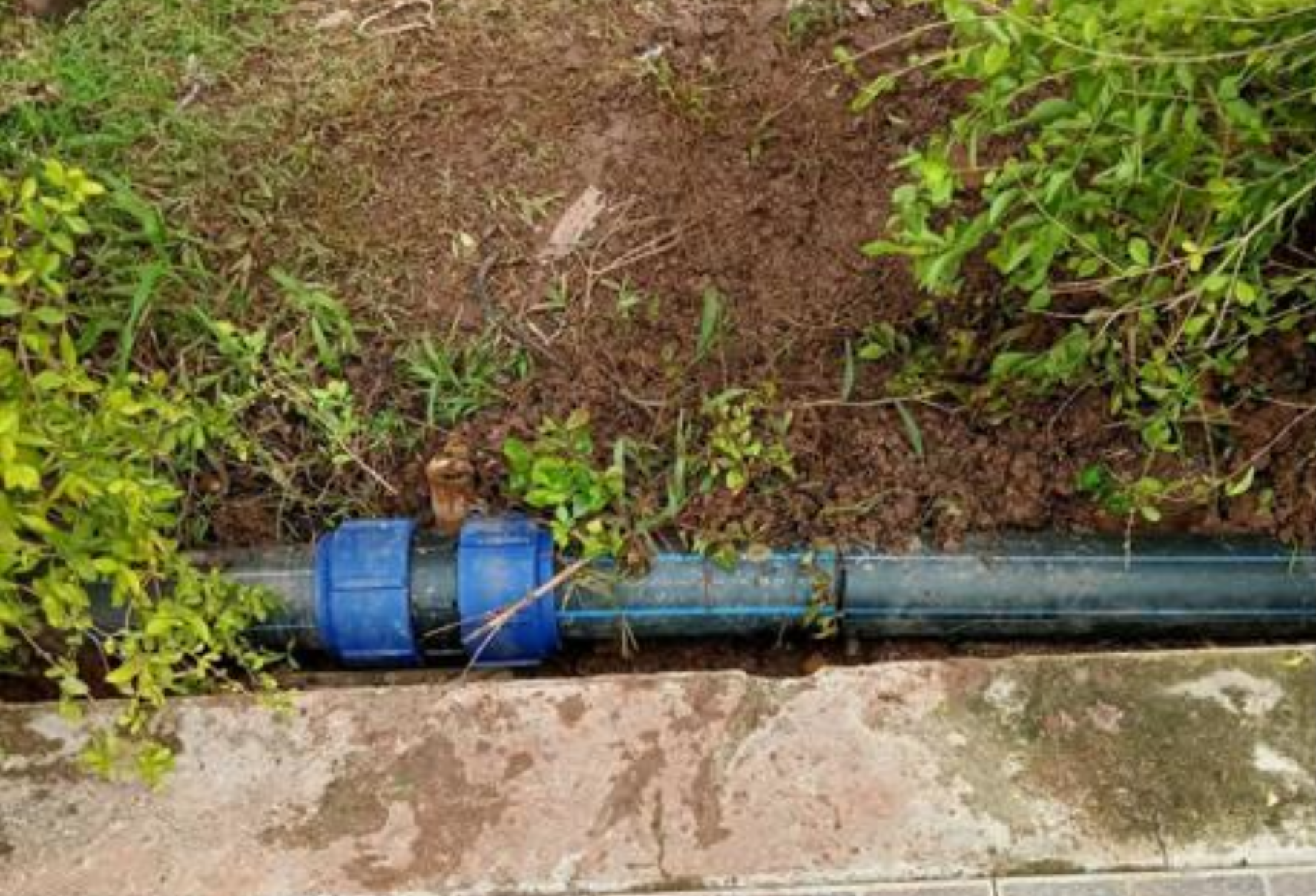
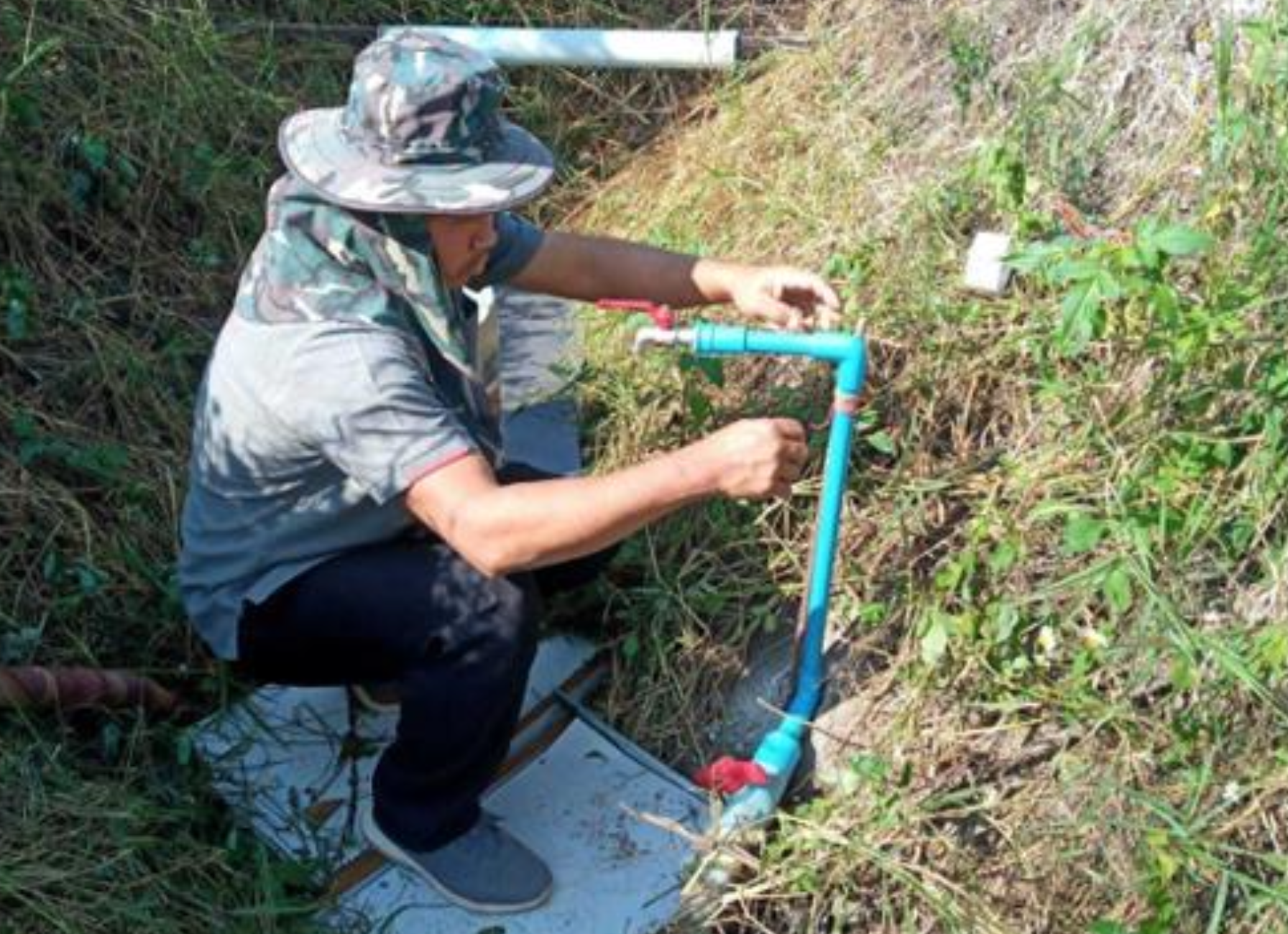
University of Phayao has established canals to support agricultural activities by pumping water from canals distributed throughout the campus. This water is used for irrigation and for managing the watering systems in various gardens. Utilizing these water resources enhances agricultural efficiency and promotes sustainable water use within the university, with the water treated effectively to support sustainable resource management and reduce the use of new water in agricultural processes.
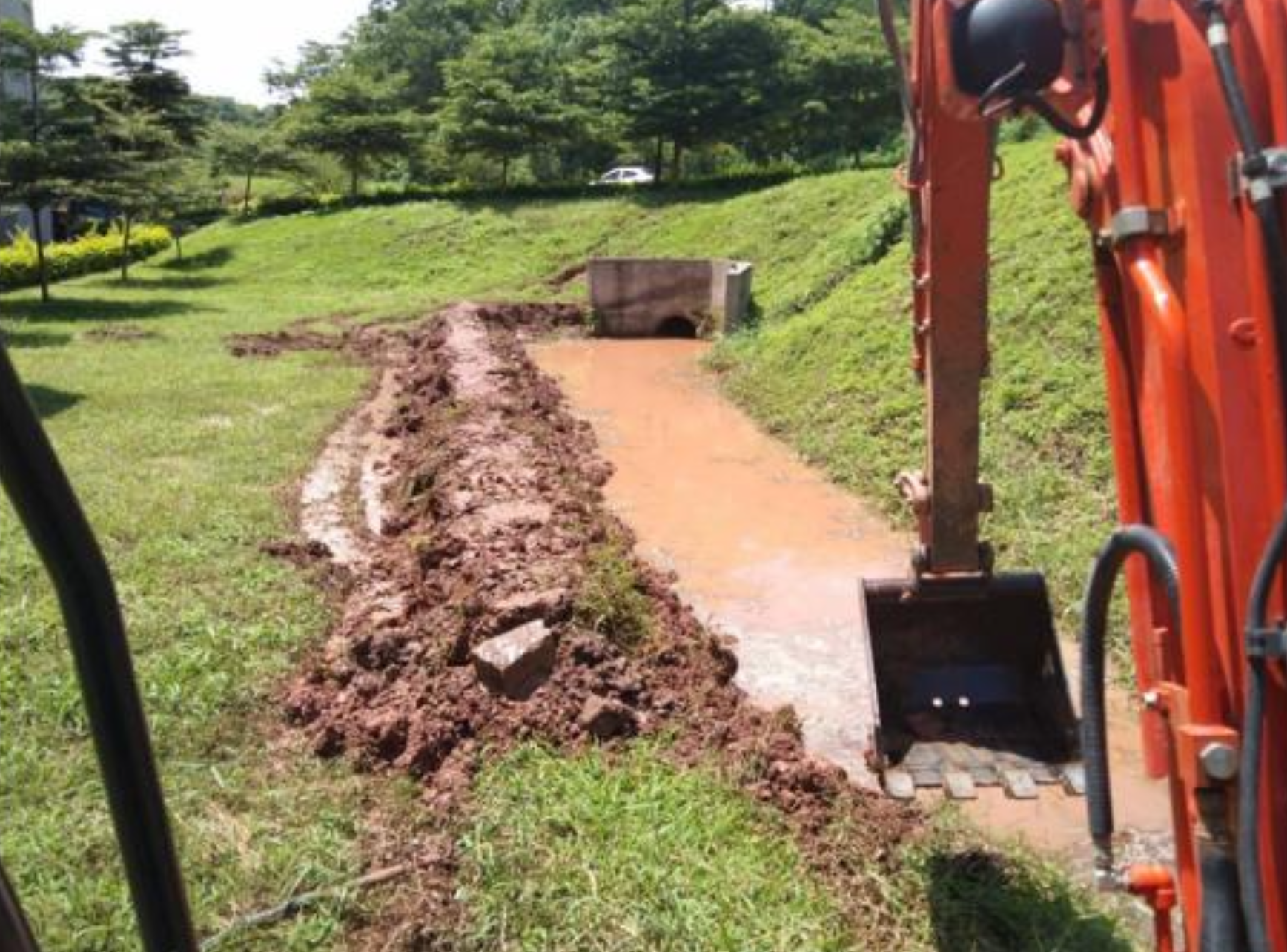
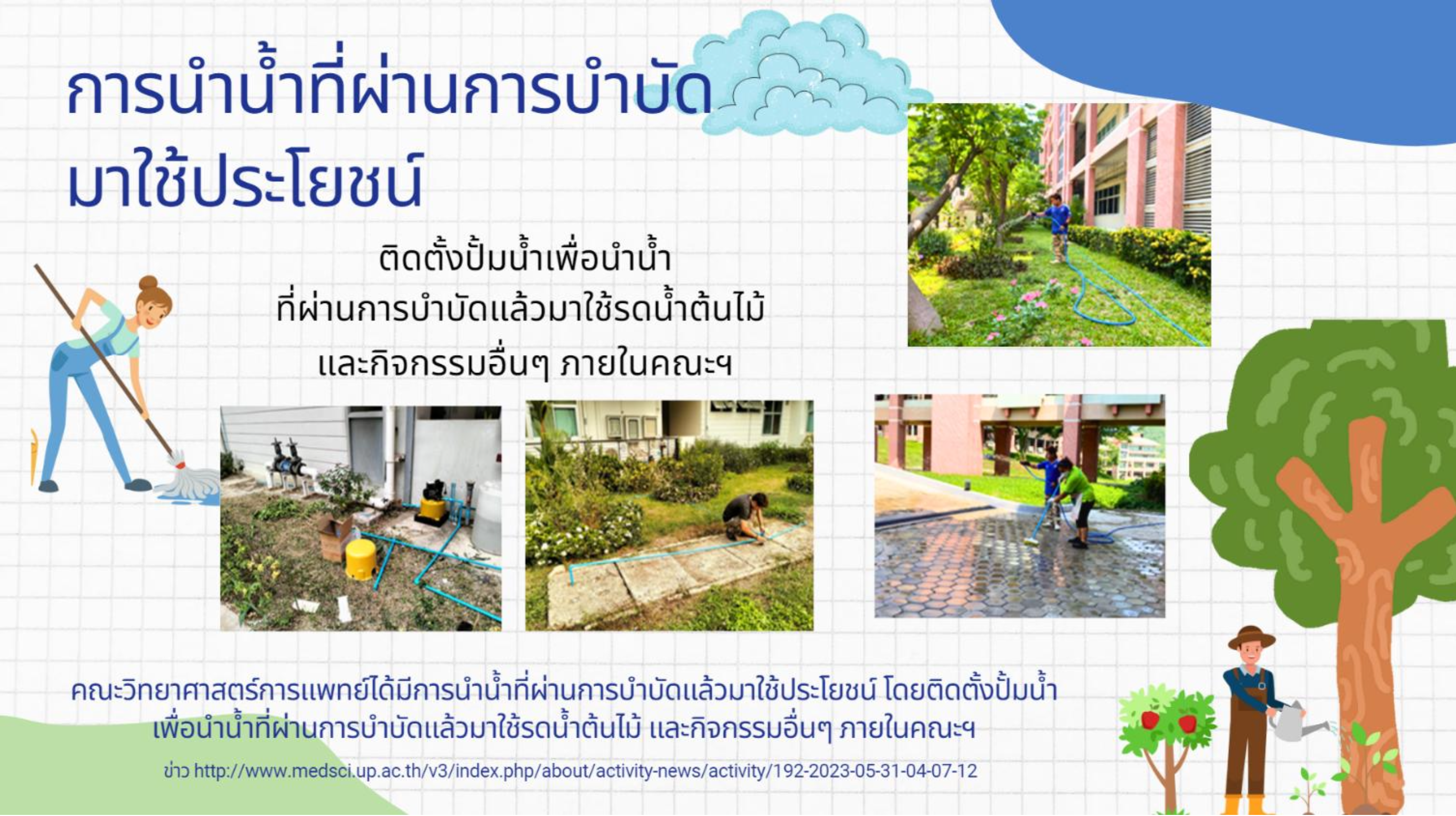
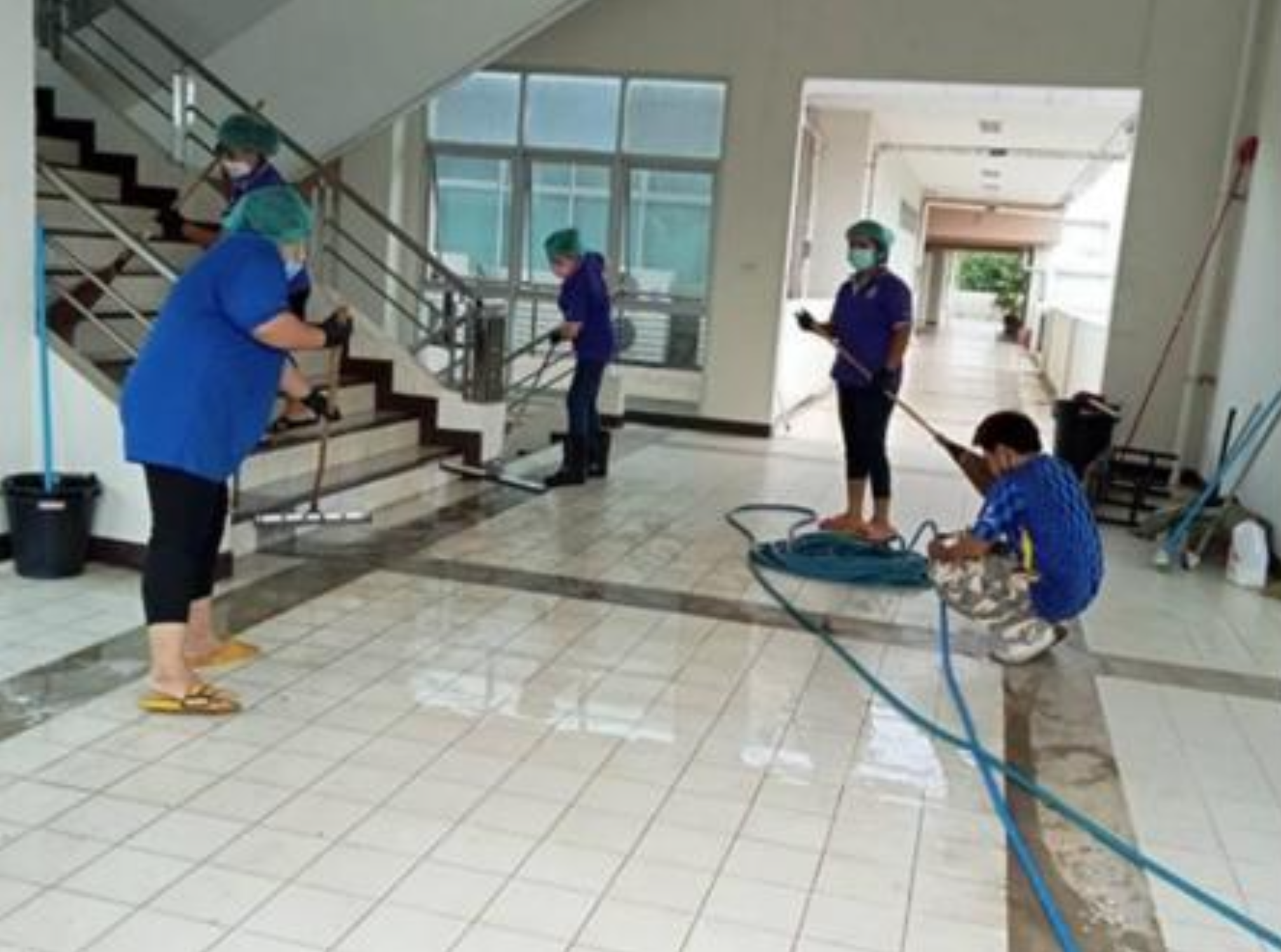
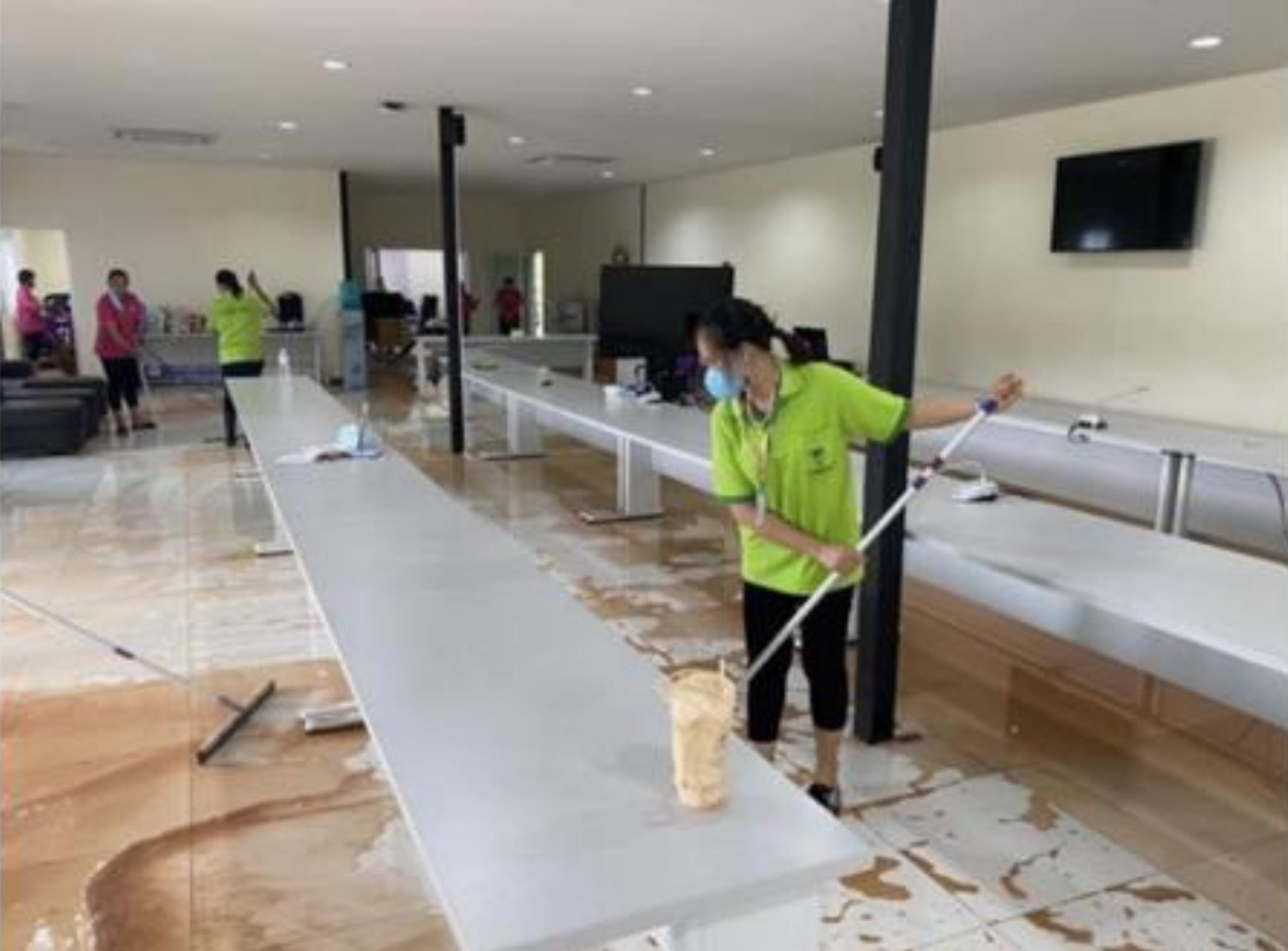
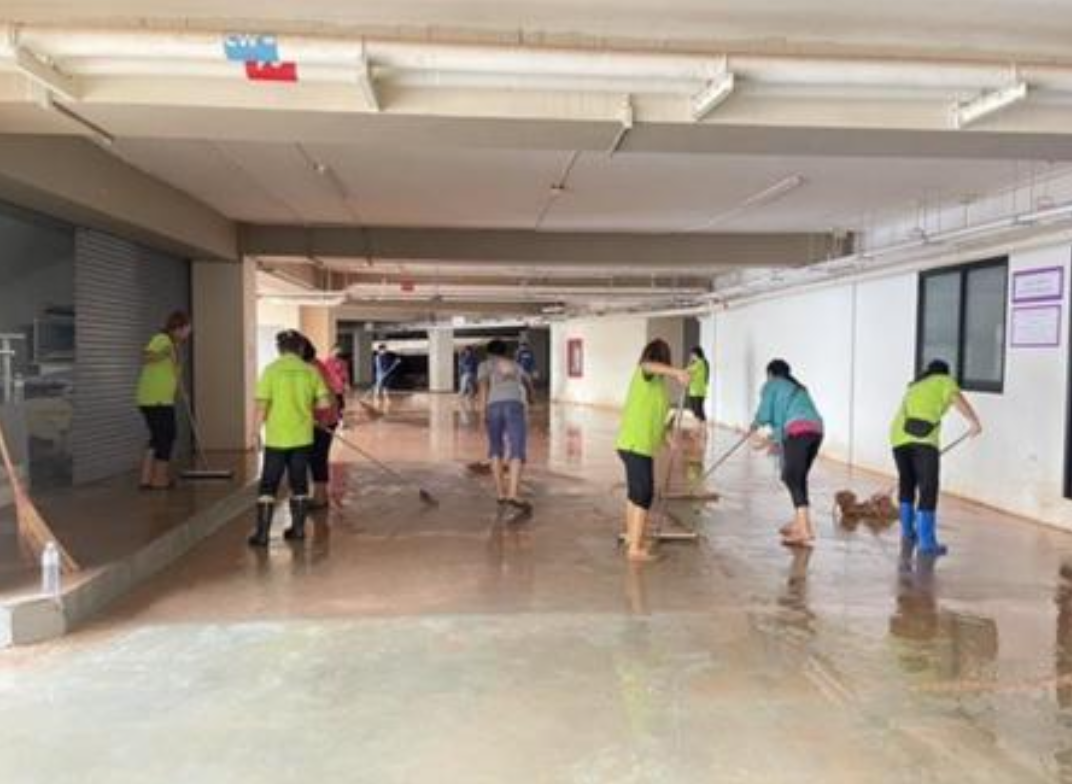
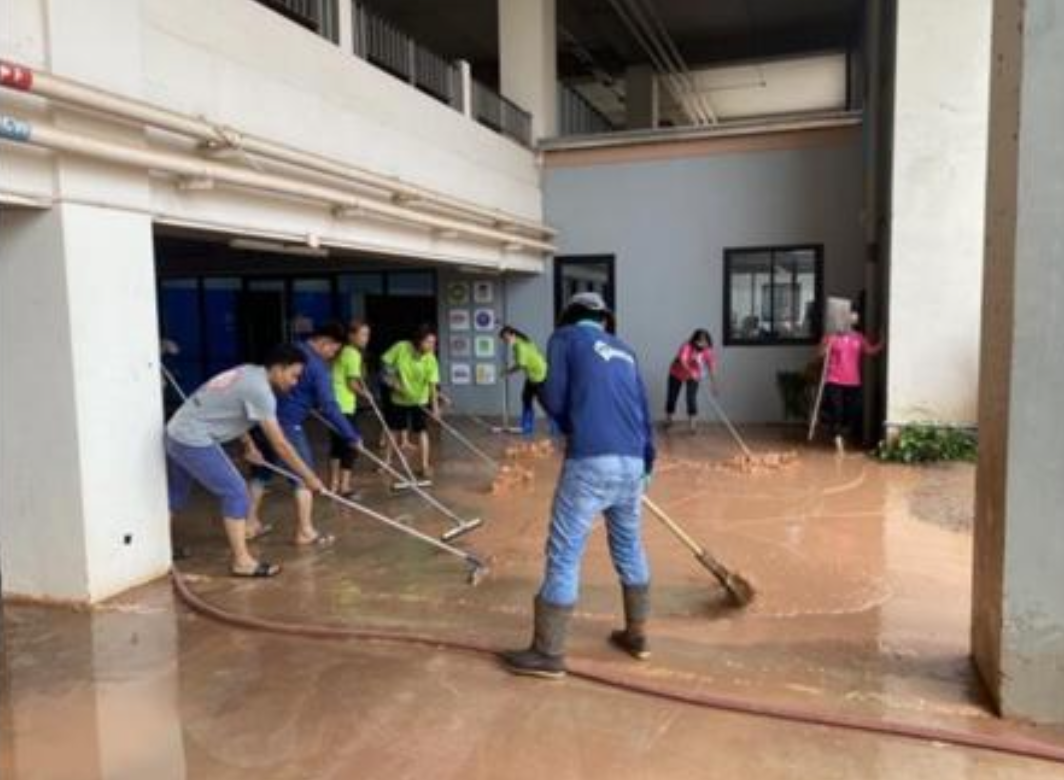
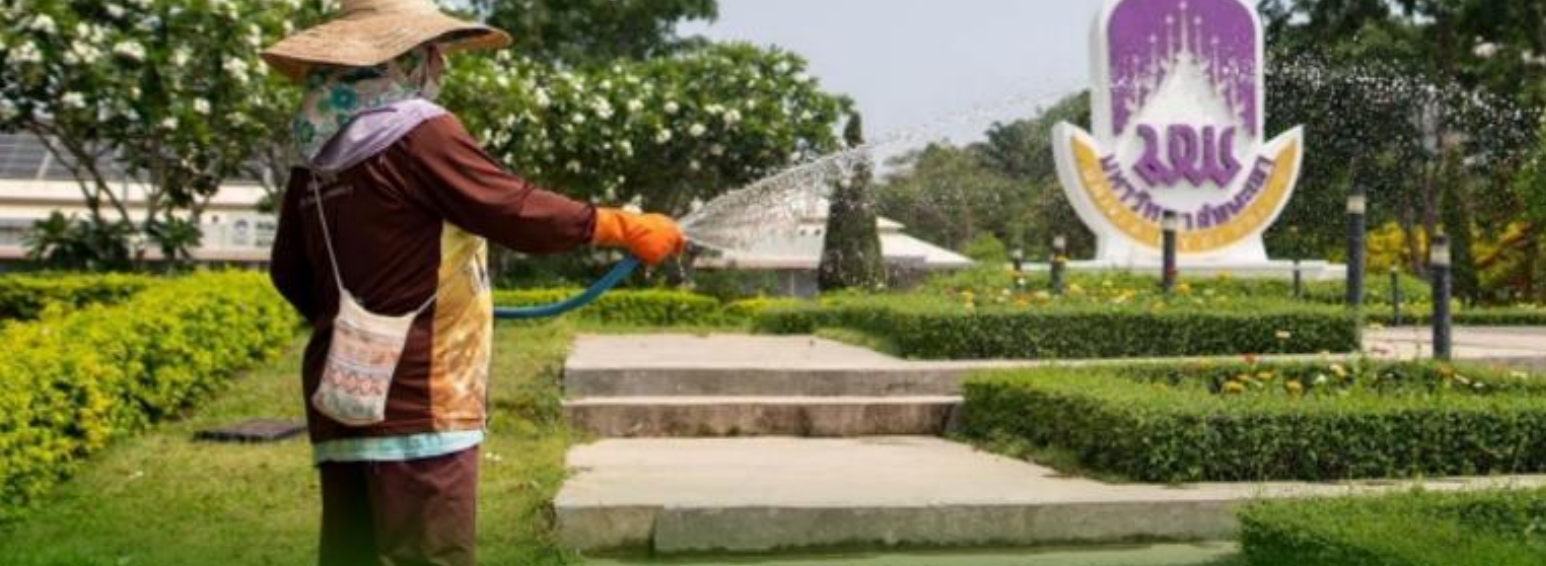 The treated water is used in various activities within the university, such as scrubbing the floors of the School's office building during student service activities, which benefits society and instills awareness of environmental conservation and the preservation of each department's area.
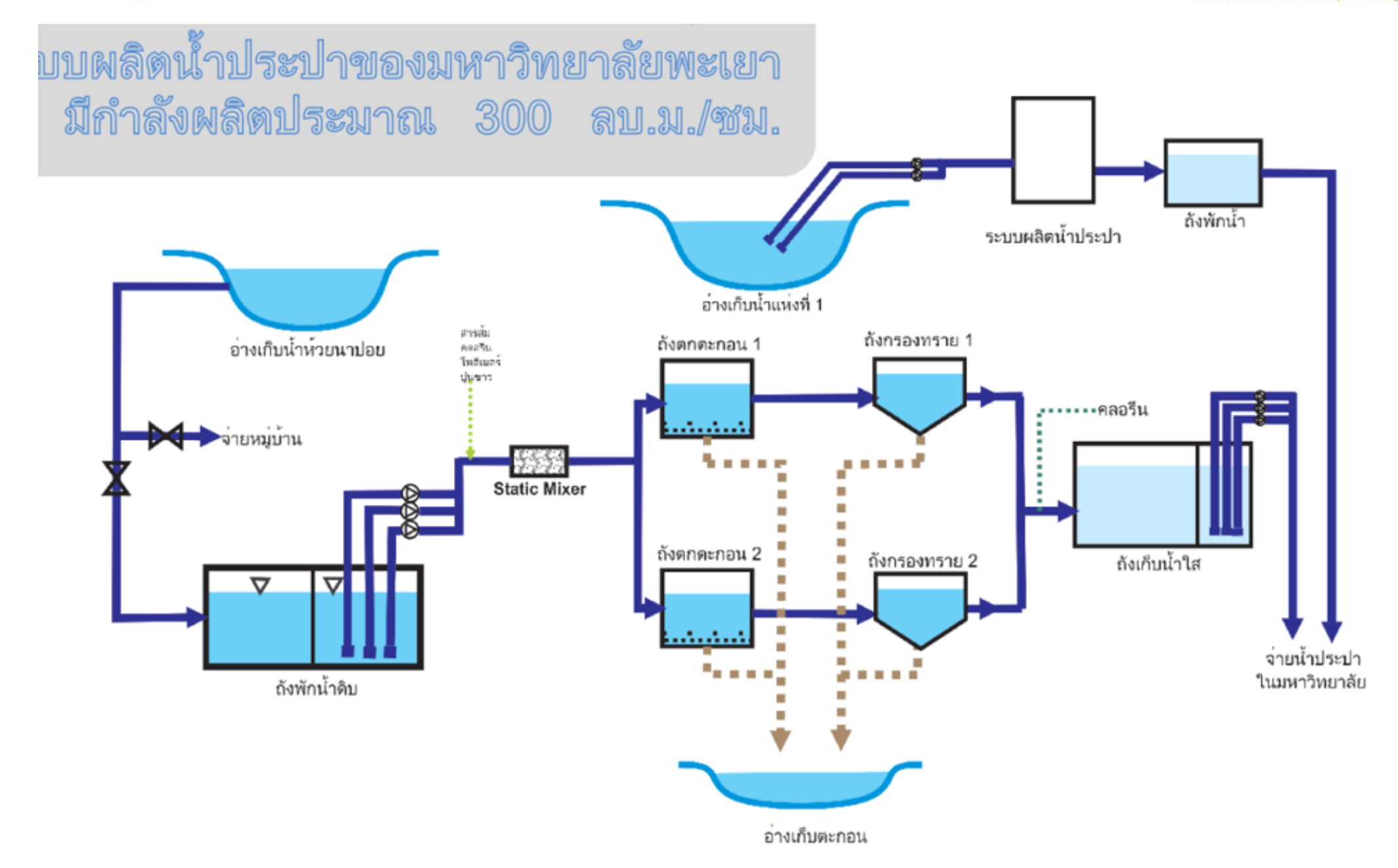
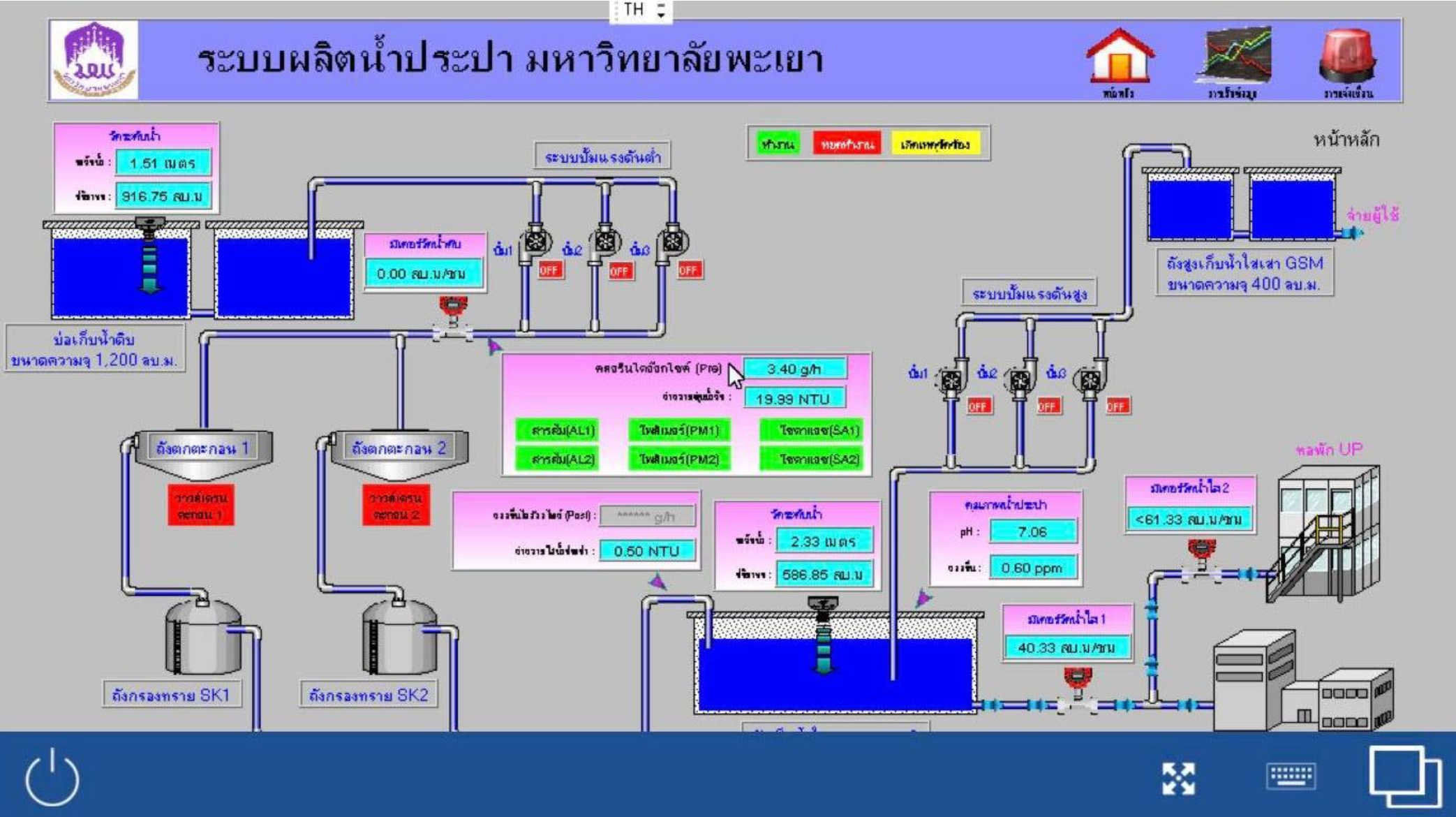
 Furthermore, at University of Phayao's main campus, 100 percent of the water consumed on campus comes from the university's own portable water plant, with a production capacity of 250 m³/hr. Rainwater harvesting is the main source for this production, rather than consuming tap water from the Provincial Waterworks Authority. By developing water supply production and distribution standards, University of Phayao creates stability and sustainability in its water supply within the campus.
Result: In 2026, 68% of water recycle usage on campus.
University of Phayao's water-recycling program is now nearly 90 percent installed, evolving from letting precious water run down the drain to recycling water across the campus. In 2018, only a wastewater treatment plant was operated to treat wastewater before discharging it back to the community, and most activities such as gardening, road cleaning, and toilet flushing relied solely on tap water. By 2020, University of Phayao became more serious about water conservation and sustainable water management, aiming to minimize the effects of drought and water shortages while also making water available for recreational purposes. A green building with a water recycling system was operated as a result, producing a substantial reduction in water consumption and water bills. By 2030, full implementation of the water recycling program at University of Phayao is expected to reach 100%.
Water Recycling Program
University of Phayao has three new buildings and has implemented the water recycling program across seven new buildings, including the Office of the President (New Building), the Innovative Learning Institute, and the Institute of Innovation and Technology. Treated water is brought to the garden areas for irrigation using a drip system controlled by an electric valve that acts as an on-off controller.
University of Phayao can manage water by reusing 68% of wastewater, reusing it for agriculture and gardening.
At University of Phayao, grey water and black water are completely separated during the wastewater treatment process. Wastewater from baths, sinks, washing machines, and other kitchen appliances is defined as grey water, while wastewater from toilets, which is likely to contain pathogens, is defined as black water. For the campus water recycling program, grey water is taken into recycling schemes, and the recycled water is used for non-portable (not for drinking) purposes such as gardening, toilet flushing, floor cleaning, bike cleaning, and construction activities such as concrete mixing. By recycling water, the campus can reduce the volume of water used in these activities by up to 190,500 m³ per year.
Use treated water to water plants in the university gardens instead of using tap water.
The remaining water from drinking is used to water plants.
Recycled water is used for gardening and for floor cleaning
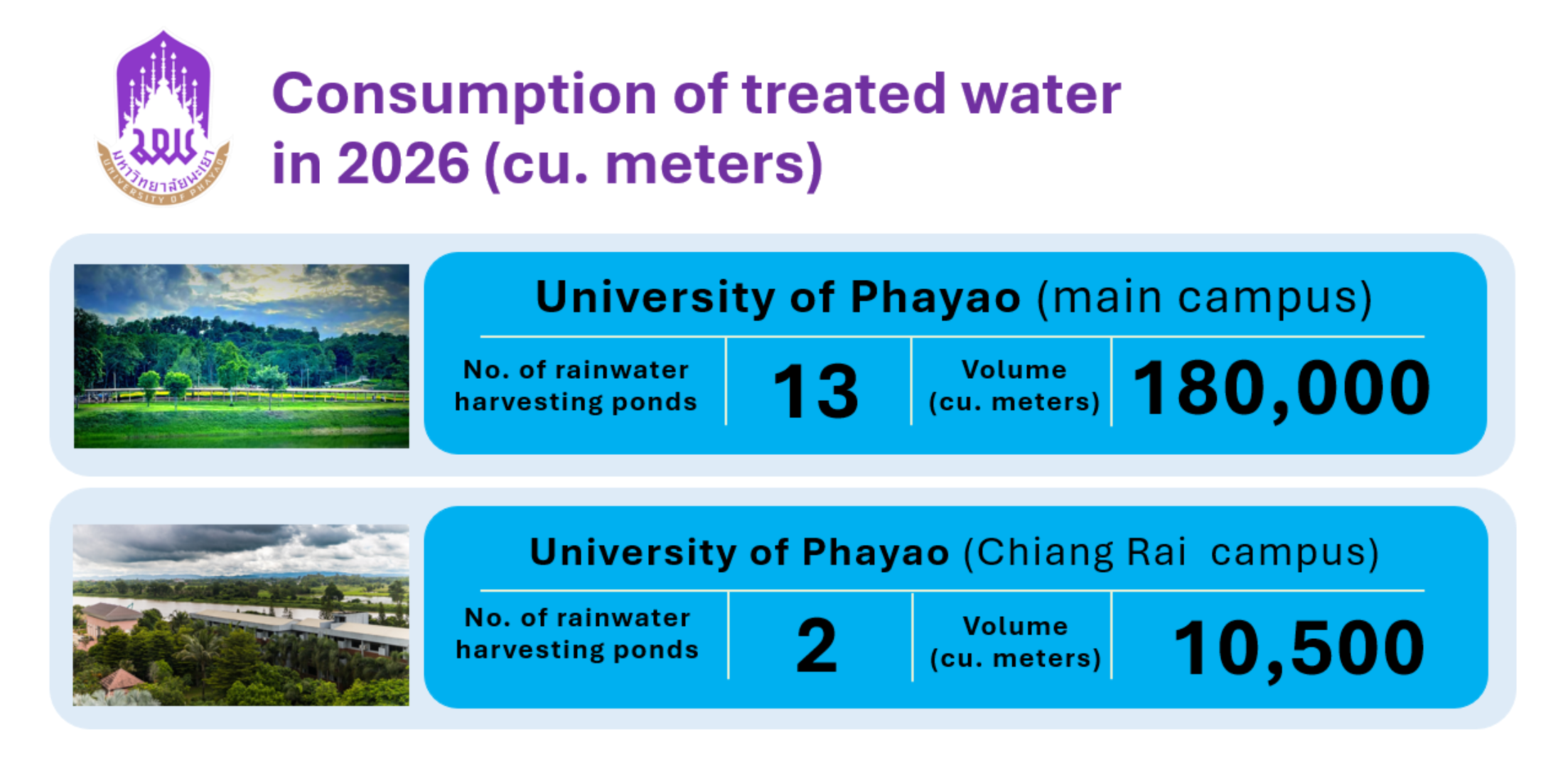
University of Phayao divides its study area into two areas: the Phayao campus and the Chiang Rai campus. In each area, there are 15 rainwater storage ponds, which vary in size depending on the nature of the area, collecting rainwater for use instead of letting it flow away uselessly. The rainwater harvesting system helps reduce tap water usage for activities such as watering plants and cleaning streets, and in some areas the university also produces water for use from stored rainwater, effectively reducing reliance on external tap water. In addition, University of Phayao has been able to reduce tap water usage by more than 190,500 cubic meters per year. Water quality is also regularly monitored and inspected to ensure that the water used is of high quality and safe.Goal: 45% of rainwater conservation for usage on campus by 2030.
Current Status: In 2026, 40.78% of rainwater conservation for usage on campus.
All wastewater is collected at the central wastewater treatment system for treatment according to the procedure, improving water quality and checking it before releasing it into the water source. Treated water is then transferred through treated-water pipes for use inside University of Phayao.
University of Phayao has established canals to support agricultural activities by pumping water from canals distributed throughout the campus. This water is used for irrigation and for managing the watering systems in various gardens. Utilizing these water resources enhances agricultural efficiency and promotes sustainable water use within the university, with the water treated effectively to support sustainable resource management and reduce the use of new water in agricultural processes.
The use of scrubbing floors within the School's office building
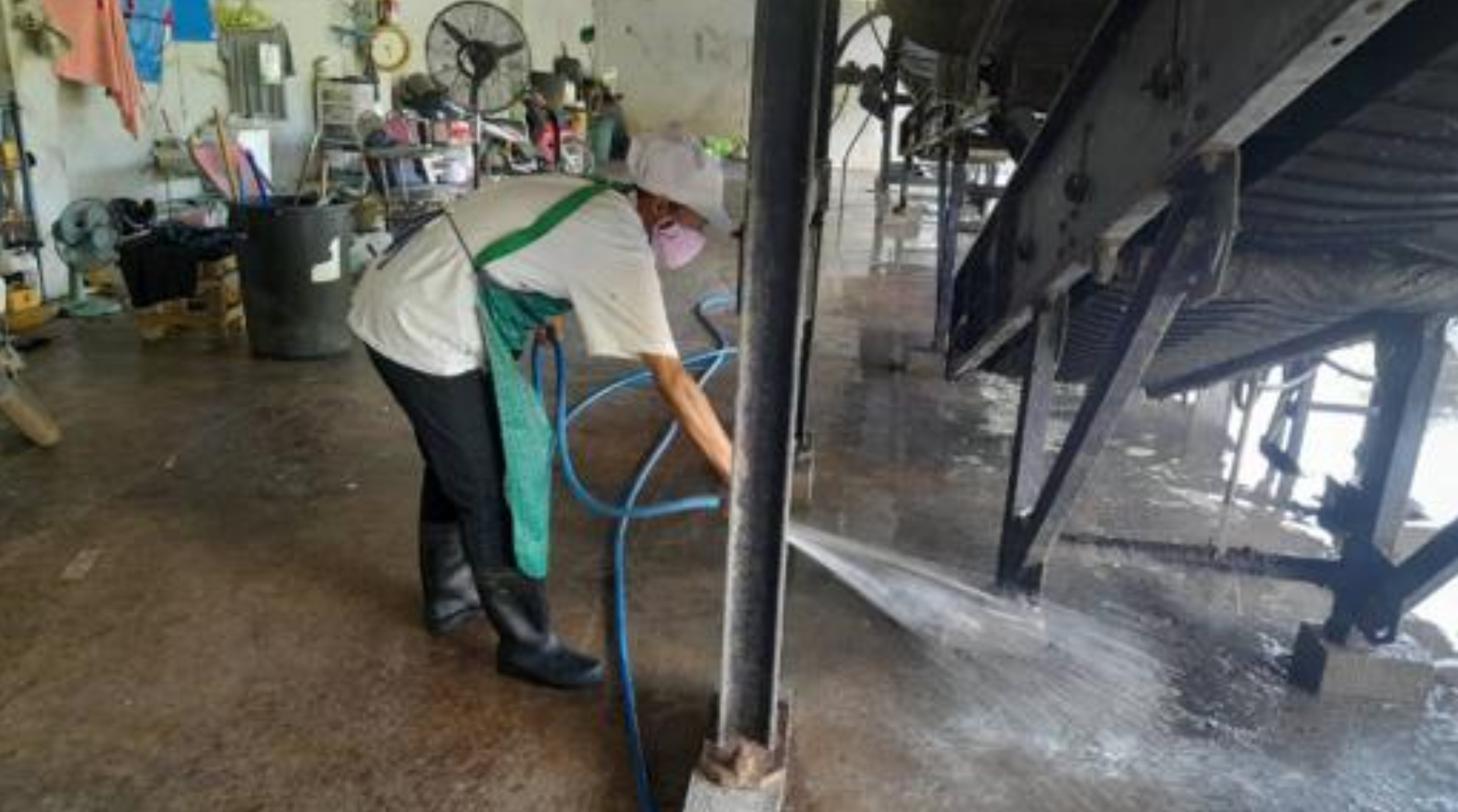
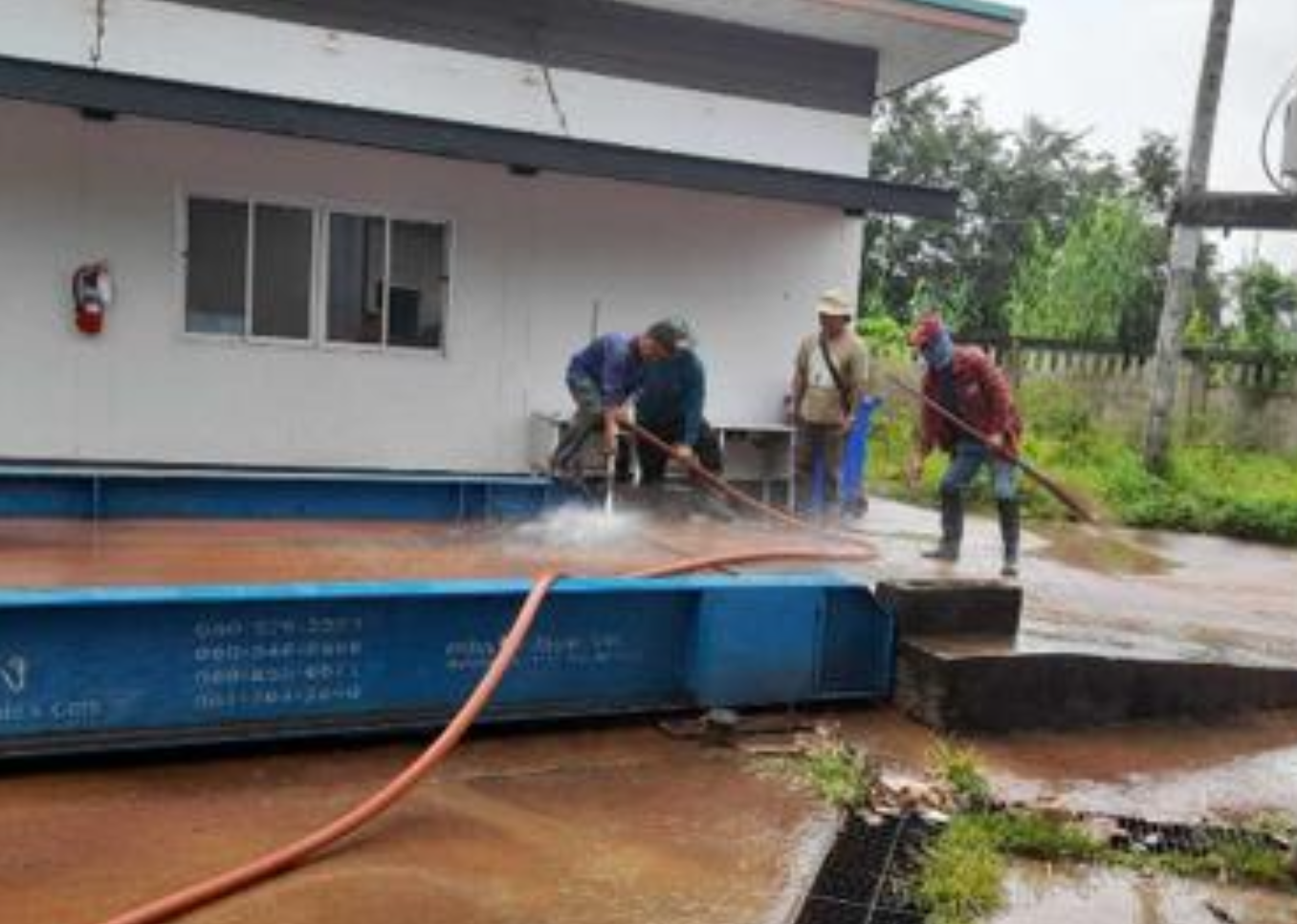
In addition, the water used by University of Phayao to wash the floors of the waste management building is 100% recycled water that has been treated, reducing the university's tap water usage.
The flow chart of the portable water plant process for water supply within campus