Whistle-Blowing and Complaint System of the University
1. Policy and Commitment
University of Phayao sees strong governance as the foundation of institutional sustainability. In line with the National Integrity and Transparency Assessment (ITA) standards set by the Office of the National Anti-Corruption Commission (NACC), the university has adopted a "Zero-Tolerance Policy" toward corruption, bribery, and ethical misconduct — renewed each year through an official declaration signed by the President, keeping leadership accountability visible across all campuses.This reflects the university's commitment to UN Sustainable Development Goal 16 (Peace, Justice, and Strong Institutions), turning anti-corruption principles into concrete guidelines within its master strategic plan.
To build a genuine culture of integrity, the university has set up administrative mechanisms that give everyone — over 22,334 students, academic and support staff, external stakeholders, local communities, and vendors — a safe, accessible way to raise concerns, report irregularities, or suggest improvements without fear of retaliation or professional jeopardy.
2. Dedicated Channels and Whistleblower Protection
To respond quickly and route cases correctly, University of Phayao has digitalized its grievance-handling process into three specialized web portals, each handled by designated, authorized units: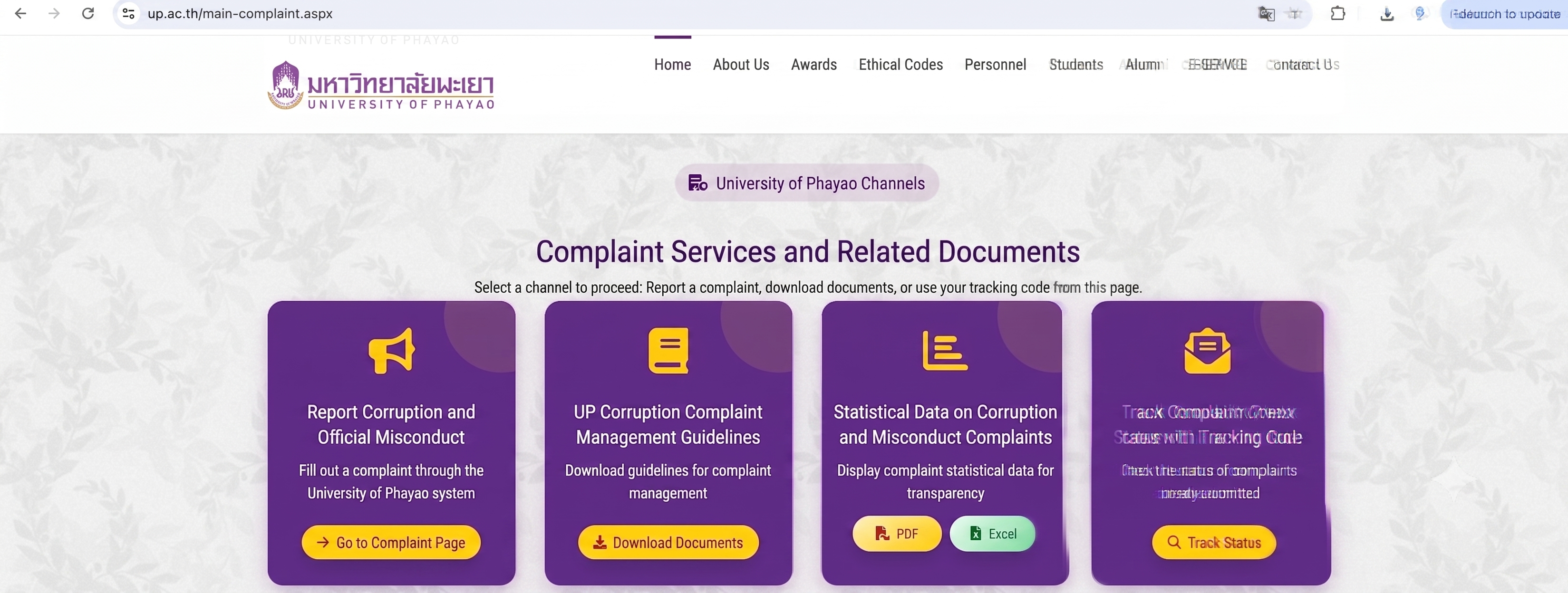
Declaration of Intent of University of Phayao, on Policy of Not Accepting Any Kind of Gifts for the Performance of Duties (No Gift Policy), Fiscal Year 2026
Anti-Corruption and Misconduct Portal — A secure, encrypted channel for reporting high-level misconduct, bribery, conflicts of interest, or unethical behavior by university personnel, bypassing standard departmental channels to prevent internal interference.Source: https://up.ac.th/ComplaintForm.aspx
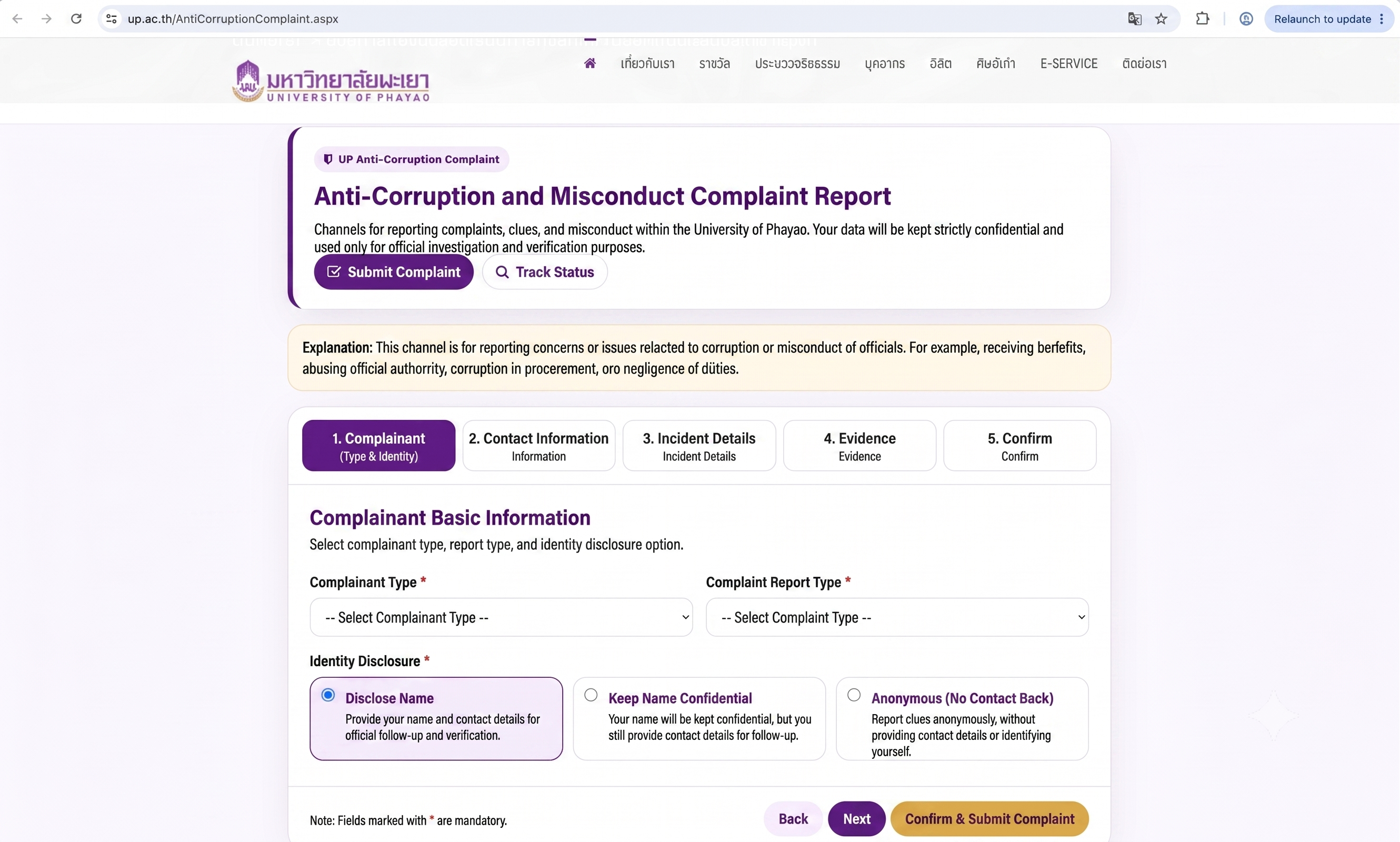
Anti-Corruption and Misconduct Portal.
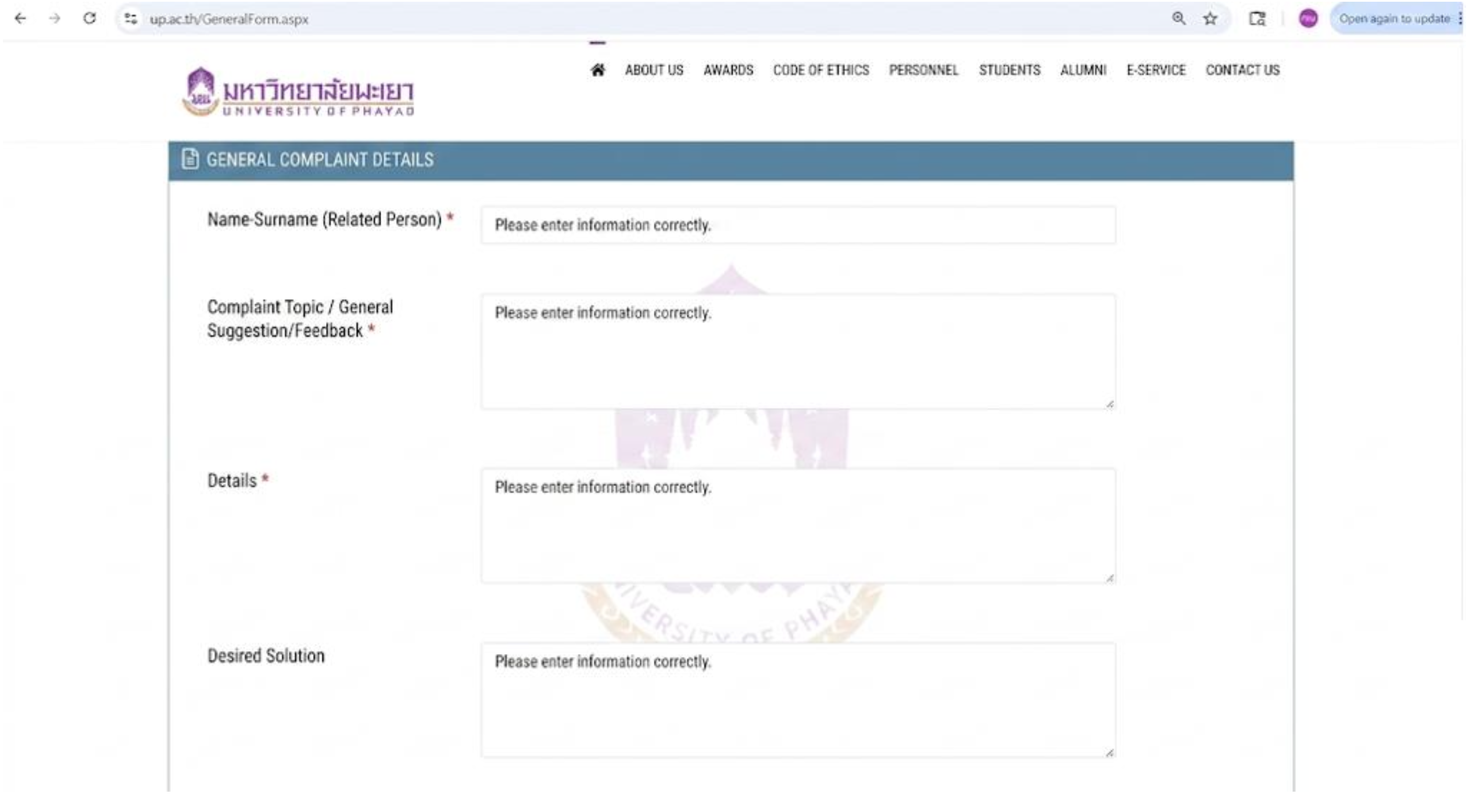
General Grievance and Campus Operations System — An open e-service platform for students and visitors to report facility issues, operational inefficiencies, environmental concerns, or general suggestions for improving campus life.Source: https://www.up.ac.th/GeneralForm.aspx
Source: http://www.senate.up.ac.th/ContactAP2.aspx
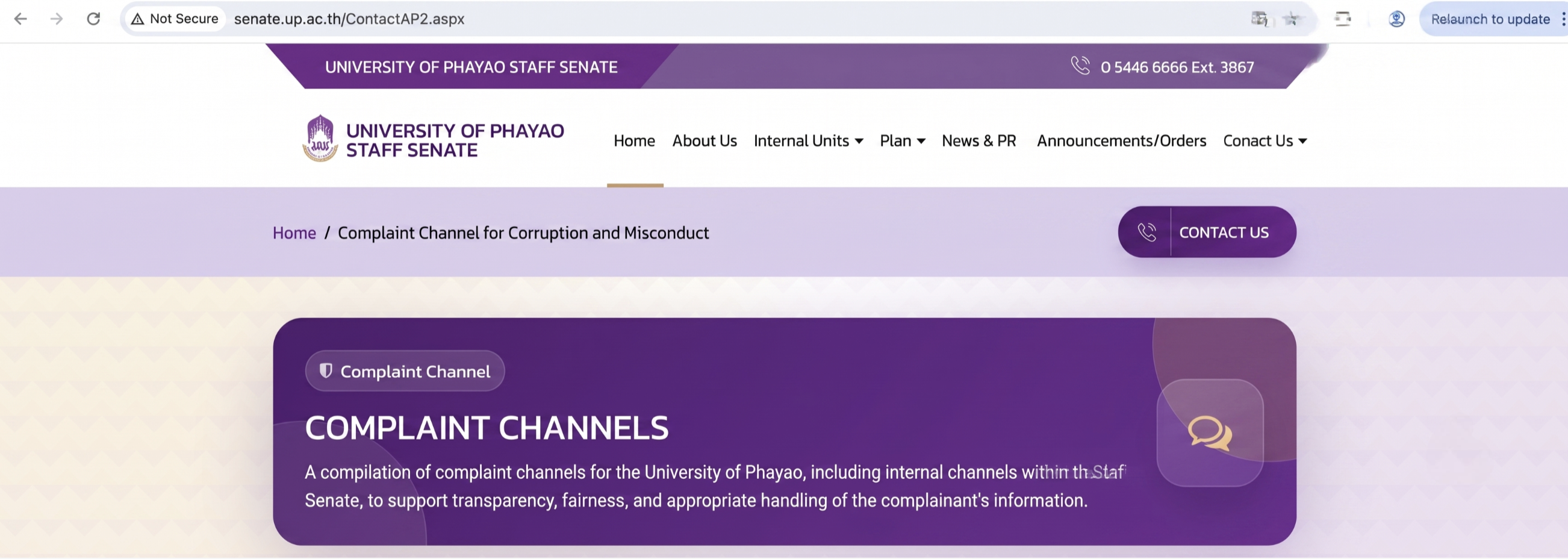
Complaint channels for personnel, through the University of Phayao Staff Council.
Advanced Data Security and Identity Masking
Since fear of reprisal is the biggest barrier to whistleblowing, the university has built strong technical safeguards into its systems:- End-to-End Confidentiality — All portals use secure HTTPS protocols and data encryption. Complainants can stay fully anonymous; for those who provide contact details for follow-up, the system masks their identity, visible only to the head of the investigating unit.
- Role-Based Access Control (RBAC) — Backend database access is tightly restricted. General IT staff cannot view case details; only a small, vetted group of integrity officers holds the decryption keys.
- PDPA Compliance — From submission through processing to final archiving or destruction, the entire data lifecycle complies with Thailand's Personal Data Protection Act (PDPA 2019), preventing unauthorized exposure of personal data.
Absolute Non-Retaliation Guarantee
Beyond technical security, the university enforces a strict anti-retaliation policy: no student will face academic bias, and no staff member will suffer professional jeopardy, demotion, or workplace hostility for filing a good-faith report. Attempting to uncover a whistleblower's identity or retaliate against them is treated as a serious disciplinary offense.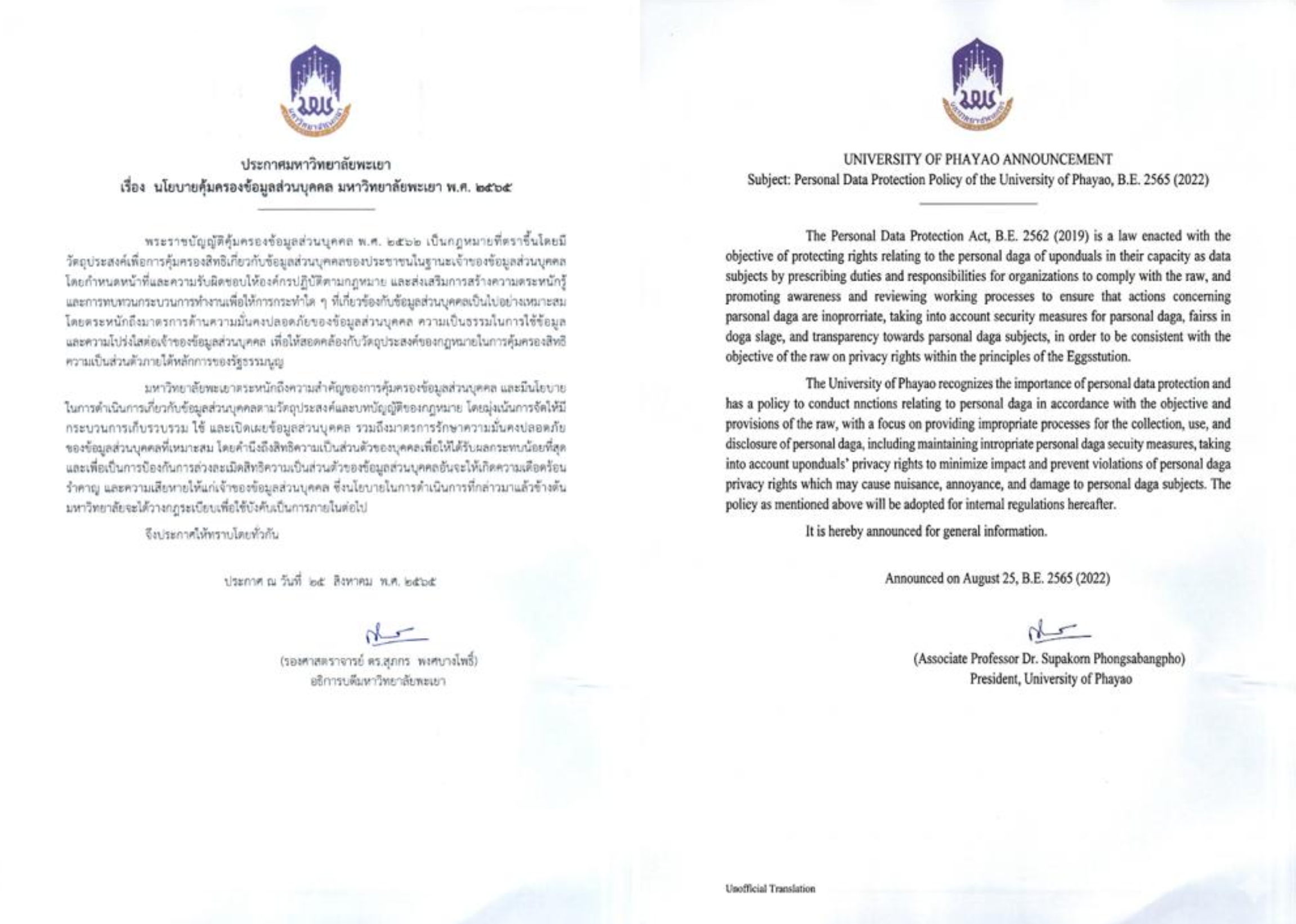
3. Standard Operating Procedures (SOP) and Operational Flow
University of Phayao follows a multi-stage Standard Operating Procedure (SOP) set out in its Complaint-Handling Manual, combining administrative justice with the security protocols required under the 2023 Personal Data Protection Regulation. Every report is handled with urgency, objectivity, and confidentiality:- Stage 1 — Secure Ingestion and Automated Tracking Generation: Once a report is submitted through any digital portal, the system archives it and generates a unique, encrypted Tracking ID, letting the reporter monitor investigation progress without revealing their identity. The platform also keeps an unalterable access log, tracing every digital footprint, edit, or data transfer to prevent tampering or leaks.
- Stage 2 — Objective Triage and Independent Committee Appointment: To avoid institutional bias, vetted integrity officers screen every report within a set timeframe. If a case shows verified grounds for corruption or a serious ethical breach, the university appoints an independent fact-finding committee. Department heads help with operational compliance but are kept separate from investigative data to avoid conflicts of interest.
- Stage 3 — Evidence Review via Anonymized Protocols: The committee reviews the allegations based on the evidence, with strict Role-Based Access Control (RBAC) and anonymization protecting the identities of both the whistleblower and witnesses throughout. Decisions rest strictly on material evidence and cross-examinations, protecting everyone involved from professional or academic jeopardy.
- Stage 4 — Enforced Resolution, Penalties, and Closed-Loop Feedback: The committee submits its findings to the university's executive board. Verified misconduct results in corrective action, policy updates, or civil and disciplinary penalties under Clause 16 of the university regulation and national frameworks. A summary of the outcome is then sent back to the reporter via their Tracking ID, closing the loop of public accountability.
4. Public Accountability and Statistics
University of Phayao backs its integrity claims with public disclosure. Each year, it publishes the "Annual Statistical Report of Complaints and Misconduct Cases" on its central governance portal, letting students, personnel, and external auditors transparently assess the university's administrative health. In the most recent cycle, the university recorded zero (0) formal complaints or verified cases of bribery, corruption, or severe ethical misconduct across all academic and administrative units.Source: https://shorturl.asia/fR0qs
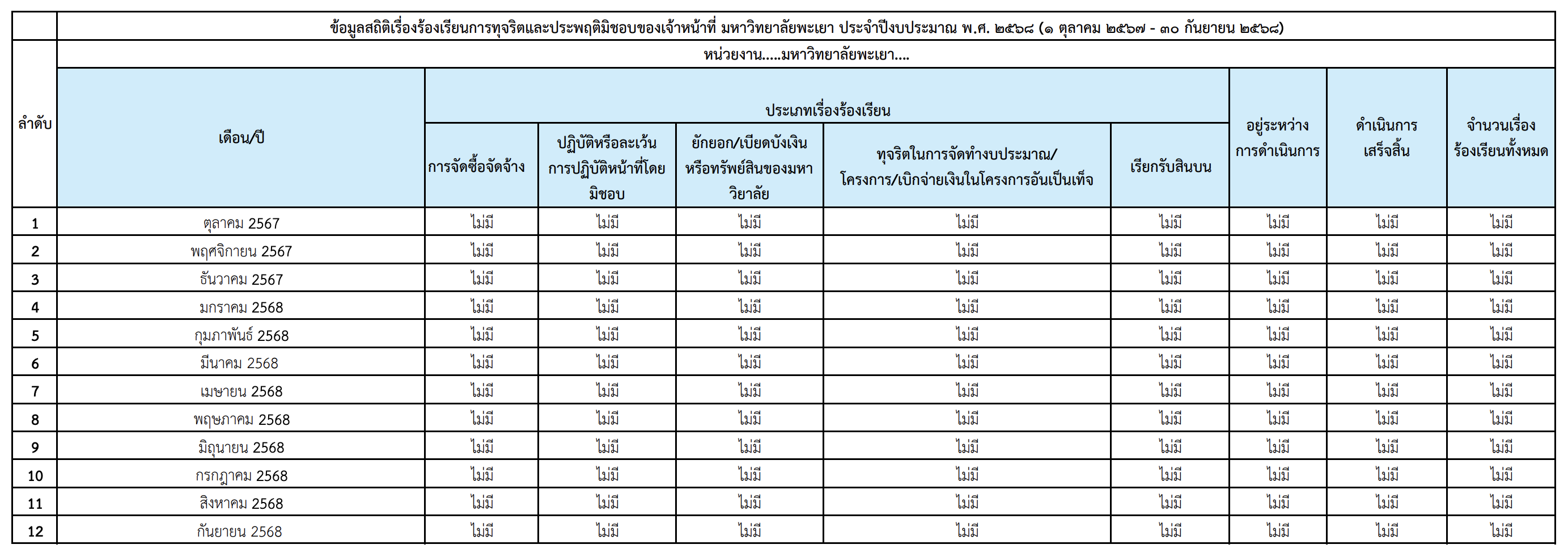
Annual Statistical Report of Complaints and Misconduct Cases.