Policy on Advanced Digital Technologies (AI/IoT) to Support Decision-Making, Efficiency, and Service Delivery
University of Phayao has established a comprehensive policy framework for the adoption of advanced digital technologies, including AI and IoT, to strengthen institutional decision-making, operational efficiency, and service delivery across the university. The following initiatives outline the policy basis and implementation scope of these technologies campus-wide.| No | Initiative | Policy Basis | Implementation Scope | Evidence |
|---|---|---|---|---|
| 1 | University of Phayao Smart University & Digital Transformation Framework | University of Phayao Strategic Plan (Fiscal Year 2026–2030) and CITCOMS Smart University Policy | Applies to all faculties, colleges, and administrative units campus-wide. | Screenshots of the official Smart University policy directives and the central IT portal. |
| 2 | Integrated Educational & Resource Management Systems (UP REG, Finance, and Asset Systems) | University IT Master Plan and Digital Transformation Roadmap | Institution-wide integration of student registration records, academic administration, asset allocation, and budgeting. | Screenshots of the UP REG portal, UP ASSET system dashboard with internal domain (https://reg.up.ac.th/). |
| 3 | Executive Information System (EIS) Dashboard & Data Analytics | Institutional Data Governance Policy of the University of Phayao | Used by university executives, Planning Division, and policy-making bodies for resource planning and enrollment trends monitoring. | Screenshots of the internal EIS analytics dashboard showcasing data visualization for strategic decision-making. |
| 4 | IoT-Based Campus Environment & Smart Infrastructure Monitoring | Smart Green Campus Initiative Policy and Eco-University Framework | Deployment of the dedicated "Fahmuit-IOT" network infrastructure, real-time campus air quality tracking (IQAir) stations, and energy-efficiency systems. | Screenshots of the Fahmuit-IOT registration gateway and live air quality monitoring dashboard across the campus. |
| 5 | UP DMS (Digital Document Management System) for Paperless Administration | University Paperless Office Guideline for Sustainable Development | Complete digital document routing, real-time tracking, and electronic signatures (E-Signature) used by all executives and staff. | Screenshots of the UP DMS application interface, electronic document flows, and metrics showing reduced paper consumption. |
| 6 | AI-Powered Smart Assistant & Customer Service Chatbot | Digital Service Innovation and Student Support Policy | Integrated within the main university portals to handle routine student and staff inquiries regarding ICT, registration, and facilities. | Screenshots of the AI Chatbot window operating on the official university platforms interacting with users. |
| 7 | Centralized UP Account & Multi-Factor Authentication (MFA) Single Sign-On | ICT Security & Access Control Policy | Unified authentication gateway utilized by all students and personnel across email, Microsoft 365, internal e-services, and UP-WiFi. | Screenshots of the UP Account management interface, MFA setup documentation, and the SSO login landing page. |
| 8 | Continuous ICT Performance Evaluation & Quality Assurance Mechanism | Annual ICT Performance Review Framework (aligned with EdPEx and ITA guidelines) | Managed by CITCOMS for annual digital maturity audits, system upgrades, and service-level agreement (SLA) tracking. | Reference links or screenshots of the annual ICT performance assessment report and system maintenance logs. |
Institutional Smart University Directive
Led by the Center for Information Technology and Communication Services (CITCOMS), the University of Phayao operates under a comprehensive Smart University Directive embedded within the university's overarching Strategic Development Plan. This policy framework establishes the baseline for data governance, cloud-first infrastructure, and digital automation. Rather than allowing decentralized, isolated software deployments, CITCOMS mandates that all newly introduced technologies must align with institutional data models and energy-efficiency standards, thereby minimizing the university's digital carbon footprint while optimizing service delivery campus-wide.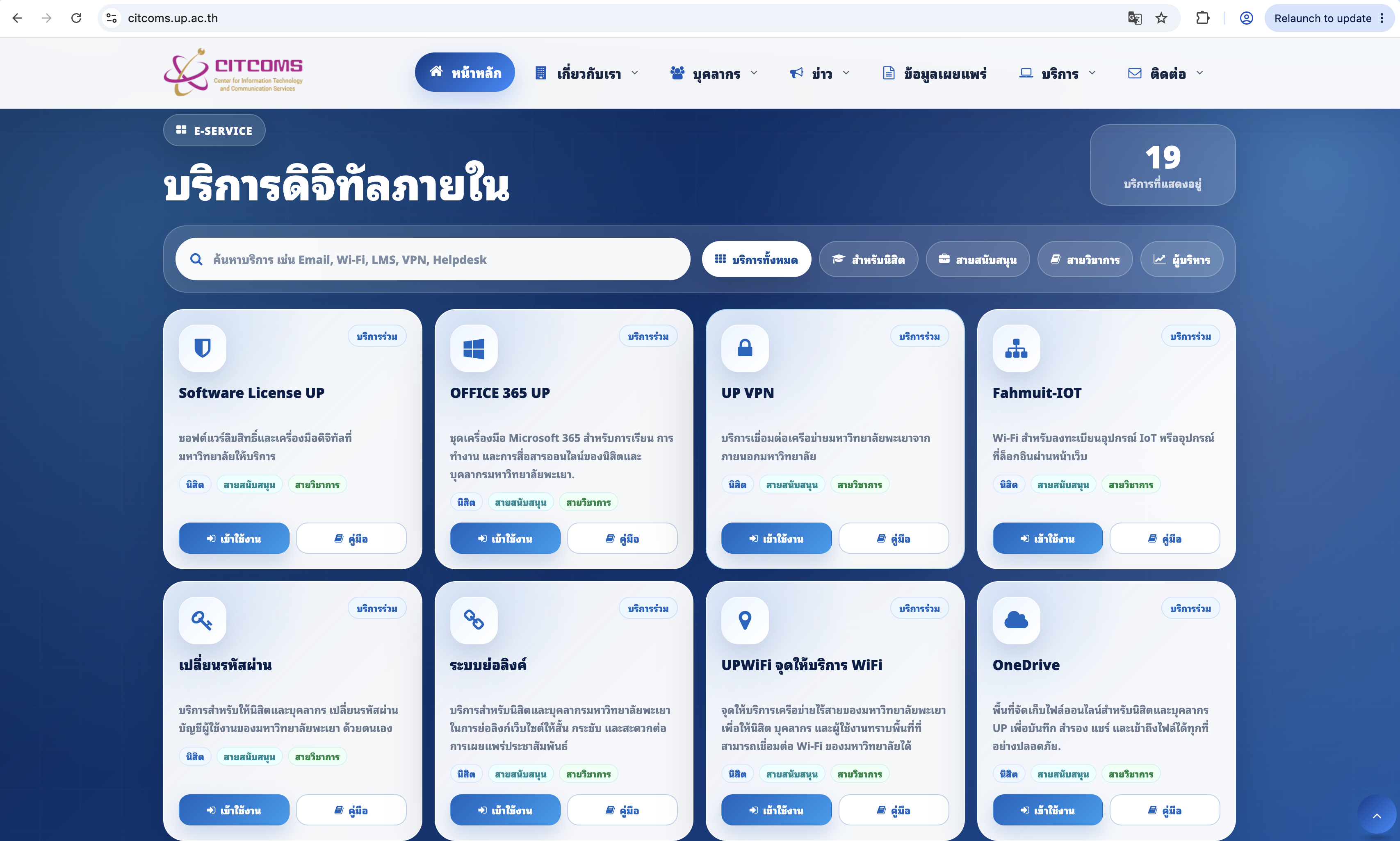
Website of Center for Information Technology and Communication Services.
University of Phayao strategically leverages advanced digital technologies to drive both institutional efficiency and environmental sustainability, digitized operations are deeply integrated into the university's core functions, yielding measurable environmental benefits:UP DMS (Digital Document Management System)
Managed centrally by the Central Division, the UP-DMS (Digital Document Management System) represents a monumental shift towards a fully paperless administration. The platform completely digitalizes internal routing, review cycles, and institutional archival processes. Crucially, the system fully integrates secure E-Signatures, enabling university executives and administrative staff to legally validate and approve official memoranda on any device without a single page of physical print. This institution-wide deployment has significantly minimized the campus's operational carbon footprint by reducing paper demand, printing energy, and internal courier logistics across the expansive university grounds.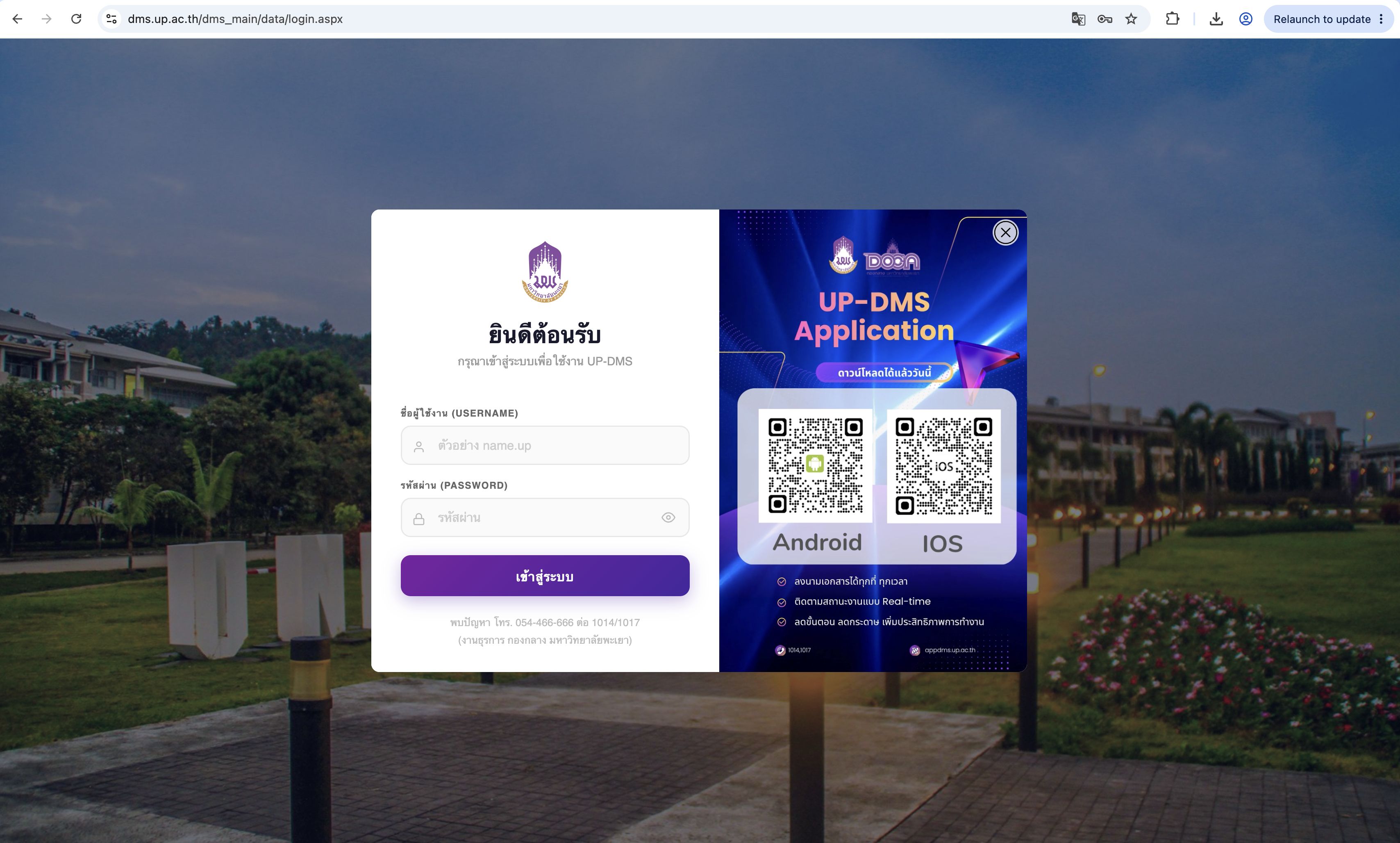
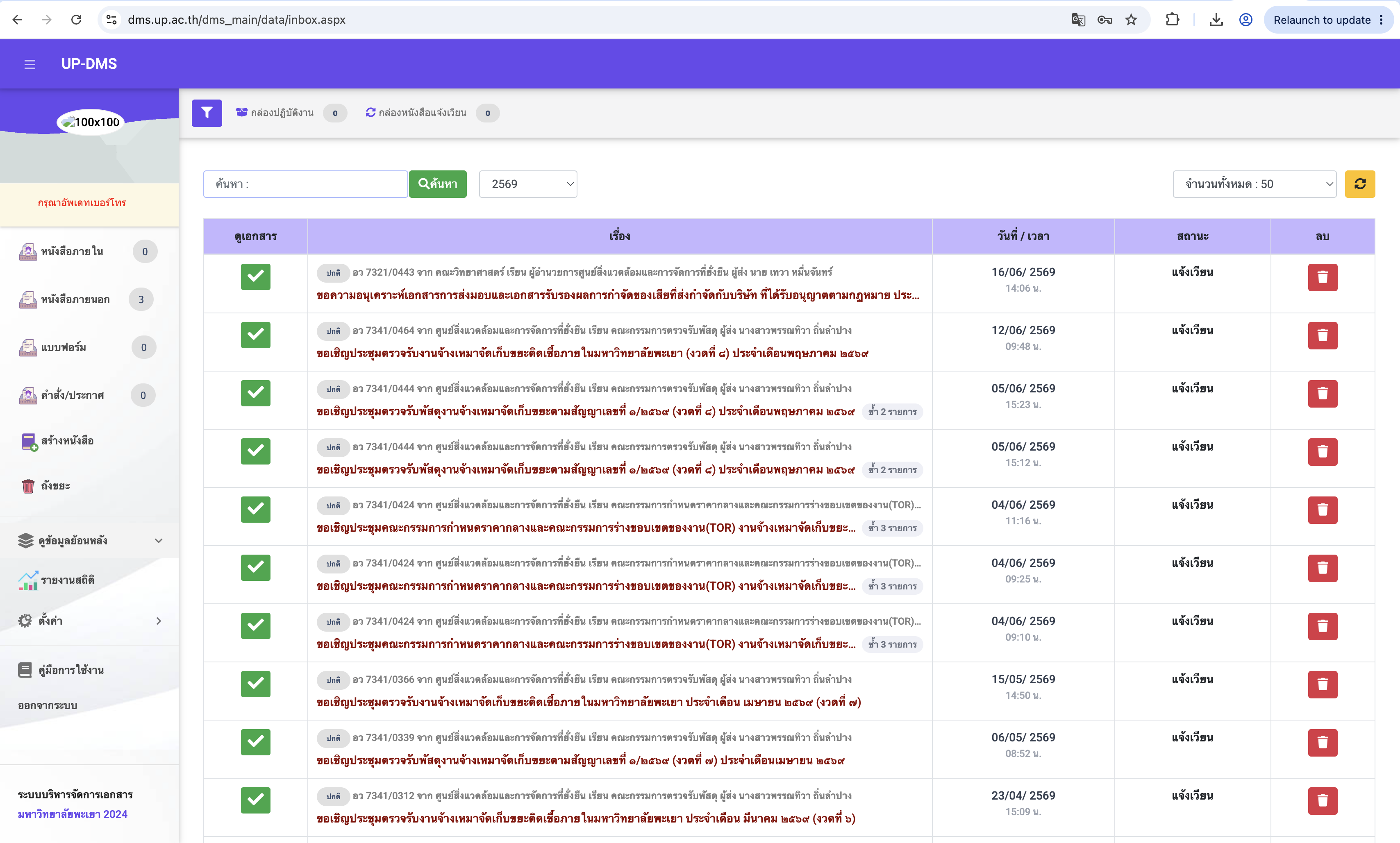
UP-Digital Document Management System.
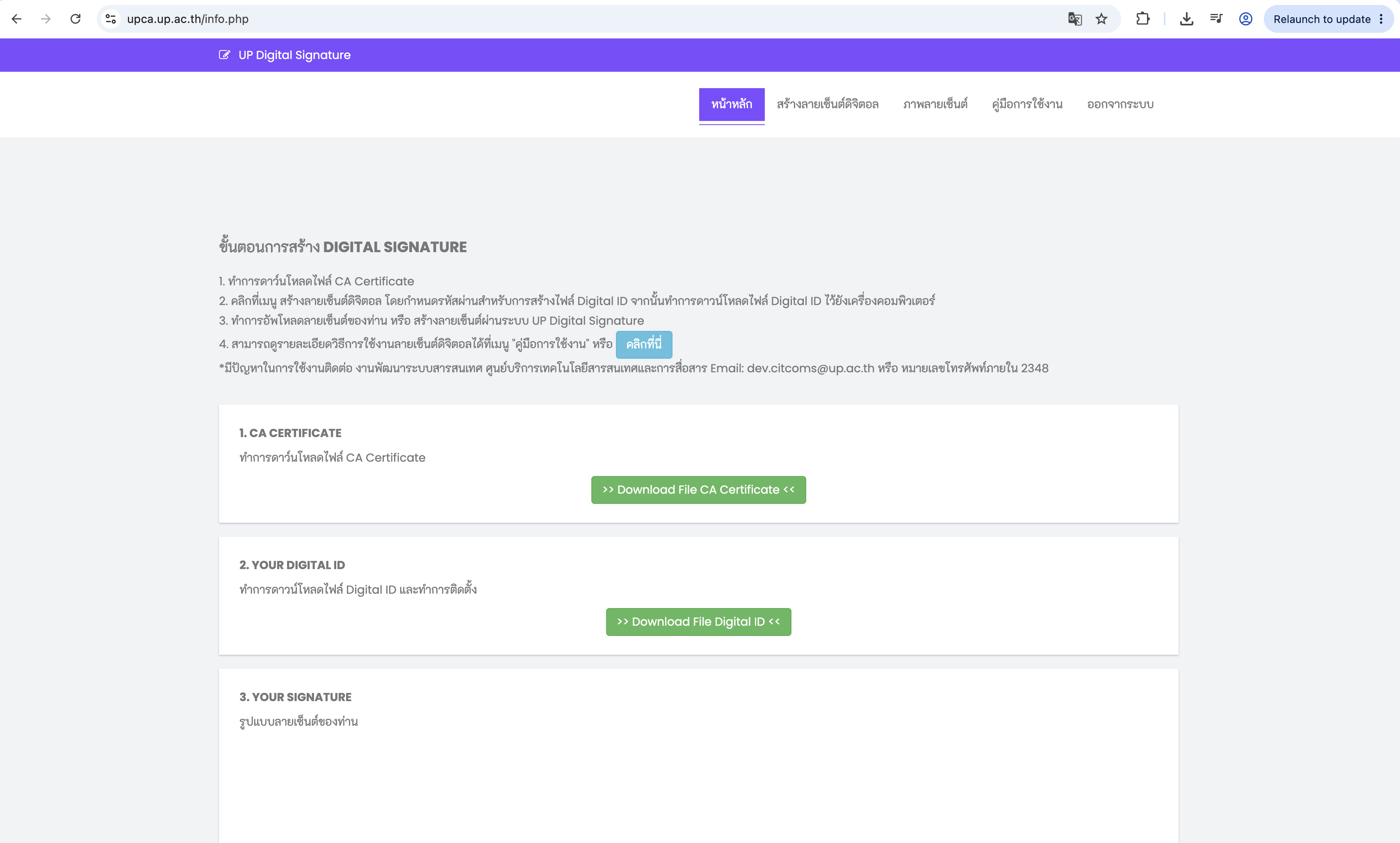
The system fully integrates secure E-Signatures.
By transitioning from physical paperwork to an institutional-wide electronic workflow with E-Signatures, the university has successfully digitalized 100% of its administrative document routing across all faculties and units. This initiative has reduced annual paper consumption by approximately 80%, equivalent to preventing the harvesting of 3,617 trees and mitigating approximately 163 tons of CO2 equivalent (tCO2e) emissions annually.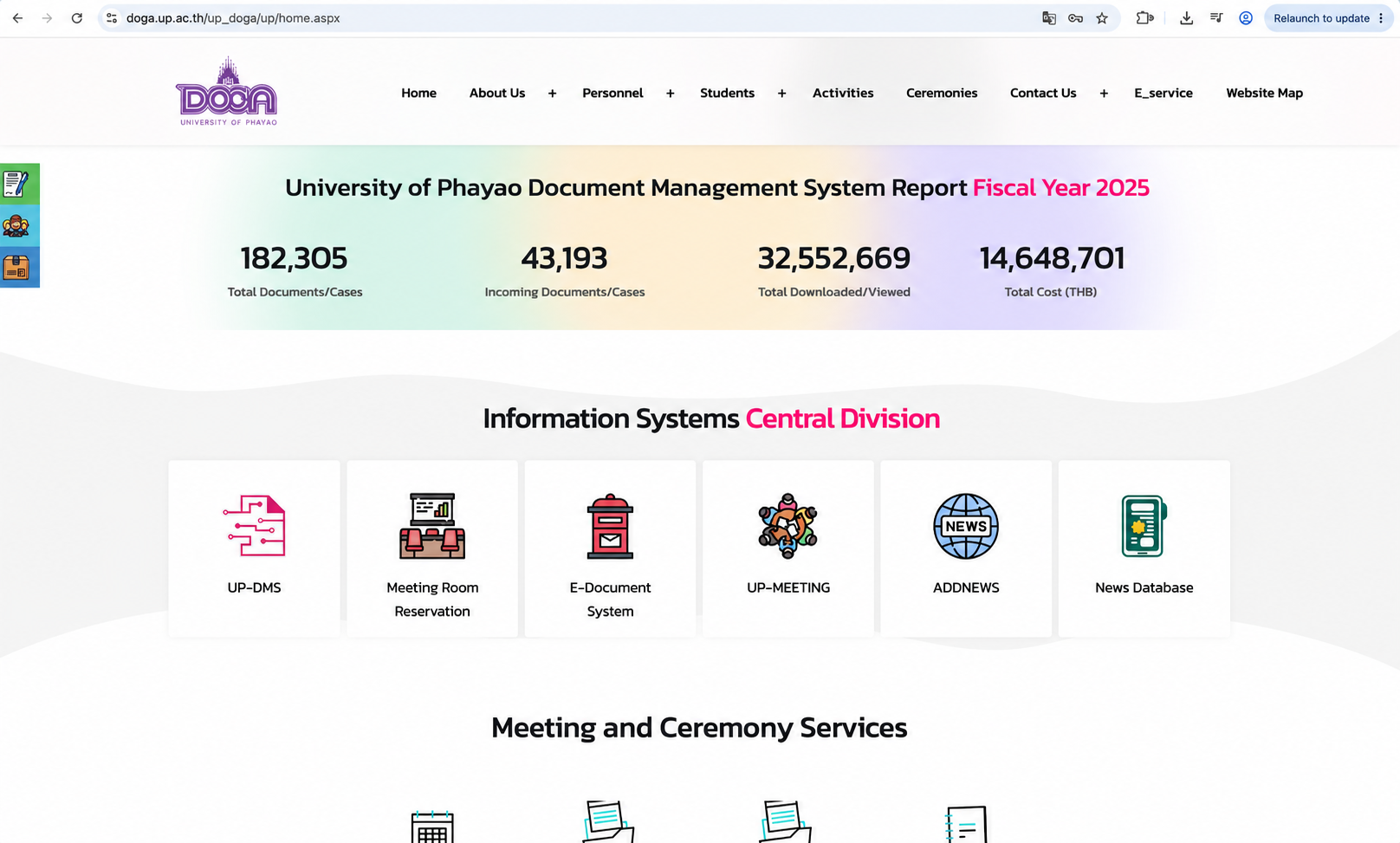
Data on paper reduction from the University of Phayao.
Note: - 70 grams (70g/m²) / One sheet weighs approximately 4.37 grams.
- One tree (such as a pine or eucalyptus tree) can produce an average of 8,000–10,000 sheets of paper.
IoT & Air Quality Monitoring (Fahmuit-IOT & IQAir Network)
To accommodate the massive influx of smart devices, the University of Phayao has deployed a dedicated network infrastructure segment specifically for the Internet of Things, known as "Fahmuit-IOT". This specialized network ensures seamless, high-availability connectivity for continuous eco-monitoring hardware, such as campus energy sub-meters and real-time air quality tracking stations (IQAir network), without interfering with standard academic traffic. Combined with the UP Account centralized identity management system — which operates as a Single Sign-On (SSO) and Multi-Factor Authentication gateway — the university guarantees secure data collection, strict access control, and robust cyber-governance for all connected smart-campus technologies.Through the dedicated "Fahmuit-IOT" network infrastructure, the university operates multiple validated outdoor air quality tracking stations integrated with the IQAir platform. This advanced IoT setup provides real-time, data-driven insights that assist university executives in facility operations, energy management, and student well-being policies, directly supporting the campus's climate action and carbon reduction goals.
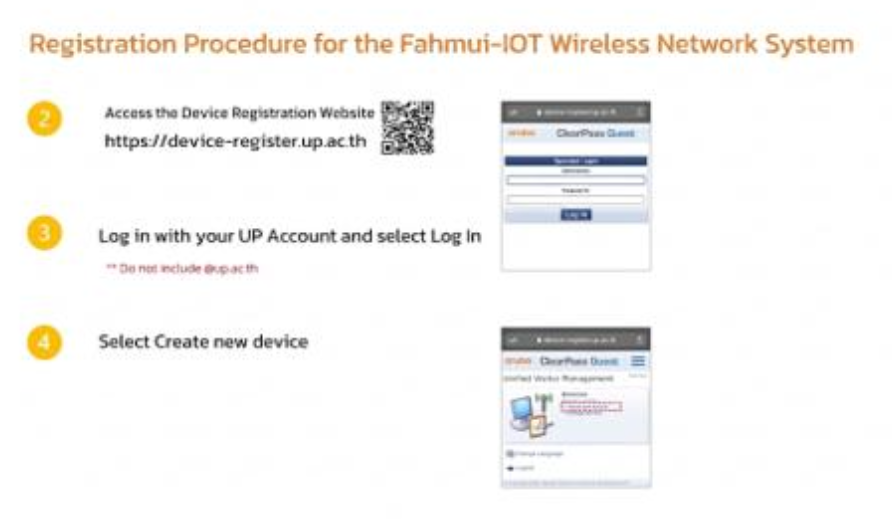
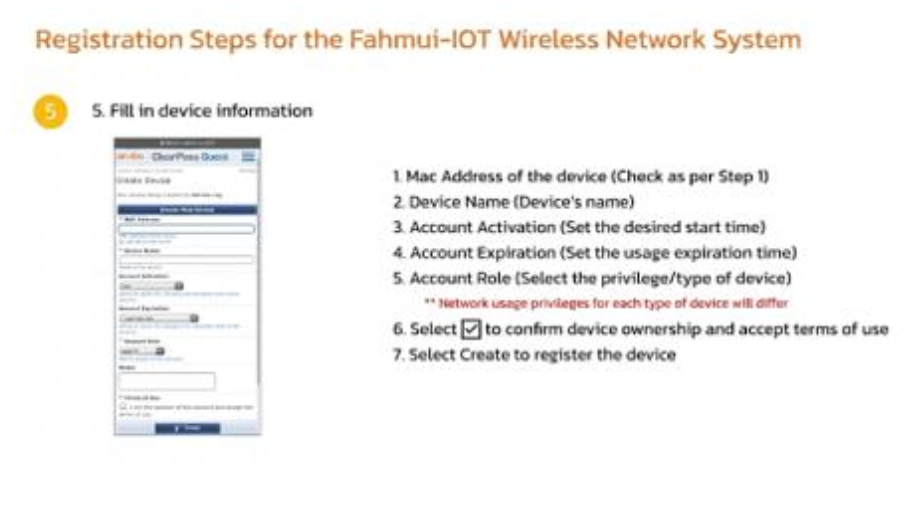
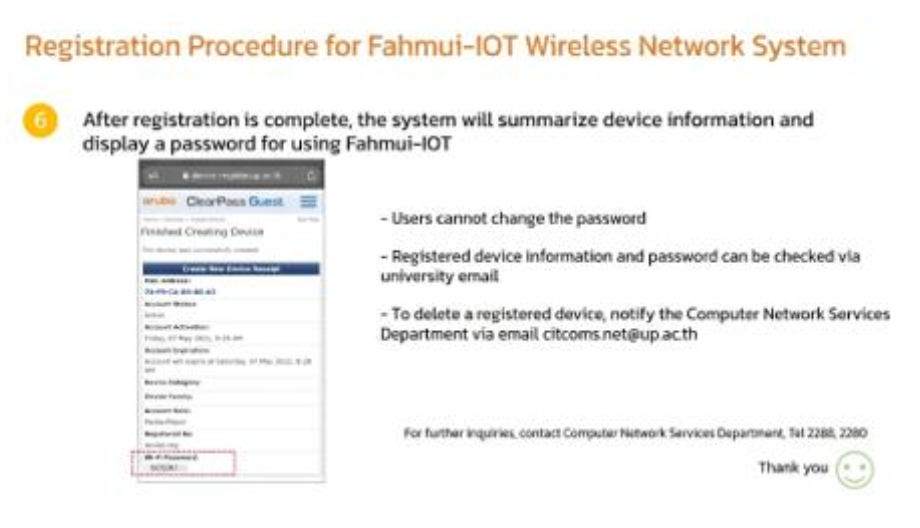
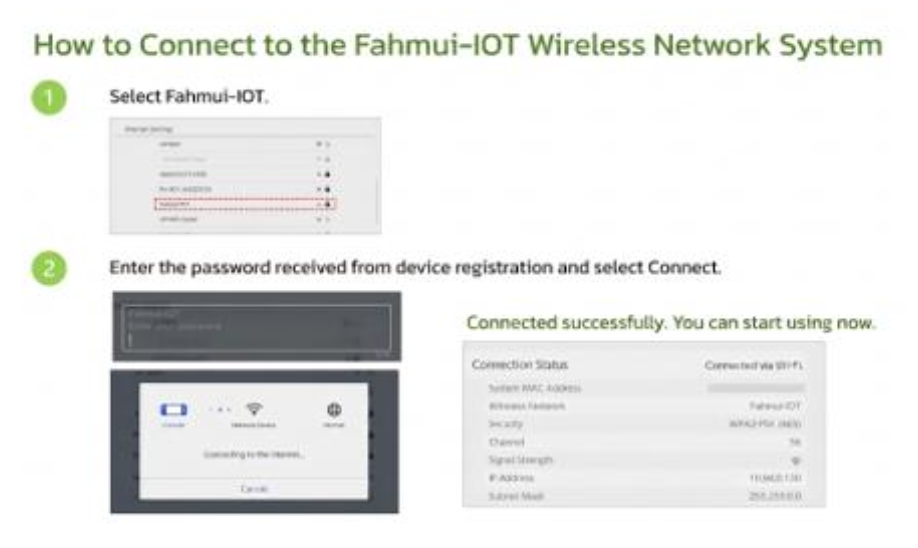
Fahmuit-IOT & IQAir Network
Compliance with the General Data Protection Regulation (GDPR) or Equivalent National Data Protection Regulations
University of Phayao demonstrates full compliance with national data privacy standards by strict alignment with the Personal Data Protection Act (PDPA) 2019, which serves as Thailand's national equivalent to the European Union's GDPR. At the governance and policy level, the university has formally enacted the "University of Phayao Personal Data Protection Policy 2022". This institutional policy establishes rigorous frameworks for the lawful, fair, and transparent collection, processing, and management of personal data belonging to students, staff, and visitors across all academic and administrative divisions. The policy is publicly accessible online to maintain institutional accountability.To ensure oversight, the University of Phayao has officially appointed a designated Data Protection Officer (DPO) and established specific sub-committees to monitor regulatory alignment. Operational security measures, including cookie consent banners and privacy notices, are deployed throughout UP's central web portals. Furthermore, the university continuously strengthens data protection culture through institutional awareness programs, hosting specialized PDPA training sessions and legal compliance webinars for educational personnel organized by the School of Law and the Center for Library and Learning Resources.
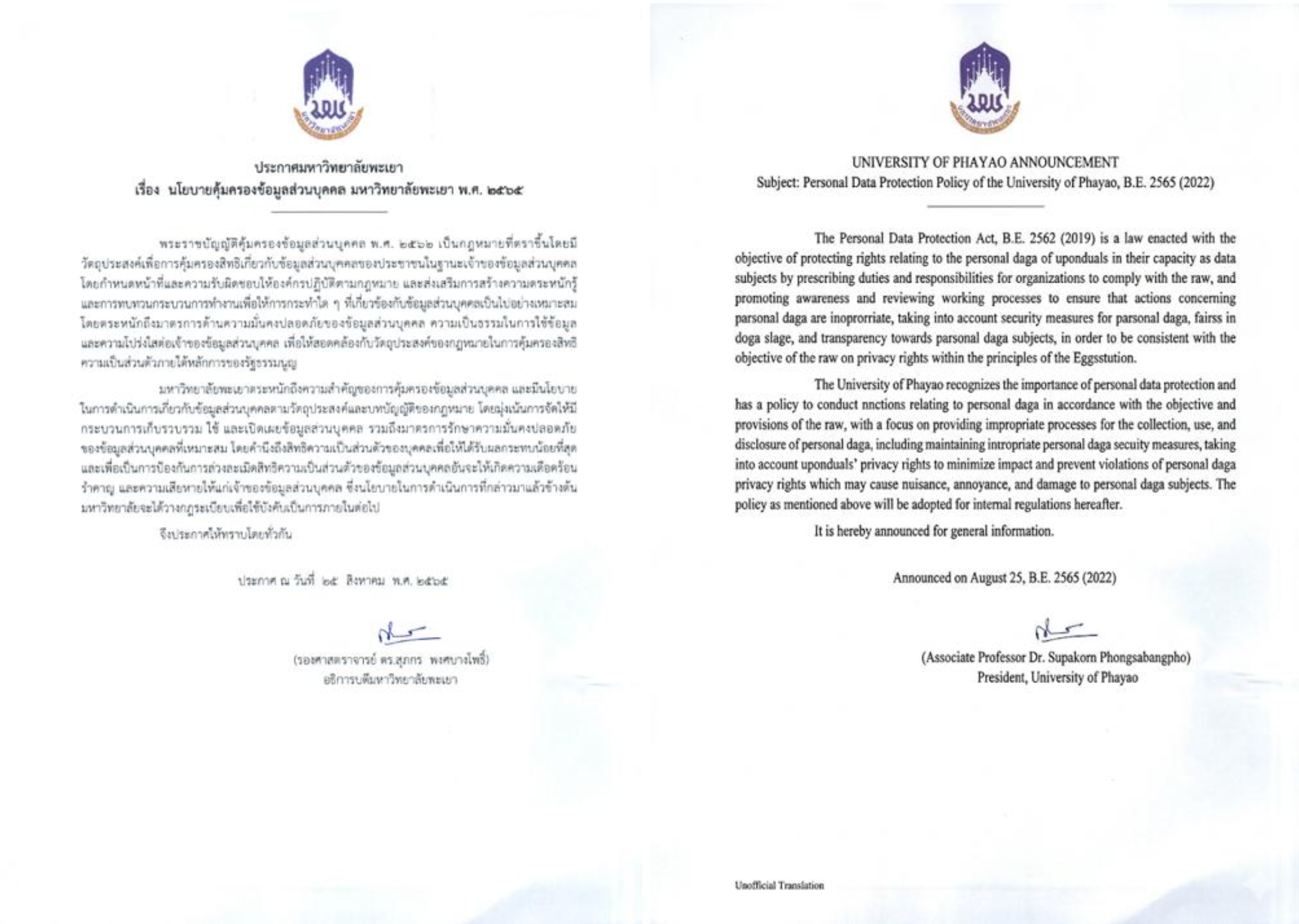
Personal Data Protection Policy 2022 (University of Phayao, Thailand)
Key Success Factors for Full Marks Compliance
University of Phayao doesn't just want "policy papers," but rather "systematic and sustainable practical implementation." University of Phayao has five key strengths that will help it achieve a perfect score, as follows:1. Comprehensive Institutional Policy Alignment with Global Standards
The "University of Phayao Personal Data Protection Policy 2022" serves as a robust institutional framework that legally translates the core tenets of the EU GDPR into the university's operational landscape via Thailand's PDPA. The policy encompasses the entire data lifecycle — governing fair processing, data minimization, and purpose limitation across all administrative and academic divisions. It is transparently communicated and publicly accessible to ensure institutional accountability.
2. Formalized Governance Structure and Designated Oversight
Accountability is securely embedded within University of Phayao's organizational structure. The university has officially issued formal orders appointing a Data Protection Officer (DPO) and establishing dedicated legal compliance sub-committees. This concrete administrative arrangement guarantees clear lines of reporting, centralized risk monitoring, and robust enforcement of data privacy, fully satisfying the metric's requirement for designated responsible units.
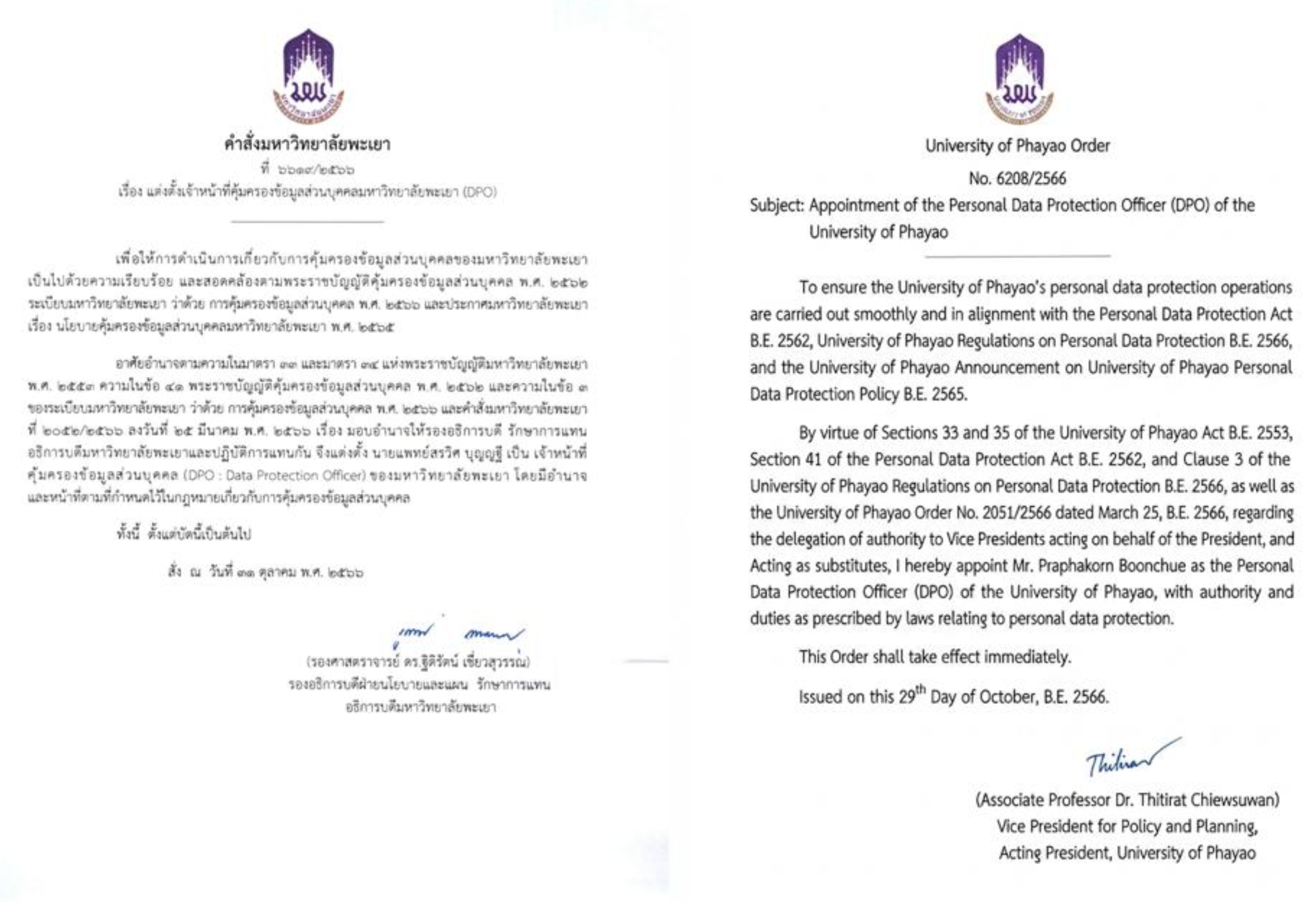
The university has officially issued formal orders appointing a Data Protection Officer (DPO)
3. Operationalized Consent Mechanisms and Data Subject RightsUniversity of Phayao successfully bridges policy with digital reality by operationalizing active user-consent mechanisms. Dynamic Cookie Consent banners and comprehensive privacy notices are fully integrated across the university's main web portals and student information systems (REG). Furthermore, the university provides standardized, publicly available "Data Subject Request Forms," granting students, staff, and external stakeholders practical, unobstructed channels to exercise their rights to access, rectify, or erase their personal data.
4. Technical Security Measures and Breach Management Protocols
Managed under the stringent supervision of the Center for Information Technology and Communication Services (CITCOMS), University of Phayao deploys state-of-the-art cybersecurity infrastructures to safeguard institutional data repositories. The university enforces strict access controls, data encryption standards, and proactive network monitoring. Additionally, UP maintains structured technical procedures to identify, evaluate, and mitigate potential personal data security breaches, minimizing digital risks effectively.
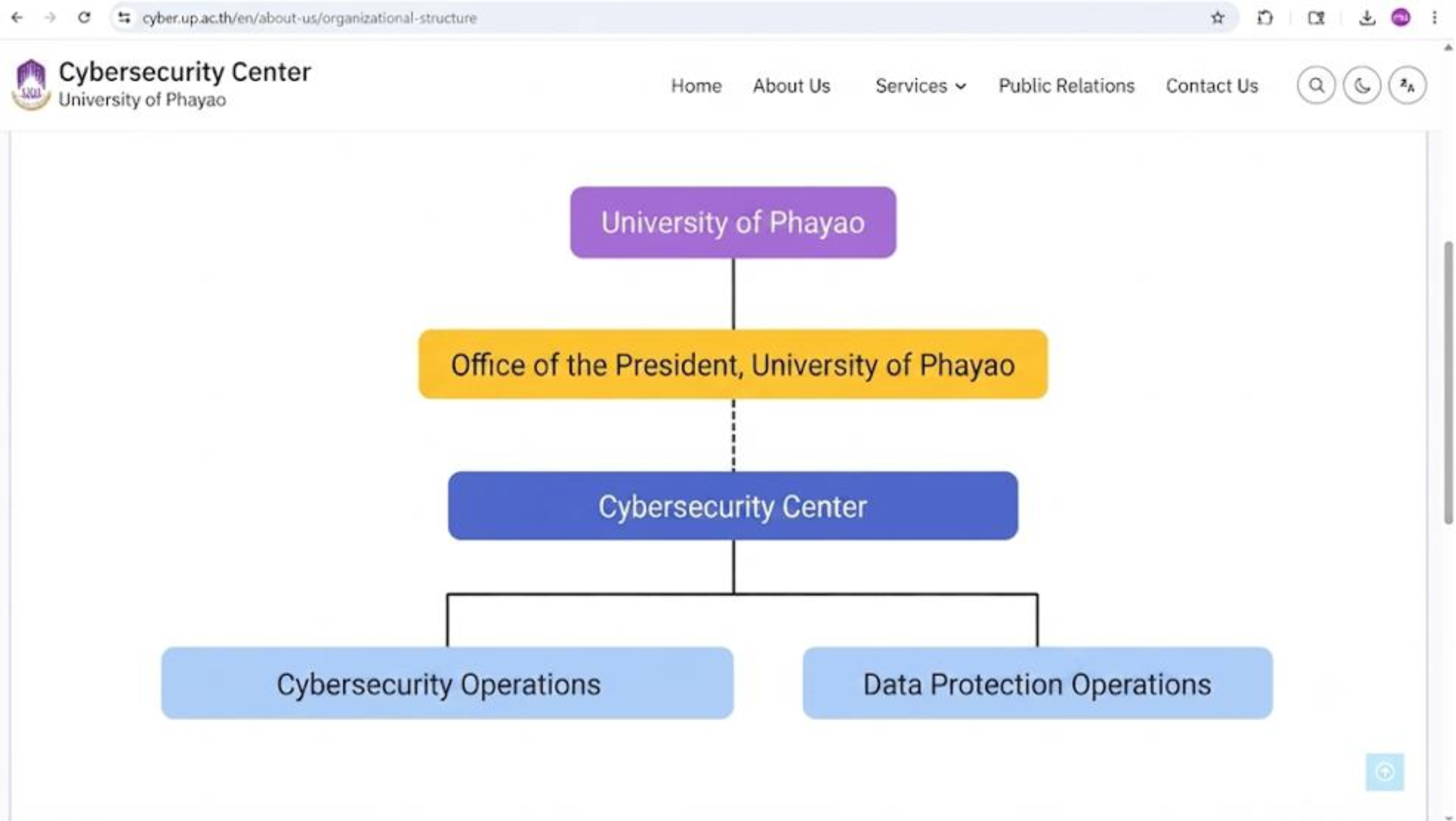
Website of the Cyber Security Center, University of Phayao. https://cyber.up.ac.th/th/home
University of Phayao, Center for Cybersecurity was approved for establishment by the resolution of the University of Phayao Executive Committee at its 120th meeting (6/2567) on March 27, 2024. The University of Phayao issued an announcement regarding the establishment of the Center for Cybersecurity dated April 29, 2024, with the effective date retroactive to March 27, 2024.5. Continuous Cultivation of Data Privacy Awareness
Demonstrating a profound commitment to continuous improvement, data protection at UP is treated as an evolving institutional culture rather than a static legal requirement. The university presents undeniable empirical evidence of ongoing compliance capability building. This includes regular specialized PDPA training workshops, legal compliance webinars, and campus-wide data privacy educational programs co-organized by the School of Law and the Center for Library and Learning Resources for both academic and support personnel.
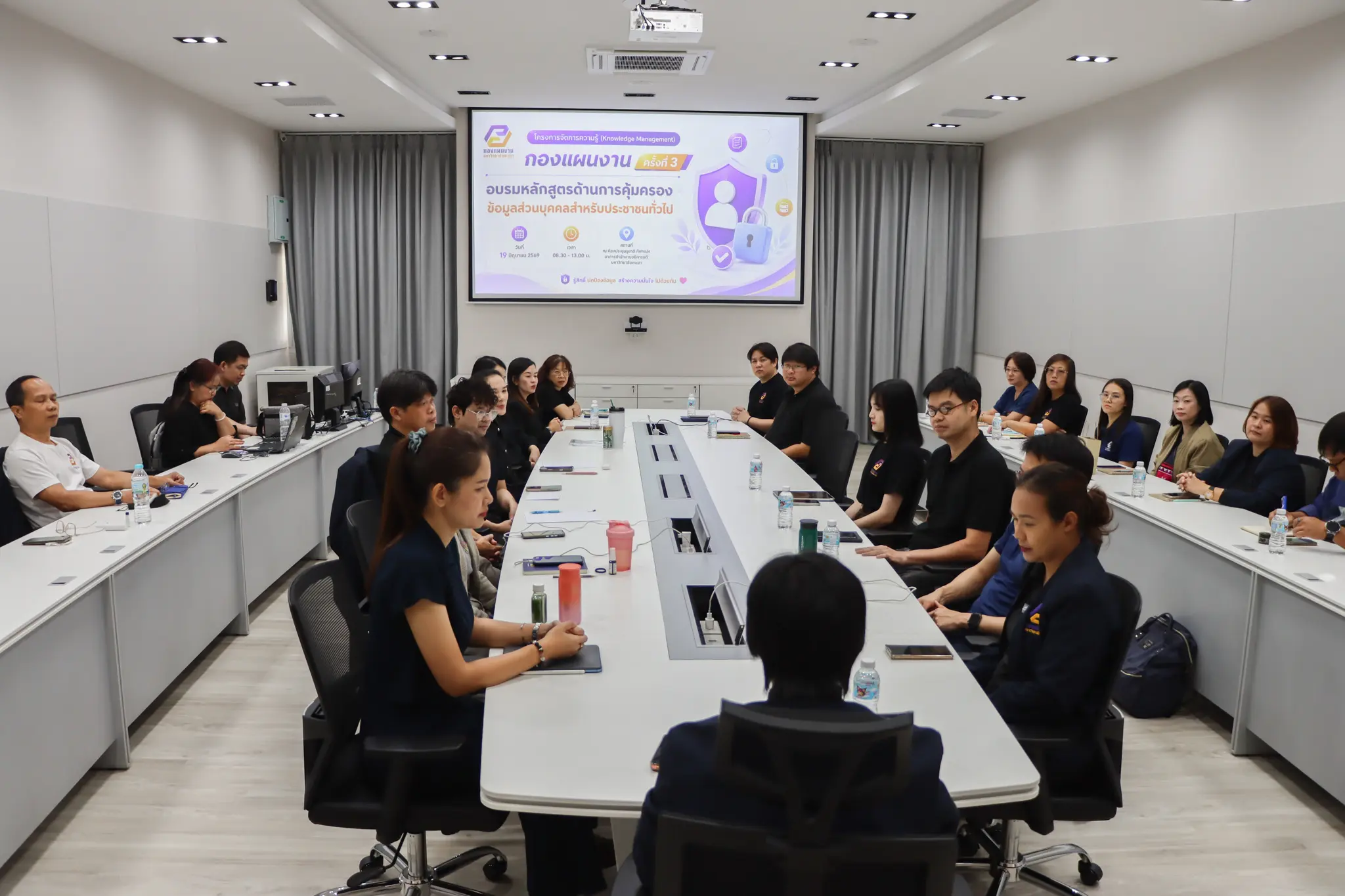
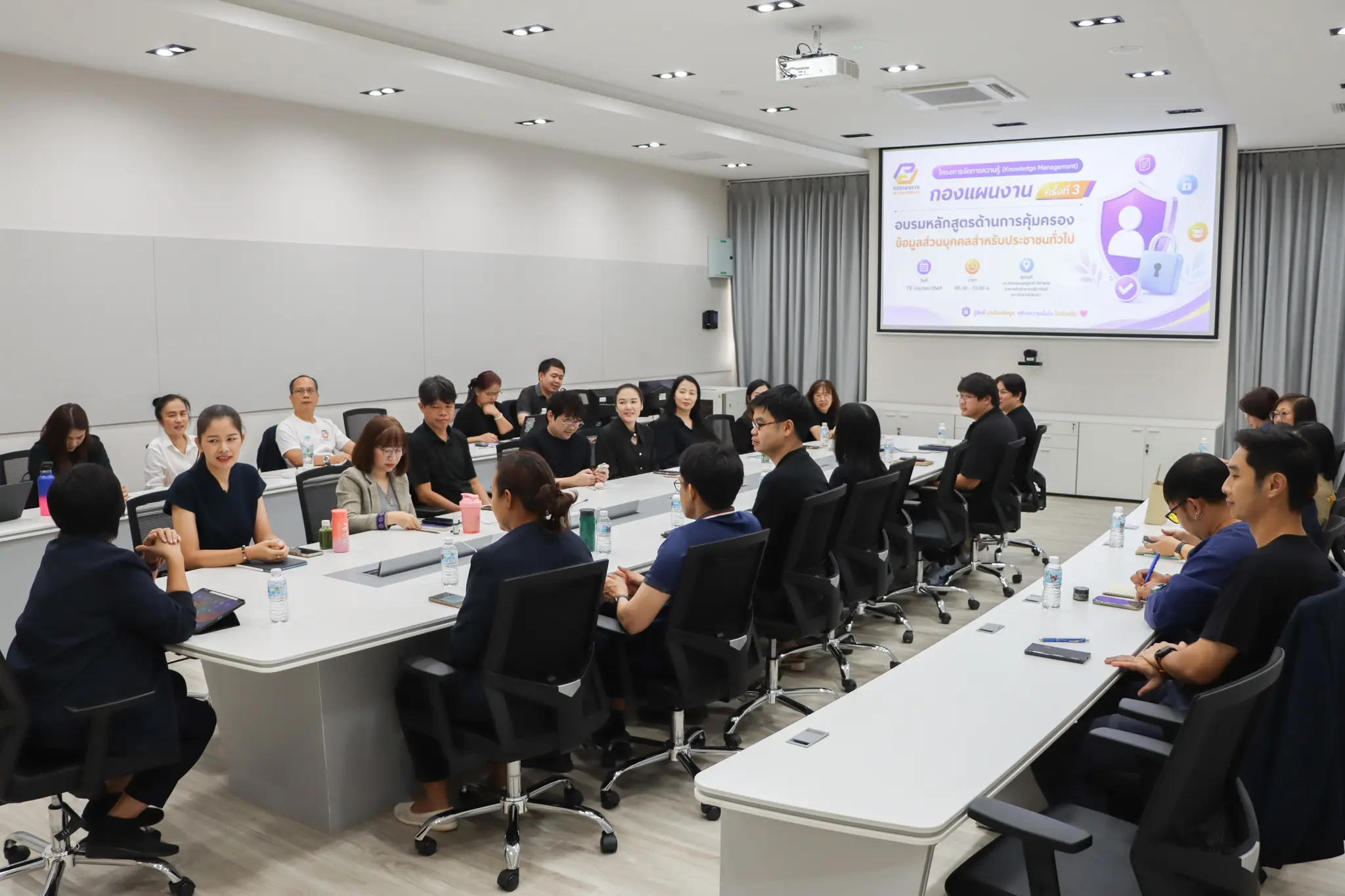
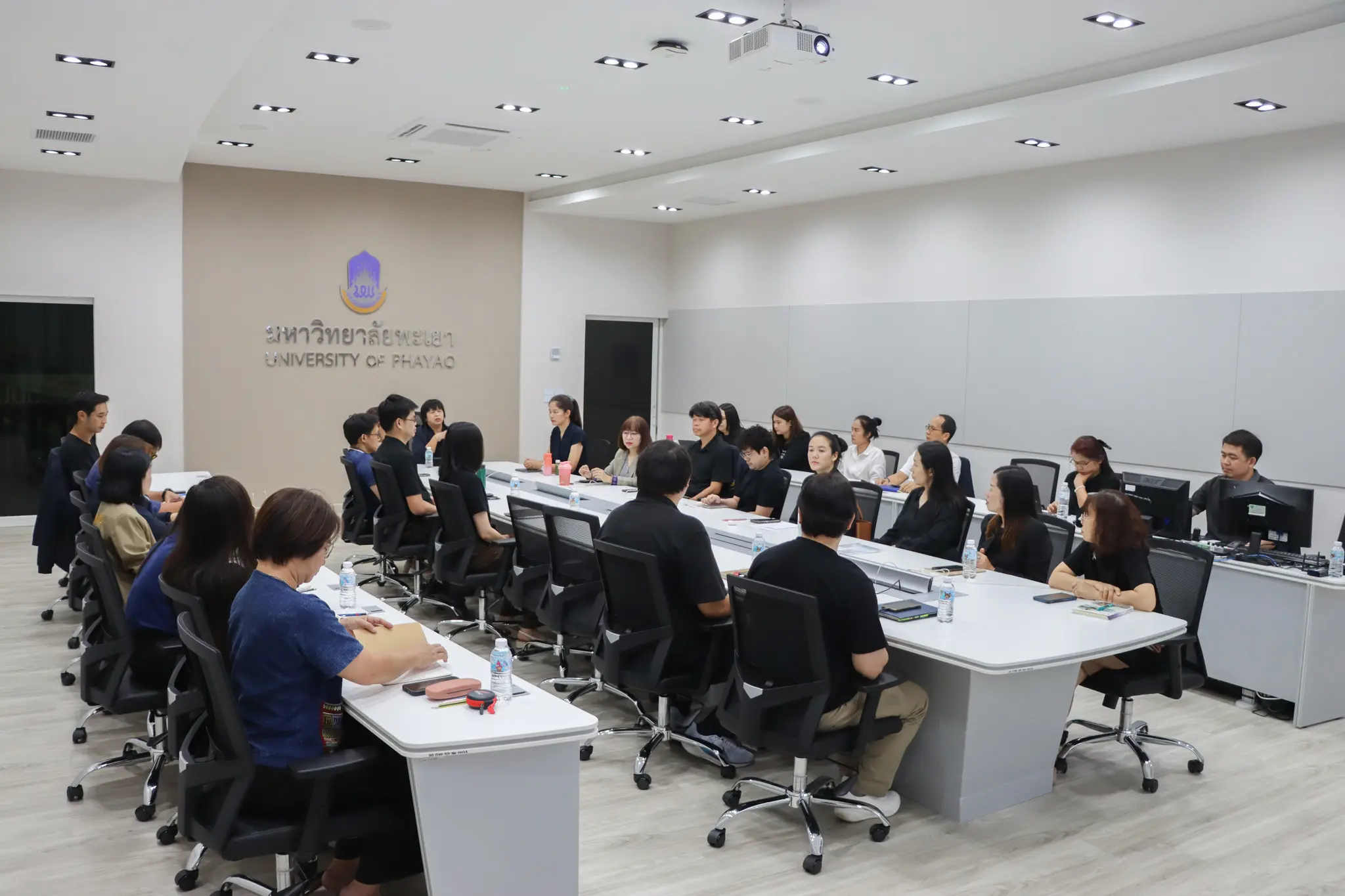
On June 19, 2026, the University of Phayao Center for Cybersecurity participated in the 3rd Knowledge Management activity organized by the Division of Planning. The event, titled "Personal Data Protection Training for the General Public," was held at the Chuchat Kilapaeng Conference Room in the Office of the President Building at the University of Phayao.
University of Phayao Center for Cybersecurity shared knowledge and exchanged experiences regarding guidelines for protecting personal data, the secure use of information technology, and building cybersecurity immunity for personnel. The center provided information on common modern-day cyber threats, such as phishing, user account credential theft, the use of insecure passwords, and the careless disclosure of personal information — all of which are factors that can lead to data breaches and cause damage at both individual and organizational levels.
Furthermore, the center recommended essential practices for managing personal data, such as:
- Verifying the reliability of information sources before use.
- Using complex, non-repeating passwords.
- Enabling Multi-Factor Authentication (MFA).
- Exercising caution when clicking links or opening attachments from unknown sources.
- Raising awareness of rights and duties under personal data protection laws to ensure confident and secure use of digital technology.
Participation in this activity reflects the role of the University of Phayao Center for Cybersecurity as a supporting agency for the university's cybersecurity, committed to building knowledge, understanding, and awareness of information security among university personnel. This initiative aims to collectively foster a strong cybersecurity culture, enabling personnel to effectively and sustainably navigate the challenges of the digital world.
University of Phayao also participated in a consultation session with the Office of the Personal Data Protection Commission (PDPC) and the National Cyber Security Agency (NCSA) to discuss strategies for preventing personal data breaches caused by cyber threats.