Ratio of Female Leaders to Total Institutional Leaders
| Leadership Level | Total Leaders & Deputies | Female Leaders & Deputies |
|---|---|---|
| University Level | 16 | 6 |
| Faculty / School Level | 212 | 115 |
| Study Program Level | 53 | 34 |
| University-Level Units | 93 | 55 |
| Total | 374 | 210 |
University of Phayao is deeply committed to fostering gender equality and ensuring equal opportunity in access to institutional leadership and administrative roles. This principle directly advances United Nations Sustainable Development Goal 5 (SDG 5: Gender Equality) and stands as a core metric within global benchmarks, such as the UI Green Metric World University Rankings. Furthermore, this proactive approach reinforces the university's alignment with national institutional excellence and governance frameworks, specifically the Education Criteria for Performance Excellence (EdPEx) and the Integrity and Transparency Assessment (ITA).
University of Phayao features an administrative structure that tangibly reflects its policies on promoting gender equality and opportunity. The institution is led by Associate Professor Dr. Supakorn Pongbangpho, the President and chief leader driving the university's strategic vision, alongside a significant number of female executives across various faculties and supporting divisions.

Assoc. Prof. Dr. Supakorn Pongbangpho — President of University of Phayao
Furthermore, the university features a strong representation of female personnel holding administrative and leadership positions across all institutional levels, as follows:University of Phayao has 7 executives serving as Vice Presidents.
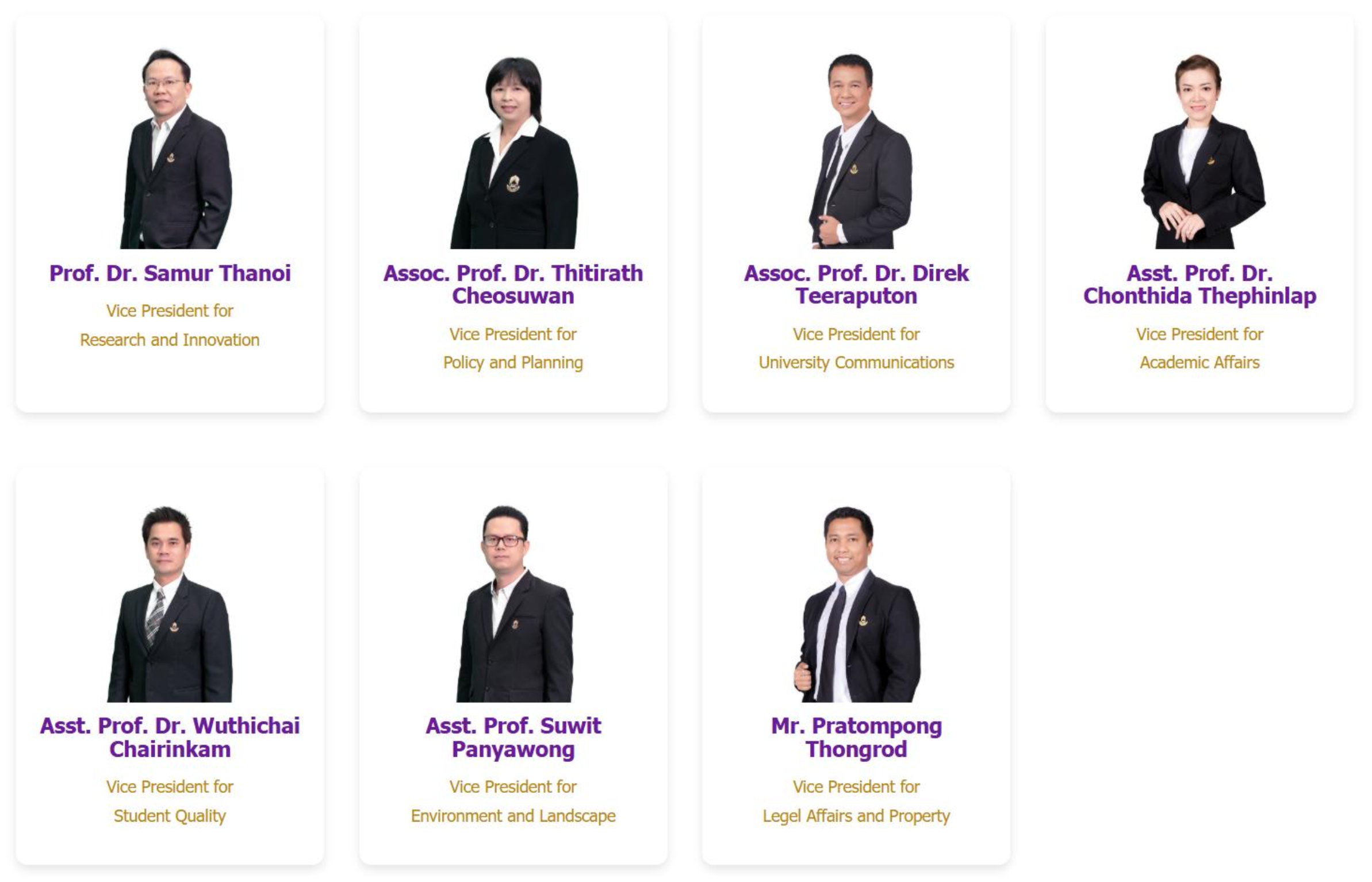
Vice Presidents of University of Phayao
University of Phayao has 8 executives serving as Assistant Presidents.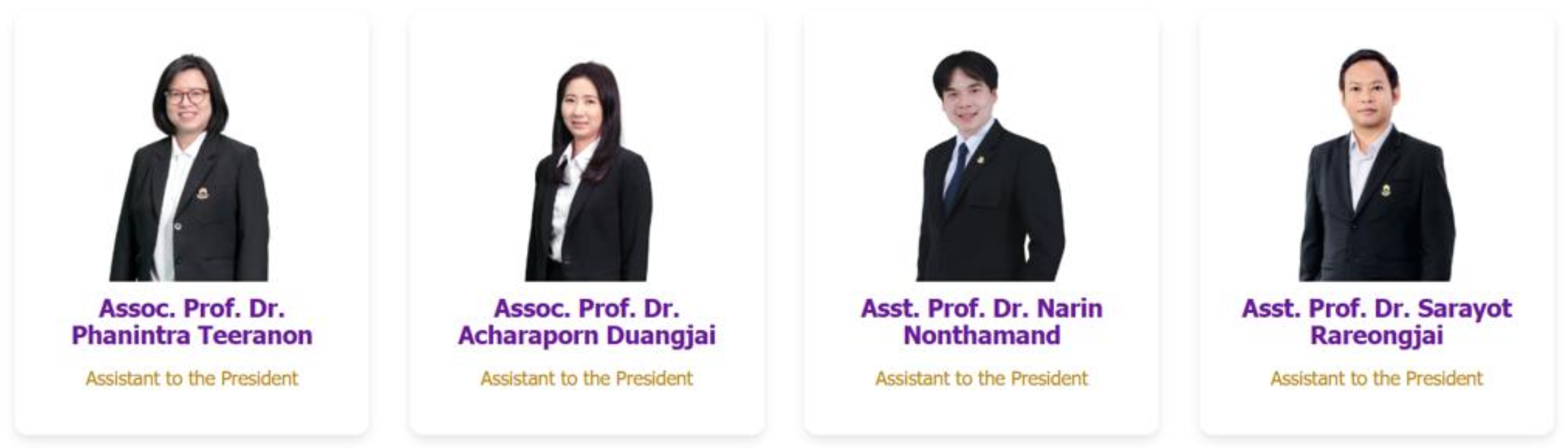

Assistant Presidents of University of Phayao
Executives in institutional units, Chiang Rai campus, and the Demonstration School of the University of Phayao.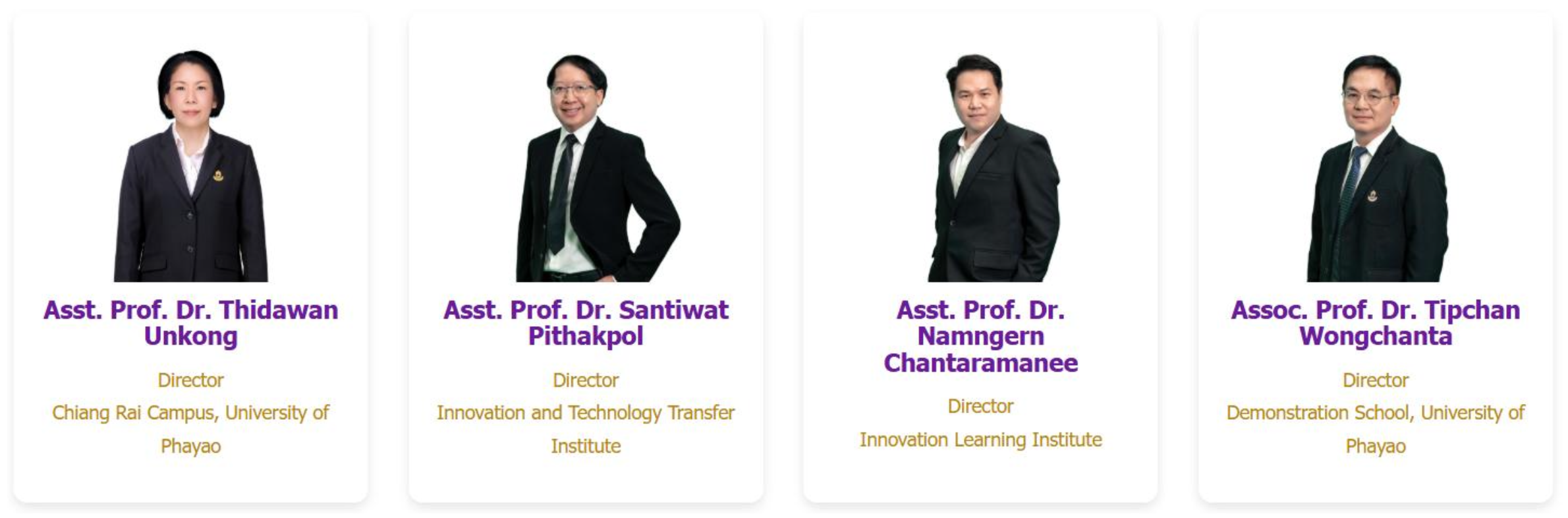
Executives in institutional units, Chiang Rai campus, and the Demonstration School of the University of Phayao
Total Number of Leaders & Deputies and Female Leaders & Deputies at University, Faculty, Study Program, and University-Level Units.| Leadership Level | Total Leaders & Deputies | Female Leaders & Deputies |
|---|---|---|
| University Level | ||
| - President | 1 | 1 |
| - Vice Presidents | 7 | 2 |
| - Assistant Presidents | 8 | 3 |
| Faculty / School Level | ||
| - Dean | 18 | 5 |
| - Associate Dean | 63 | 26 |
| - Assistant Dean | 49 | 29 |
| - Head of the Office of the School | 18 | 14 |
| - Supervisor | 64 | 41 |
| Study Program Level | ||
| - Head of the Bachelor | 53 | 34 |
| University-Level Units | ||
| - Director | 19 | 8 |
| - Deputy Director | 7 | 4 |
| - Supervisor | 67 | 43 |
| Total | 374 | 210 |
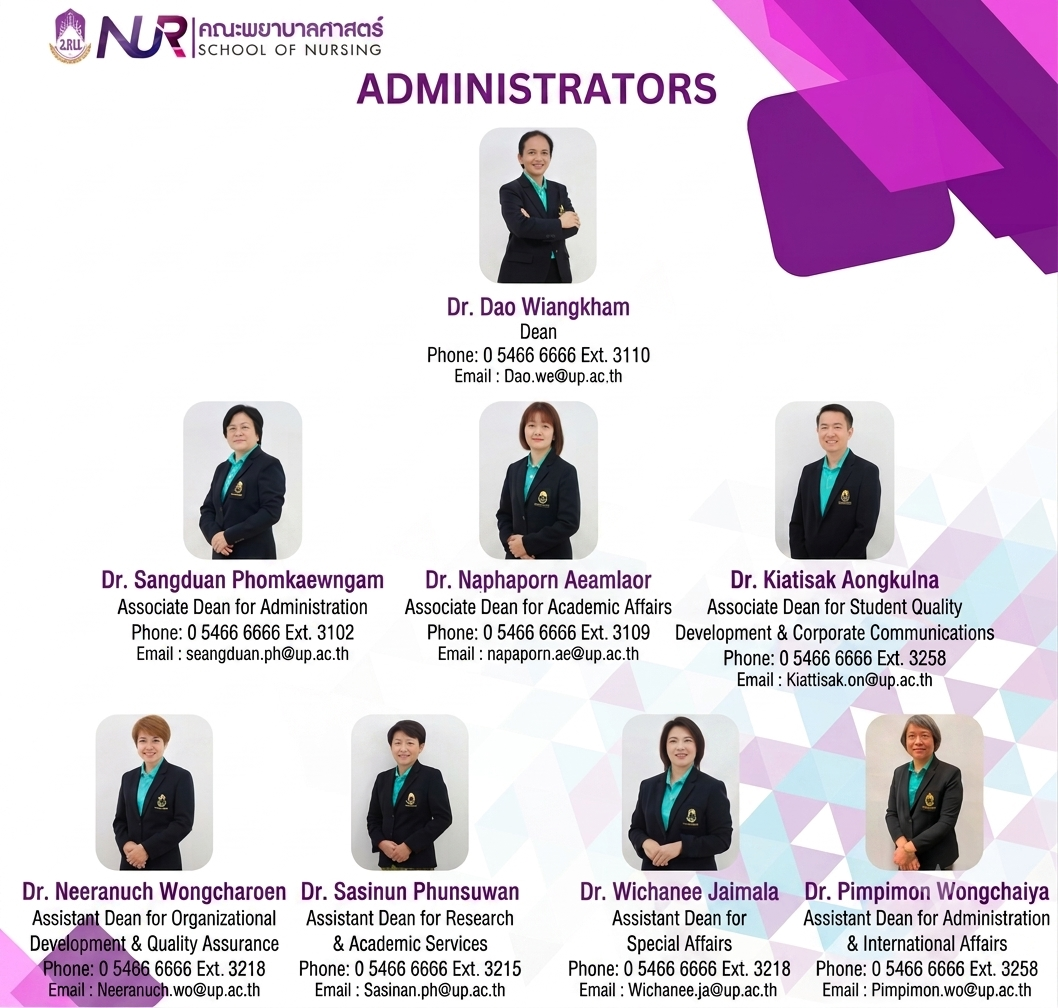
Examples of Female Deans at the University of Phayao
School of NursingDean: Assistant Professor Dr. Dao Wiangkham
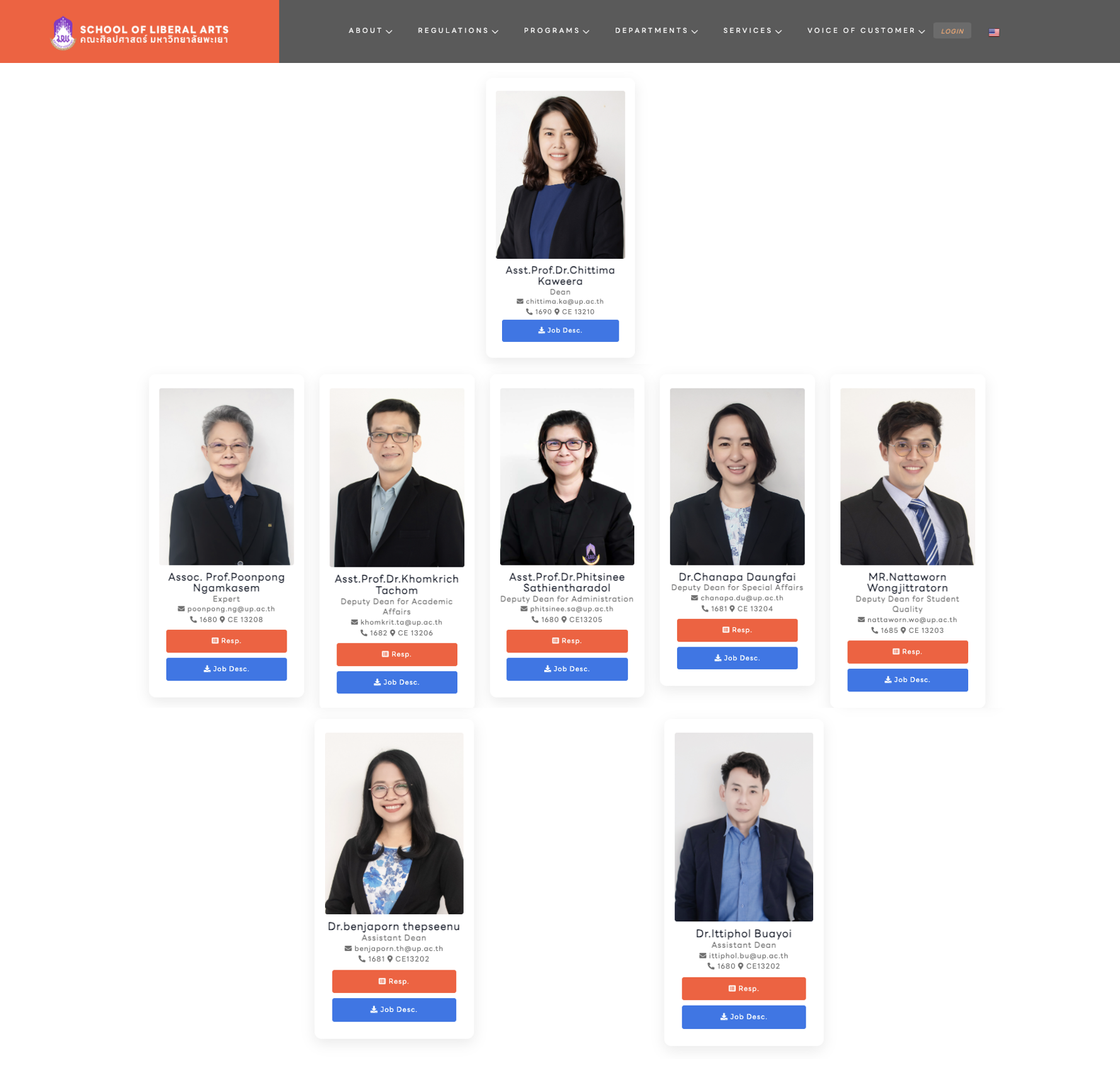
If the School of Nursing represents outstanding female leadership in the health sciences, the School of Liberal Arts serves as proof that the University of Phayao provides equal opportunities and fosters a strong, growing cohort of female leaders across all academic disciplines, extending far beyond any single profession.
School of Liberal Arts
Dean: Assistant Professor Dr. Chittima Kaweera
School of Business and Communication Arts
Dean: Assistant Professor Dr. Tanyatip Kharuhayothin

Female Leadership in Central Administrative Divisions
The central administrative divisions and support units under the Office of the President constitute the operational and supporting core of the University of Phayao. A high proportion of female leaders within this segment provides clear evidence to external assessors that women play a leading role not only in academic fields but also in vital areas of policy formulation, structural development, resource management, and overall organizational growth.The female leaders within the administrative sectors of the University of Phayao play a significant role in decision-making and executive management across a wide range of specialized areas, encompassing:
- Administration and finance (e.g., Division of Central Administration, Division of Finance)
- Strategic planning and educational services (e.g., Division of Planning, Division of Educational Services)
- Student and community development (e.g., Division of Student Affairs, Center of Arts and Culture)
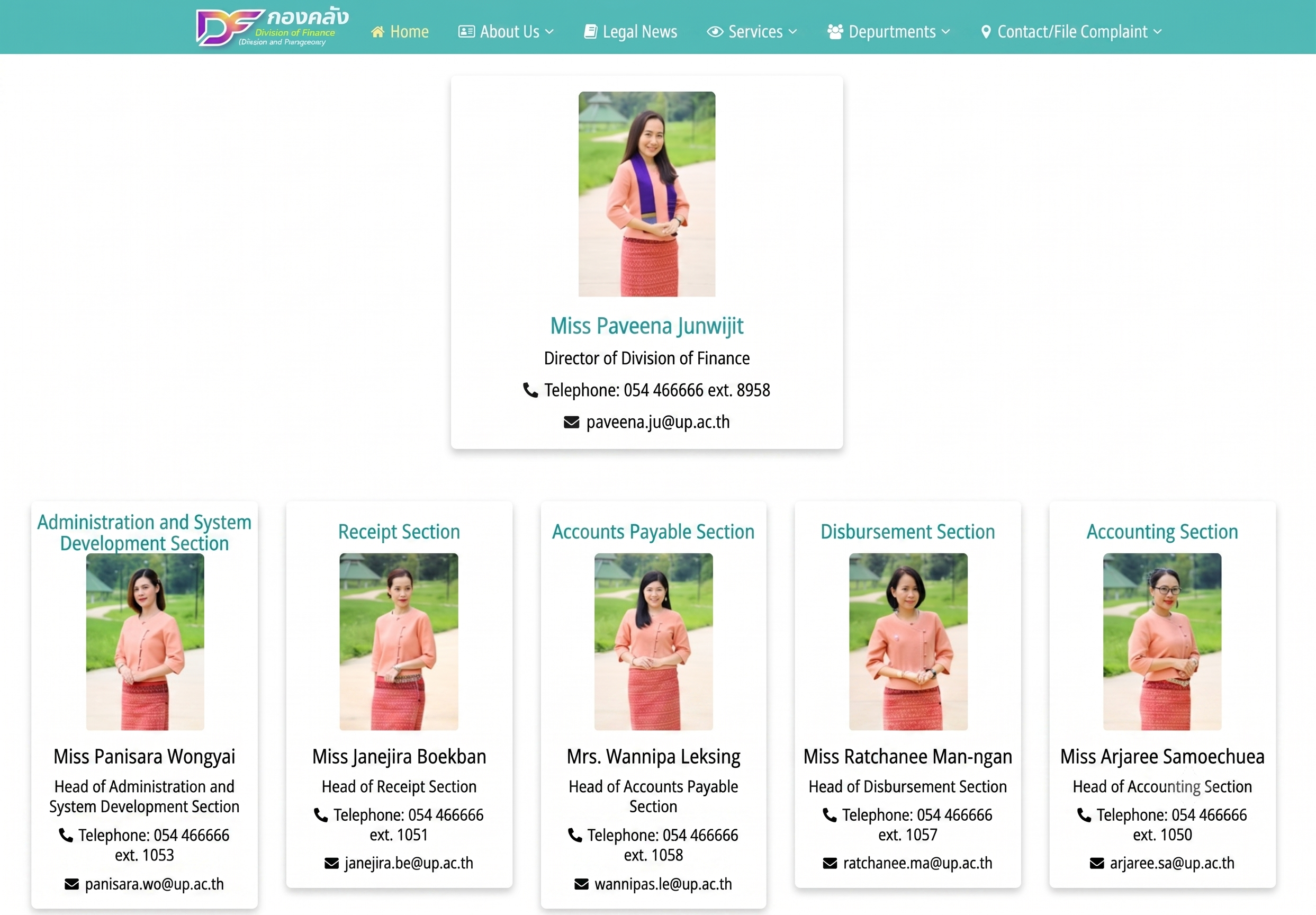
Division of Finance
Director: Miss Paveena Junwijit
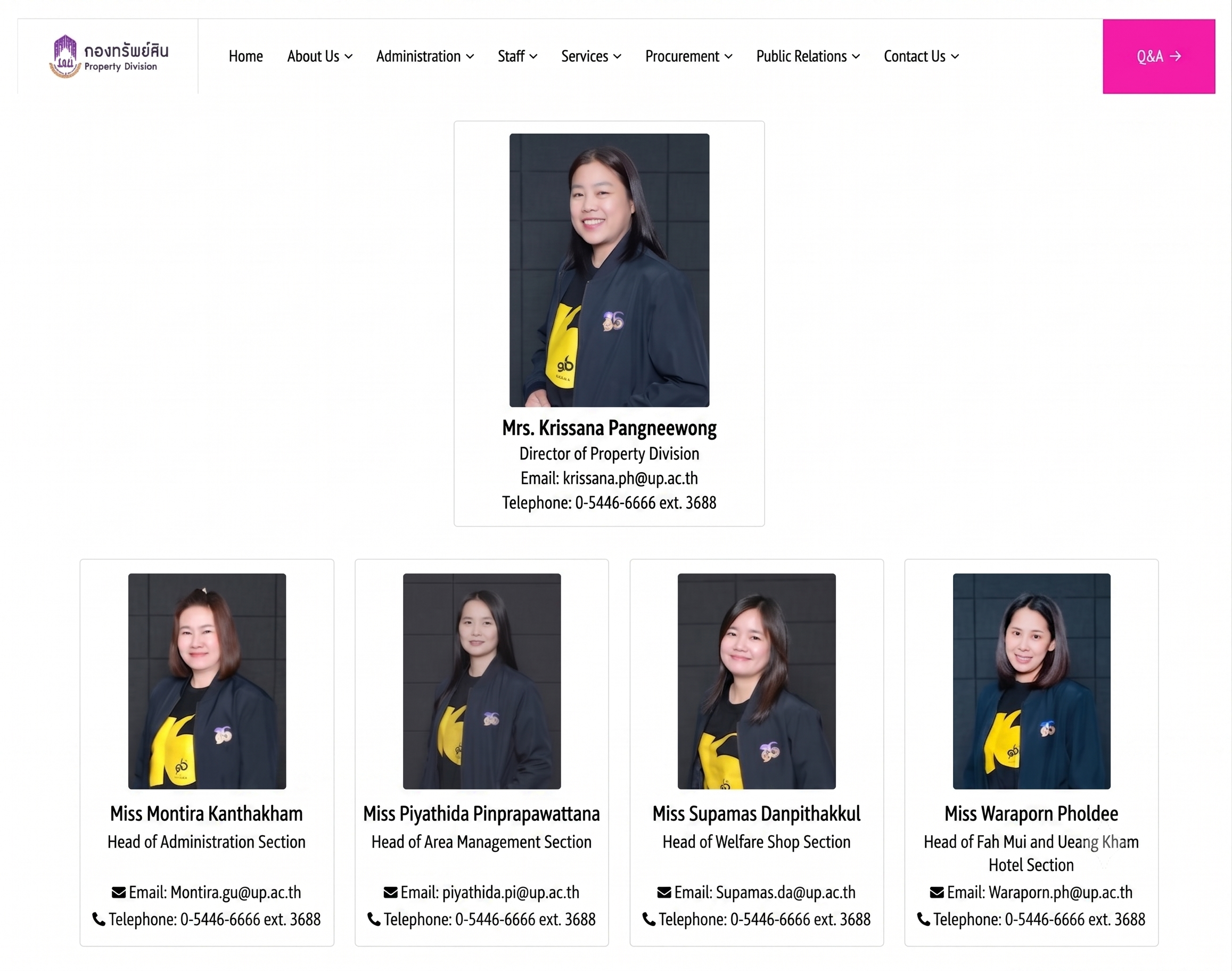
Division of Property
Director: Mrs. Krissana Pangneewong
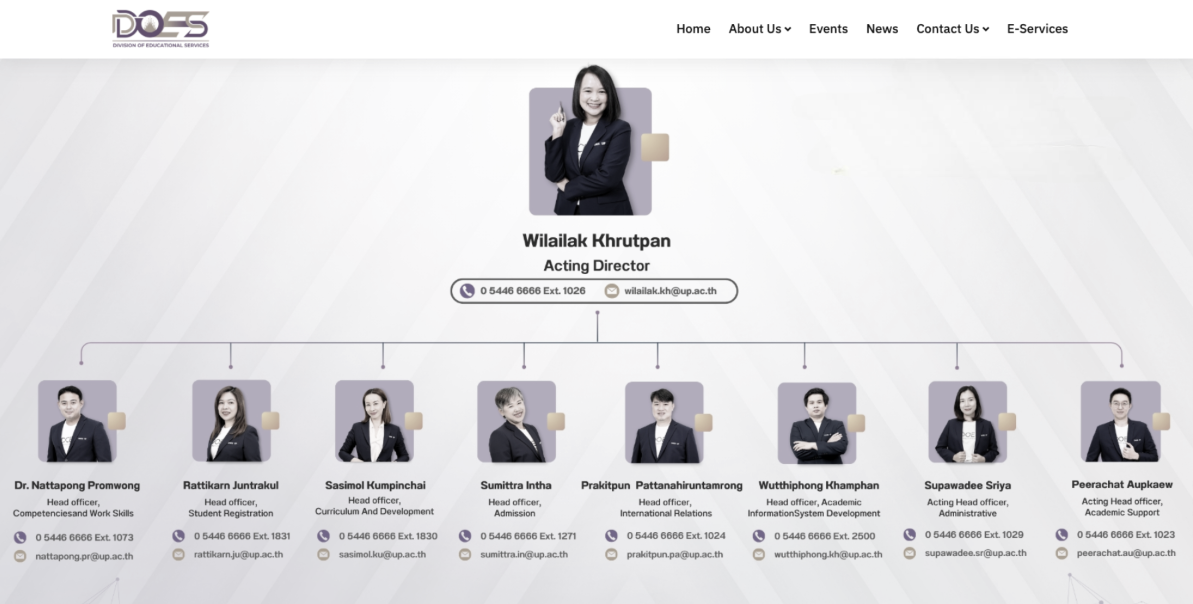
Division of Educational Services
Director: Miss Wilailak Khrutpan
University of Phayao continuously implements measures to promote and develop the potential of its support staff by providing women with equitable access to advanced management and leadership training. Consequently, the proportion of female leaders in administrative roles has demonstrated a steady upward trend year over year.