Option 2: Recommended by University of Phayao
CO2 (electricity)
=
electricity usage per year (kWh)
1000
× 0.84
=
3,162,779 kWh
1000
× 0.84
= 2,657 metric tons
CO2 (bus) (University of Phayao uses 100% electricity, which is included in the electricity consumption.)
=
number of shuttle bus in your university × total trips for shuttle bus service each day × approximate travel distance of vehicle each day inside campus only (KM) × 240
100
× 0.005
=
0 × 10 × 105 × 240
100
× 0.005
= 0 metric tons
CO2 (cars)
=
number of cars entering your university × 2 × approximate travel distance of vehicle each day inside campus only (KM) × 240
100
× 0.02
=
917 × 2 × 4.5 × 240
100
× 0.02
= 396 metric tons
CO2 (motorcycle)
=
number of motorcycle entering your university × 2 × approximate travel distance of vehicle each day inside campus only (KM) × 240
100
× 0.01
=
10 × 2 × 4.5 × 240
100
× 0.01
= 2 metric tons
CO2 (total)
= 2,657 + 0 + 396 + 2
= 3,055 metric tons
Carbon footprint in 2024 = 3,055 metric tons
Total Carbon Footprint (University of Phayao, Thailand)
Global warming is primarily driven by CO₂ emissions resulting from human activities. Currently, the global climate is approaching a critical tipping point, beyond which temperature increases may become irreversible. In response, nations and organizations worldwide have committed to achieving carbon neutrality by 2050. University of Phayao, with over two decades of research experience in climate change, possesses the knowledge, expertise, human resources, and technological capacity to address these challenges. The university is widely recognized, both nationally and internationally, as a leader in energy conservation, reflecting its deep understanding and commitment to sustainable development. In alignment with these objectives, University of Phayao has launched the "University of Phayao Carbon Neutrality 2050" initiative, aiming to achieve net-zero carbon emissions by 2040. This goal will be providing training on carbon neutrality to executives and personnel at all levels, we can improve their understanding of greenhouse gas emissions, accomplished through the expanded use of renewable energy, enhanced carbon sequestration via plantation programs, and other measures to mitigate the impacts of climate change. By setting a target earlier than national policies, University of Phayao demonstrates leadership and proactive engagement, encouraging other institutions to adopt similar strategies for the benefit of both the country and the global community. The Carbon Neutrality 2050 campaign is integrated into University of Phayao's broader Sustainable Development Goals, complementing five additional strategic objectives:- Enhancing Student Engagement — empowering students to actively participate in sustainability initiatives.
- Demonstrating Research and Innovation Impact — showcasing the university's contributions to sustainable technologies and climate solutions.
- Promoting Community Engagement — fostering collaboration with local and global communities to advance sustainability.
- Developing Green Infrastructure and Environment — implementing eco-friendly facilities and campus designs.
- Establishing a Sustainable Management System — ensuring that policies, operations, and governance support long-term environmental sustainability.
- Scope 1 (Direct Emissions): Emissions directly generated by university-owned or controlled sources, such as combustion of fuels in campus vehicles, laboratory equipment, and backup generators.
- Scope 2 (Indirect Emissions): Emissions from the consumption of purchased electricity, steam, or heat. Electricity usage, in particular, constitutes the largest contributor, accounting for approximately 94% of total emissions, reflecting the energy-intensive nature of university operations.
- Scope 3 (Other Indirect Emissions): Emissions resulting from university-related activities not directly controlled by University of Phayao, including commuting by students and staff, procurement of goods and services, and waste disposal.
Link: https://upnetzero.up.ac.th/
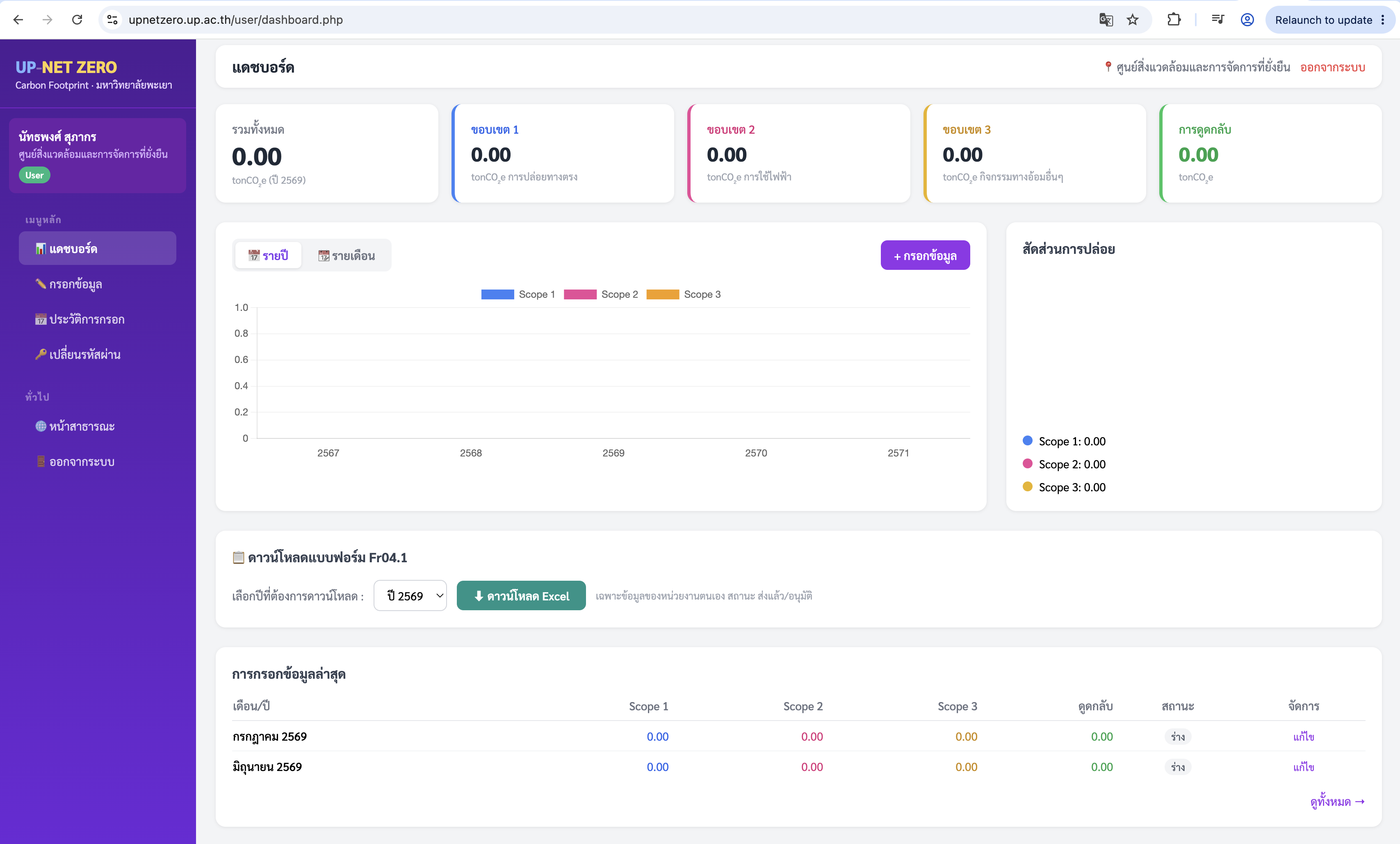
Information system for calculating greenhouse gas emissions at the organization level.
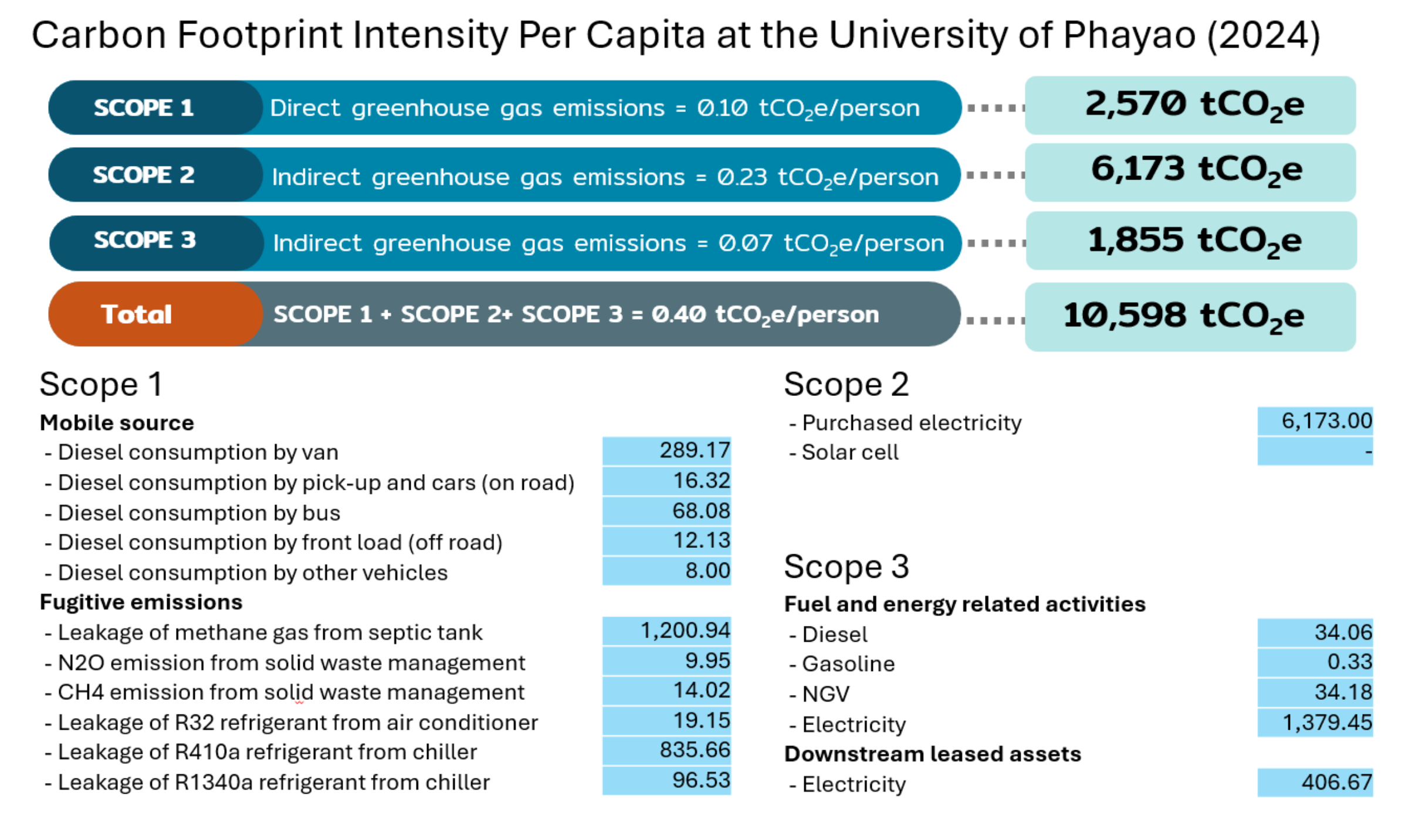
The Total Carbon Footprint (CO2 emission in the last 12 months, in metric tons) of University of Phayao: 5,748 metric tons, with the highest CO2 emissions being electricity in university, with CO2 emissions at 5,506 metric tons.Carbon Footprint Intensity Per Capita at the University of Phayao (2024)
The CFO assessment of the University of Phayao covered seven types of greenhouse gases: carbon dioxide (CO2), methane (CH4), nitrous oxide (N2O), hydrofluorocarbons (HFCs), perfluorocarbons (PFCs), sulfur hexafluoride (SF6), and nitrogen trifluoride (NF3). These gases from organizational activities are categorized into three scopes as follows:- Scope 1: Direct emissions such as stationary combustion sources (e.g., boilers and power generators), mobile combustion emissions (e.g., vehicles), and leakages (e.g., refrigerant leaks and waste treatment systems).
- Scope 2: Indirect emissions from electricity consumption.
- Scope 3: Other indirect greenhouse gas emissions, including any processes to obtain fuels or energy produced by the sources in scopes 1 and 2.
Results of the assessment of the carbon footprint per capita at the University of Phayao
The data collected in 2024 revealed that electricity consumption from the grid produced the highest amount of greenhouse gases, at 6,173 tons of CO2e or 58.25% of the university's total emissions. This result is consistent with other government organizations and entities whose highest greenhouse gas producing activities are primarily from electricity use. The carbon footprint per capita at the University of Phayao for the year 2024 was approximately 0.40 tons of CO2e per person. This figure was calculated from total emissions of 10,598 tons of CO2e divided by a population of 24,384 people engaged in university activities.| Scope | Carbon Footprint organization (CFO) (tonCO2e) |
Proportion relative to scope (scope 1, 2, and 3) |
|---|---|---|
| Scope 1 | 2,570 | 24.25 |
| Scope 2 | 6,173 | 58.25 |
| Scope 3 | 1,855 | 17.50 |
| total emissions (Scope 1, 2, and 3) | 10,598 | 100.00 |
Possible solutions to reduce the carbon footprint per capita
From the assessment above, the activity that emitted the highest amount of greenhouse gases was electricity consumption (63.08%, including electricity generated from solar rooftop installations). In 2026, it is estimated that electricity consumption will continue to be the activity that emits the most greenhouse gases. Therefore, the following actions can help reduce greenhouse gas emissions at the University of Phayao:- Reduce electricity consumption by encouraging faculties, departments, and students to use electricity more efficiently through focused energy management policies.
- Increase the use of clean energy by installing additional solar rooftops, for instance.
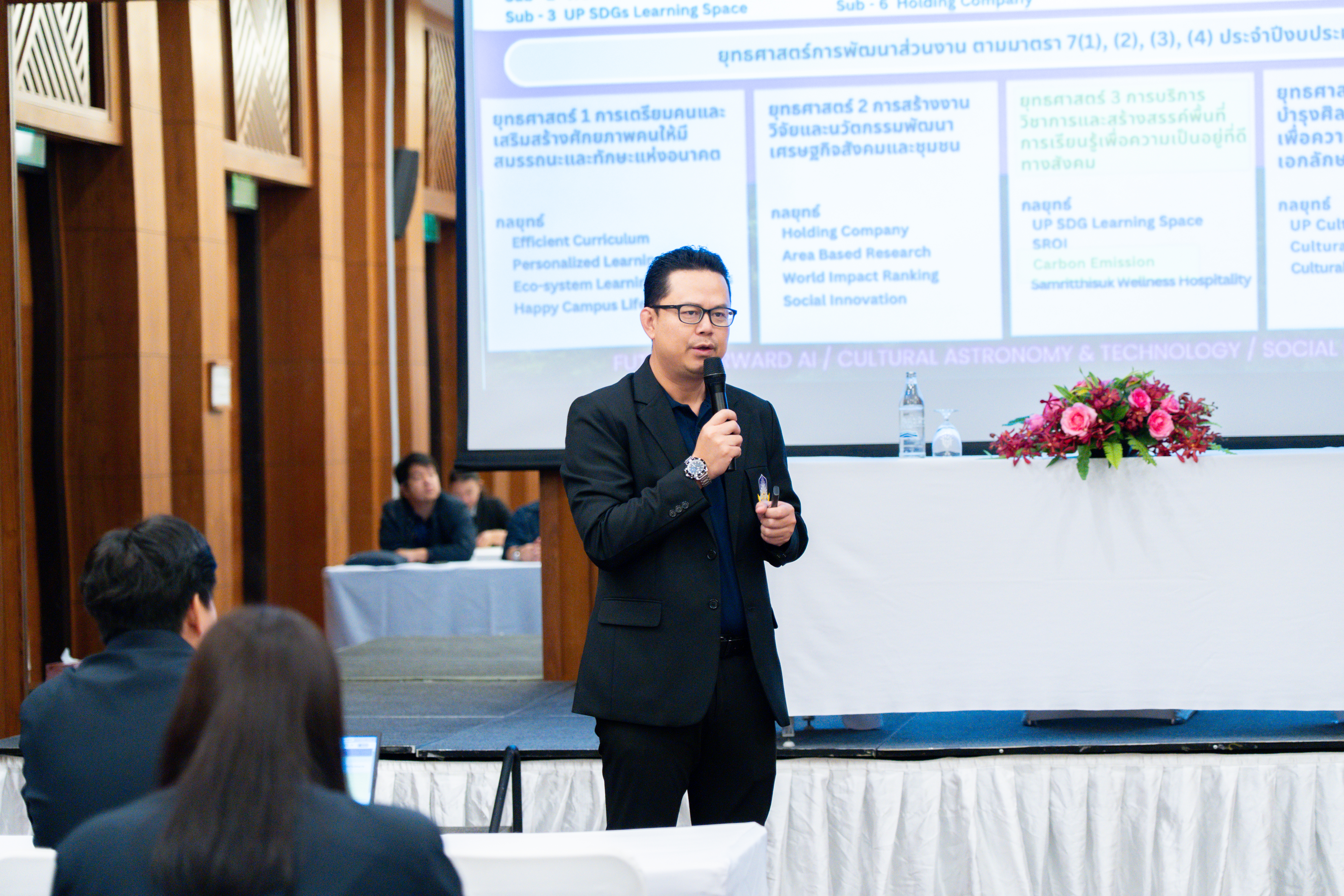
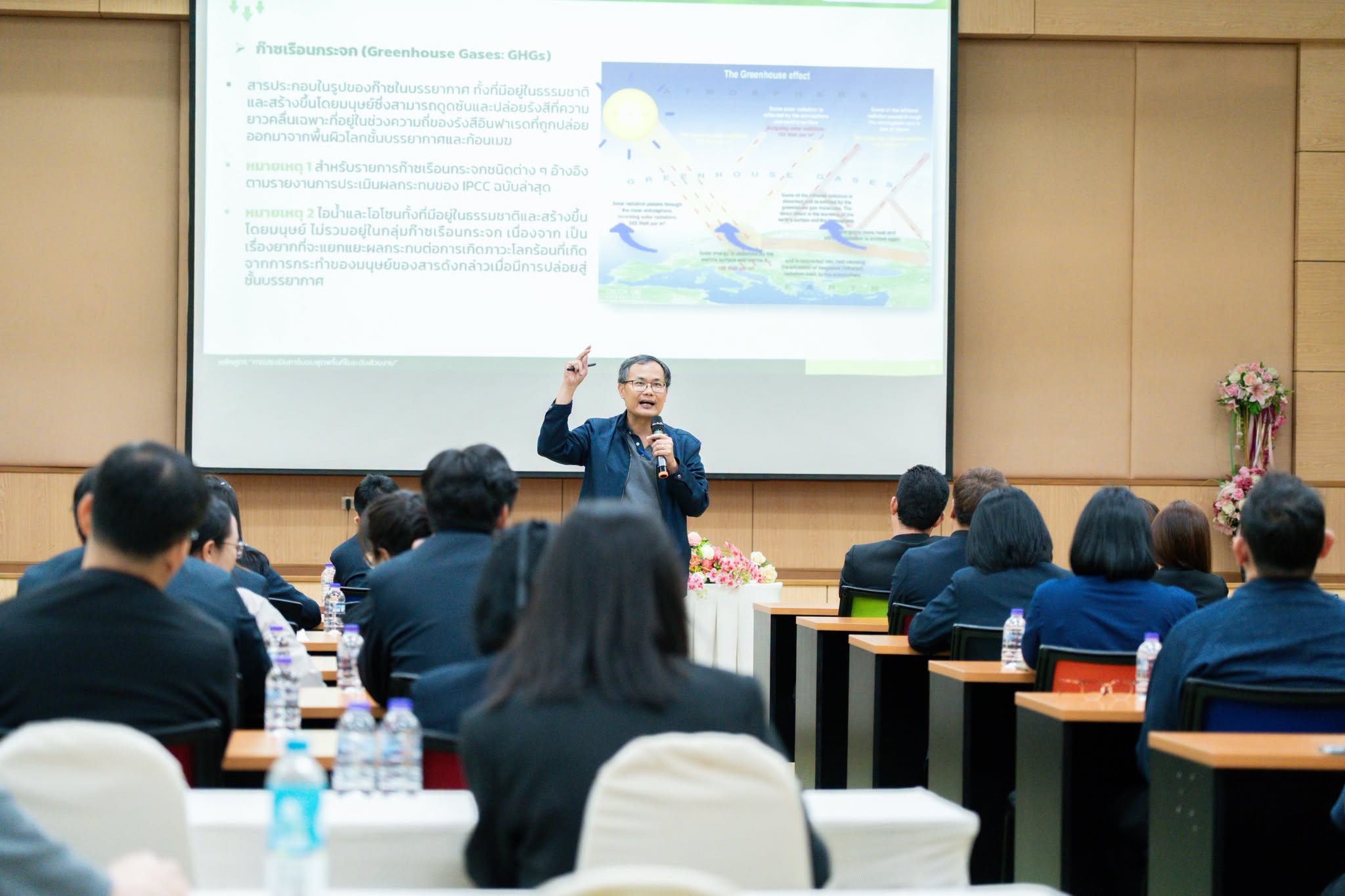
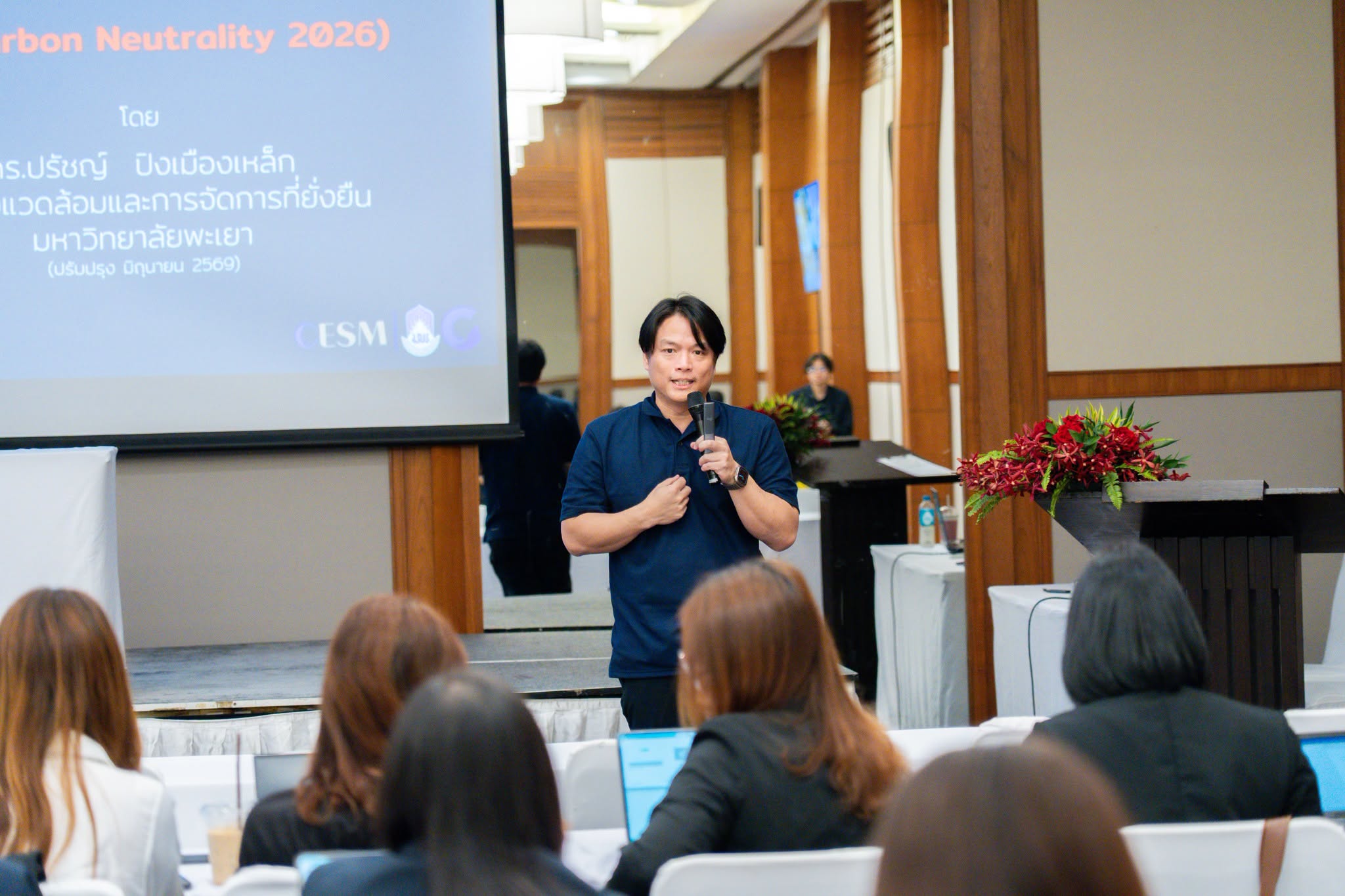
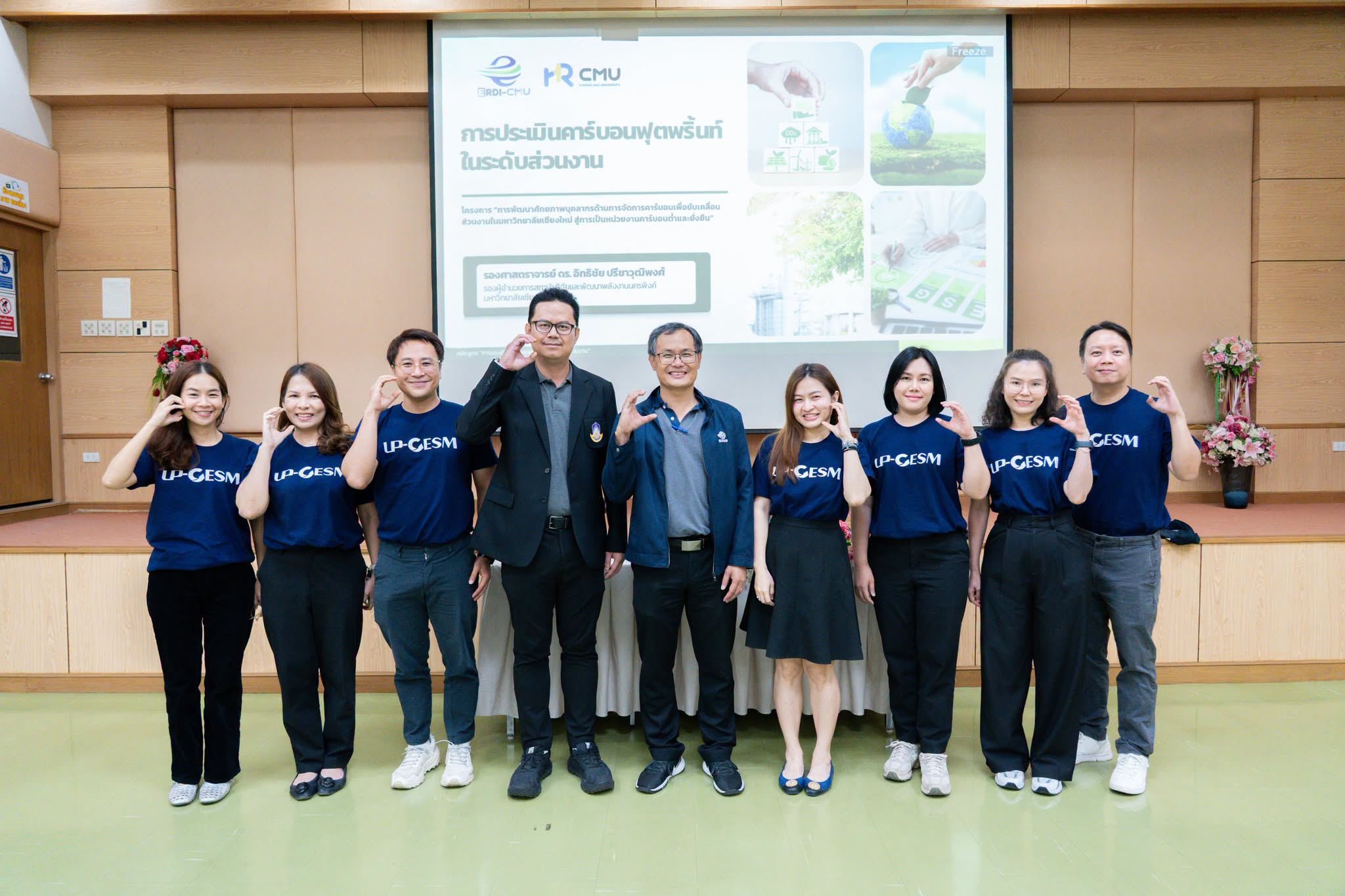
UP Carbon Neutrality training for executives
The training program covered key topics including the concepts of Net Zero, Carbon Neutrality, and Carbon Credits; organizational carbon reduction target setting; and strategic planning approaches toward achieving Net Zero emissions. Participants also received guidance on applying for Organizational Carbon Footprint (CFO) assessment and certification.