University of Phayao operates more than 14 rainwater harvesting systems across the campus to collect and store rainwater instead of allowing it to run off. A well-designed rainwater harvesting system also helps the university significantly reduce irrigation construction costs. The harvested rainwater is used for plant irrigation, which decreases the campus's dependence on tap water. As a result, University of Phayao has reduced water consumption by more than 210,400 cubic meters per year.




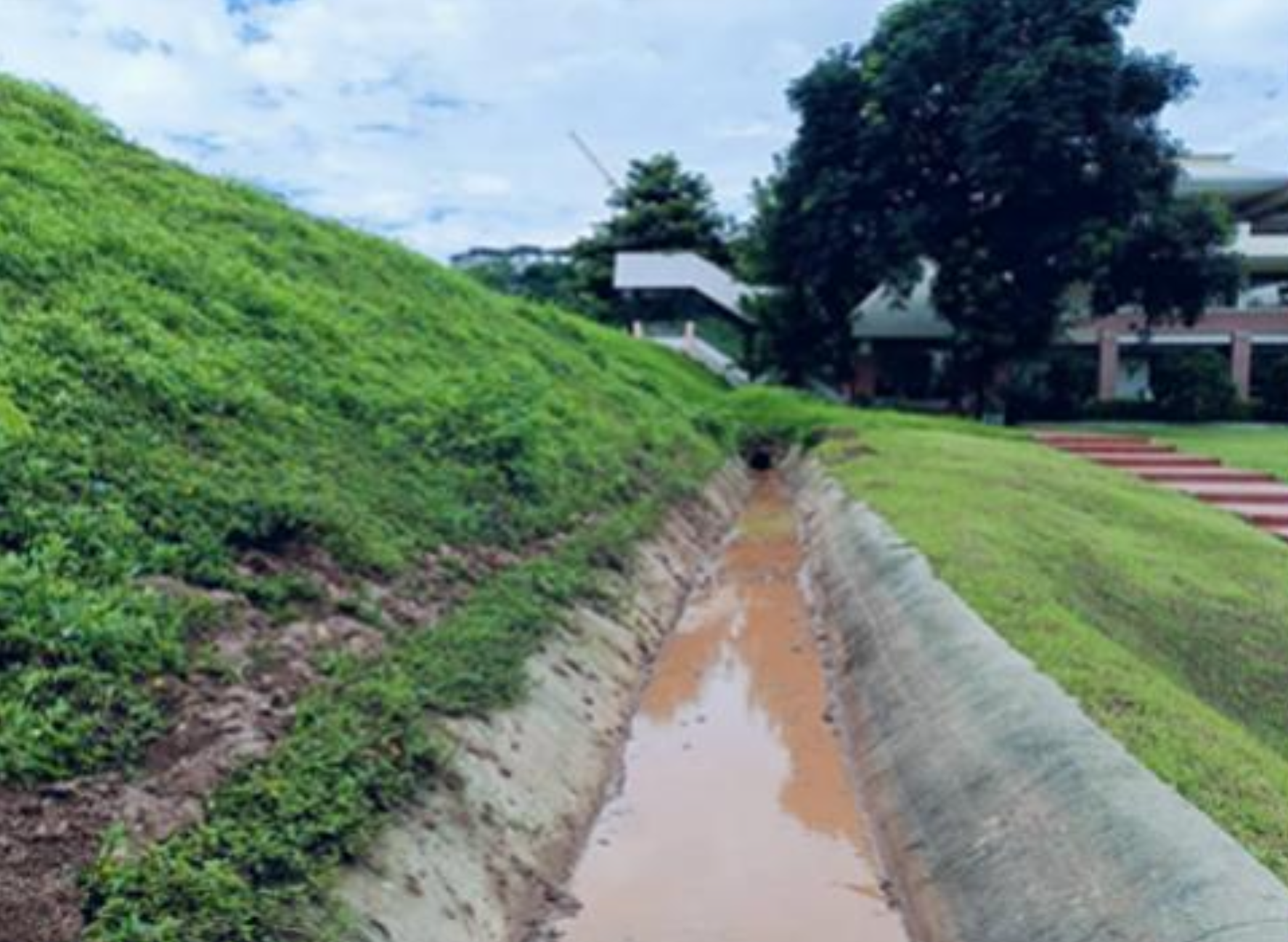
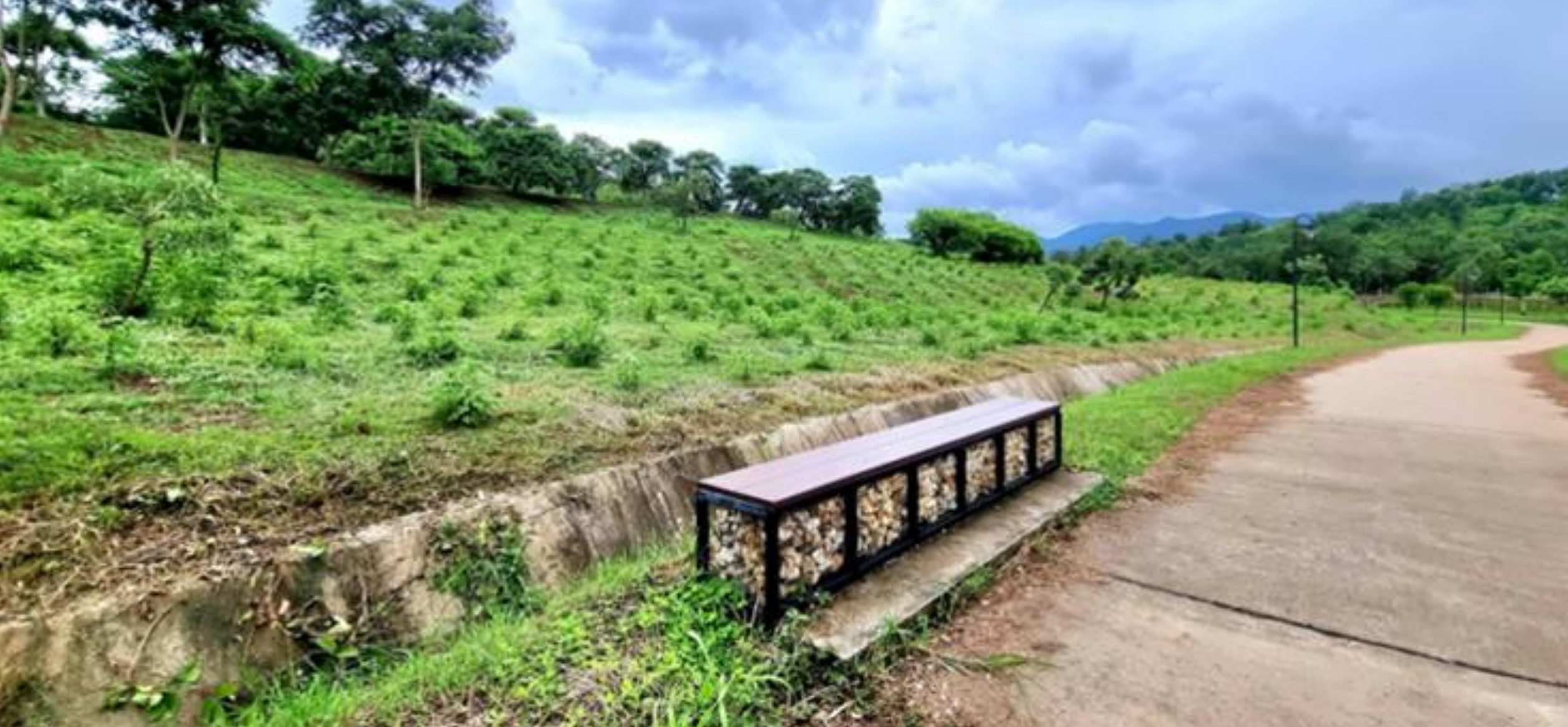
 Gutters drain water from buildings and surrounding areas into water sources.
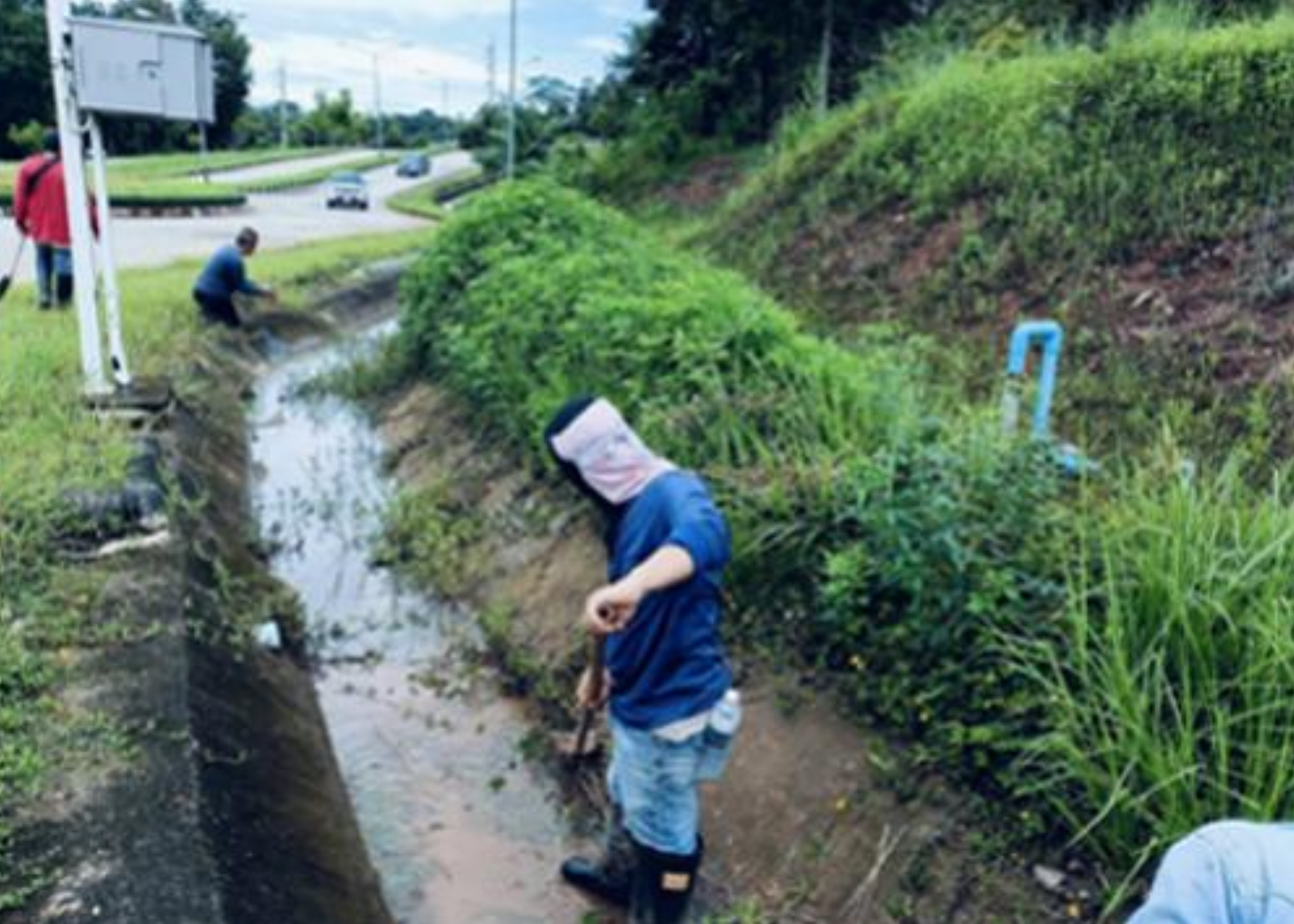
Good water quality is fundamental to maintaining a green campus. Therefore, University of Phayao conducts monthly monitoring of water quality parameters, including pH, BOD, COD, TKN, and oil & grease, at every rainwater harvesting system to ensure the water is safe before being used for irrigation. Monitoring also helps prevent high concentrations of phosphorus, which can lead to excessive algae and aquatic plant growth that ultimately reduce dissolved oxygen levels in the water.
Water Conservation – Rainwater Collection
The University of Phayao has two important water sources for producing piped water. Catchment No. 1 has a storage volume of 657,000 m³ and a second catchment, Catchment No. 2, has a storage volume of 433,000 m³. Both catchments are filled by rainwater that falls into the basin as well as rainwater channeled from the drain gutters of campus buildings. The production capacity is 500 m³/h, supplied by two water production plants at 250 m³/h per plant.
University of Phayao's two rainwater catchment reservoirs
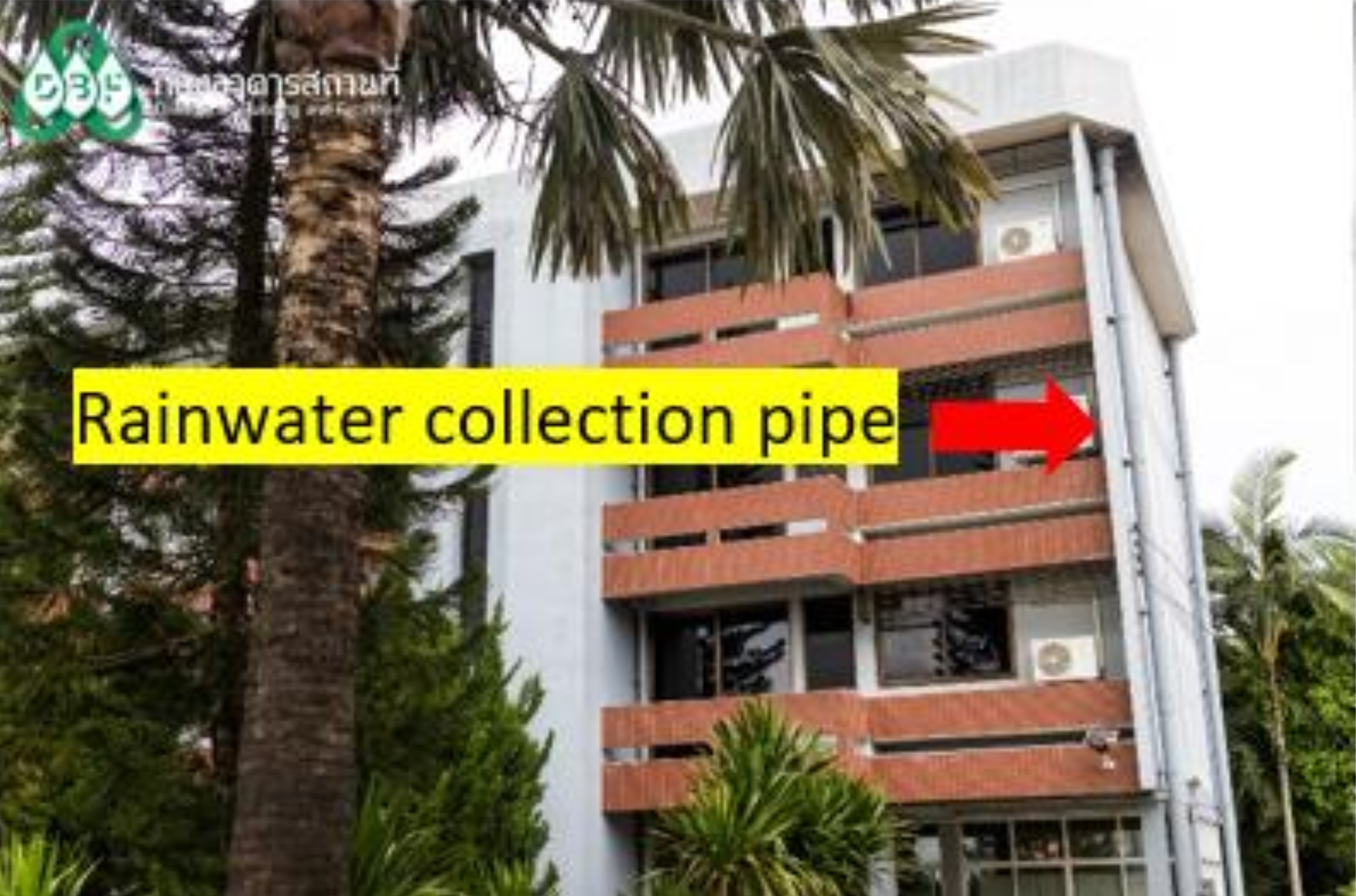
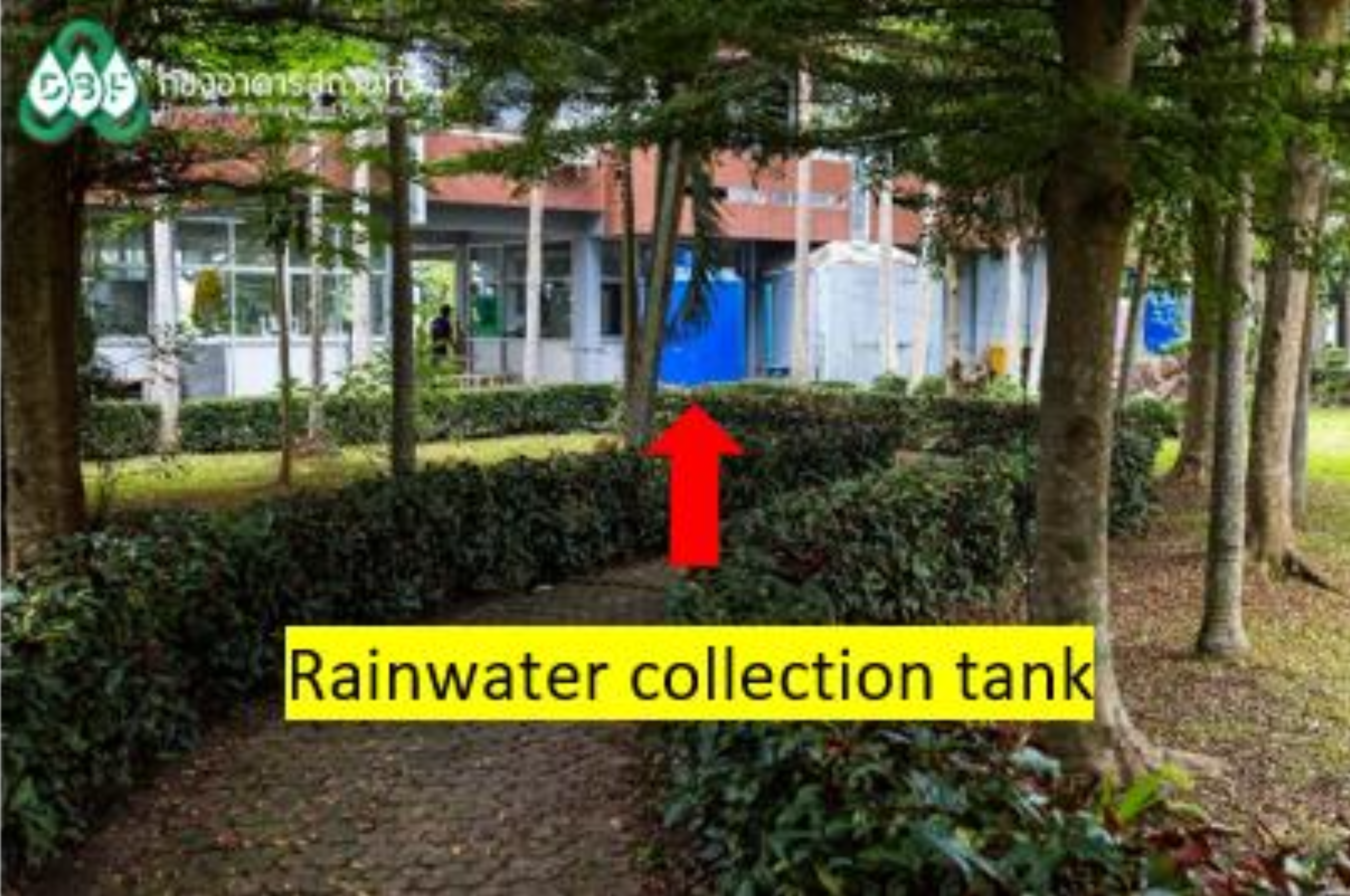
All buildings of the University of Phayao have a separated sewerage system for wastewater and for clean water (rainwater). Rainwater is collected from the roofs of buildings and discharged into the local ponds around the buildings. Some buildings also collect all of their rainwater for indoor use, including toilet flushing and watering plants inside the building.
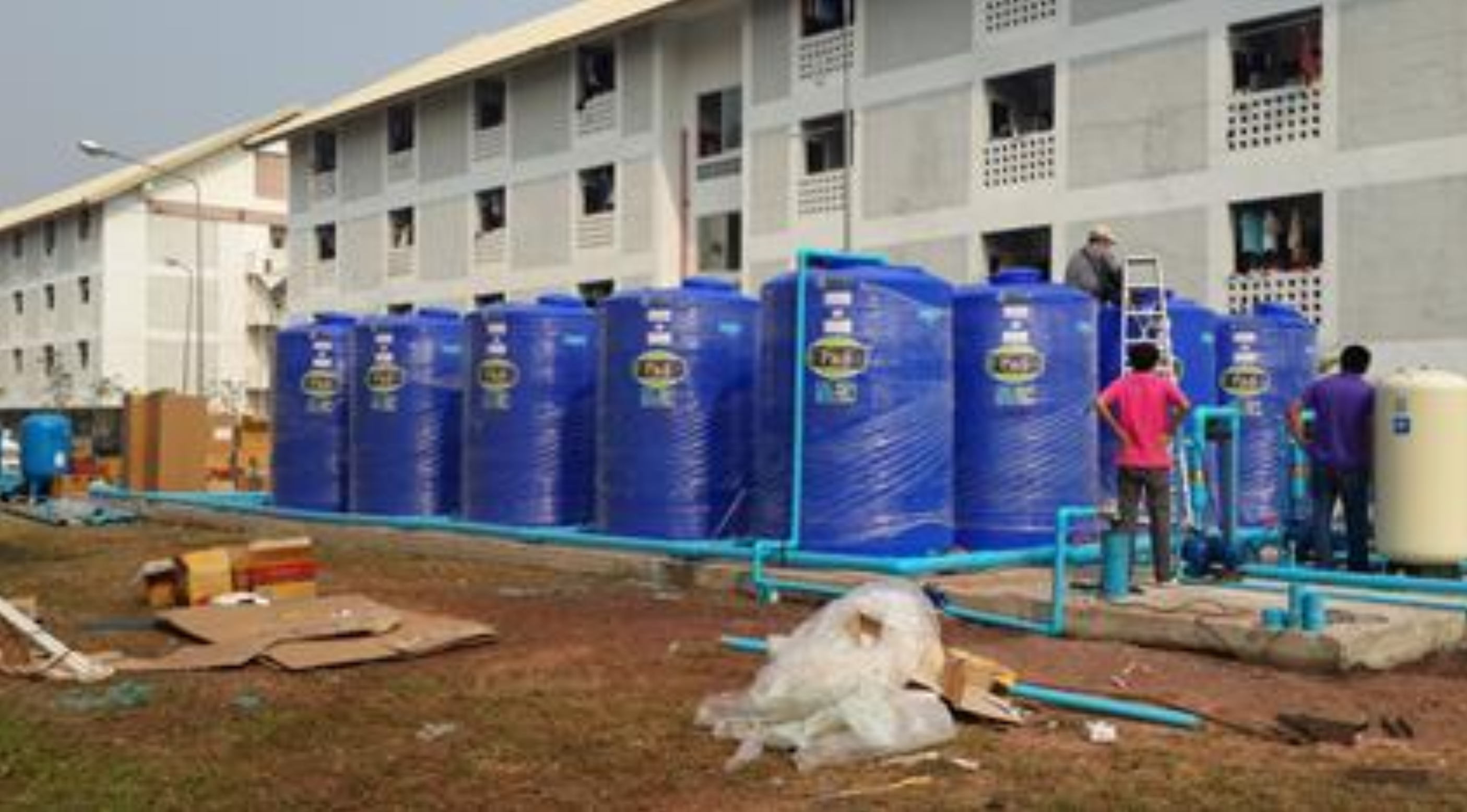
Rainwater collection pipe and rainwater collection tank
University of Phayao can cut down the cost of irrigation construction by using water from rainwater harvesting to irrigate plants, which reduces the campus's dependence on tap water.Good water quality is fundamental to maintaining a green campus. Therefore, University of Phayao conducts monthly monitoring of water quality parameters, including pH, BOD, COD, TKN, and oil & grease, at every rainwater harvesting system to ensure the water is safe before being used for irrigation. Monitoring also helps prevent high concentrations of phosphorus, which can lead to excessive algae and aquatic plant growth that ultimately reduce dissolved oxygen levels in the water.