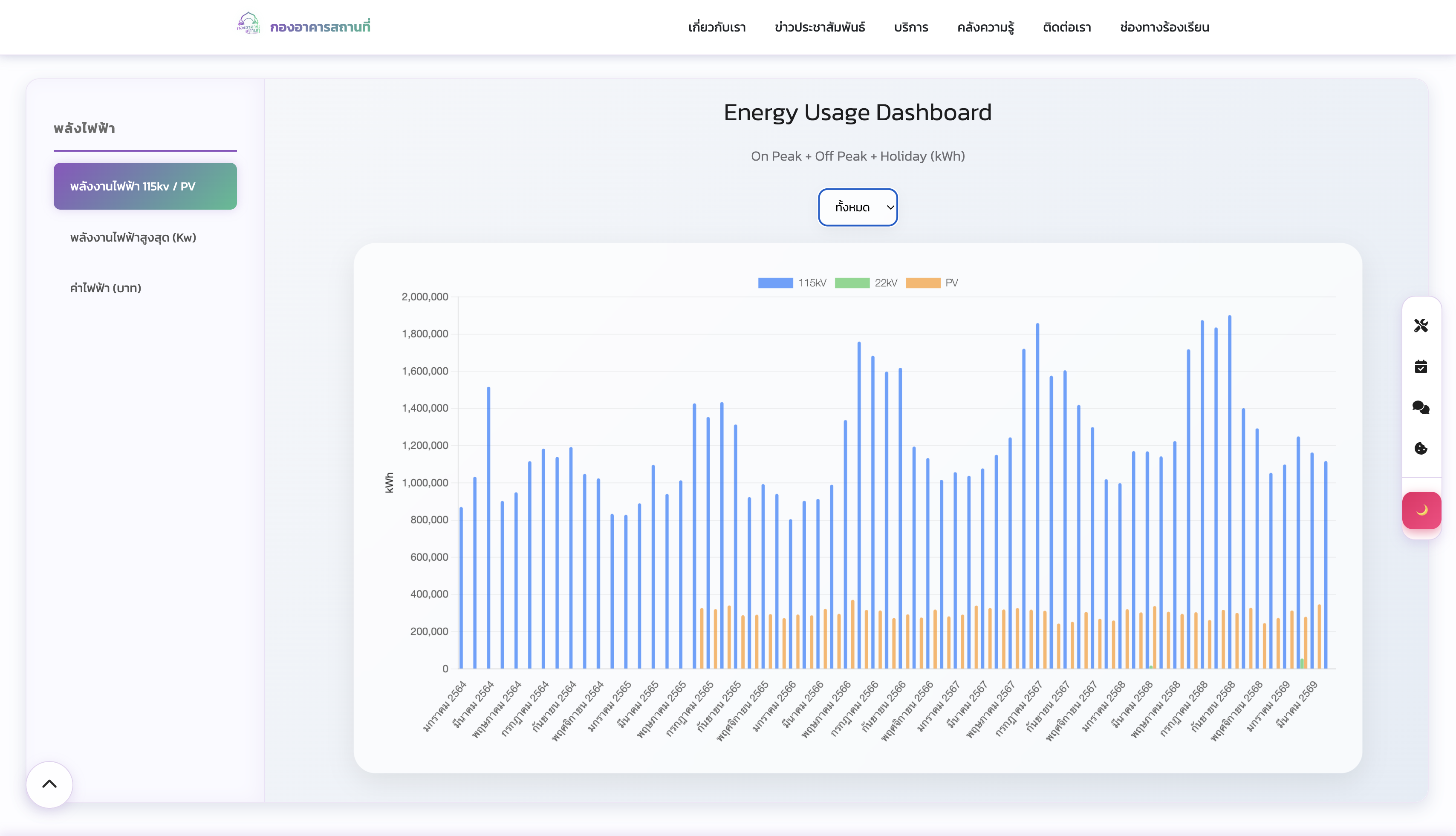
Total Electricity consumption (Yearly) in 2021-2026 (University of Phayao, Thailand)
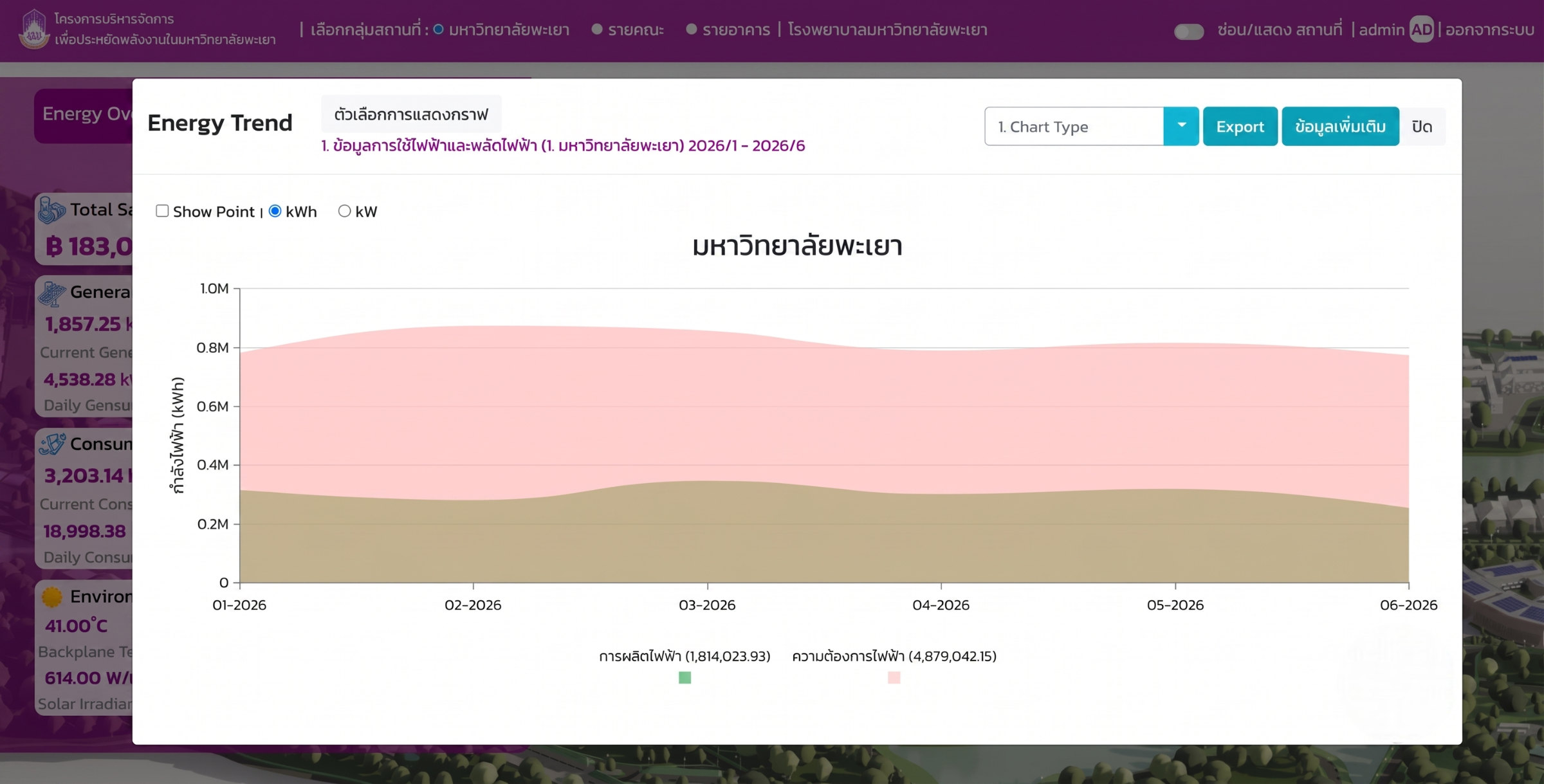
Electricity consumption (Monthly) (kWh) in 2026 (University of Phayao, Thailand)
Targets: 35% reduction on energy usage (capita/year) by 2028 compared to 2020 baseline.Current Status: In 2026, 23% reduction on energy usage (capita/year) compared to 2018 baseline. Electricity consumption is one of the most significant indicators of sustainability and energy management in higher education institutions. At University of Phayao, annual electricity usage reflects not only the daily operational needs of the campus but also the university's commitment to sustainable development and efficient energy use. With a growing population of students, academic staff, laboratories, offices, and advanced research facilities, University of Phayao's electricity demand continues to expand in line with its mission to provide high-quality education, research, and innovation. On a yearly basis, electricity consumption at University of Phayao covers a wide variety of facilities, including classrooms, lecture halls, research centers, student dormitories, smart buildings, laboratories with advanced scientific equipment, libraries, cafeterias, and recreational spaces. Each of these facilities requires a significant amount of power to maintain a conducive learning and working environment. For example, laboratories often use high-energy-consuming instruments, while classrooms and office spaces rely heavily on air conditioning and lighting due to Thailand's tropical climate. This creates a considerable annual energy demand that the university must carefully manage. However, University of Phayao has consistently emphasized energy efficiency and sustainability in its operations. The university has adopted advanced energy management systems that allow for continuous monitoring, recording, and optimization of electricity usage. By applying digital technology and smart building management systems, University of Phayao is able to reduce unnecessary energy consumption, improve efficiency, and align its energy practices with global sustainability standards such as the United Nations Sustainable Development Goals (SDGs). Furthermore University of Phayao integrates renewable energy sources such as solar photovoltaics into its energy supply mix, thereby reducing its dependence on electricity generated from fossil fuels. While renewable energy does not yet cover the full extent of electricity demand, it contributes meaningfully to lowering the overall carbon footprint of the university. By combining renewable energy generation with power purchased from the Provincial Electricity Authority (PEA), University of Phayao balances reliability with sustainability in its annual electricity usage. Another important factor influencing electricity consumption is the increasing adoption of energy-efficient appliances across the campus. Over the years, University of Phayao has systematically replaced outdated appliances with more efficient models, including LED lighting, high-efficiency air conditioning systems, and laboratory equipment with improved energy performance. These initiatives not only help reduce annual energy consumption but also set a model for sustainable practices in other universities and institutions across Thailand. University of Phayao aims to reduce energy consumption by 35% per year. The internal departments must implement the specified policies, such as choosing energy-saving electrical equipment, using technology for control electrical systems, energy conservation training, lighting, air conditioning. Including to creating awareness and participation of students and staff in saving energy in various ways. University of Phayao has an electricity demand in 2025 equal to 4,891,999 kWh. University of Phayao uses a solar power generation system, which is clean energy. It produces electricity from solar power of 1,819,220 kWh. Therefore, the amount of electricity that University of Phayao purchases from the Provincial Electricity Authority (PEA) will be equal to 3,162,779 kWh. In 2026, electricity consumption is likely to decline. This is due to the campaign to use electricity economically and the use of efficient electrical equipment as reported in indicator 2.1 (EC.1) Energy efficient appliances usage.
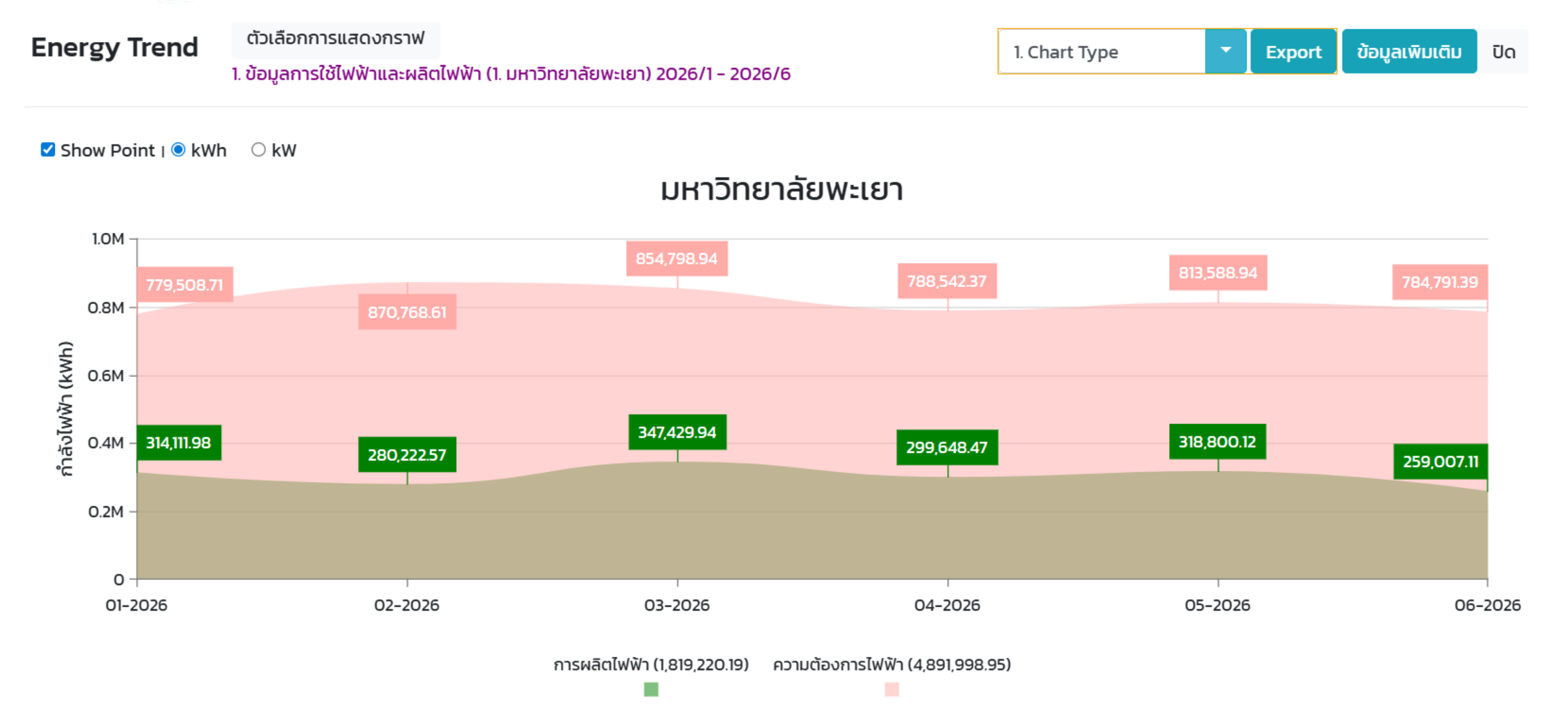
= 4,891,999 / 24,384 = 200.62
(Total number of regular students and administrative staff = 22,334 + 2,050 = 24,384 person) In summary, annual electricity usage at University of Phayao reflects the combined demands of academic excellence, research innovation, and campus life. While the demand is naturally high due to the scale and nature of its operations, University of Phayao has consistently demonstrated leadership in energy management. Through renewable energy integration, energy-efficient infrastructure, smart building systems, and community engagement, the university has made significant progress toward reducing its environmental impact and building a sustainable energy future. In total, during the year 2026, University of Phayao recorded an overall electricity consumption of 4,891,998.95 kilowatt-hours (kWh), reflecting both the scale of its operations and its ongoing efforts to optimize energy performance across the entire campus.
Electricity Consumption (kWh) Per Month
Per Month Between 2025-2026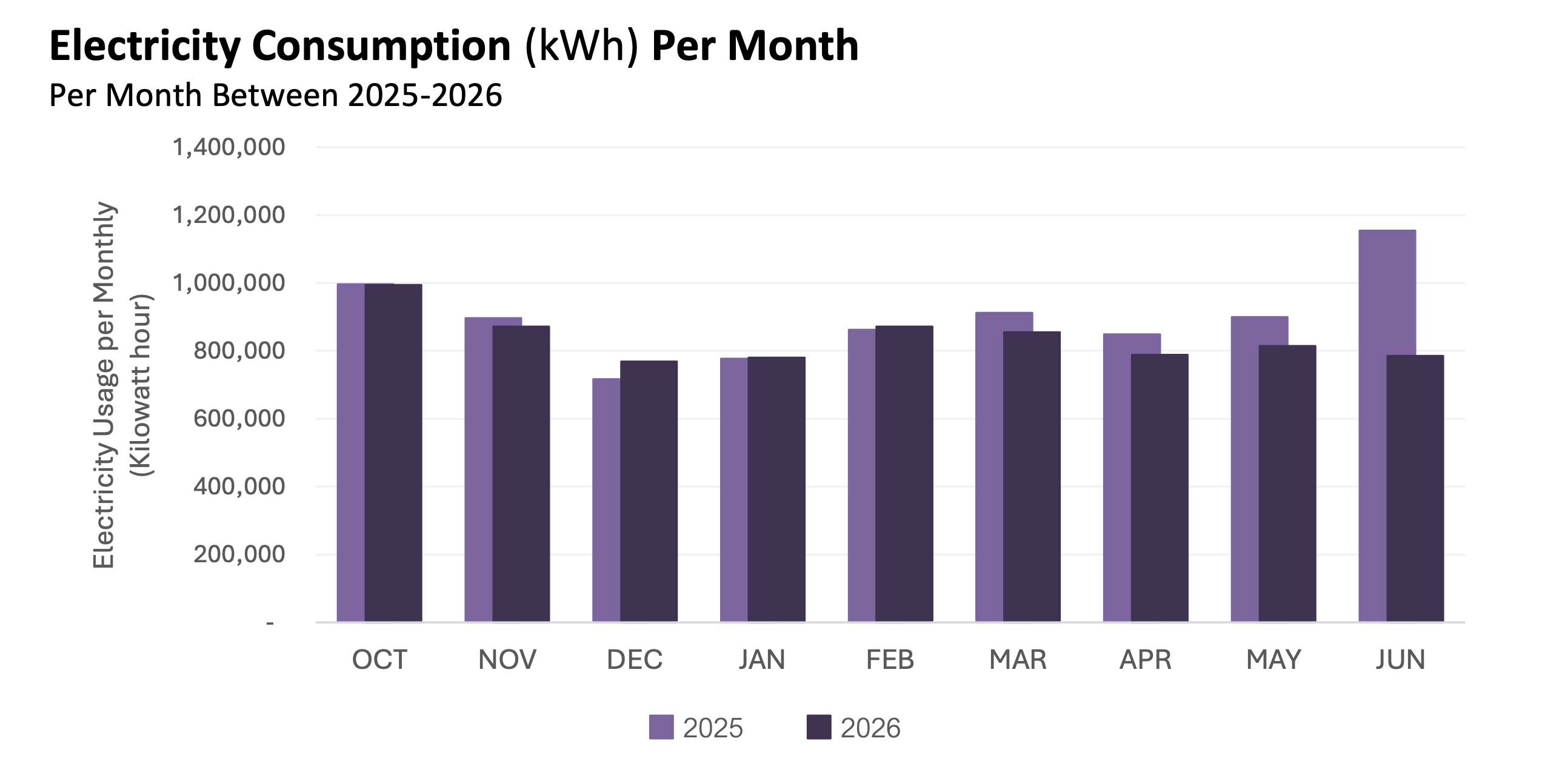
Future direction in sustainable university
The university has established guidelines for saving energy in various forms, such as educating students and staff to be aware of reducing energy use, taking care of the environment, campaigning for internal departments to use energy-saving light bulbs and electrical appliances with energy-saving labels. Campaign to turn off unused lights Unplug electrical appliances Choosing the right air conditioner for the room size and check the operation of the air conditioner regularly to save energy. Electricity usage reporting system of the University of Phayao.Link: http://45.91.132.63/monitoring/Login.aspx

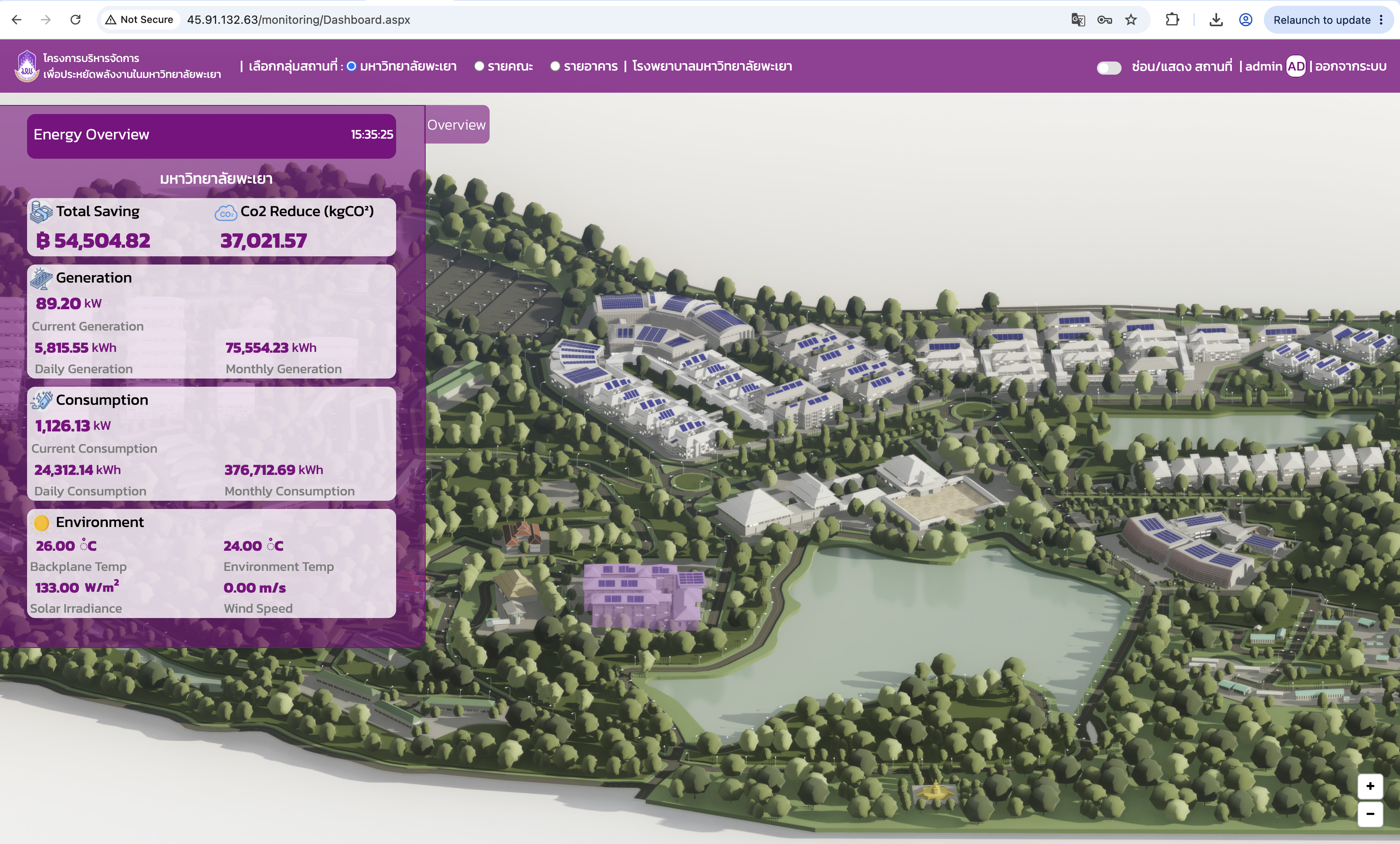
University of Phayao's electricity usage reporting system not only displays electricity consumption but also reports on greenhouse gas emission reductions.