Total Volume of Inorganic Waste Produced
University of Phayao produces approximately 597 tons of waste per year, or about 50 tons/month, with a daily waste volume of about 1.6–2.0 tons/day. Inorganic waste — comprising plastic, plastic bags, recyclable waste, and non-recyclable waste — makes up approximately 70–75% of total waste. In 2026, University of Phayao produced 197.97 tons of inorganic non-toxic waste, comprising 14.36 tons of paper, 84.11 tons of soft plastic (plastic bags), 36.92 tons of hard plastic (plastic bottles), 46.93 tons of recyclable waste, and 15.65 tons of non-recyclable waste.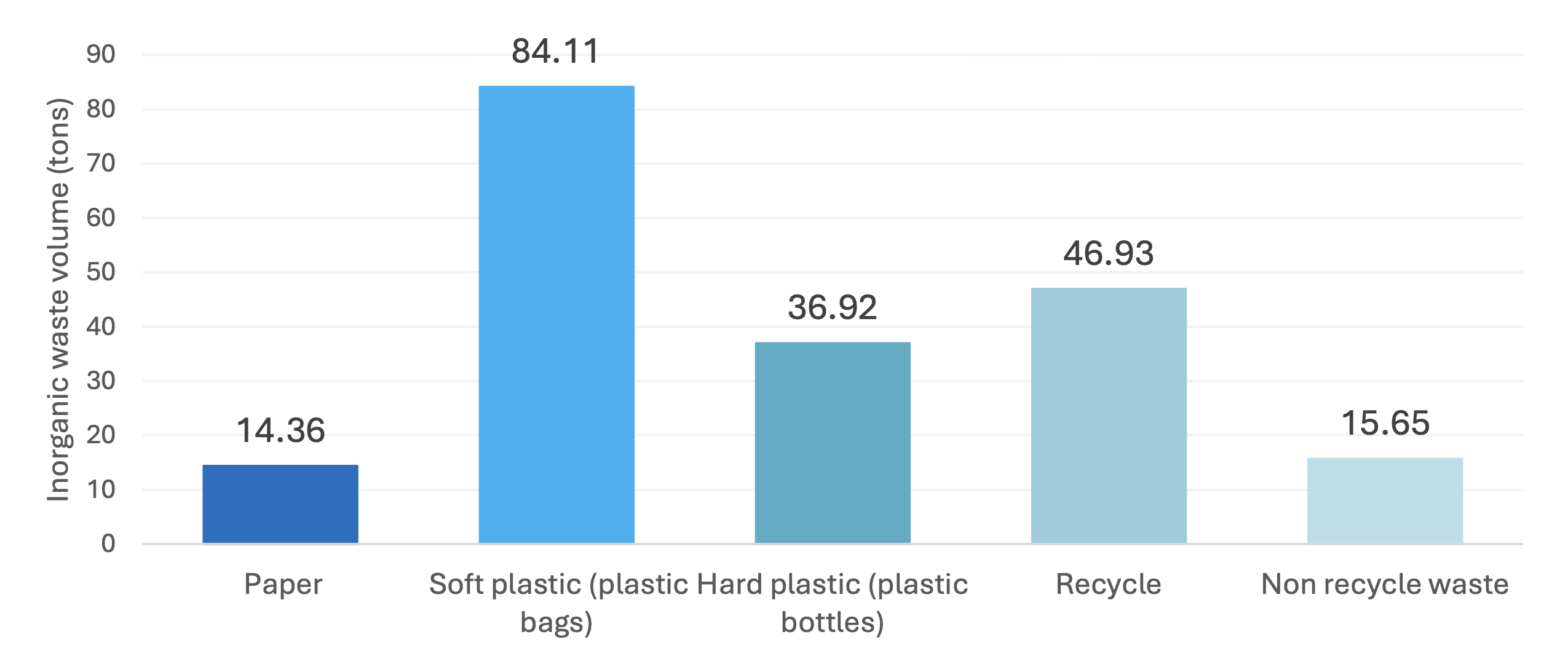
Total volume of inorganic waste this year 2026, (Total)
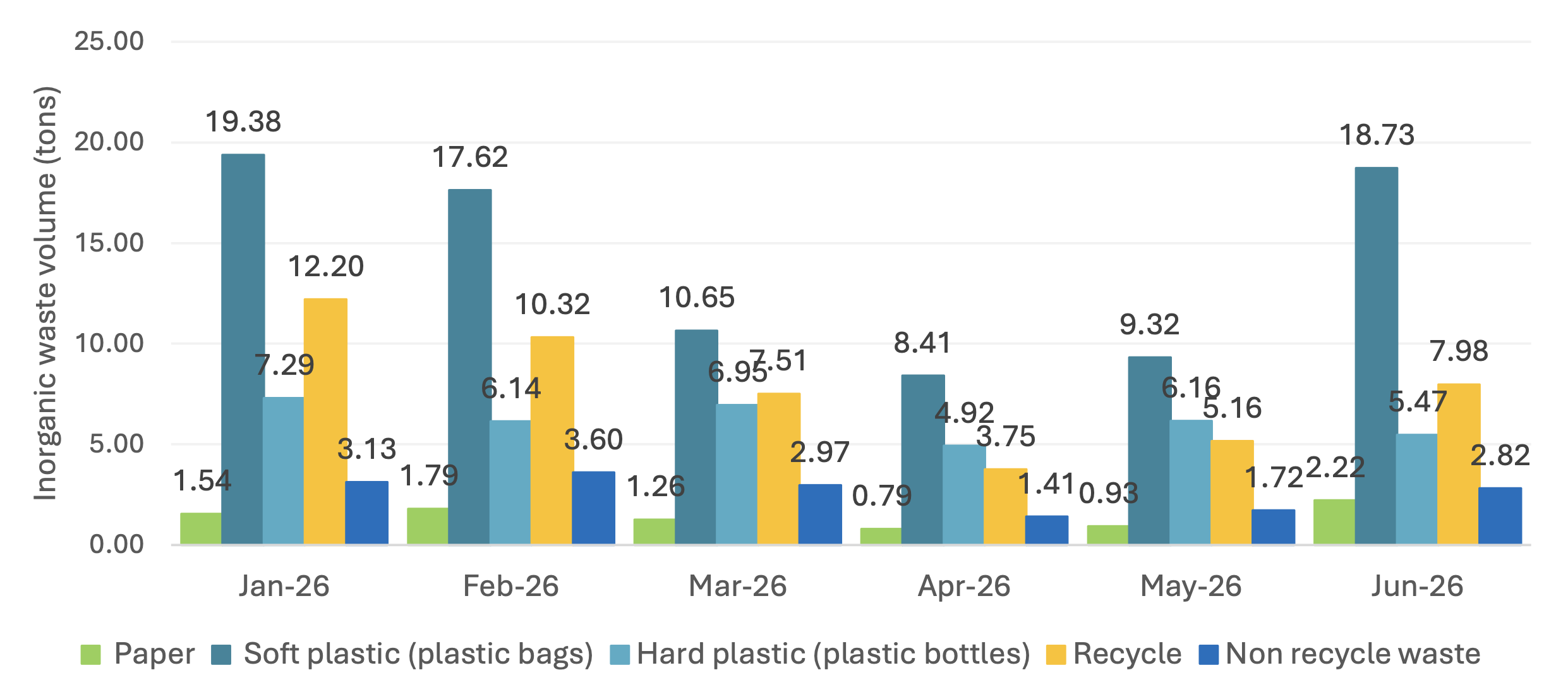
Total volume of inorganic waste this year 2026, (Monthly)
Year-over-Year Reduction
Compared to the previous year, University of Phayao saw a substantial decrease in inorganic non-toxic waste volume, from 514.78 tons last year to 197.97 tons this year — a reduction of 316.81 tons, equivalent to approximately 61.5%.Plastic Waste
University of Phayao generated approximately 121.03 tons of plastic waste, accounting for 42% of its total waste. This includes 36.92 tons of hard plastics (plastic bottles) and 84.11 tons of soft plastics (plastic bags). The majority of plastic waste on campus originates from convenience stores serving staff and students.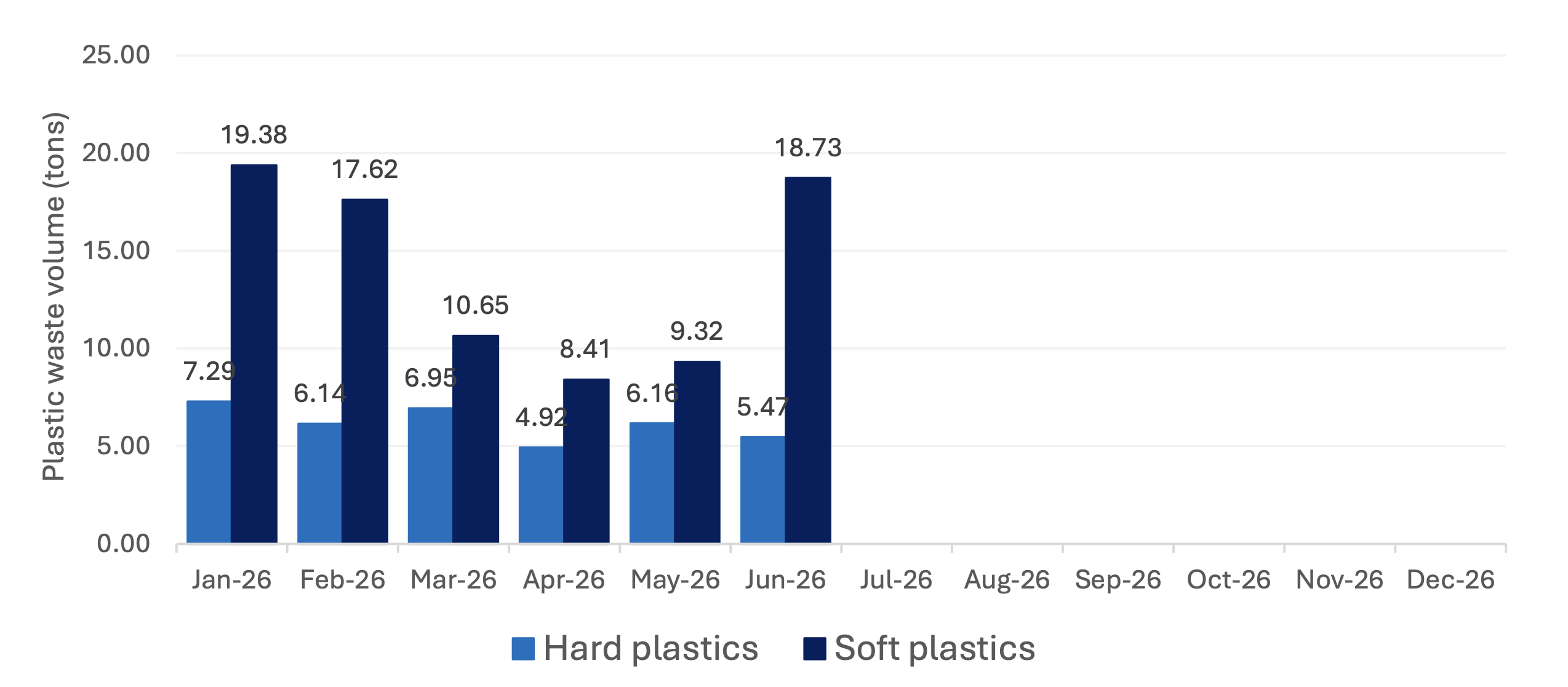
Total volume of plastic produced this year 2026, (Monthly)
Remarkably, the University of Phayao is able to eliminate all plastic waste by converting it into useful products. These include hangers made from plastic bottle caps, plastic filament for 3D printers, and oil derived from plastic bags, which is used to power lawn mowers.Inorganic Waste Treatment (2026)
University of Phayao can manage 98% of inorganic waste (plastic and plastic bags, recyclable waste, and non-recyclable waste). Of the 197.97 tons of inorganic waste treated, up-cycling accounted for the largest share at 140.84 tons (71.14%), followed by reuse at 30.84 tons (15.58%) and down-cycling at 22.60 tons (11.42%).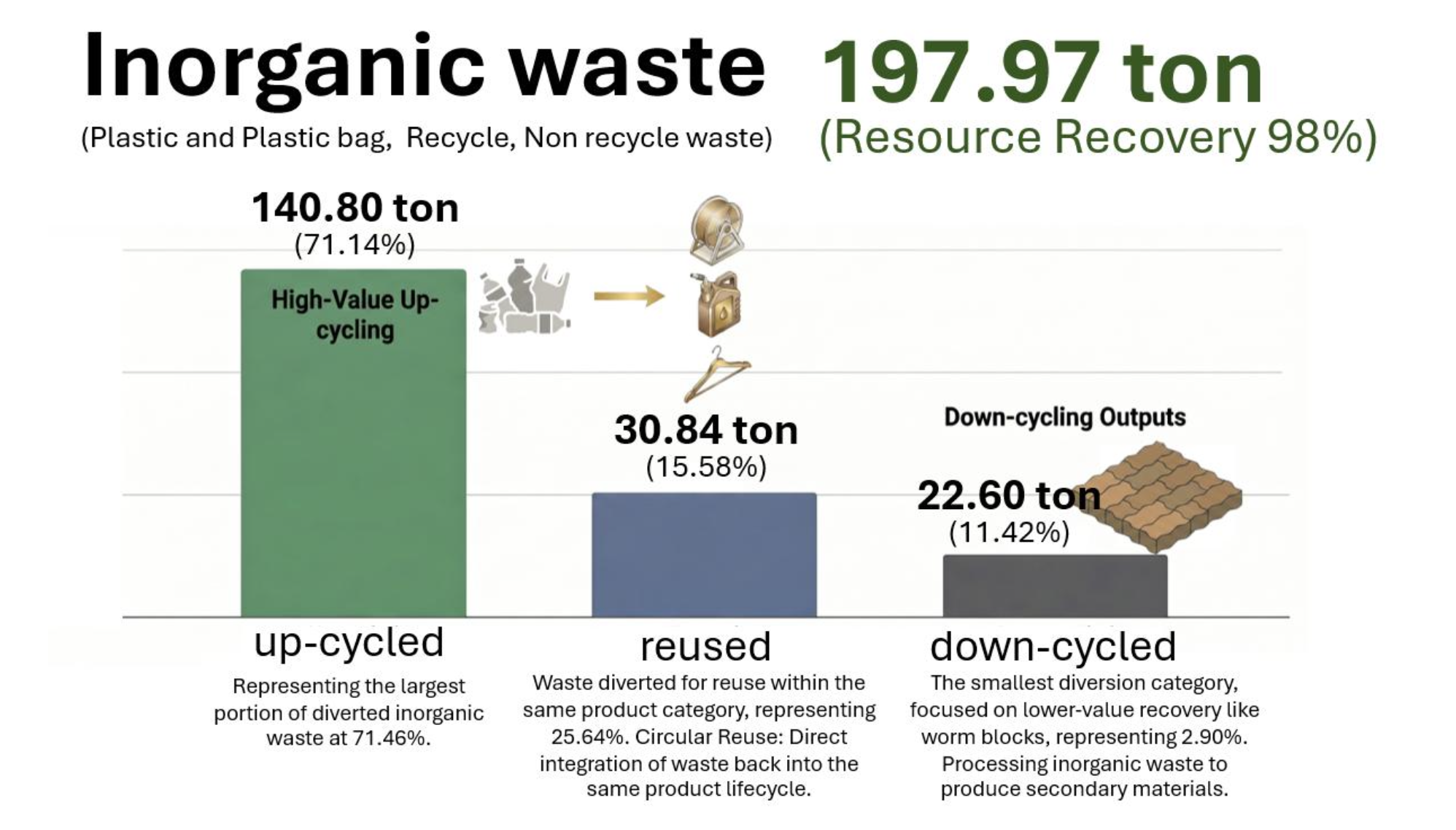
Guidelines for managing inorganic waste of the university in the form of reduced, reused, and recycled
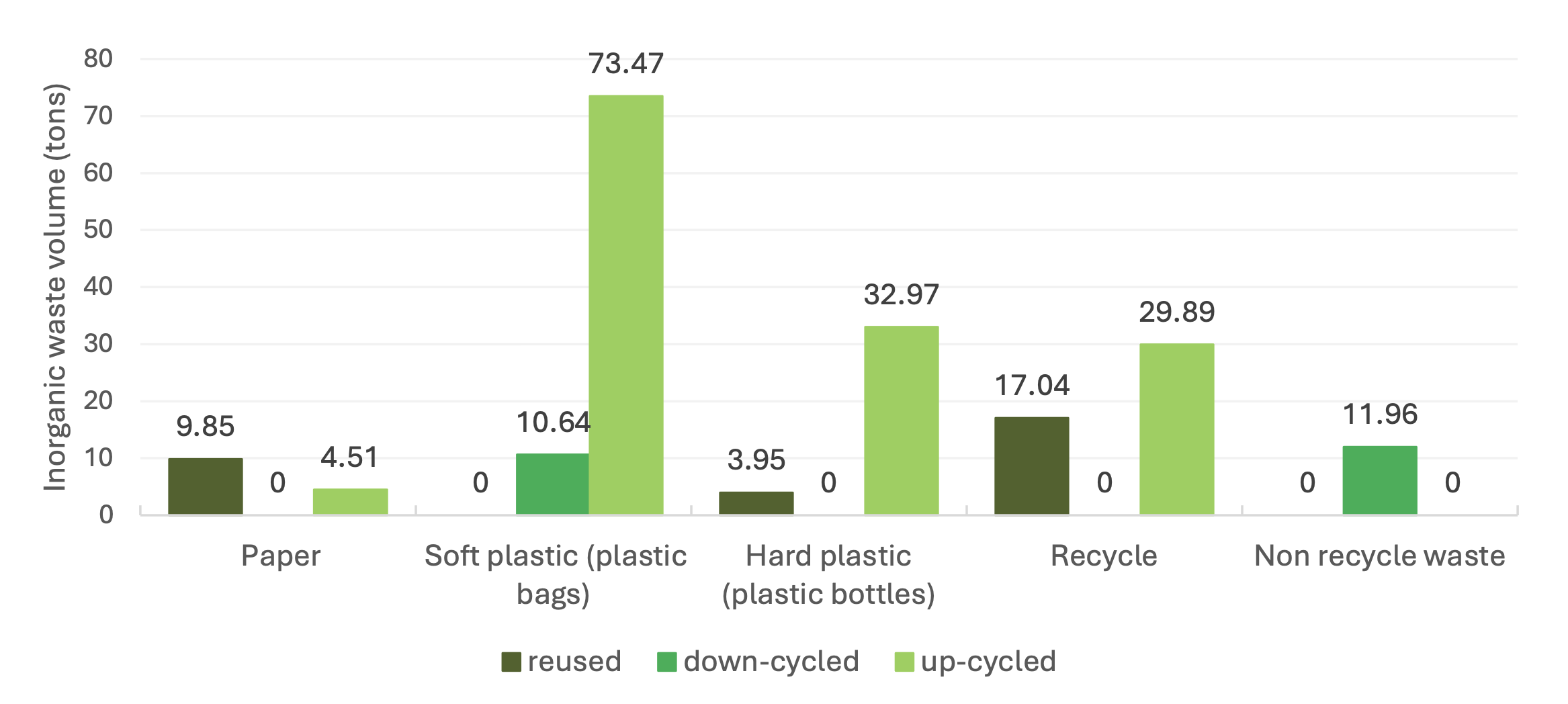
Inorganic waste treated by method (reused, down-cycled, up-cycled), by waste category — 2026
Inorganic waste is a type of waste that does not contain organic compounds and is generally very difficult for microorganisms to decompose. Glass, aluminum cans, dust, and metal are examples of inorganic waste, which can remain undecomposed for more than 500 years, making disposal especially challenging. Reducing consumption, reusing, and recycling are key solutions for managing this type of waste.Paper Waste and the UP-DMS Electronic Document System
In 2026, University of Phayao purchased approximately 14.36 tons of paper, categorized into 10.84 tons of printing paper and 3.52 tons of hard paper, most of which originated from office activities. To address paper consumption, the university has developed an electronic document management system called UP-DMS, which has the potential to reduce paper usage by up to 32.55 million sheets — equivalent to 142 tons of paper, preventing the harvesting of 3,617 trees, and mitigating approximately 163 tons of CO2 equivalent (tCO2e) emissions annually.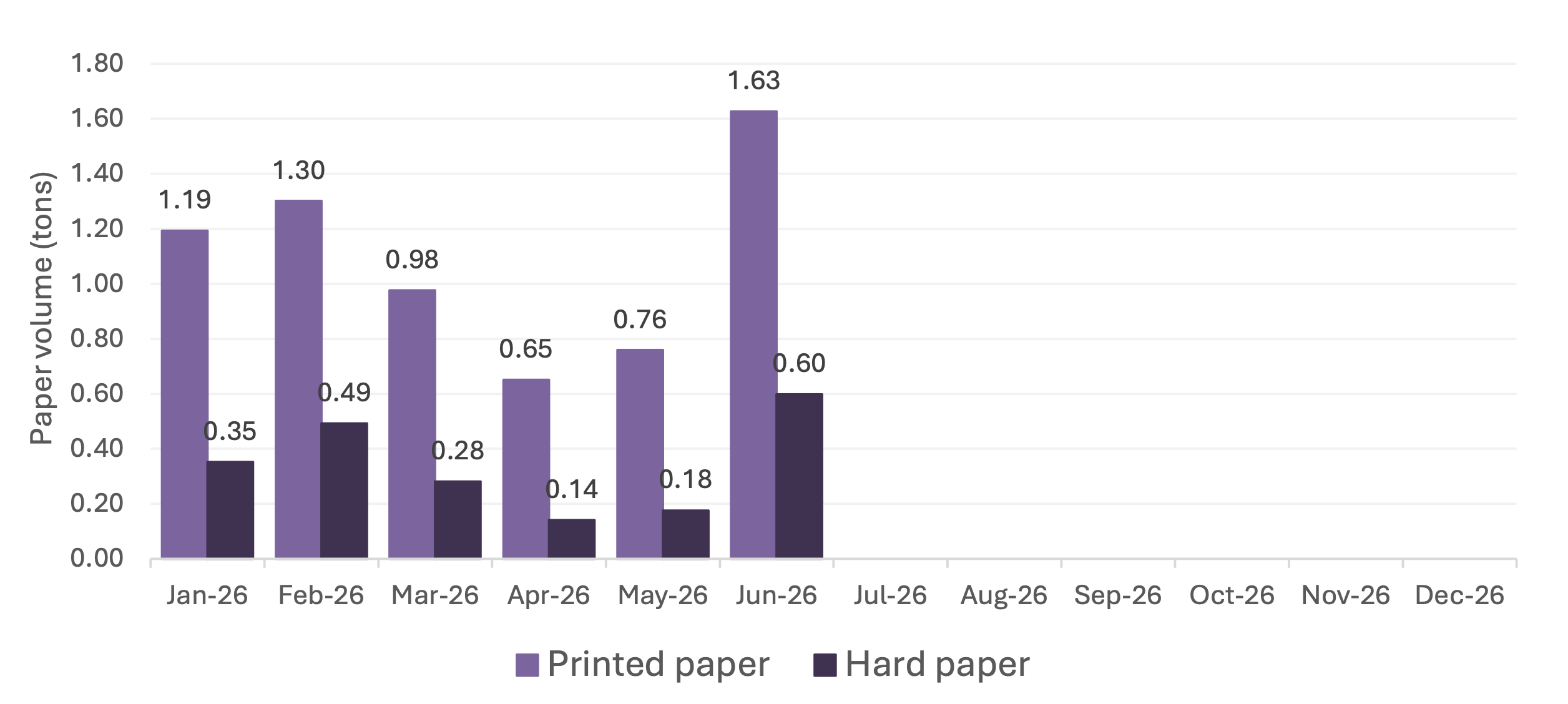
Total volume of paper produced this year 2026, (Monthly)