In line with the country's "UP Green and Carbon Neutrality" policy to address the climate crisis
and achieve Sustainable Development Goals (SDGs), University of Phayao has developed a public
transportation system that seamlessly connects various modes of transportation. This includes electric
bus stations, electric mass transit systems, and pedestrian pathways. University of Phayao aims to
reduce the use of private cars, thereby decreasing traffic congestion within the university and
alleviating air pollution problems. This initiative also reduces PM2.5 emissions from exhaust pipes,
eases traffic congestion during rush hours, and minimizes road accidents caused by personal vehicles.
It leads to cost savings for individuals in terms of fuel, car maintenance, and car insurance, as they
can utilize the university's provided public transportation or opt for cycling and walking to access
classrooms, offices, parks, and dining areas more conveniently and efficiently. This effort is designed
to enhance transportation accessibility for the public, ensuring that all groups can access the public
transportation system comprehensively while limiting internal university travel to be more
environmentally friendly. Public utilities within the university include:
The university's operations take into account environmental sustainability, proper use of resources and value awareness, reducing greenhouse gas emissions, and the thorough distribution of wealth are economies that all countries must adopt as a means of development. University of Phayao considers that if it continues to use fossil fuel systems, it will not be able to meet the goal of carbon neutrality. Therefore, it has set guidelines to change all public buses within the university to electric buses (EV Bus 100%) to respond to the government's policy and the policy of the Ministry of Higher Education, Science, Research and Innovation to reduce carbon dioxide emissions into the atmosphere and promote the production and use of zero-emission vehicles (Zero Emission Vehicle) by changing NGV buses to electric buses 100%. The project is in line with the country's goal of tackling the climate crisis and achieving the Sustainable Development Goals (SDGs), with University of Phayao earning a reputation as a green university and aiming to achieve complete carbon neutrality by 2040.
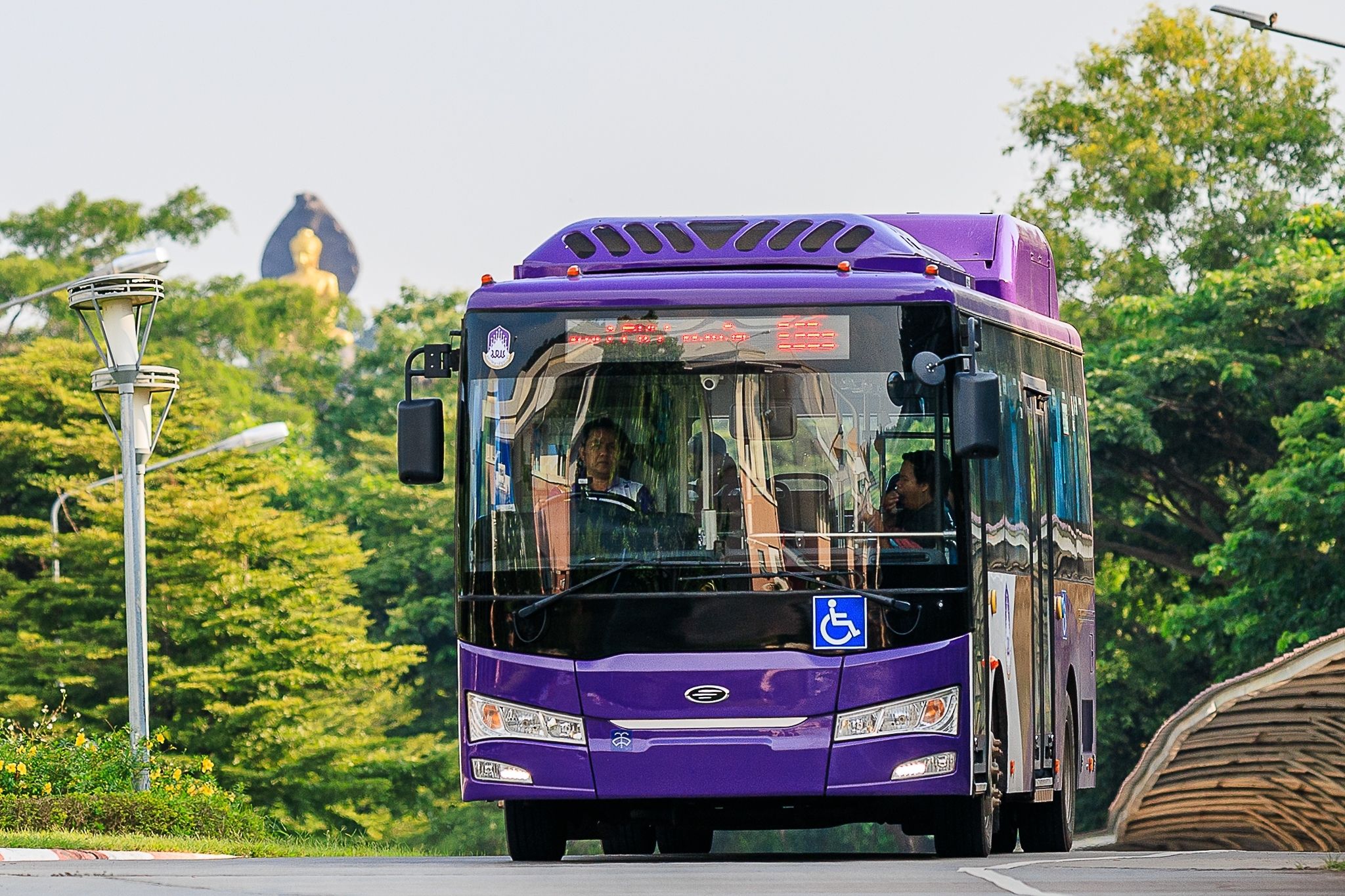
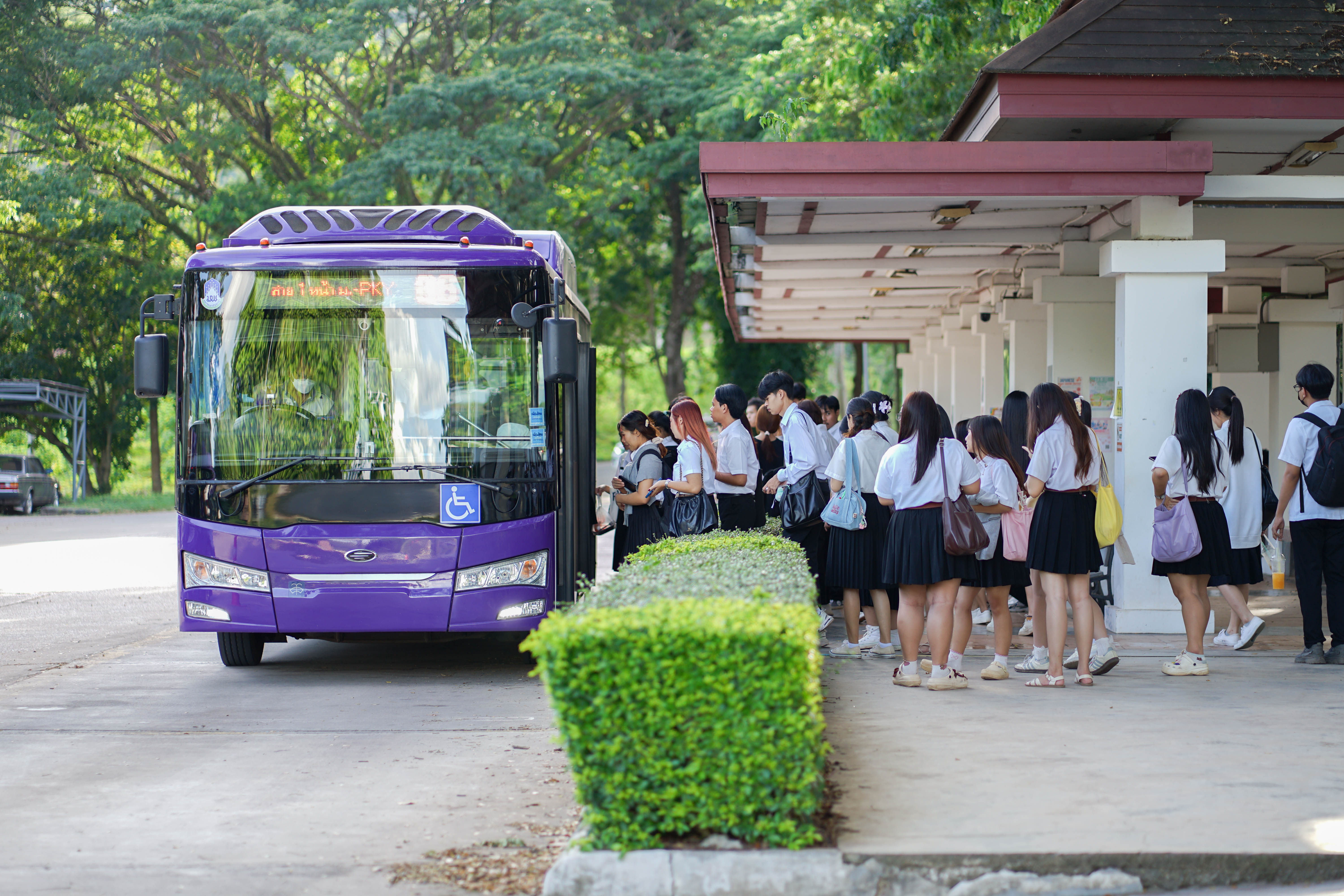
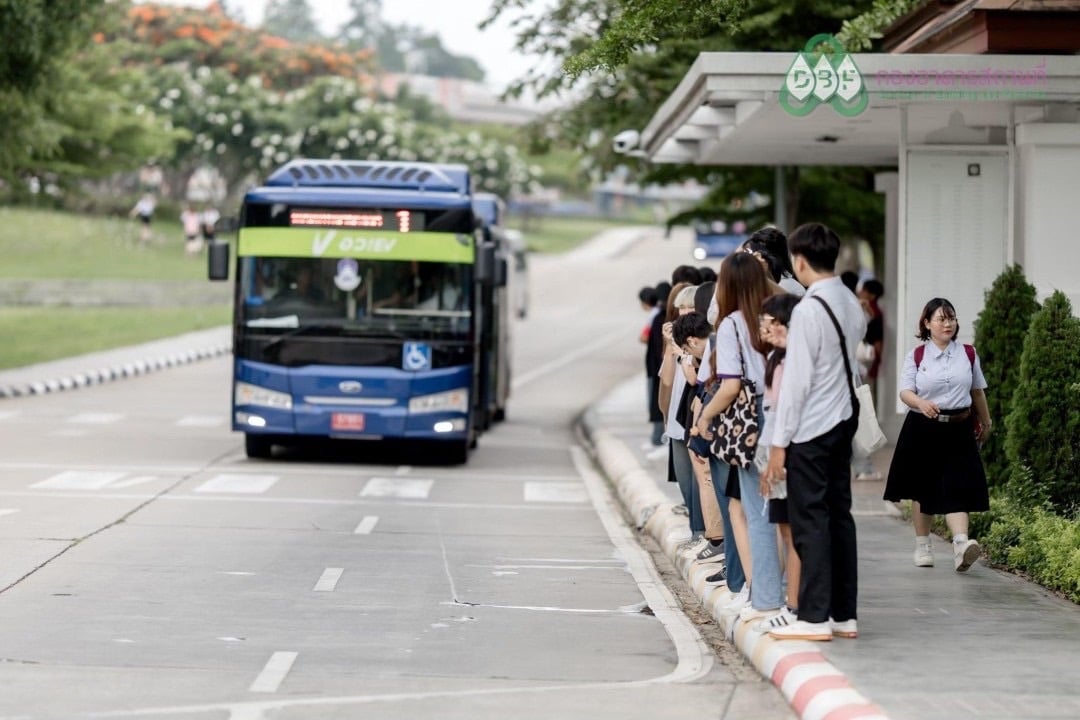
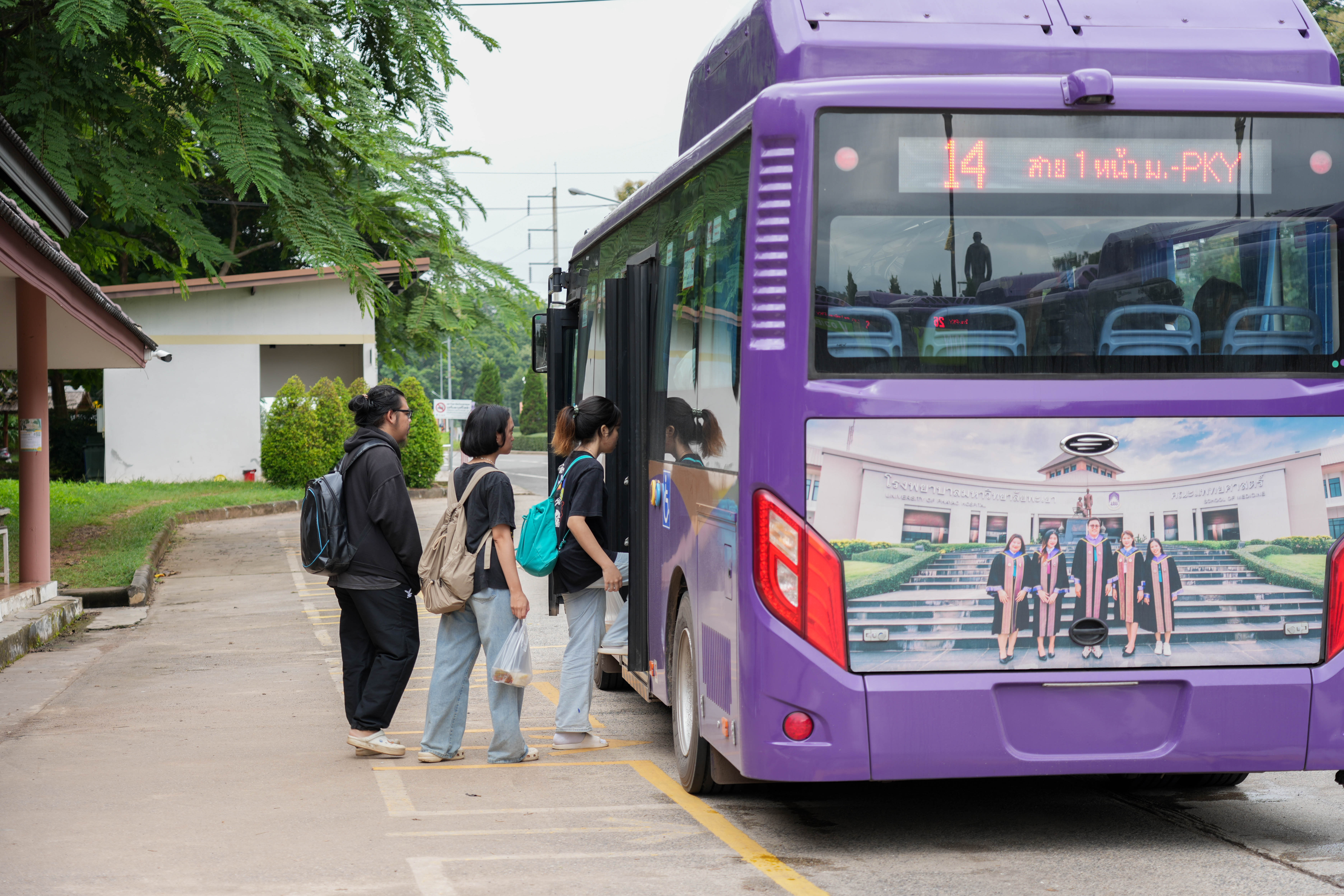 Shuttle services (Electric buses 100%) a public transport policy has been formulated by University
of Phayao to facilitate the travel of students, personnel, and the general public while keeping
convenience in mind. Everyone can access and use public transport equally, equitably, and
sustainably. Sustainable cities and communities create safety in communities within and around
campus. Public transportation (Electric buses 100%) management within University of Phayao is an
efficient use of resources within the university to limit the number of vehicles traveling within the
university and reduce the amount of emissions from vehicles. Therefore, University of Phayao welfare
shuttle service (Electric buses 100%) is provided free of charge in order to provide public service for
students, personnel, as well as those who contact within UP to be convenient and safe.
Shuttle services (Electric buses 100%) a public transport policy has been formulated by University
of Phayao to facilitate the travel of students, personnel, and the general public while keeping
convenience in mind. Everyone can access and use public transport equally, equitably, and
sustainably. Sustainable cities and communities create safety in communities within and around
campus. Public transportation (Electric buses 100%) management within University of Phayao is an
efficient use of resources within the university to limit the number of vehicles traveling within the
university and reduce the amount of emissions from vehicles. Therefore, University of Phayao welfare
shuttle service (Electric buses 100%) is provided free of charge in order to provide public service for
students, personnel, as well as those who contact within UP to be convenient and safe.
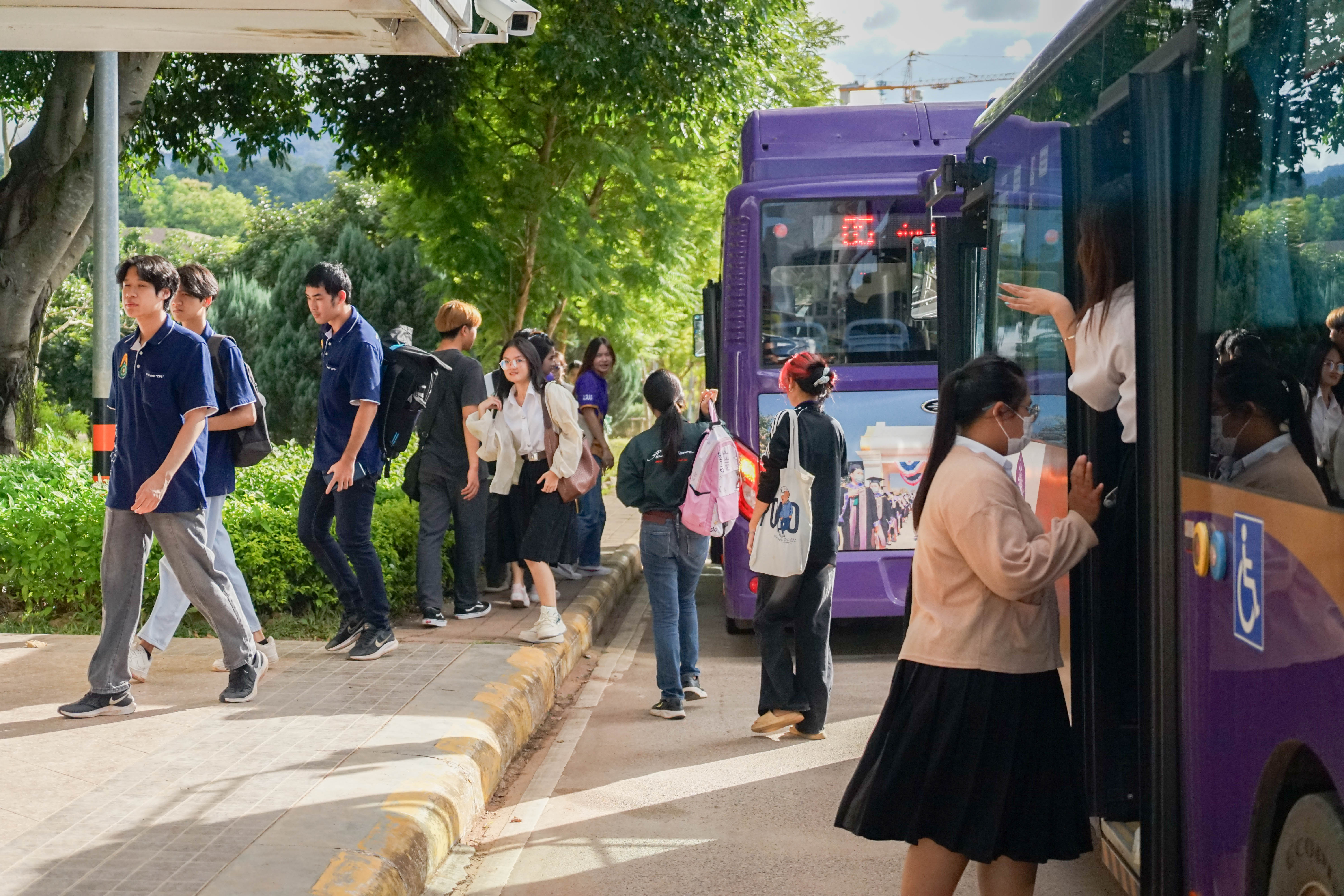
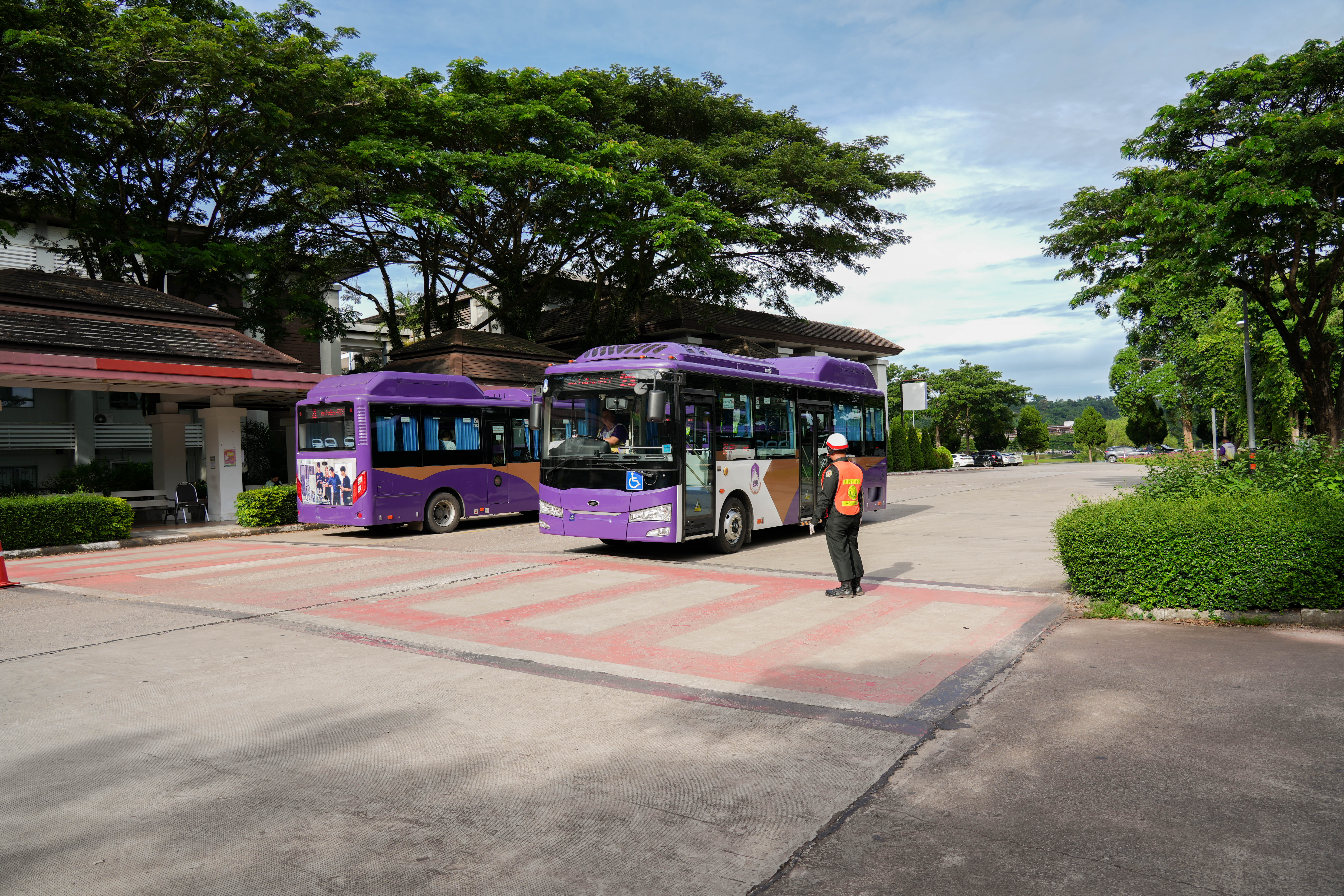 Total number of electric buses: 30 and
Total trips of each shuttle service each day: 644 trips.
Total number of electric buses: 30 and
Total trips of each shuttle service each day: 644 trips.
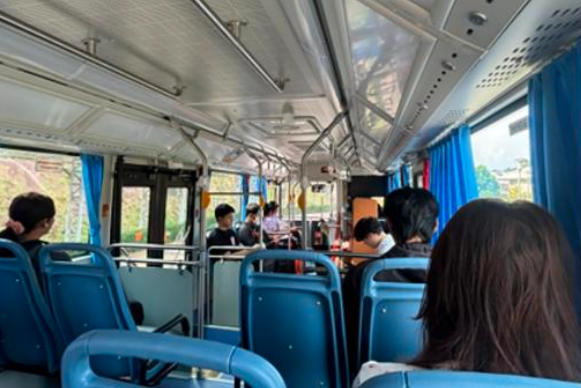
The provision of welfare shuttle service of University of Phayao accommodated totally 19,865 passengers per day and it can support transferring students, staff, and visitors who contacts the University institutes.
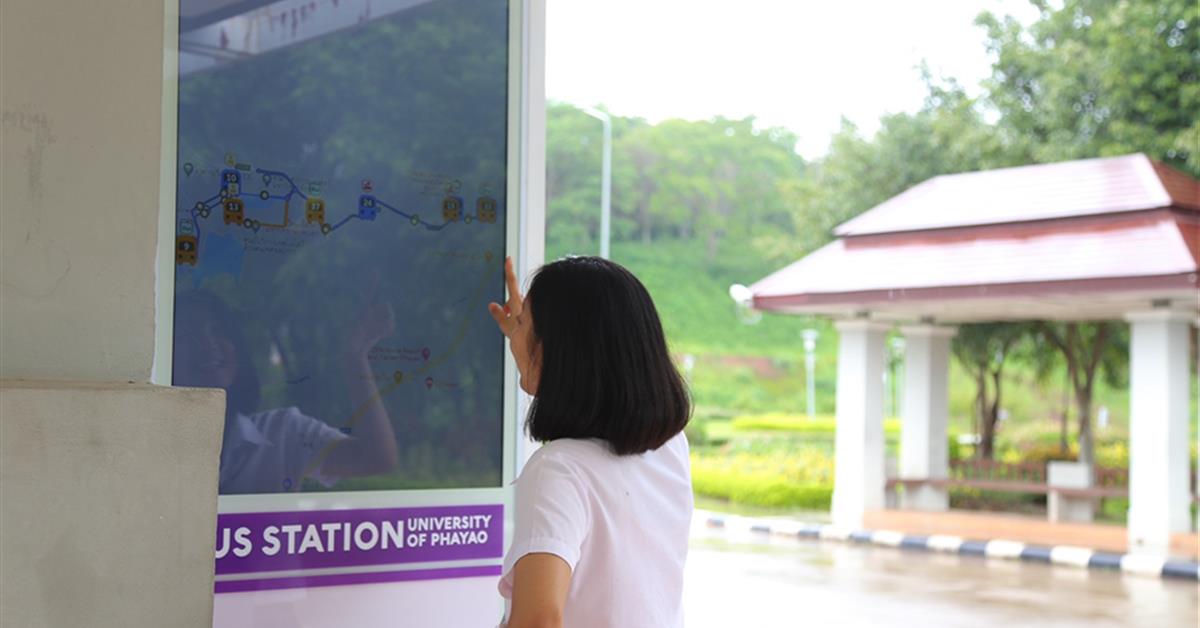
In the future, the screen of this system will be updated to a smaller size and more compact. The material will be selected for reducing the weight of the screen. Furthermore, Smartphone, tablet and notebook charging port will be installed along with the screen which can let the student charge their phone or pc during waiting for the bus.
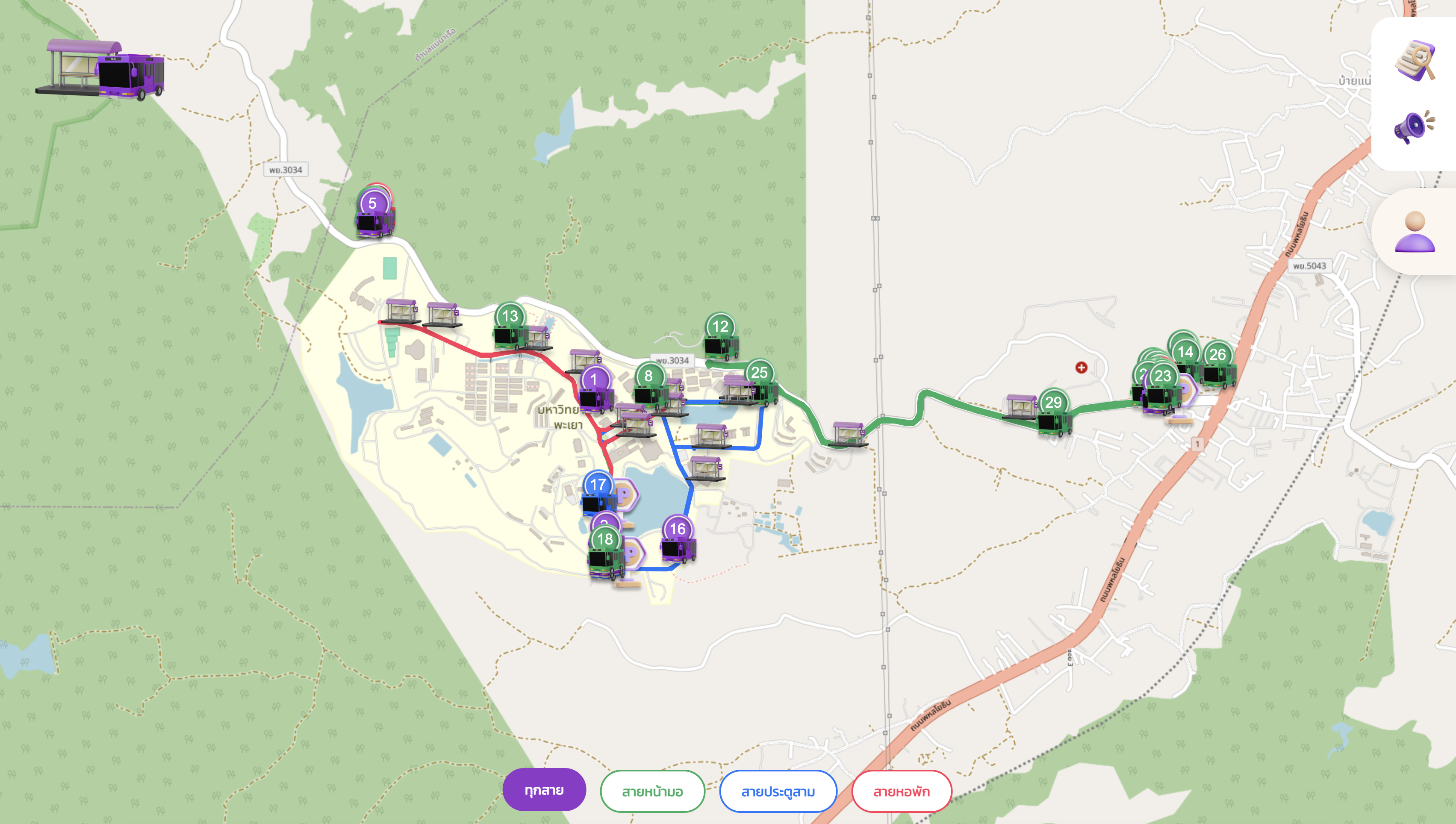
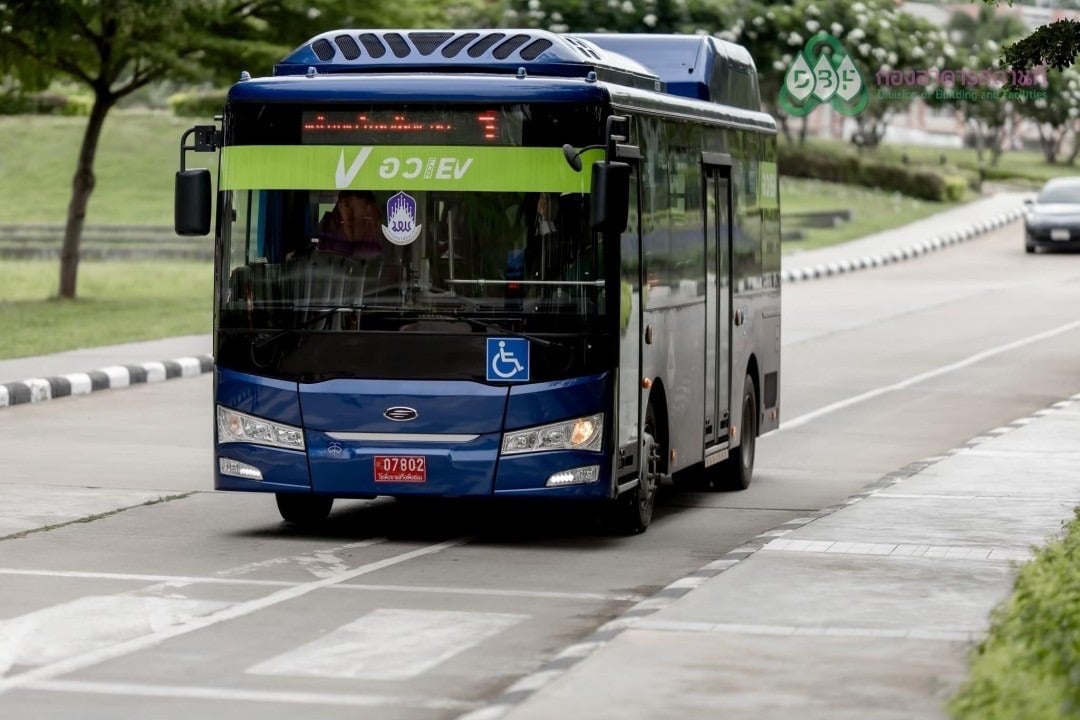
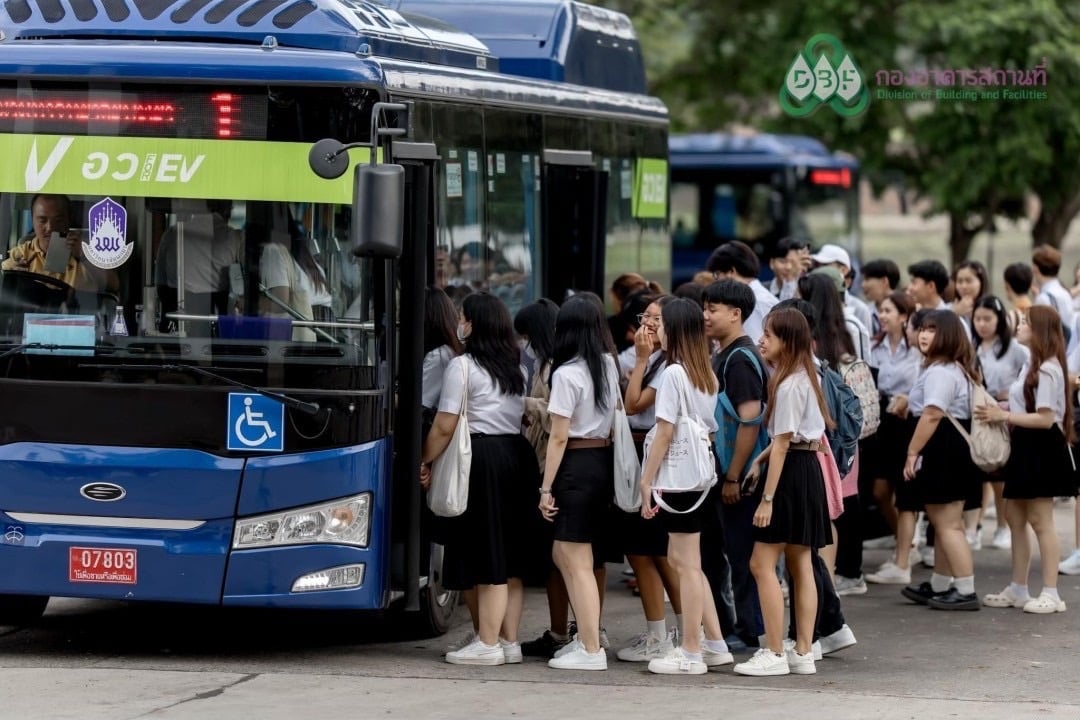 Types of public transport services within University of Phayao can be provided to students and
personnel to roam within the University of Phayao in many routes. University of Phayao has
designated 3 electric bus routes as follows:
Types of public transport services within University of Phayao can be provided to students and
personnel to roam within the University of Phayao in many routes. University of Phayao has
designated 3 electric bus routes as follows:
The campus-wide implementation of the 100% ZEV shuttle service yields significant, verifiable reductions in environmental footprints:


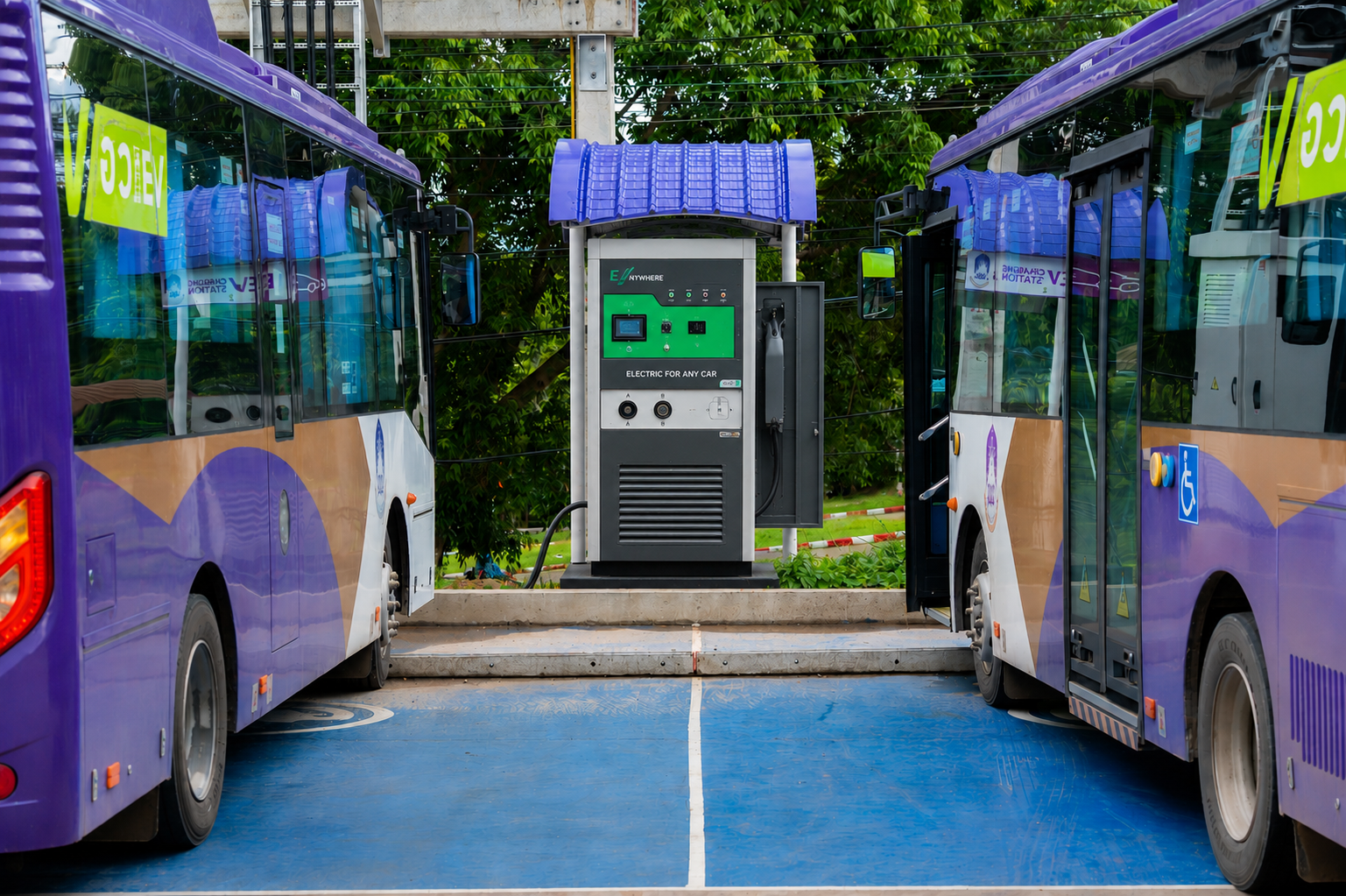 The University of Phayao has installed electric vehicle (EV) charging stations where students and
staff can park and charge their vehicles. This initiative aligns with the Sustainable Development
Goals (SDGs) and aims to reduce greenhouse gas emissions from transportation on campus. The
university recognizes the importance of behavioral changes in vehicle usage among students and
staff, shifting from a reliance on fossil fuels to the use of more environmentally friendly vehicles.
The University of Phayao has installed electric vehicle (EV) charging stations where students and
staff can park and charge their vehicles. This initiative aligns with the Sustainable Development
Goals (SDGs) and aims to reduce greenhouse gas emissions from transportation on campus. The
university recognizes the importance of behavioral changes in vehicle usage among students and
staff, shifting from a reliance on fossil fuels to the use of more environmentally friendly vehicles.
The electric charging station of the University of Phayao has been supported by the Energy Conservation Promotion Fund, Energy Policy, and Planning Office, operated by the Thai Electric Vehicle Association to support investment in the establishment of a public electric charging station at the Automotive Technology Development Center, School of Engineering, University of Phayao.
The limitation of car usage policy includes several strategies, such as restricting the number of parking permits issued each semester, prioritizing parking spaces for carpool vehicles, and designating certain areas as "low-emission zones." The university also encourages staff and students to use the campus shuttle service or other eco-friendly options for short-distance commuting within the campus area. Additionally, vehicle entry regulations have been periodically revised to reduce congestion and minimize the carbon footprint associated with daily commuting.
The carpool promotion program has been launched to foster a culture of shared mobility within University of Phayao community. Under this initiative, individuals who share rides with others are provided with certain privileges, such as priority parking spots, reduced parking fees, or participation in green campus reward programs. This not only helps reduce fuel consumption and travel expenses but also strengthens the sense of community and cooperation among university members. Moreover, by reducing the total number of vehicles entering the campus, the program contributes to the reduction of greenhouse gas (GHG) emissions, traffic congestion, and demand for parking spaces, resulting in more open and livable campus spaces.
In the long term, these measures support University of Phayao Sustainable Traffic and Mobility Master Plan, which aims to develop a safe, efficient, and environmentally responsible transportation system within and around the university. The plan also aligns with Thailand's national strategies for sustainable urban mobility and supports the United Nations Sustainable Development Goals (SDGs) particularly:
University of Phayao continues to explore innovations in smart mobility, such as integrating data-driven transport planning, adopting electric vehicles for shuttle services, and creating digital carpool matching platforms. The university also organizes awareness campaigns, workshops, and competitions to motivate students and staff to adopt greener commuting habits.
Through these comprehensive and forward-looking policies, University of Phayao not only reduces the negative environmental impacts caused by excessive private car use but also sets a strong example of how higher education institutions can lead the transition toward a low-carbon, sustainable transportation culture that enhances both the quality of life and the environmental well-being of the entire community.
Park & Ride
The University of Phayao offers parking facilities located near its public transportation systems, comprising buildings and parking lots. These are designated for students, staff, and the general public to transition from their personal vehicles to the university's public transportation system. This includes electric welfare passenger buses and pedestrian paths. These facilities provide quicker and more convenient access to workspaces and educational buildings. They help reduce traffic and encourage the use of the university's public transportation, aligning with Thailand's greenhouse gas policy, aiming for tangible Carbon Neutrality.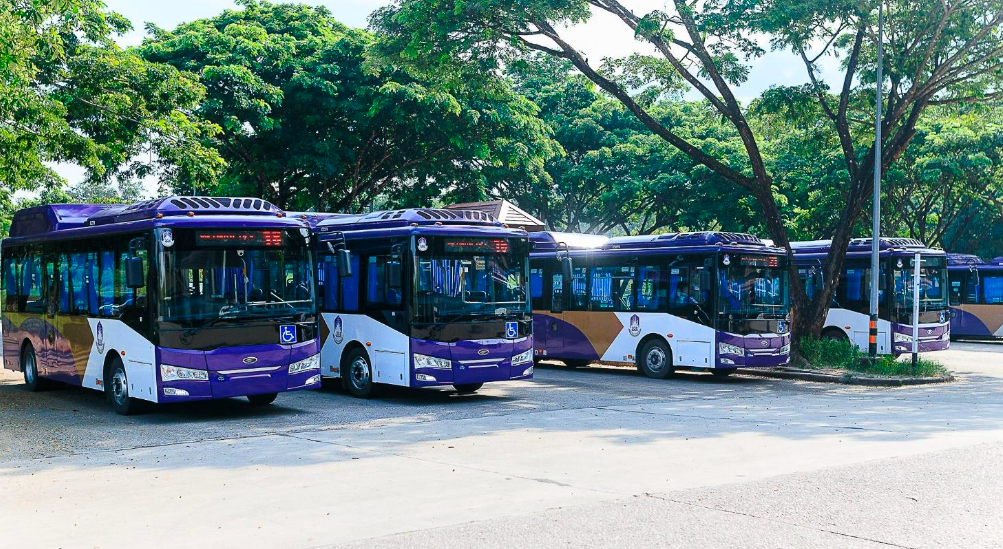
The university's operations take into account environmental sustainability, proper use of resources and value awareness, reducing greenhouse gas emissions, and the thorough distribution of wealth are economies that all countries must adopt as a means of development. University of Phayao considers that if it continues to use fossil fuel systems, it will not be able to meet the goal of carbon neutrality. Therefore, it has set guidelines to change all public buses within the university to electric buses (EV Bus 100%) to respond to the government's policy and the policy of the Ministry of Higher Education, Science, Research and Innovation to reduce carbon dioxide emissions into the atmosphere and promote the production and use of zero-emission vehicles (Zero Emission Vehicle) by changing NGV buses to electric buses 100%. The project is in line with the country's goal of tackling the climate crisis and achieving the Sustainable Development Goals (SDGs), with University of Phayao earning a reputation as a green university and aiming to achieve complete carbon neutrality by 2040.
The provision of welfare shuttle service of University of Phayao accommodated totally 19,865 passengers per day and it can support transferring students, staff, and visitors who contacts the University institutes.
Real-Time Bus Tracking System
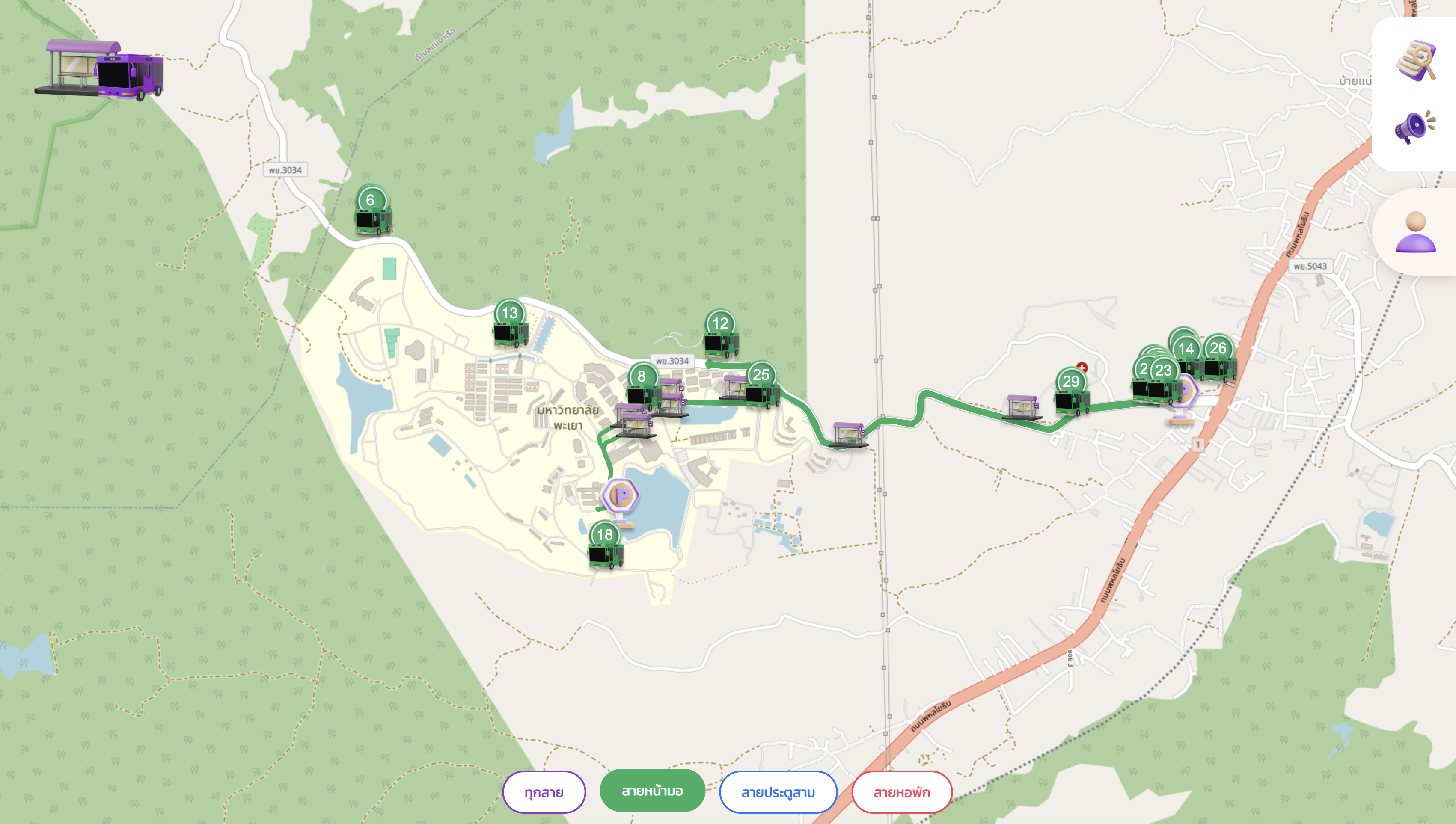
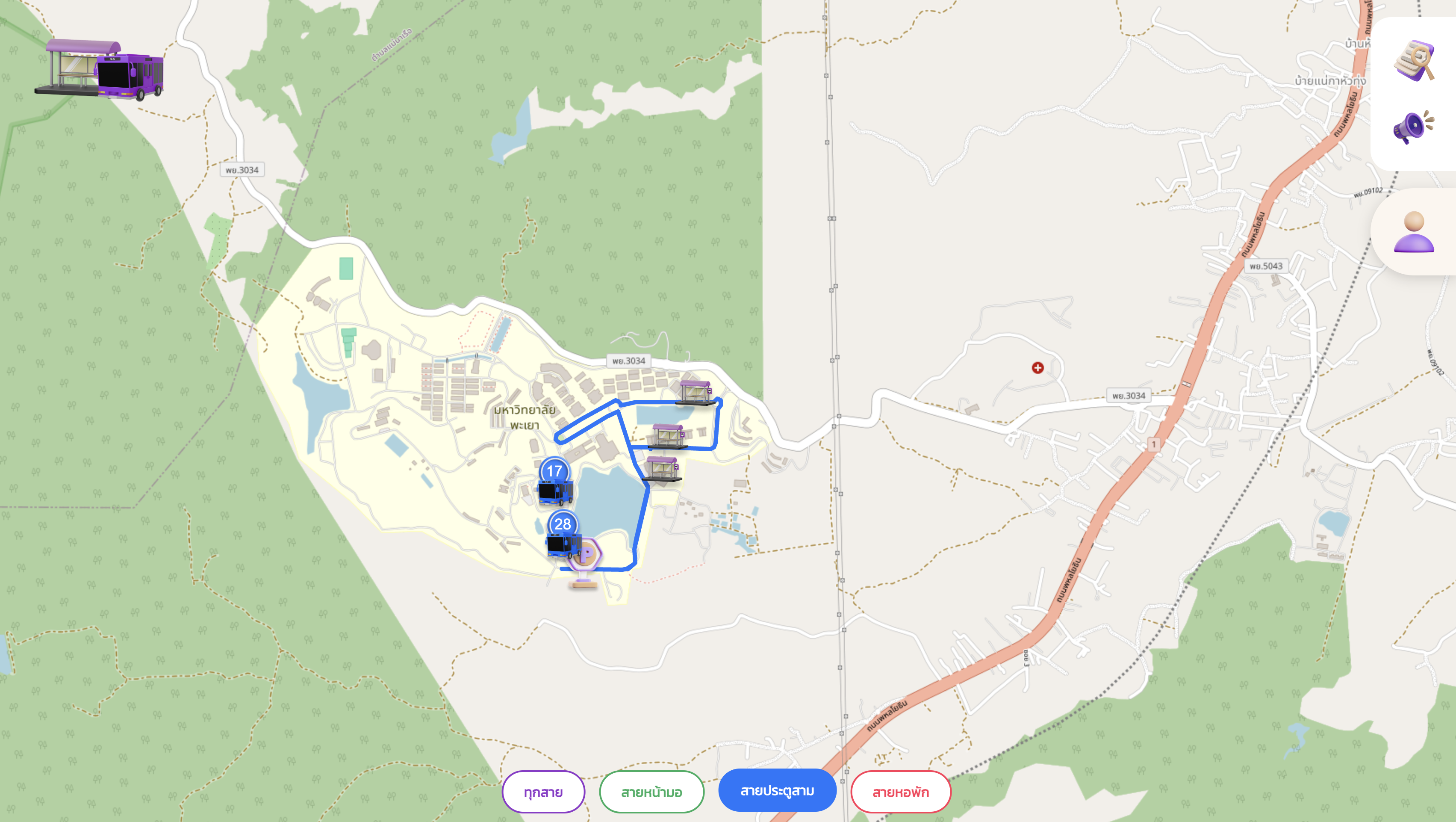
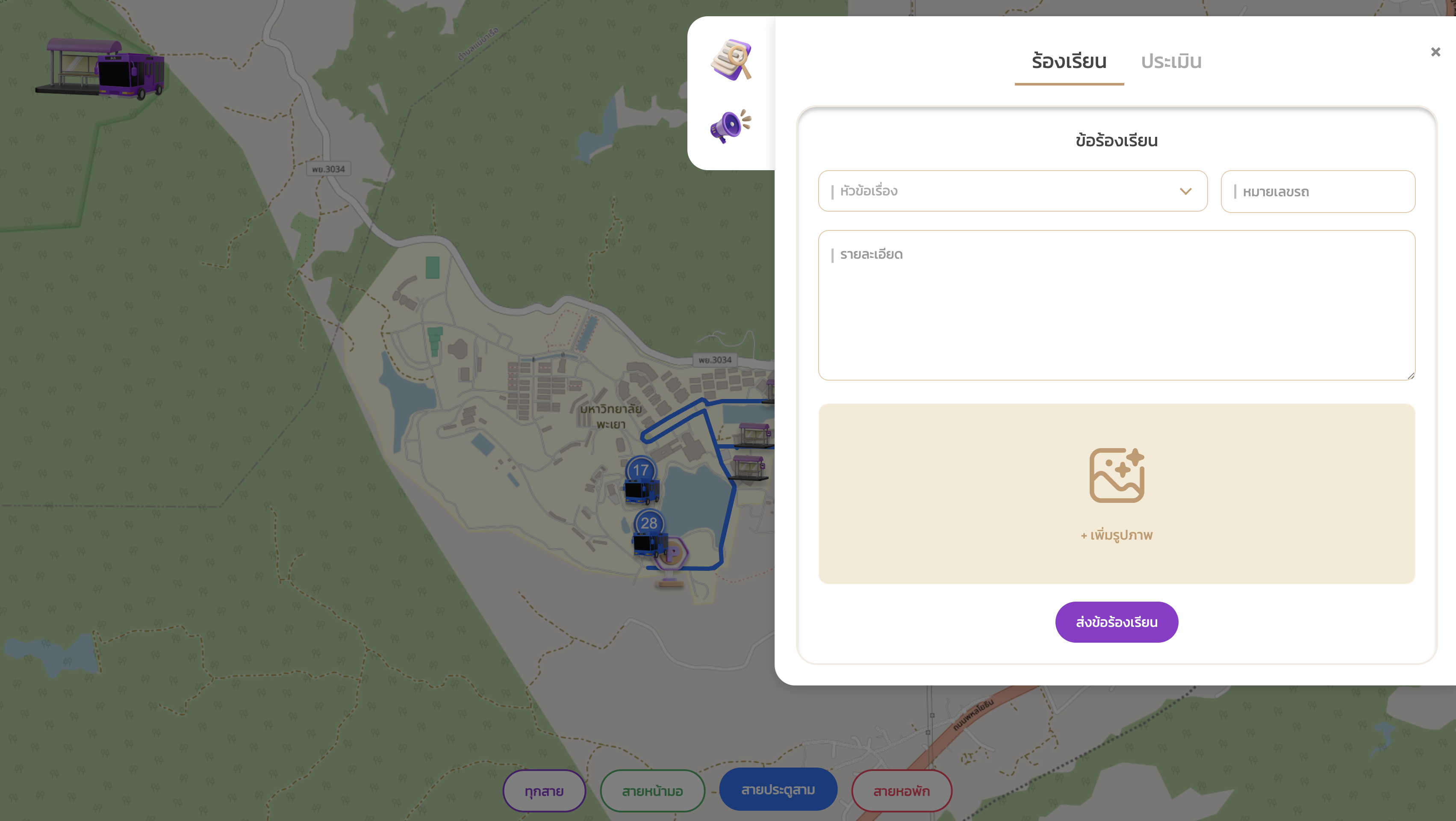
University of Phayao has installed the real-time bus tracker at UP's bus stop, by has brought another new technology, which is a 55 inches screen for facilitating the transportation in the university. This screen is installed at all the bus stops, and it shows the real time bus transition in the university in the form of real map and update the data in every one second. Moreover, there are various colors for representing the route of the bus, and the numbers of the bus that are on duty along with the numbers of people on the bus. In addition to this, users are able to access this system on their PC or mobile through http://bustransit.up.ac.th/ or by installing the Smart UP application on Android and IOS which is developed by Center for Information Technology and Communication Services, University of Phayao.In the future, the screen of this system will be updated to a smaller size and more compact. The material will be selected for reducing the weight of the screen. Furthermore, Smartphone, tablet and notebook charging port will be installed along with the screen which can let the student charge their phone or pc during waiting for the bus.
Bus transit application
This real-time bus tracker system is another university strategy in the form of Smart Operation which bring new technology innovation for improving the work, quality of life, the living condition in the university.Public Service
Public Service, is available for convenient and safe access to transport system through management of transportation routes and traffic within University of Phayao. The transportation system is a door-to-door linkage that supports universal design for older persons, persons with disabilities, and children.
Electric Bus Route Map (EV), Line 1
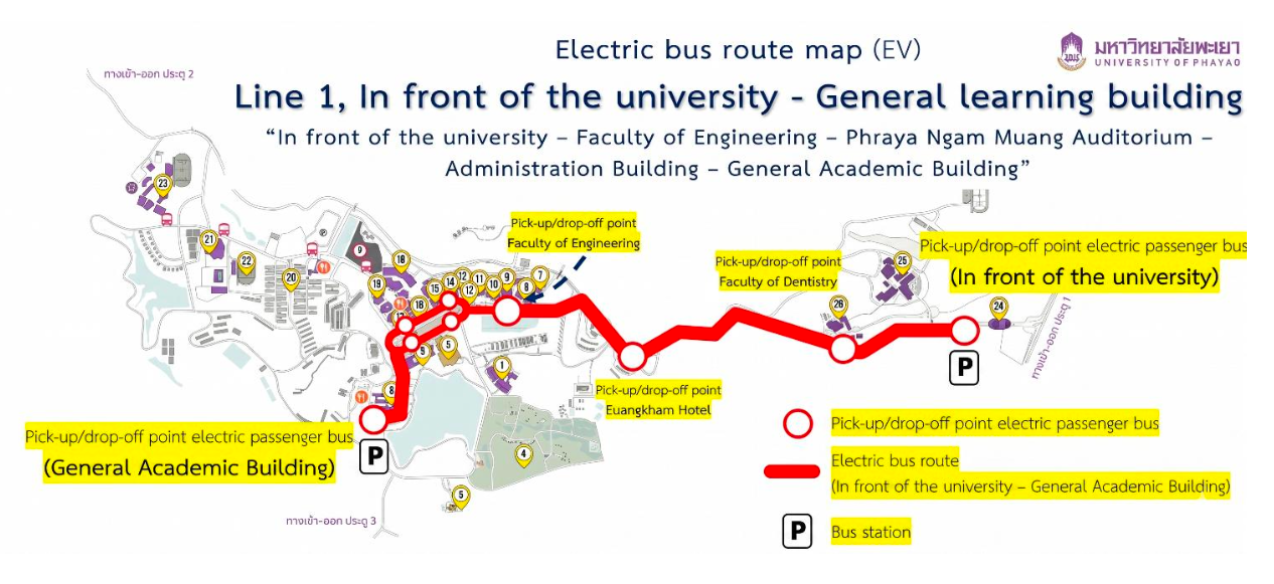
Electric bus route map (EV), Line 1.
Electric Bus Route Map (EV), Line 2
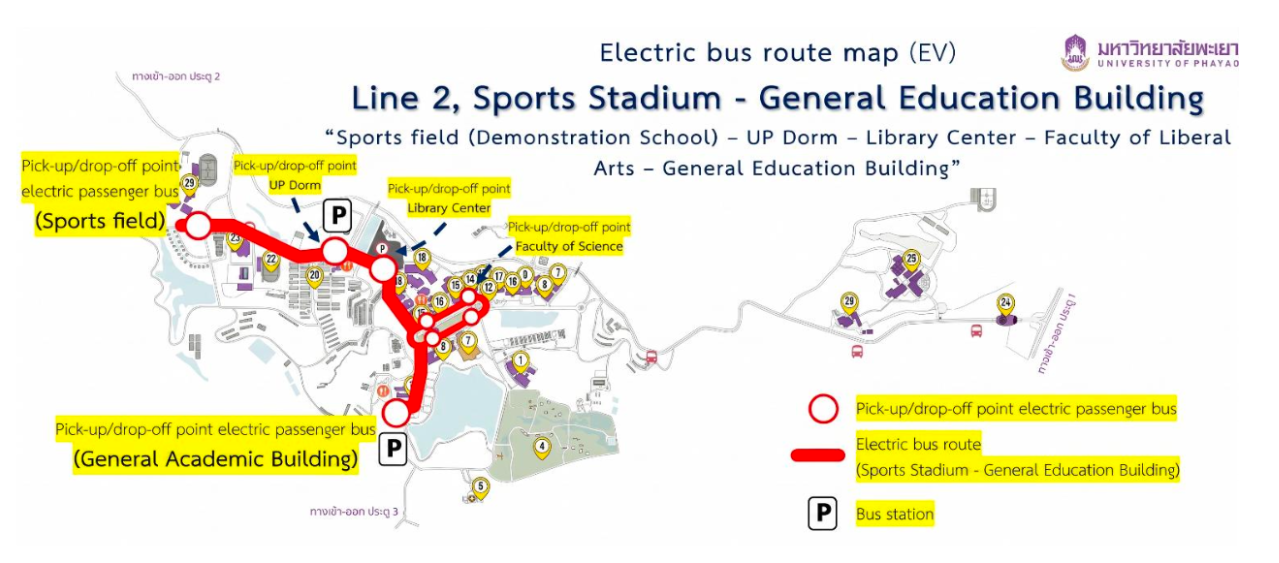
Electric bus route map (EV), Line 2.
Electric Bus Route Map (EV), Line 3
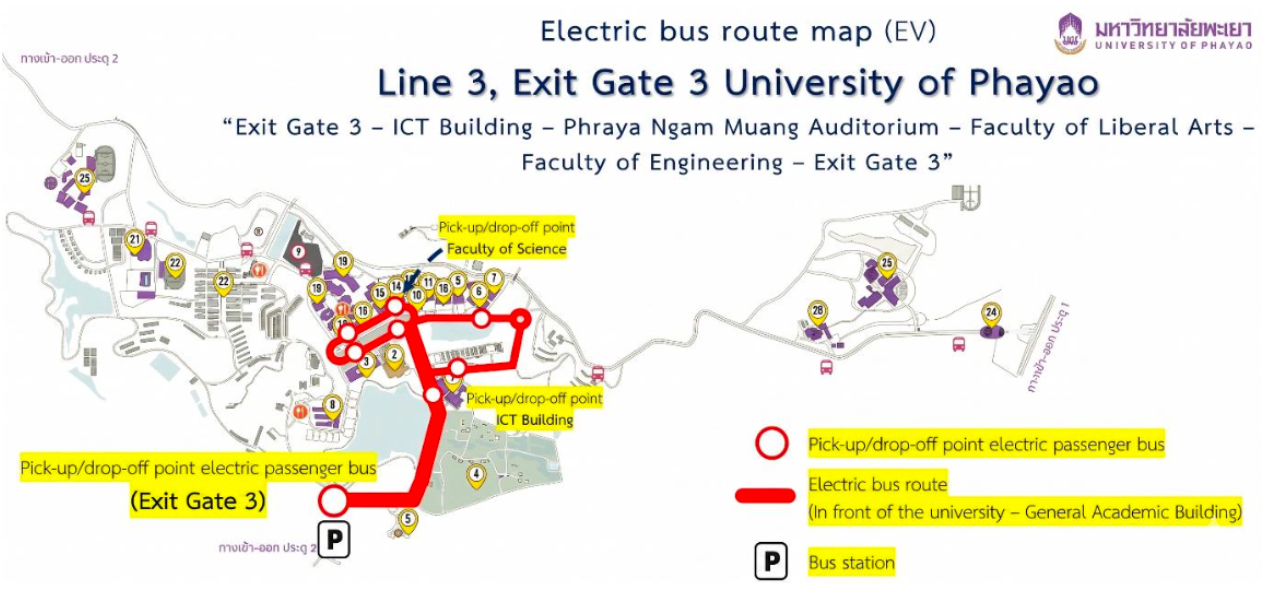
Electric bus route map (EV), Line 3.
Electricity Consumption & Greenhouse Gas Reduction
Based on data collected from the electric bus services shows that the average monthly electricity consumption is 66,081 kWh. Annual greenhouse gas emissions are estimated at approximately 482 tons of CO₂ equivalent, representing a reduction of 353 tons compared to the 835 tons generated by an NGV fuel system.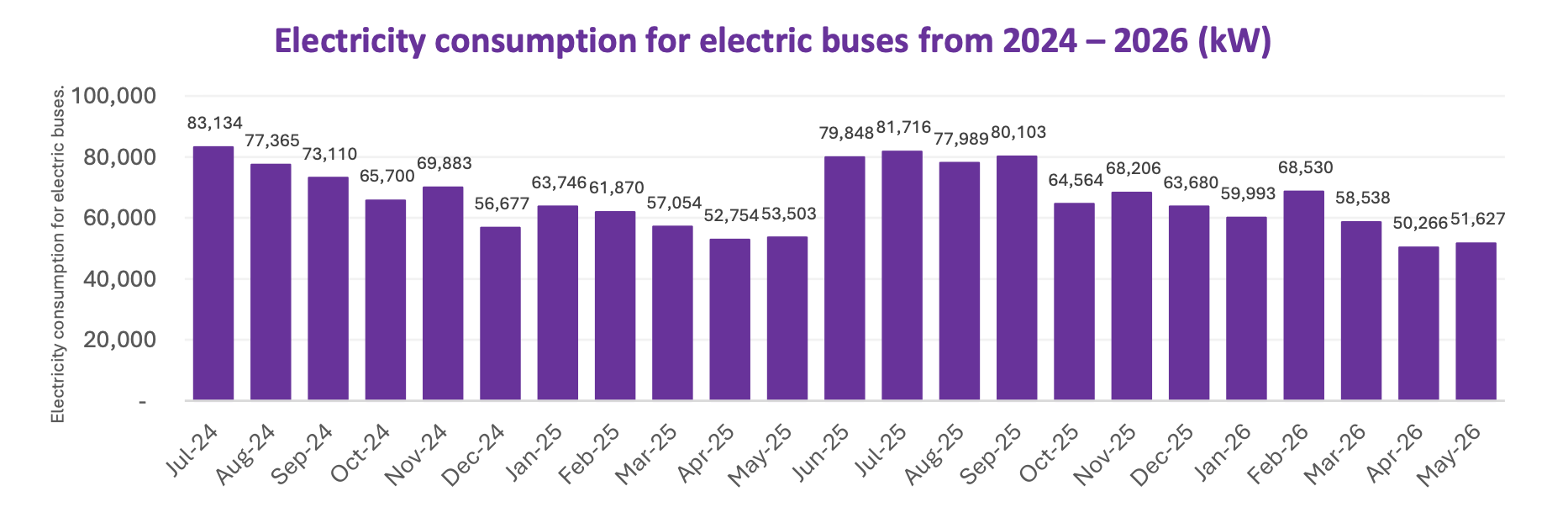
Electricity consumption for electric buses from 2024 – 2026 (kW)
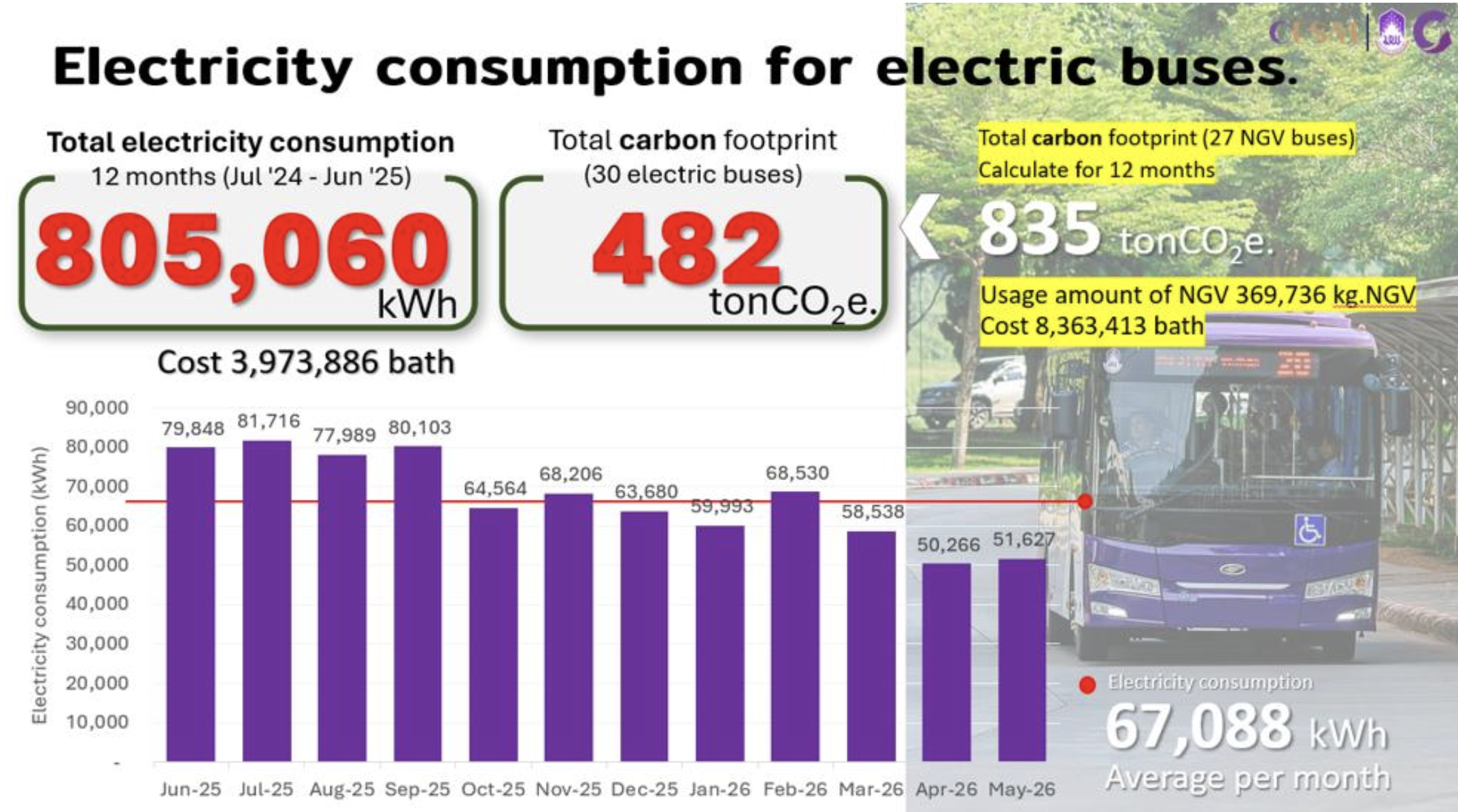
Electricity consumption for electric buses
The campus-wide implementation of the 100% ZEV shuttle service yields significant, verifiable reductions in environmental footprints:
- Greenhouse Gas Mitigation: The project achieves an estimated reduction of 450–600 metric tons of CO₂ equivalent (tCO₂eq) per year.
-
Local Air Quality Improvement (Annual Avoided Pollutants):
- Carbon Monoxide (CO) — 1,857 kg/year reduction
- Hydrocarbons (HC) — 3,096 kg/year reduction
- Nitrogen Oxides (NOₓ) — 8,669 kg/year reduction
- Particulate Matter (PM) — 123 kg/year reduction
Electric Vehicle Charging Stations
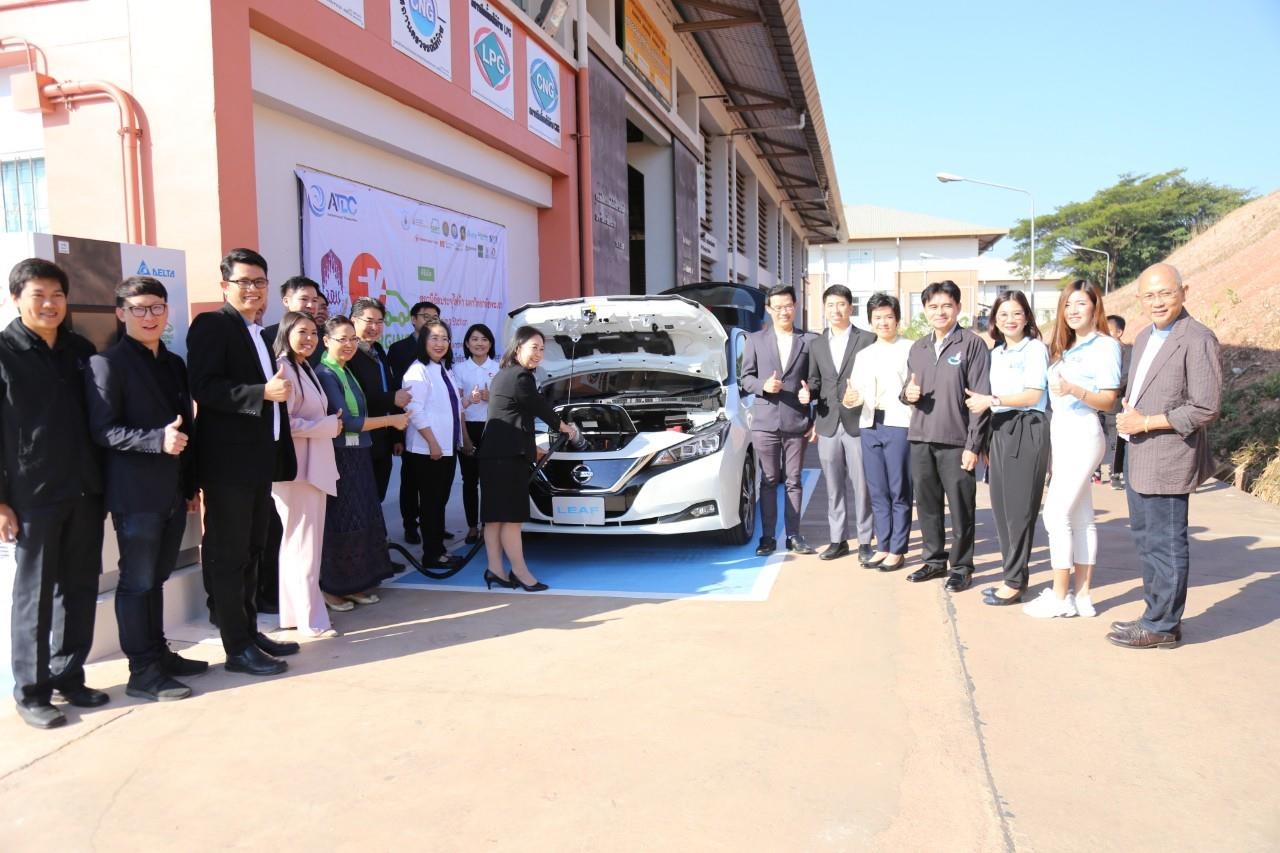
The electric charging station of the University of Phayao has been supported by the Energy Conservation Promotion Fund, Energy Policy, and Planning Office, operated by the Thai Electric Vehicle Association to support investment in the establishment of a public electric charging station at the Automotive Technology Development Center, School of Engineering, University of Phayao.
Limitation of Car Usage & Car Pool Promotion
University of Phayao has long recognized the importance of sustainable transportation as a key element in achieving its environmental and sustainability goals. In accordance with UP's Transportation and Mobility Policy, the university has implemented clear measures to both limit private car usage and actively promote carpooling among students, faculty members, and staff. These initiatives are part of the university's broader efforts to encourage a modal shift — a behavioral change from the use of private vehicles to more sustainable modes of transport such as public buses, university shuttle vans, bicycles, and walking.The limitation of car usage policy includes several strategies, such as restricting the number of parking permits issued each semester, prioritizing parking spaces for carpool vehicles, and designating certain areas as "low-emission zones." The university also encourages staff and students to use the campus shuttle service or other eco-friendly options for short-distance commuting within the campus area. Additionally, vehicle entry regulations have been periodically revised to reduce congestion and minimize the carbon footprint associated with daily commuting.
The carpool promotion program has been launched to foster a culture of shared mobility within University of Phayao community. Under this initiative, individuals who share rides with others are provided with certain privileges, such as priority parking spots, reduced parking fees, or participation in green campus reward programs. This not only helps reduce fuel consumption and travel expenses but also strengthens the sense of community and cooperation among university members. Moreover, by reducing the total number of vehicles entering the campus, the program contributes to the reduction of greenhouse gas (GHG) emissions, traffic congestion, and demand for parking spaces, resulting in more open and livable campus spaces.
In the long term, these measures support University of Phayao Sustainable Traffic and Mobility Master Plan, which aims to develop a safe, efficient, and environmentally responsible transportation system within and around the university. The plan also aligns with Thailand's national strategies for sustainable urban mobility and supports the United Nations Sustainable Development Goals (SDGs) particularly:
- Goal 7: Affordable and Clean Energy — through the promotion of low-emission transportation systems.
- Goal 11: Sustainable Cities and Communities — by fostering accessible and eco-friendly mobility options.
- Goal 13: Climate Action — through the reduction of carbon emissions and the promotion of environmentally conscious commuting behavior.
University of Phayao continues to explore innovations in smart mobility, such as integrating data-driven transport planning, adopting electric vehicles for shuttle services, and creating digital carpool matching platforms. The university also organizes awareness campaigns, workshops, and competitions to motivate students and staff to adopt greener commuting habits.
Through these comprehensive and forward-looking policies, University of Phayao not only reduces the negative environmental impacts caused by excessive private car use but also sets a strong example of how higher education institutions can lead the transition toward a low-carbon, sustainable transportation culture that enhances both the quality of life and the environmental well-being of the entire community.