Municipal Solid Waste Management System
University of Phayao provides a municipal solid waste management system, educating the university community through the University of Phayao Municipal Solid Waste Management Manual. The manual covers four main parts: waste segregation, waste collection, waste utilization, and a recyclable waste bank — with waste segregation being the most important part. Four color-coded bins are provided across the university: green, yellow, blue, and red, representing organic waste, recyclable waste, non-recyclable waste, and toxic waste respectively. Organic waste such as leaves, grass, fruits, and cooked food is collected for the composting process, where organic matter is decomposed into fertilizer for trees and plants around the campus.Total Volume of Organic Waste Produced
University of Phayao produces approximately 500–550 tons of waste per year, with a daily waste volume of about 1.8–2.2 tons/day. Organic waste — comprising food waste, wood scraps, and leaves — makes up approximately 18–20% of total waste.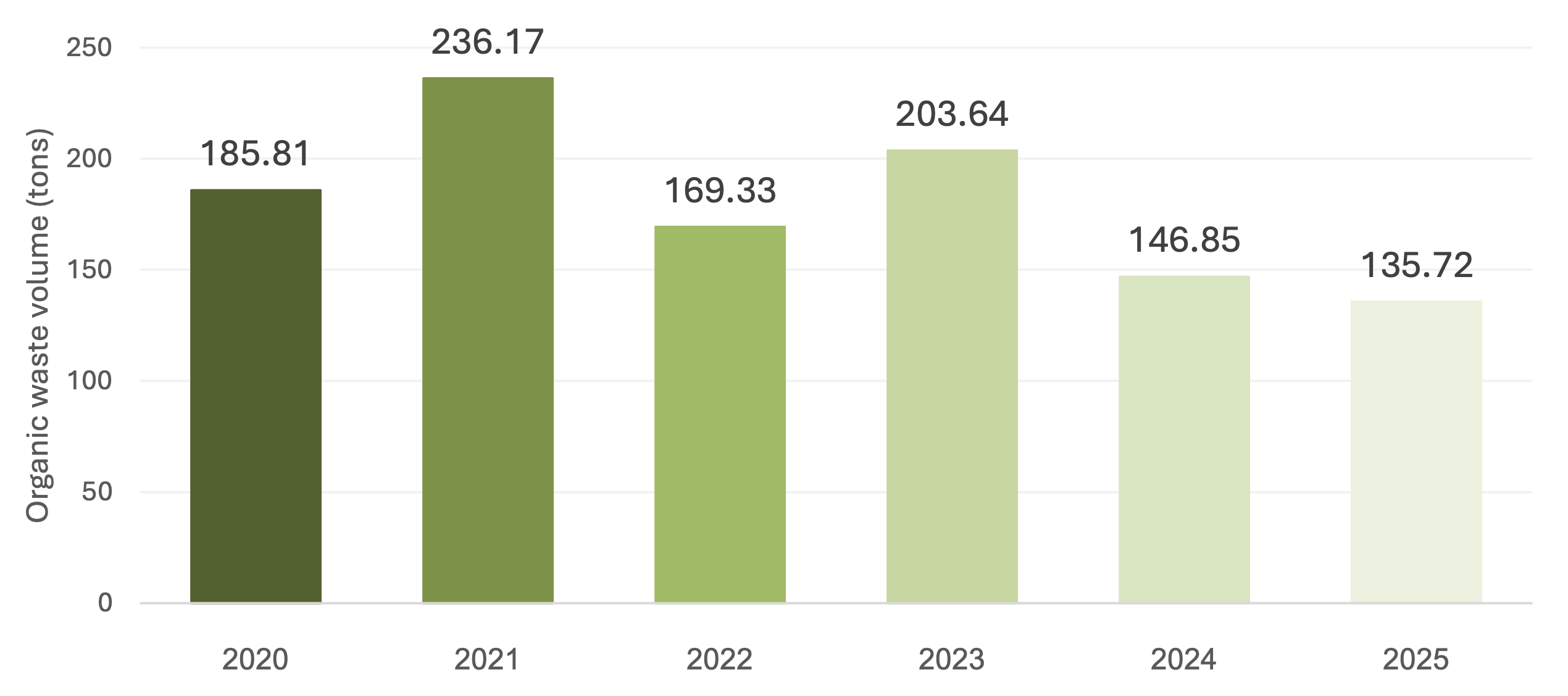
Total volume of organic waste year 2020 - 2025, (Total)
Total Volume of Organic Waste
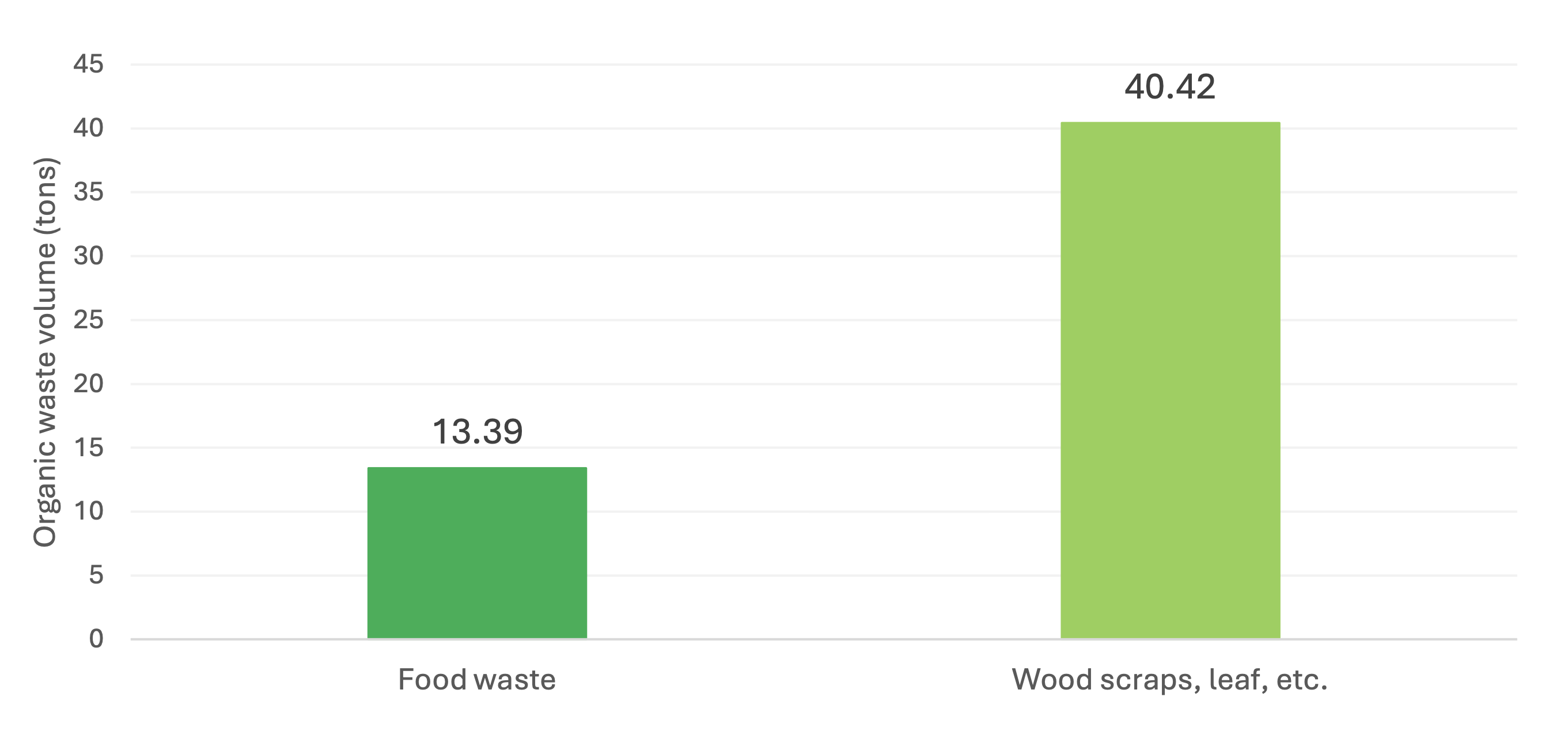
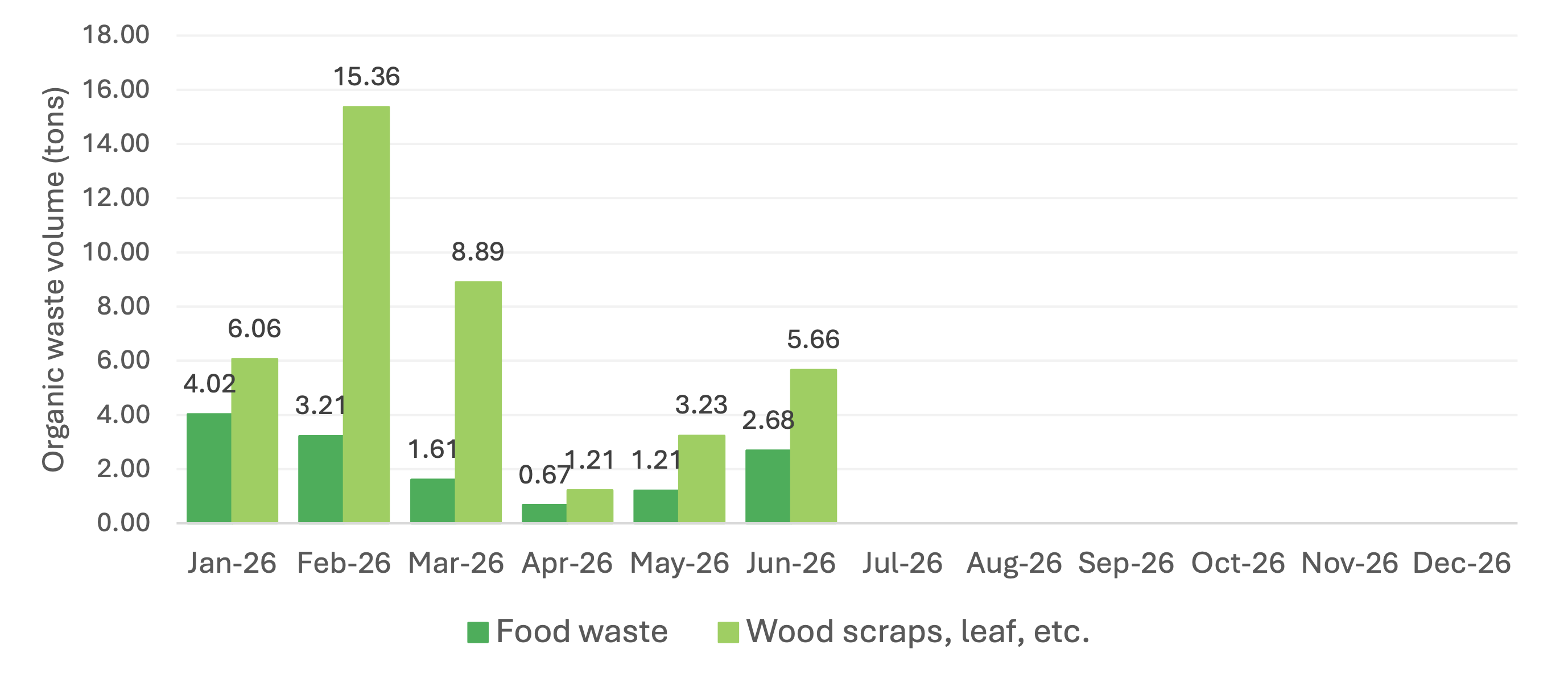
Total volume of organic waste in 2026 — Total (Food waste 13.39 tons, Wood scraps/leaf 40.42 tons) and Monthly breakdown
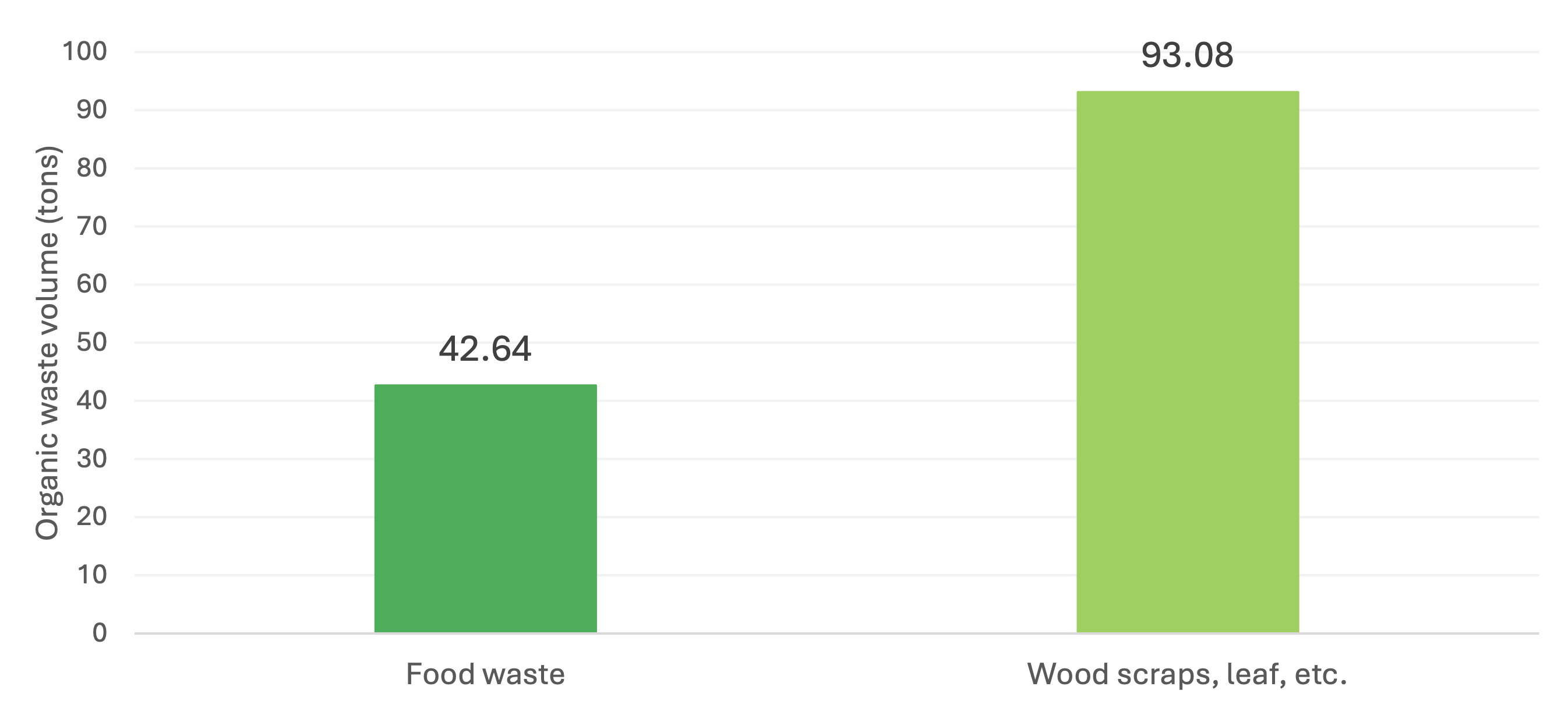
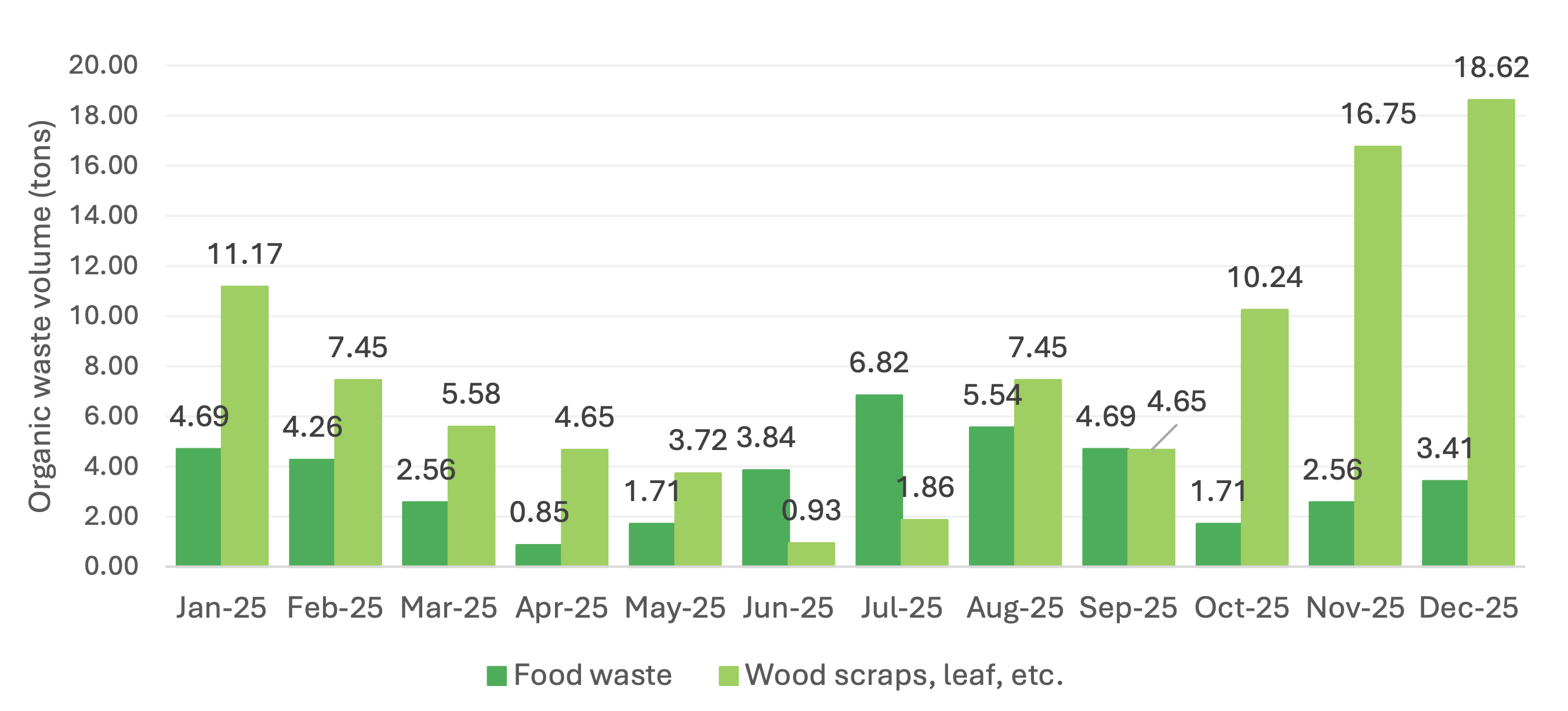
Total volume of organic waste in 2025 — Total (Food waste 42.64 tons, Wood scraps/leaf 93.08 tons) and Monthly breakdown
Year-over-Year Reduction
Compared to the previous year, University of Phayao saw a decrease in organic waste volume: food waste decreased by 68.59%, from 42.64 tons in 2025 to 13.39 tons in 2026, while wood and leaf waste decreased by 56.57%, from 93.08 tons to 40.42 tons. These decreases reflect the university's strong commitment to promoting environmental engagement and responsibility among its staff and students.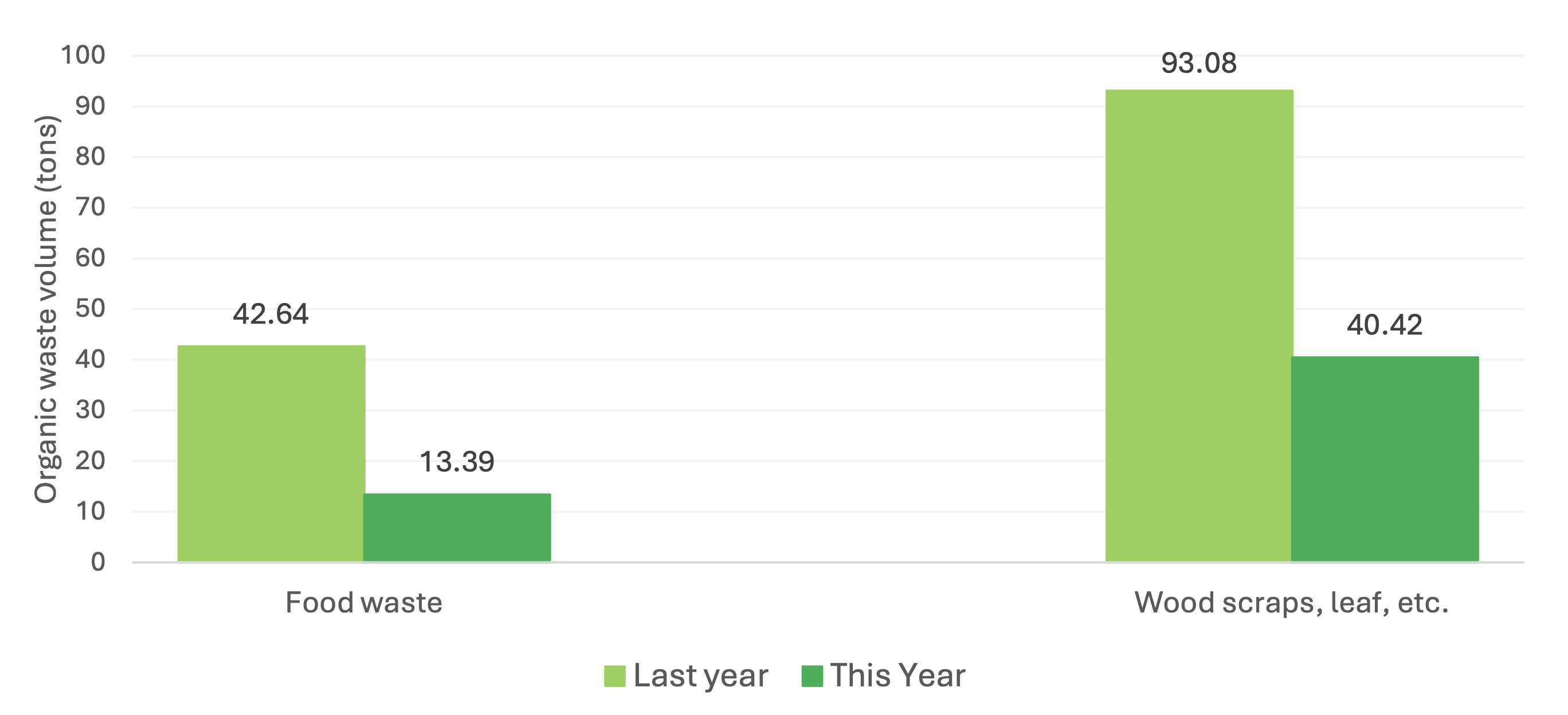
Total volume of organic waste produced this year, compared to last year
Organic Waste Treatment: 100% Resource Recovery
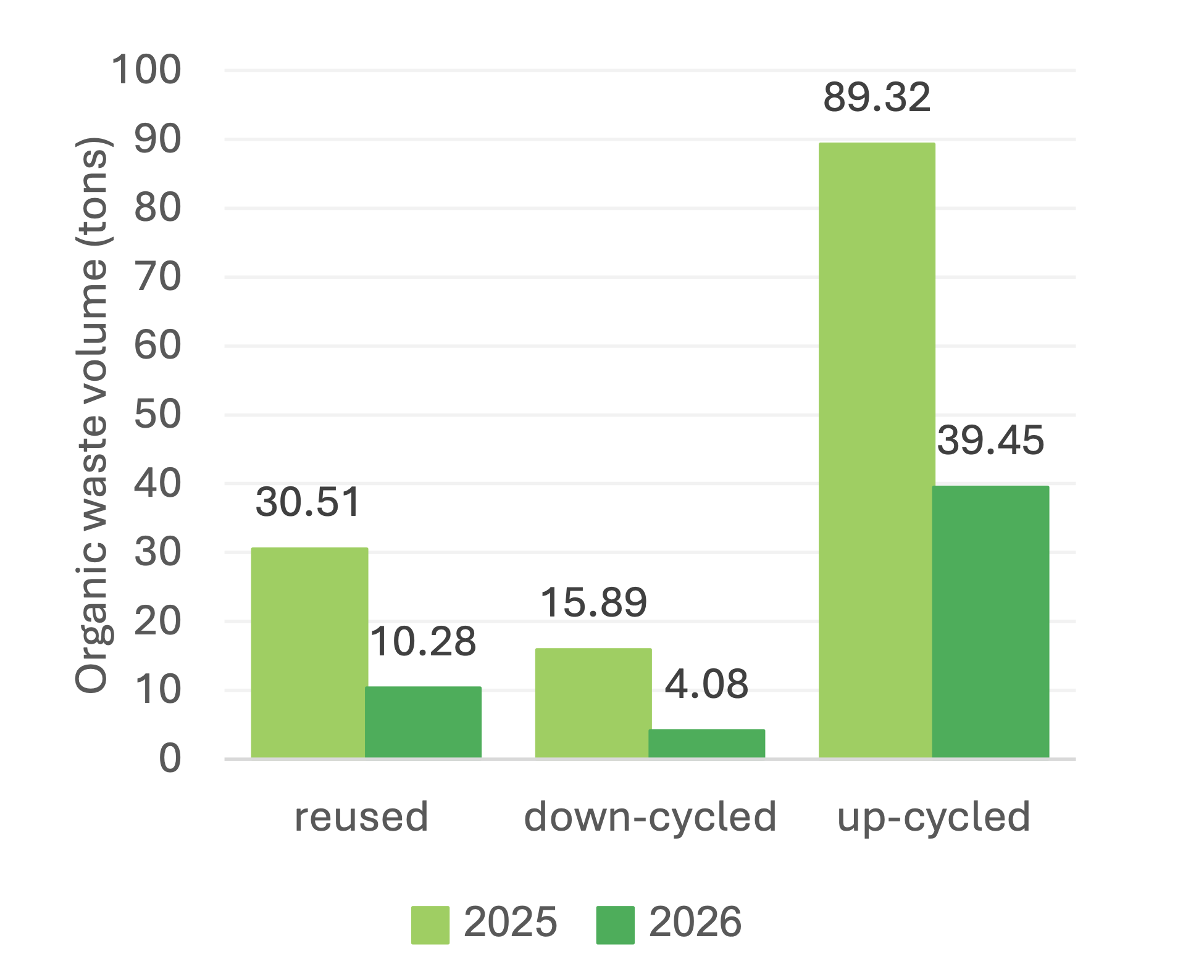
University of Phayao can manage 100% of its organic waste (food scraps, vegetable scraps, and plant scraps), treating it through three pathways: reuse, up-cycling, and down-cycling. In 2025, the university treated all 135.72 tons of organic waste it produced: 30.51 tons were reused, 15.89 tons were down-cycled, and 89.32 tons were up-cycled. Of the 42.64 tons of food waste, 30.51 tons were reused and 12.13 tons were down-cycled, while of the 93.08 tons of wood scraps and leaves, 3.76 tons were down-cycled and 89.32 tons were up-cycled. In 2026, the university treated all 53.81 tons of organic waste it produced: 10.28 tons (19.10%) were reused, 4.08 tons (7.59%) were down-cycled, and 39.45 tons (73.31%) were up-cycled. Of the 13.39 tons of food waste, 10.28 tons were reused and 3.11 tons were down-cycled, while of the 40.42 tons of wood scraps and leaves, 0.97 tons were down-cycled and 39.45 tons were up-cycled.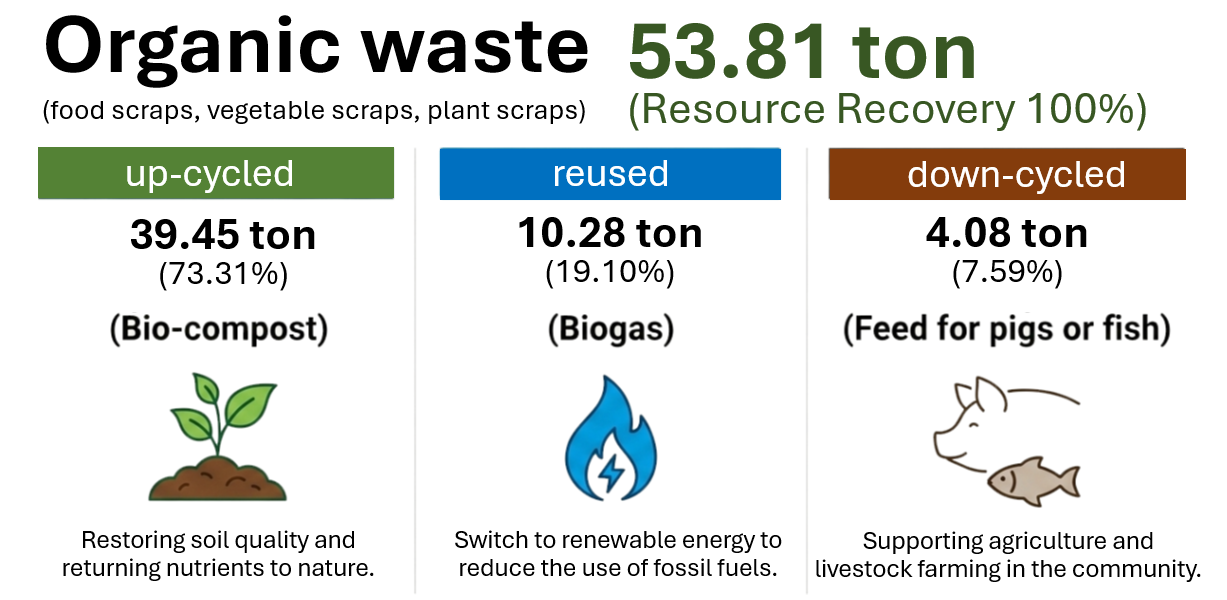
Guidelines for managing organic waste of the university in the form of reused, up-cycled and down-cycled (2026)
"Great & Green: Turning Leaves into Fertilizer, Reducing Pollution, and Restoring Life to the Soil"
As part of this effort, the university runs this campaign — a carbon credit initiative under SDG 15 (Life on Land) that campaigns against open burning, reduces greenhouse gas emissions, mitigates pollution, and restores life to the soil by converting fallen leaves into organic fertilizer — reflecting the university's vision to become a World Green University.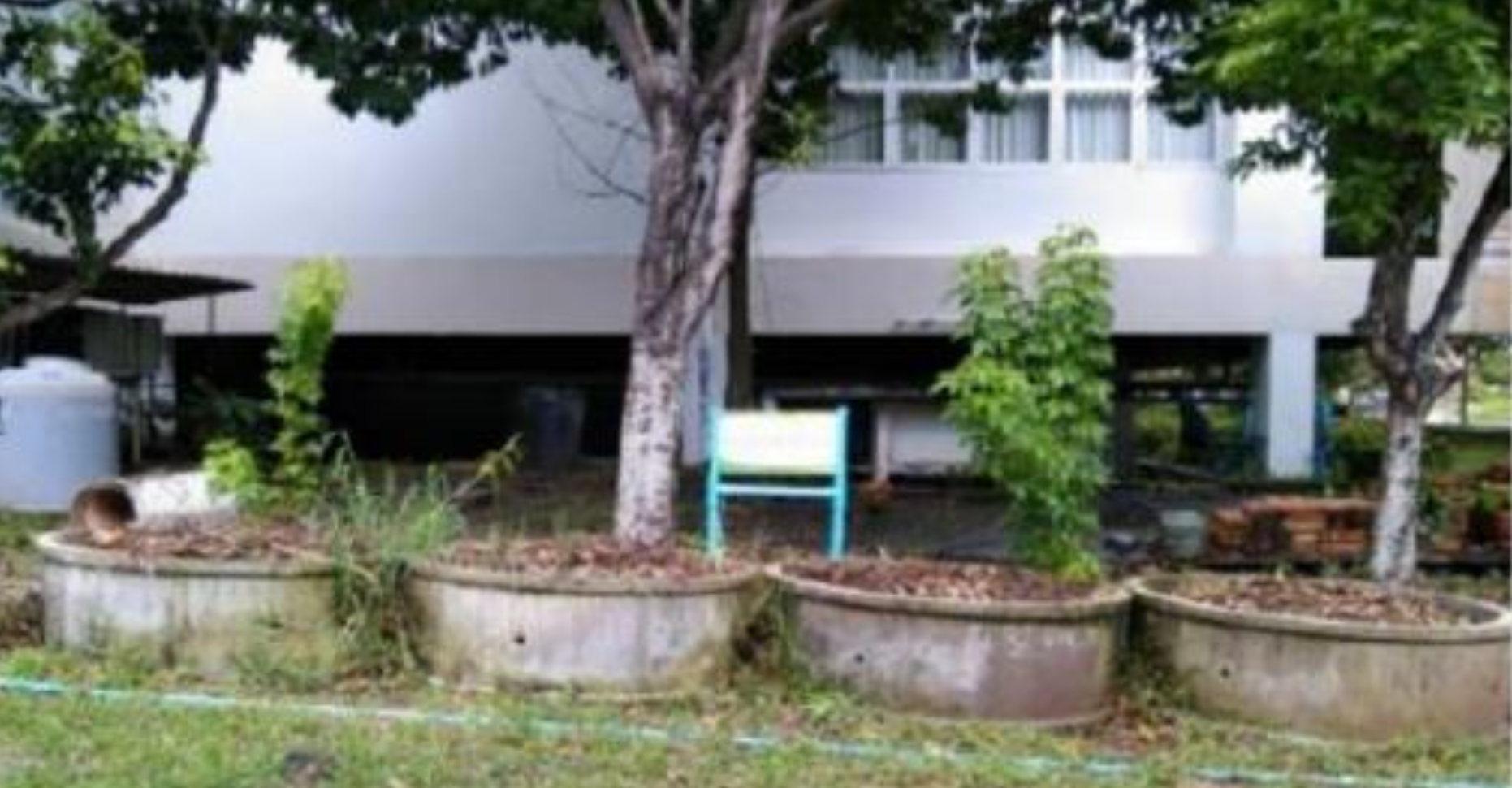
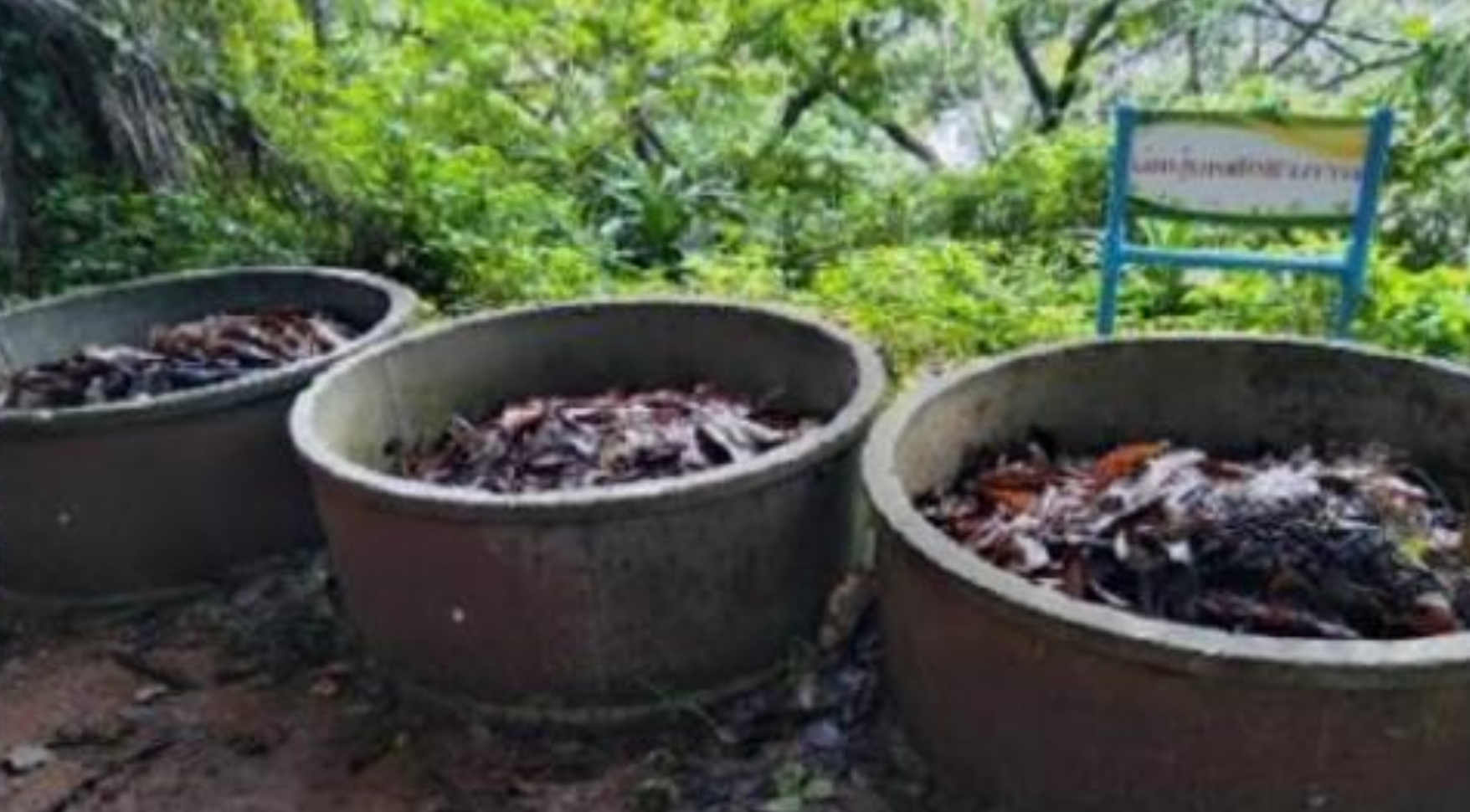
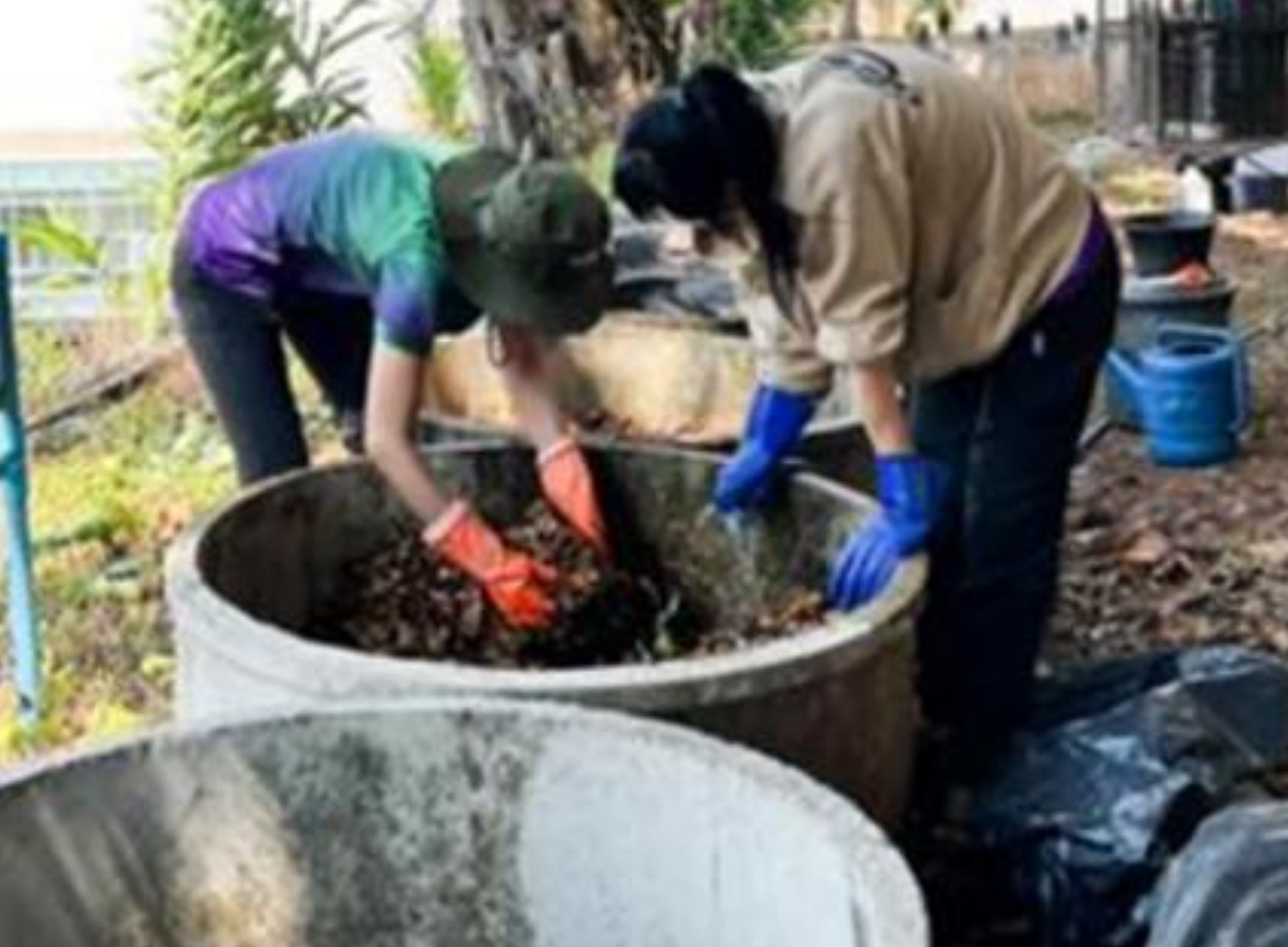
Using leaves, twigs, and food scraps to make bio-compost
Biogas System from Food Waste in the Cafeteria
The university manages leaf waste to make compost and food waste to produce biogas for use in the university's cafeteria. University of Phayao transforms food waste into clean energy by collecting food leftovers from the central cafeteria and on-campus dormitories to feed into an anaerobic digestion system. This process converts the waste into biogas, which is recirculated as cooking gas within the university community, while the remaining digestate is developed into organic fertilizer to enrich the soil. This initiative reduces landfill waste, lowers greenhouse gas emissions, and addresses SDG 7 (Affordable and Clean Energy), SDG 12 (Responsible Consumption and Production), and SDG 13 (Climate Action).
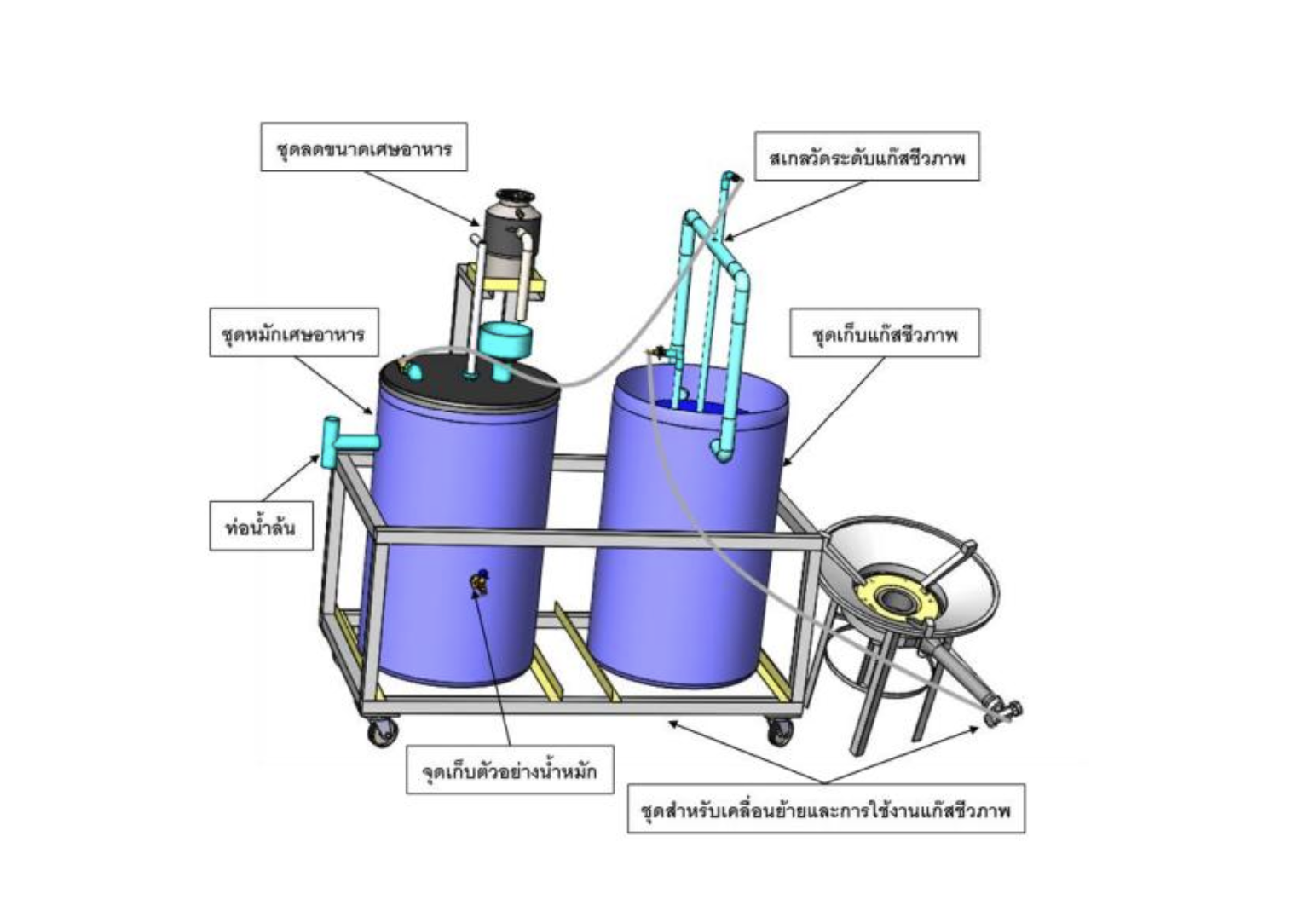

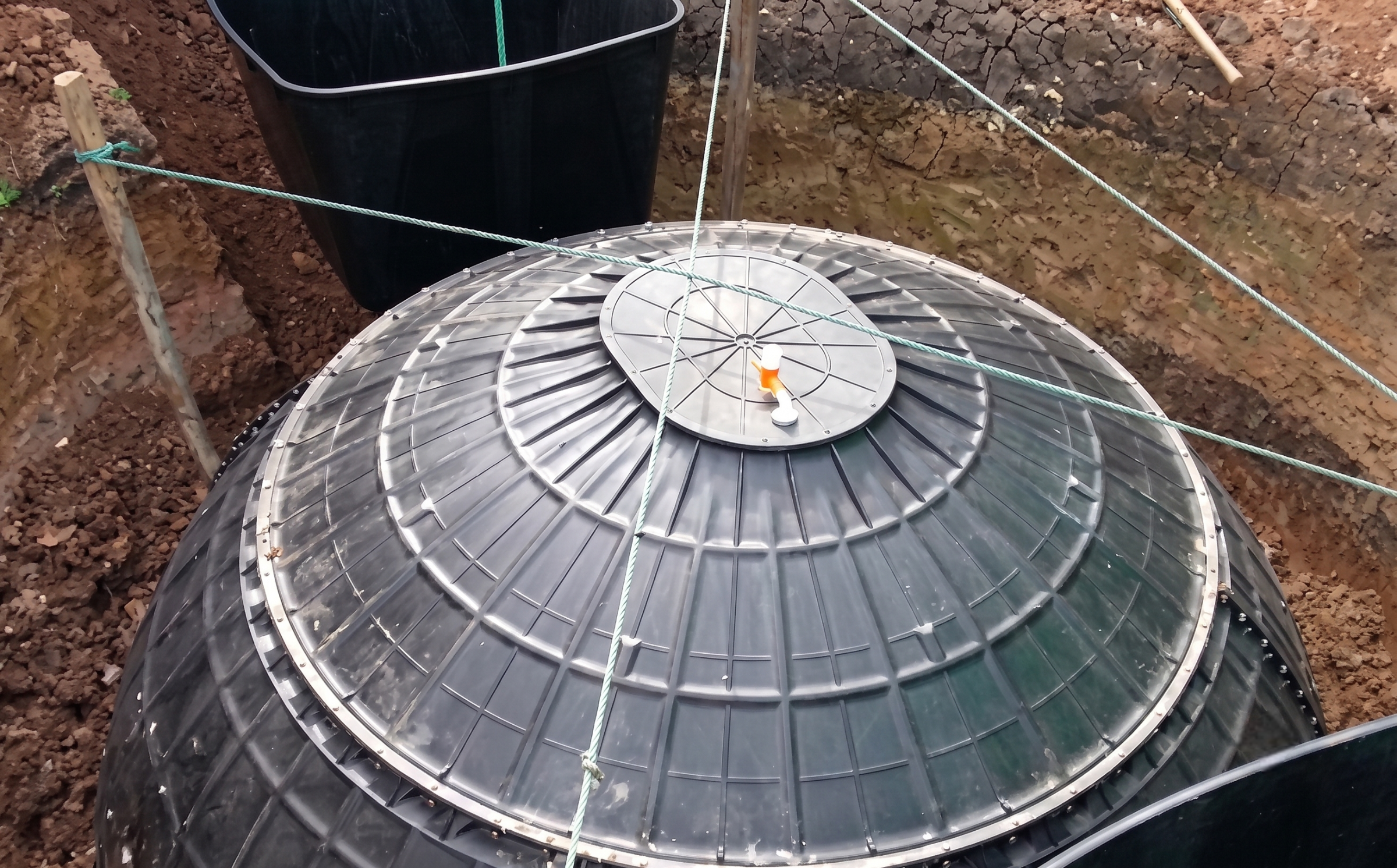
Biogas system from food waste in the cafeteria
This organic waste treatment yields an annual production of 1,028 cubic meters of biogas and 29.64 tons of organic fertilizer. In addition, the university reduces carbon dioxide emissions by 438 tons of CO2 equivalent (CO2-e) per year and saves more than 2,785.69 USD annually on waste management, LPG, and fertilizer expenses. The biodegradable waste generated from the university's activities is also used as raw material for producing organic soil conditioner. Production involves shredding the raw materials and fermenting them for approximately 1 month. After fermentation, the material is sun-dried, finely ground, and left to rest for 3 days before being used or packaged. This approach reduces the cost of maintaining green spaces and generates revenue for the university.Waste to Energy — Target & Performance
Targets: 100% of food waste are transformed into energy by 2030.
Results: In 2026, 76.77% of food waste were transformed into energy.
The university's cafeteria generates approximately 40–80 kg of food waste per day, including raw meat, vegetable peelings, bones and shells, and leftover dishes. Through the waste-to-energy program, 100 kg of food waste produces around 10 cubic meters of biogas per day, used for cooking and boiling water at the canteen, with soil conditioner and fertilizer as a by-product. These waste utilization activities reduce total solid waste by approximately 6.95%.From Organic Waste Compost to Blooming Vegetable Gardens and Flower Fields
Over 39 tons of bio-compost produced by the university has been reused in planting plots throughout the campus, with benefits across three main areas:- Soil Structure Restoration: The original land of the university consisted of laterite and compacted soil in certain areas. Compost from organic waste, rich in microorganisms and organic matter, has improved the soil's structure, making the ground more porous, enhancing water retention, and improving aeration.
- Organic Vegetable Gardens for Student Food Security: Nitrogen-rich compost derived from food scraps is used in the pesticide-free vegetable gardens of the School of Agriculture and Natural Resources and various demonstration plots, producing fast-growing, crisp, and safe leafy green vegetables such as lettuce, kale, and cabbage for campus consumption.
- Flower Gardens and Landscapes (Companion Planting Model): The university has landscaped its surroundings using a Companion Planting Model blending flowers and vegetables. Secondary nutrients from the compost, such as calcium and magnesium, nourish flowers campus-wide — including marigolds, sunflowers, and cosmos — creating a natural pollinator network that helps repel pests from surrounding vegetable plots.
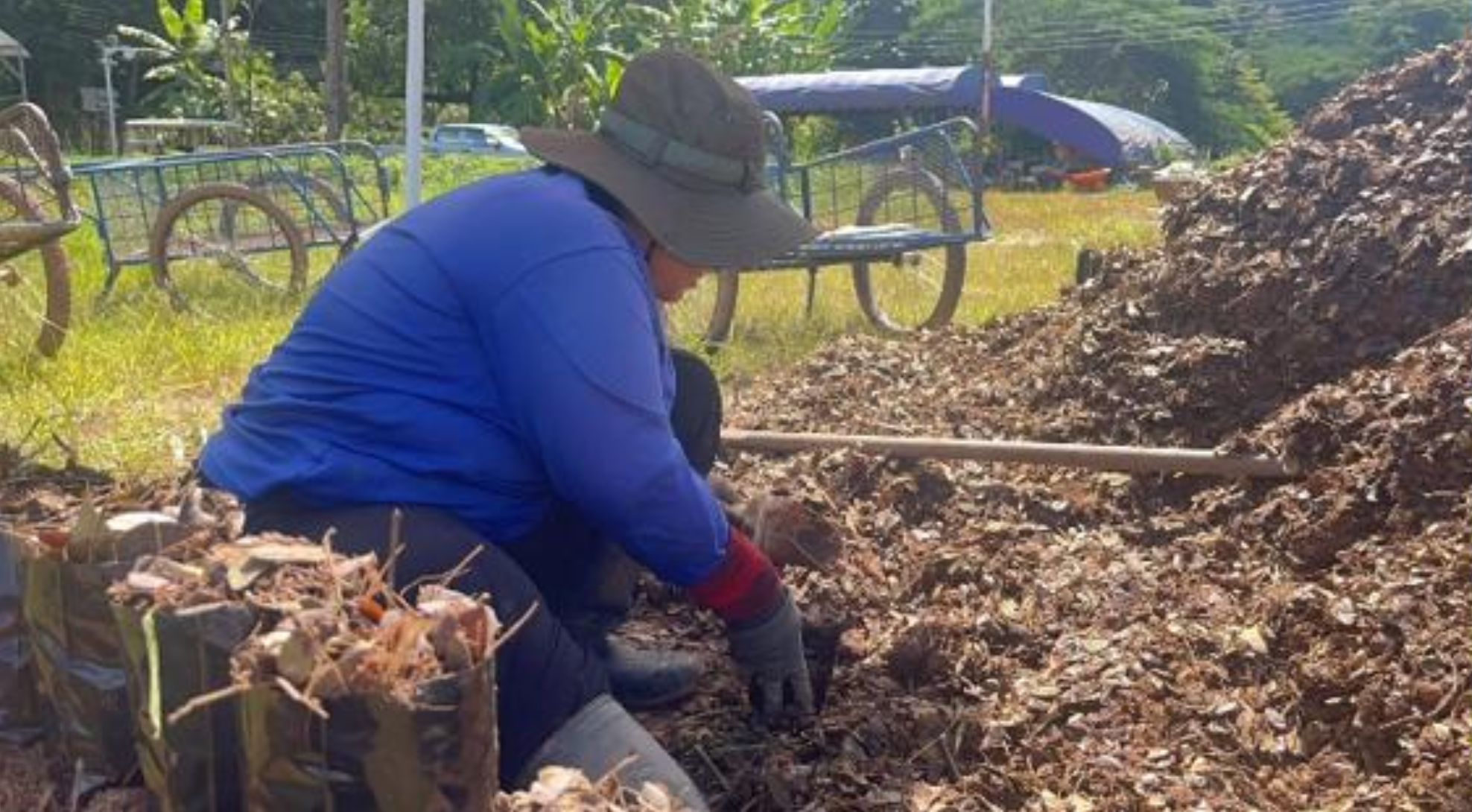
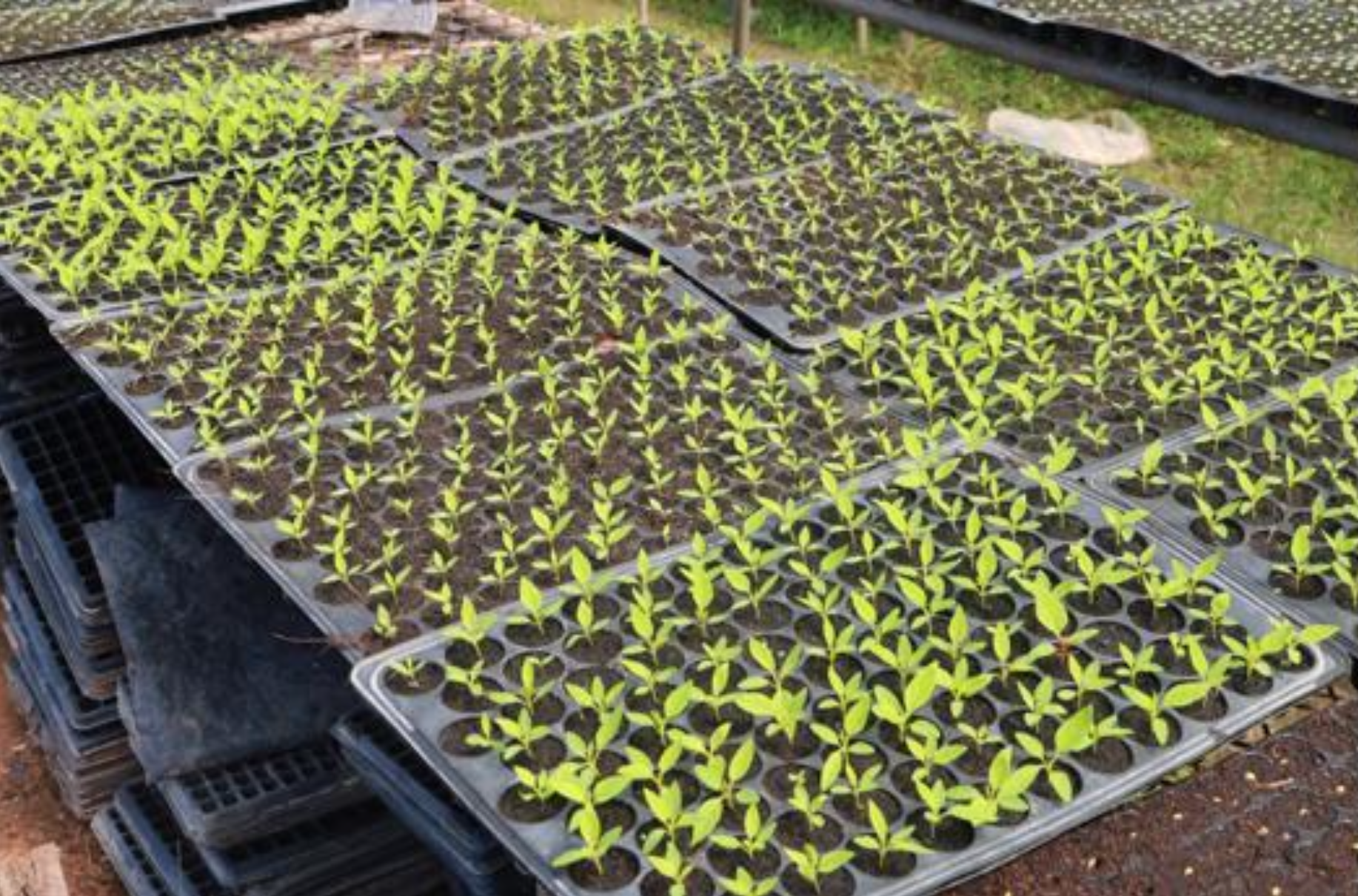
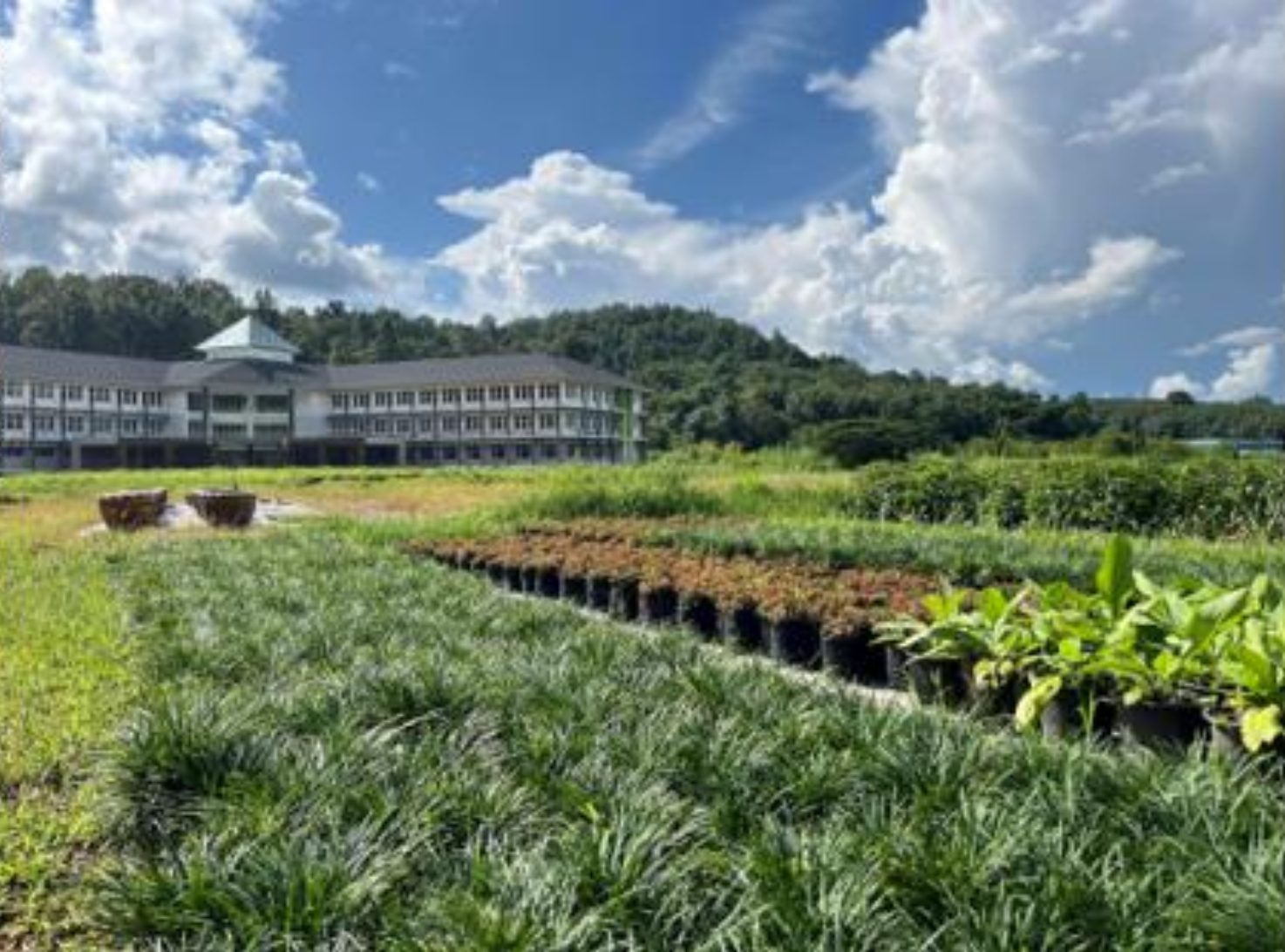
From organic waste compost to blooming vegetable gardens and flower fields