Turning Plastic Waste into Useful Products
University of Phayao utilizes plastic waste to create useful products such as coat hangers, plastic filament for 3D printers, road surfaces, and brick blocks. Plastic waste is first processed through a granulator to reduce it into smaller pieces, which are then transformed into various products. Through this initiative, the university has reduced plastic waste by up to 65% of its total plastic waste. Plastic waste can also be transformed into useful products such as oil derived from plastic, road surfaces, and brick blocks — innovations that recycle waste materials and give them renewed value.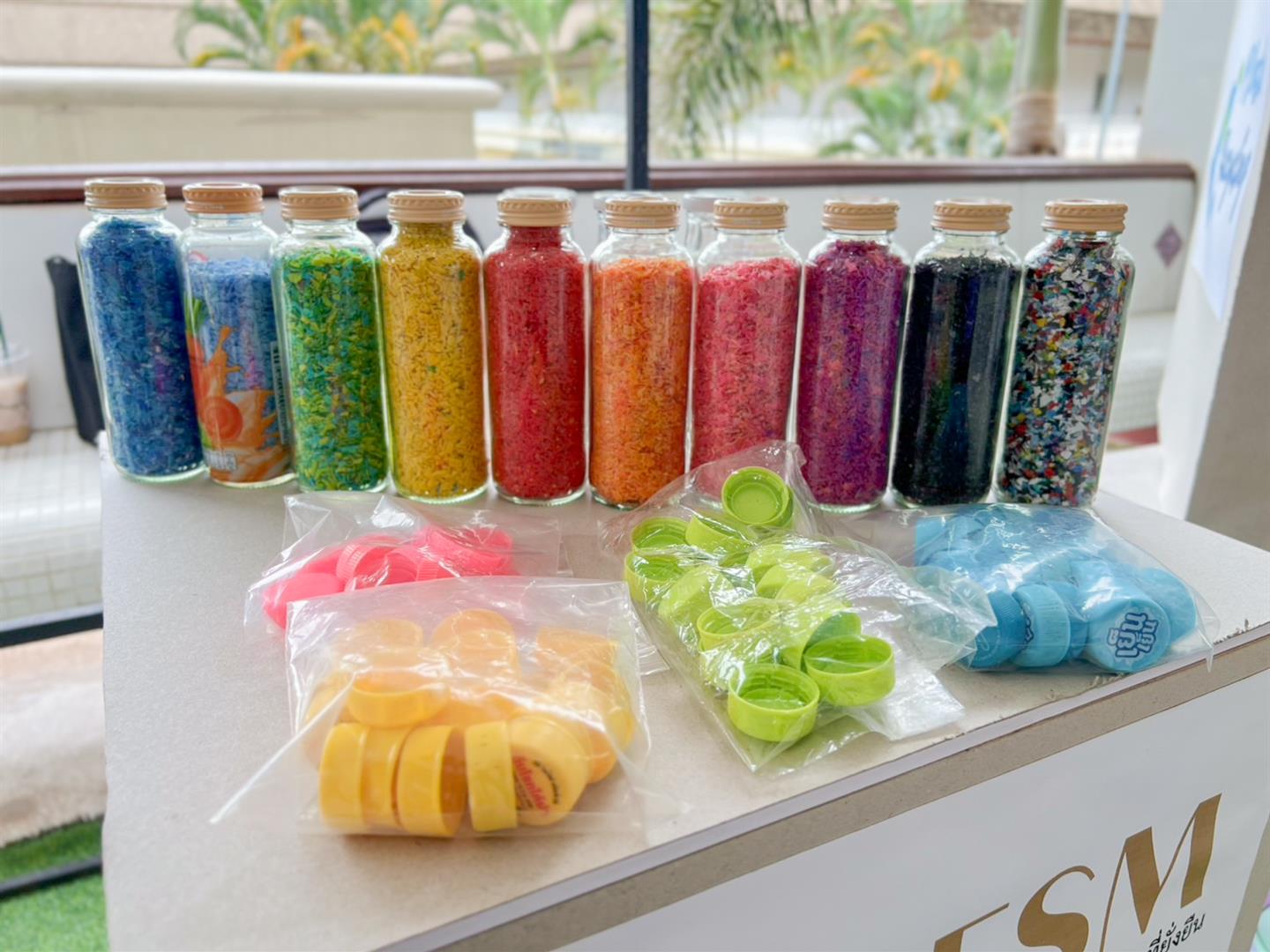
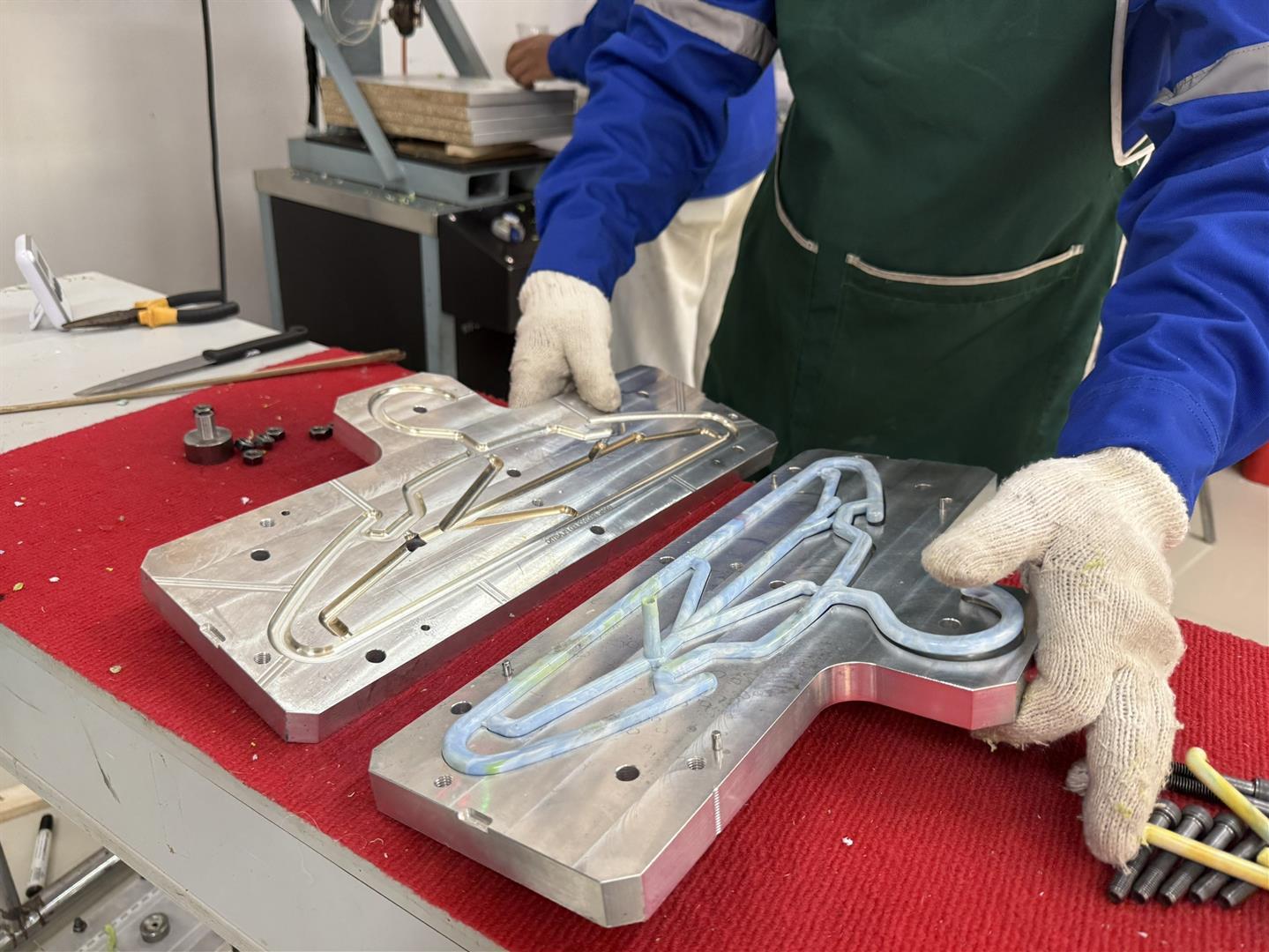
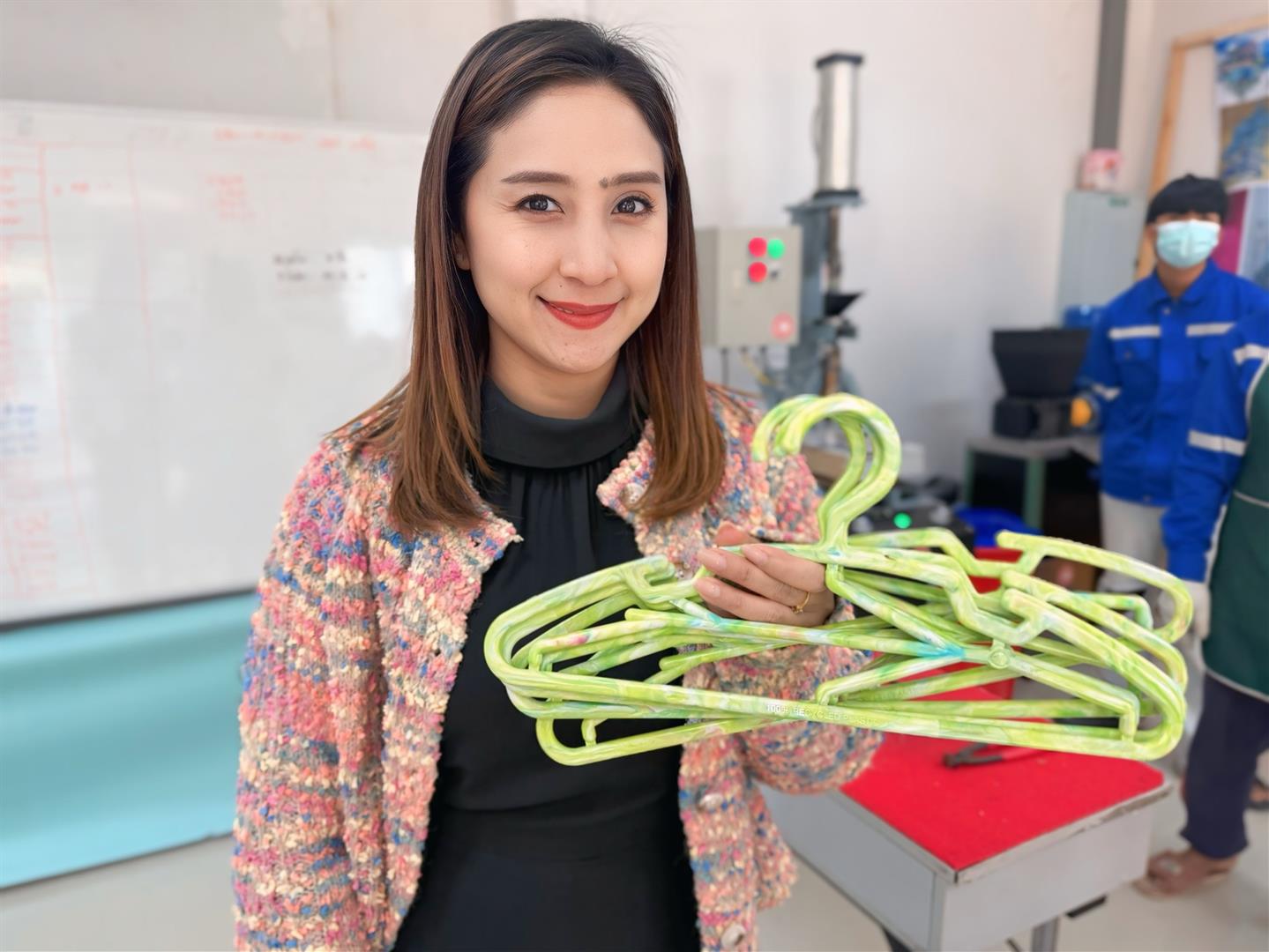
Plastic waste is granulated and transformed into recycled plastic products, including coat hangers
Residual plastic from the production of clothes hangers and other hard plastics is ground and mixed to produce "worm blocks," which are used as paving stones within the university.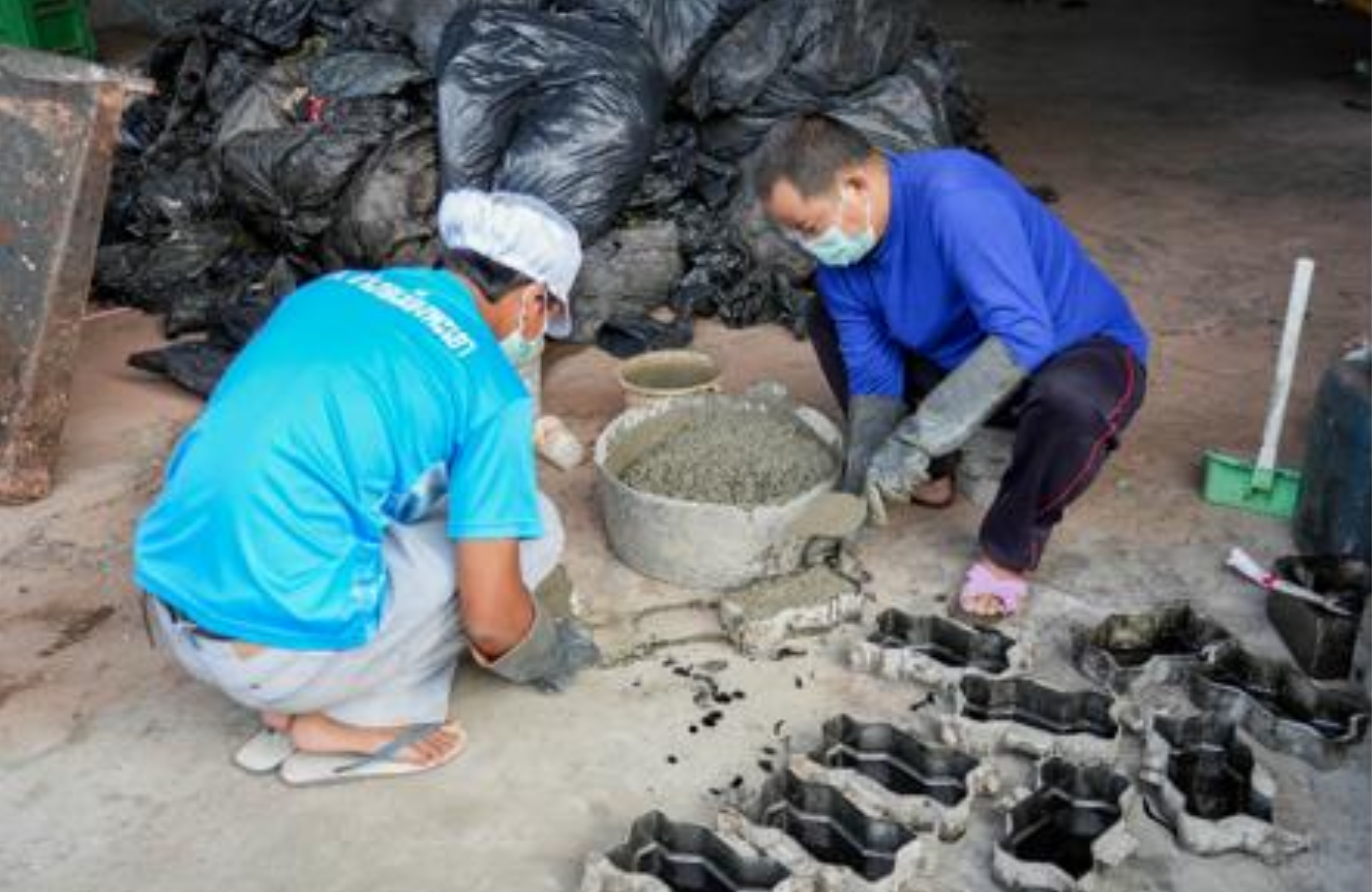

Producing worm block paving stones from residual recycled plastic
Plastic waste that cannot be sold — such as plastic bags, plastic cups, and plastic wrap — is processed into oil, producing gasoline and diesel at a ratio of 2:1 (approximately 4.9 kg of plastic yields 2.4 liters of gasoline). Through these plastic waste processing activities, University of Phayao is able to eliminate 100% of its plastic waste.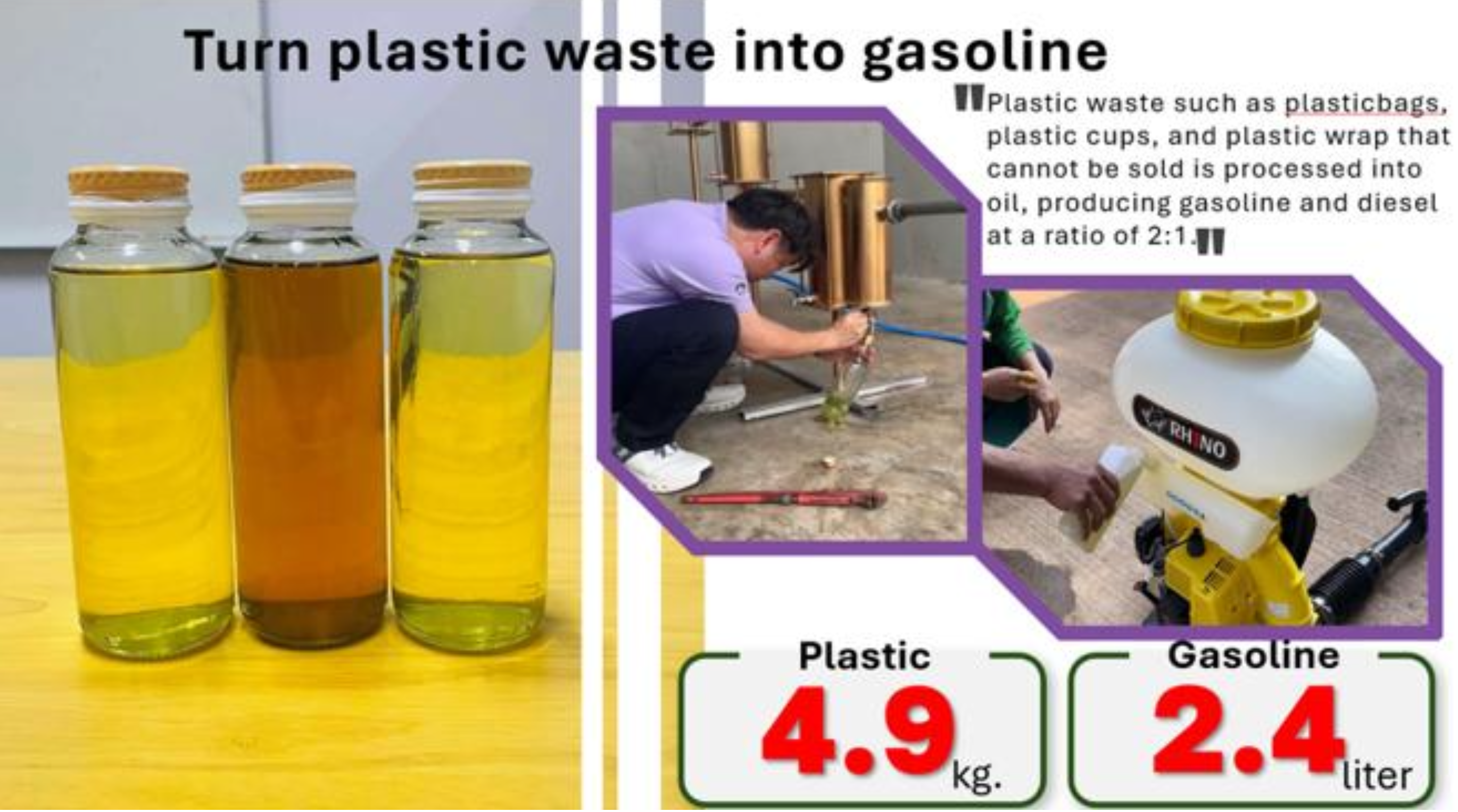
Turning plastic waste into gasoline and diesel (4.9 kg plastic → 2.4 L fuel)
Total Volume of Plastic Produced
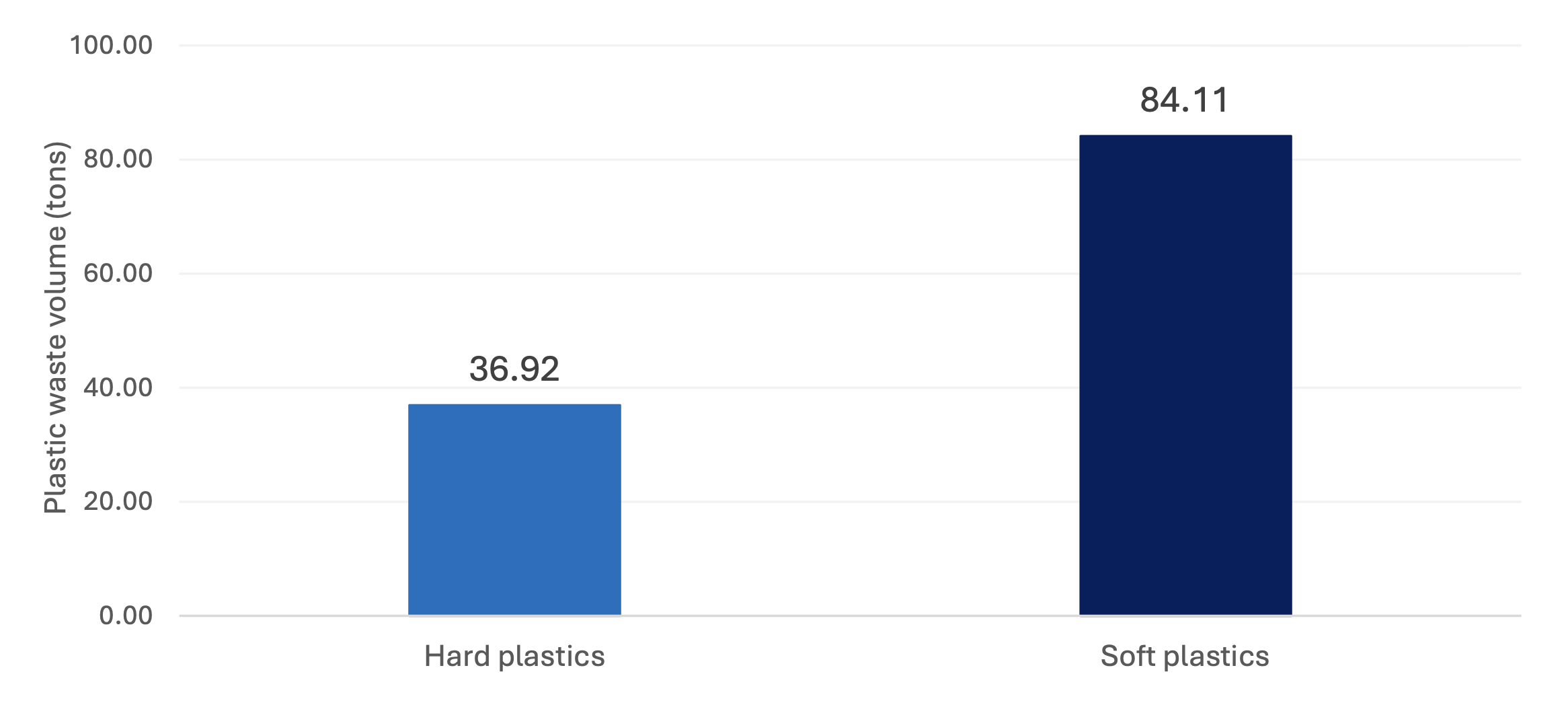
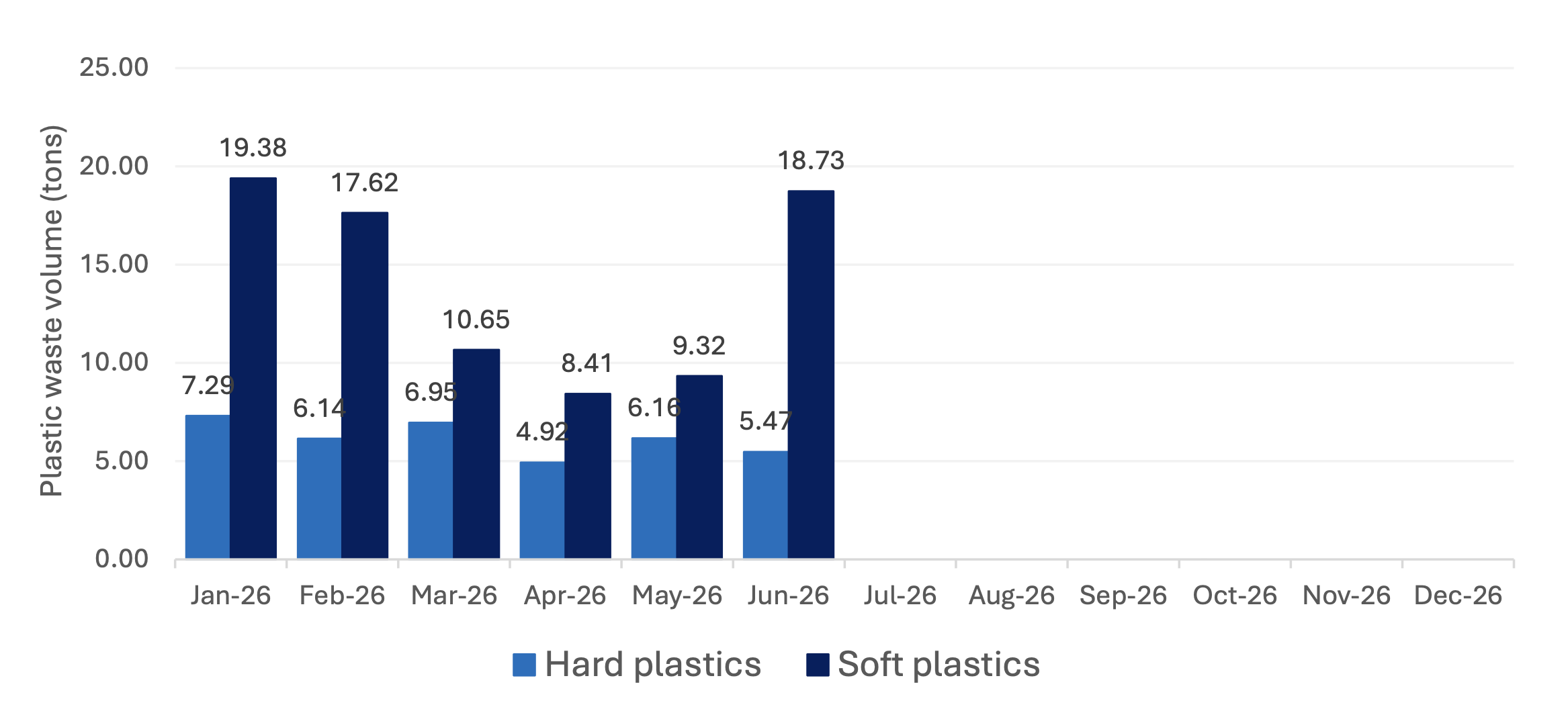
Total volume of plastic produced this year 2026 — Total (Hard plastics 36.92 tons, Soft plastics 84.11 tons) and Monthly breakdown
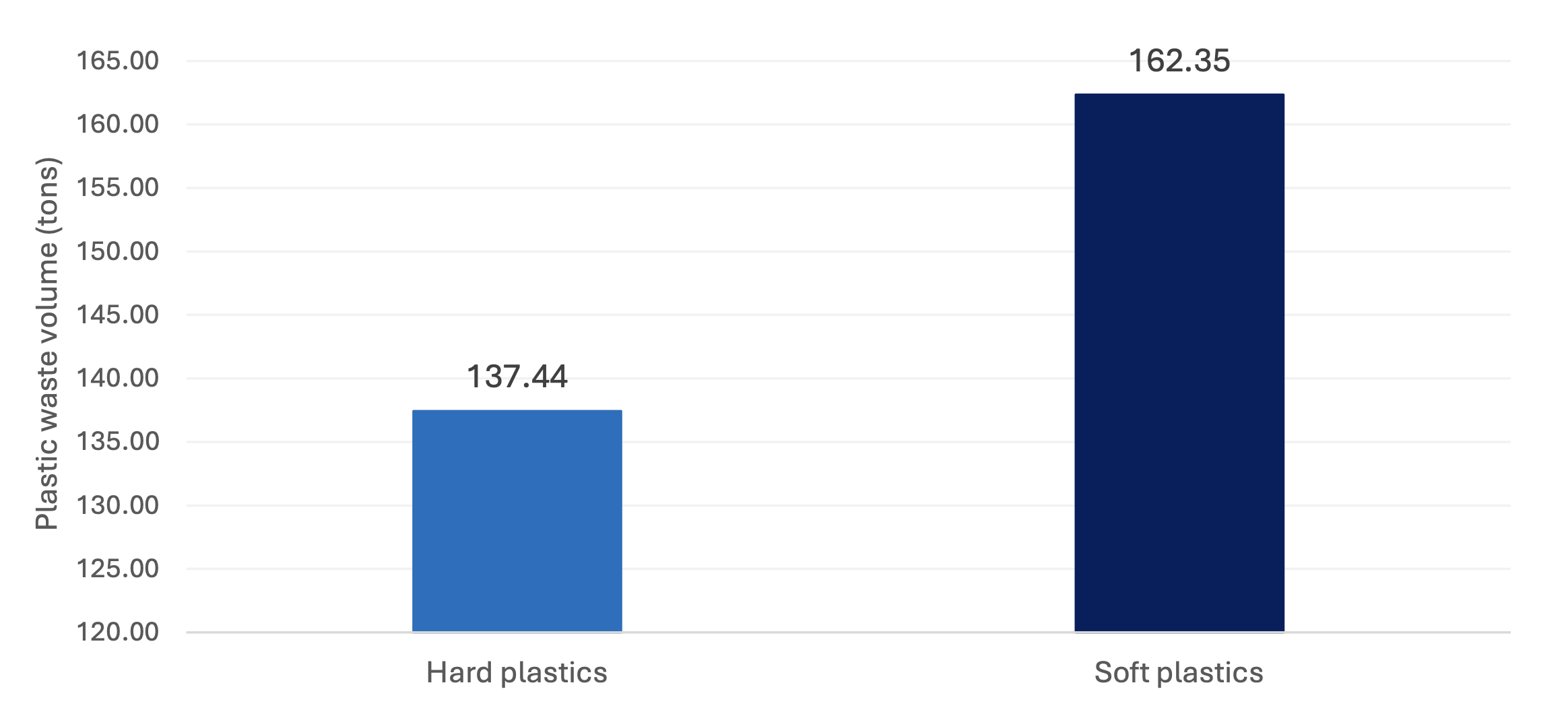
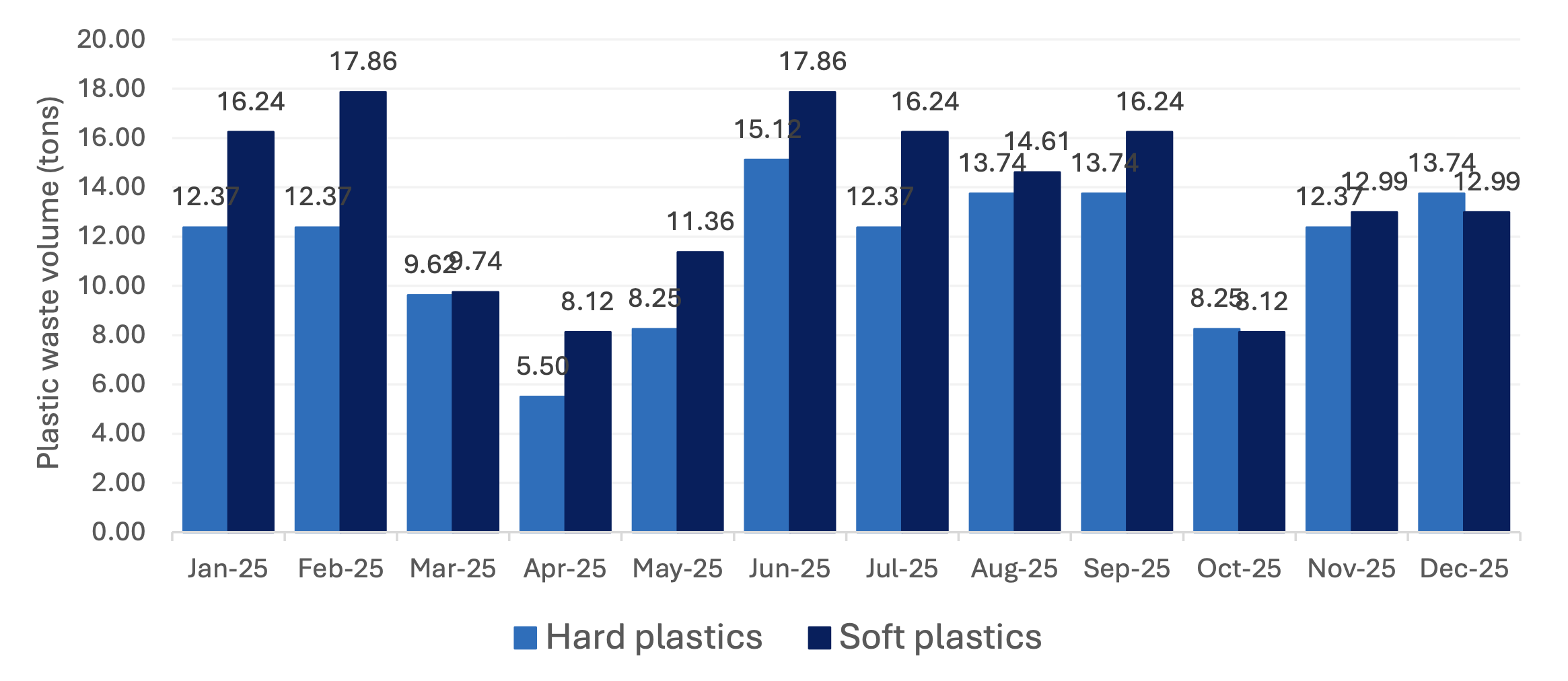
Total volume of plastic produced in 2025 — Total (Hard plastics 137.44 tons, Soft plastics 162.35 tons) and Monthly breakdown
Total Volume of Paper Produced
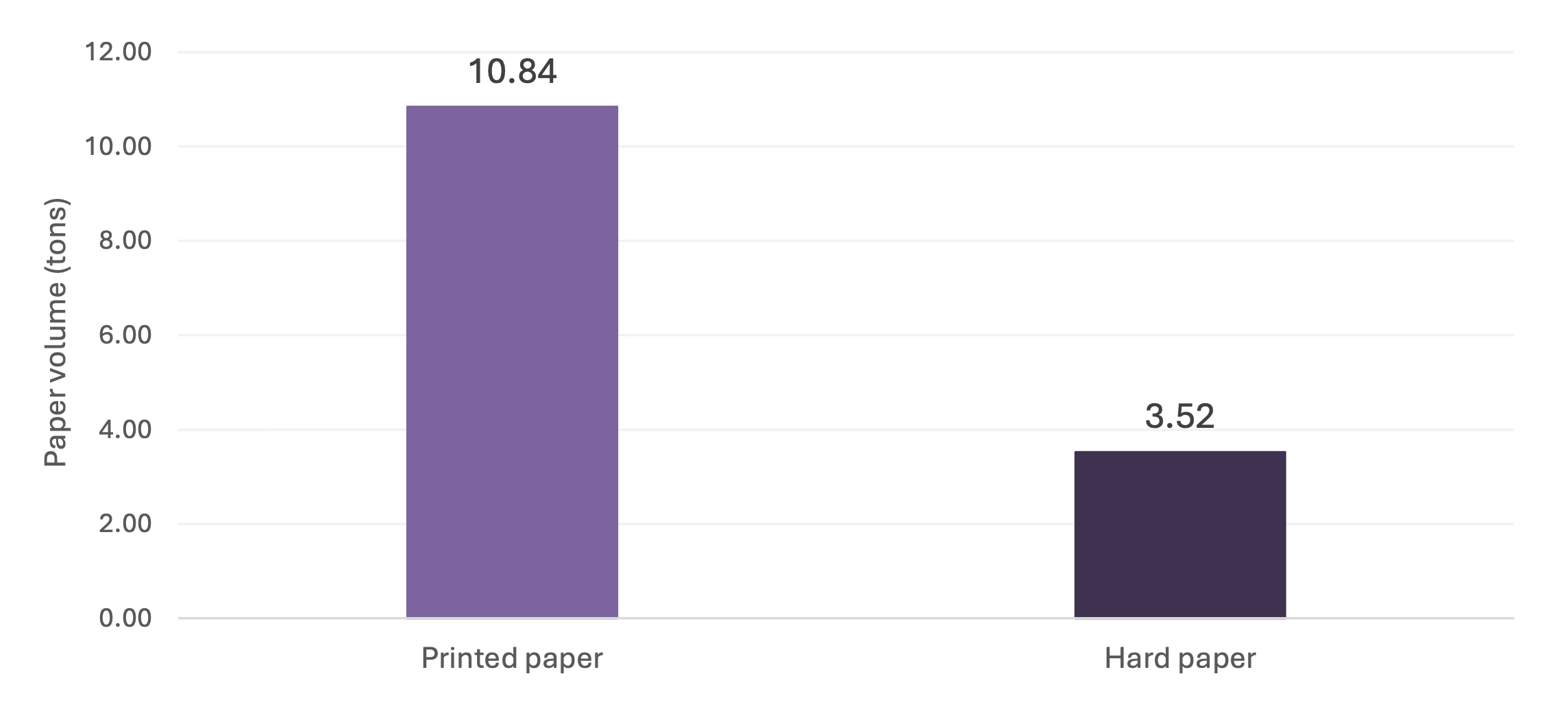
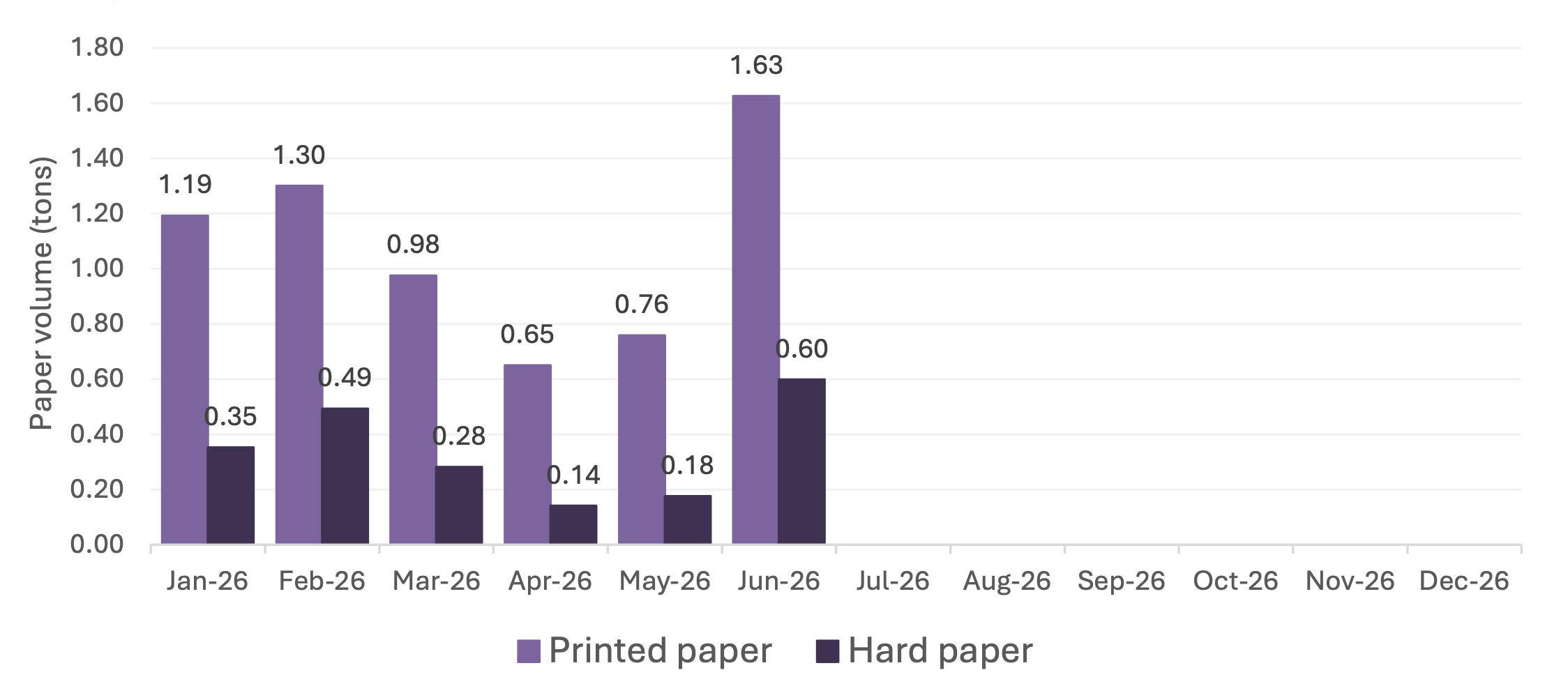
Total volume of paper produced this year 2026 — Total (Printed paper 10.84 tons, Hard paper 3.52 tons) and Monthly breakdown
Furthermore, in 2026, 16.1 tons of paper were recycled: 6.71 tons were reused for double-sided printing, while 14.85 tons were disposed of and sold as recyclable paper.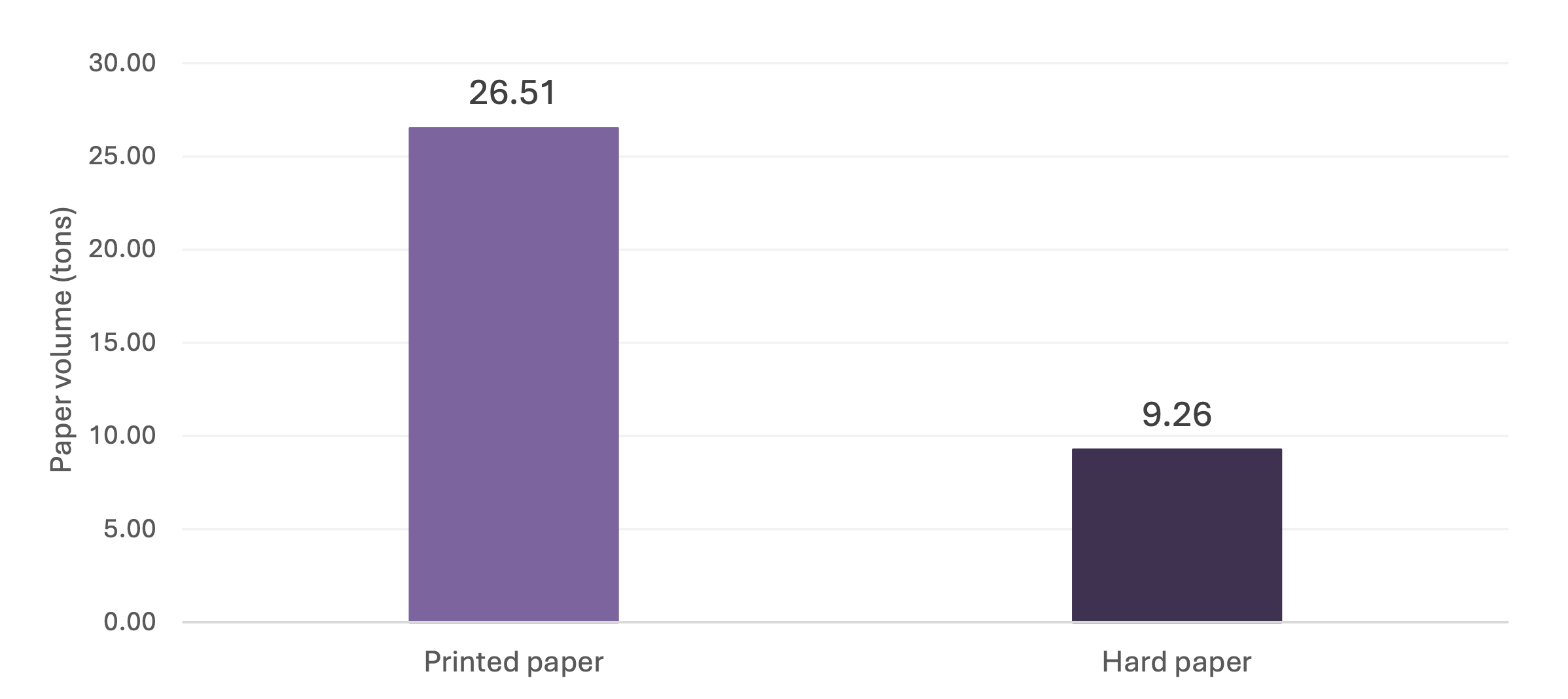
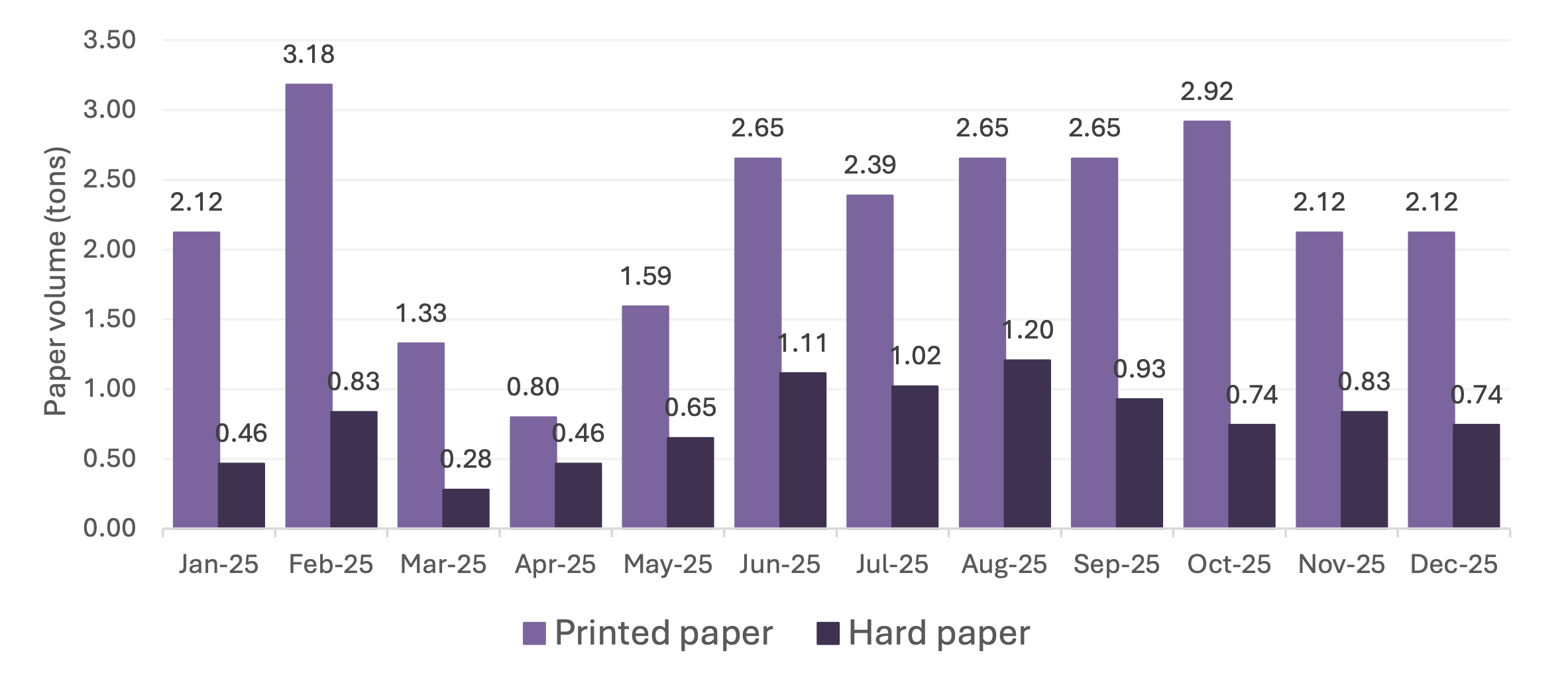
Total volume of paper produced in 2025 — Total (Printed paper 26.51 tons, Hard paper 9.26 tons) and Monthly breakdown
Year-over-Year Reduction
Compared to the previous year, University of Phayao has seen a significant reduction in both plastic waste and office paper usage. Plastic waste decreased by 60%, from 299.79 tons in 2025 to 121.03 tons in 2026, while paper usage dropped by 60%, from 35.77 tons to 14.36 tons. These reductions reflect the university's strong commitment to fostering participation and environmental responsibility among staff and students.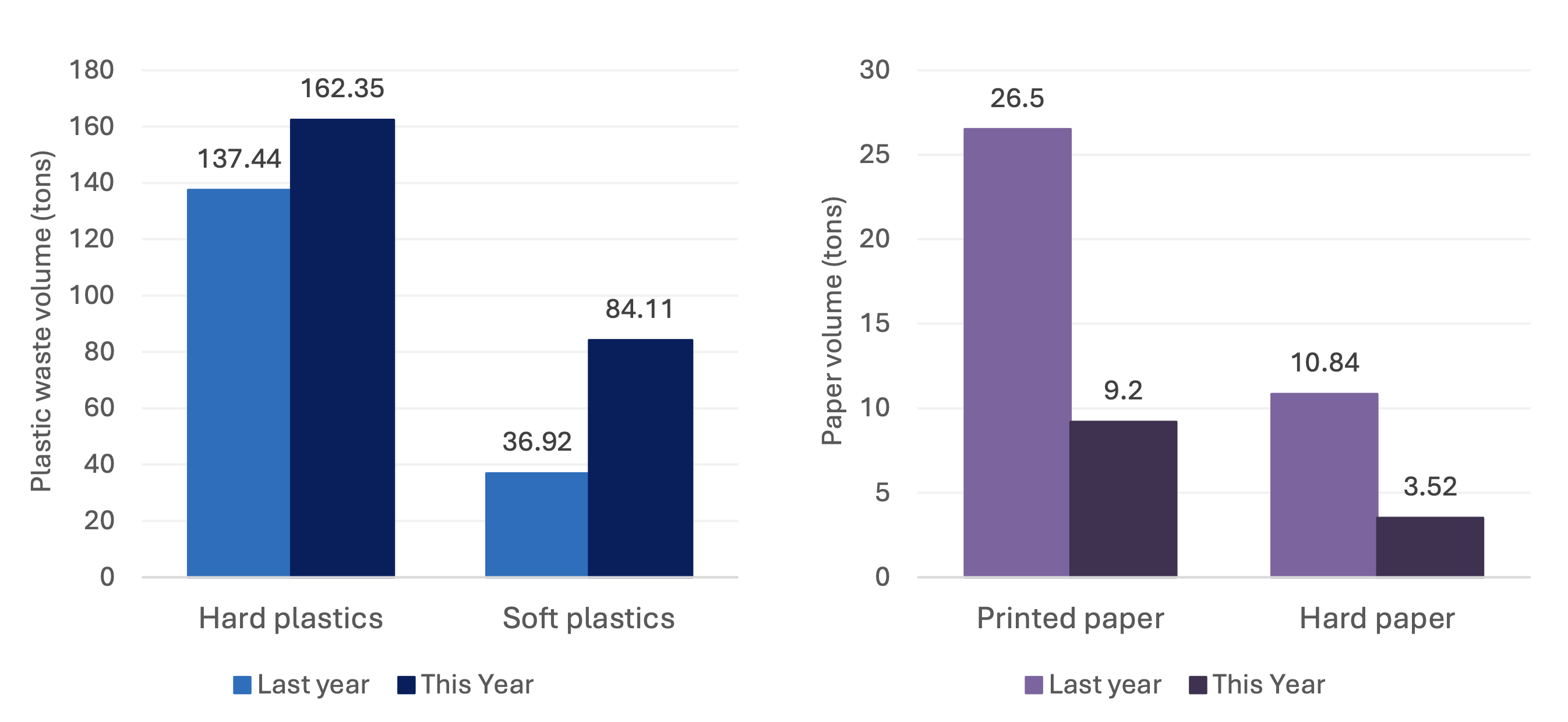
Total volume of paper and plastic produced this year, compared to last year
Paperless Campus: Goal and Target
Goal: To be a paperless campus.Target: 90% reduction in paper usage by 2030, compared to the 2020 baseline.
Result: In 2026, a 56.79% reduction in paper usage was achieved compared to the 2020 baseline. Most official documents and learning materials have already been converted into digital platforms for research, classroom learning, and technical services. Students can download handouts and past exam papers from the university's e-Learning website, manage educational documents via the E-Lecture platform, and submit homework and assignments using UP Office 365 or OneDrive.
UP-DMS: Digital Document Management System
To address paper consumption, University of Phayao has developed an electronic document management system called UP-DMS, managed centrally by the Central Division. The platform digitalizes internal routing, review cycles, and institutional archival processes, and fully integrates secure E-Signatures, enabling executives and administrative staff to legally validate and approve official memoranda on any device without a single page of physical print.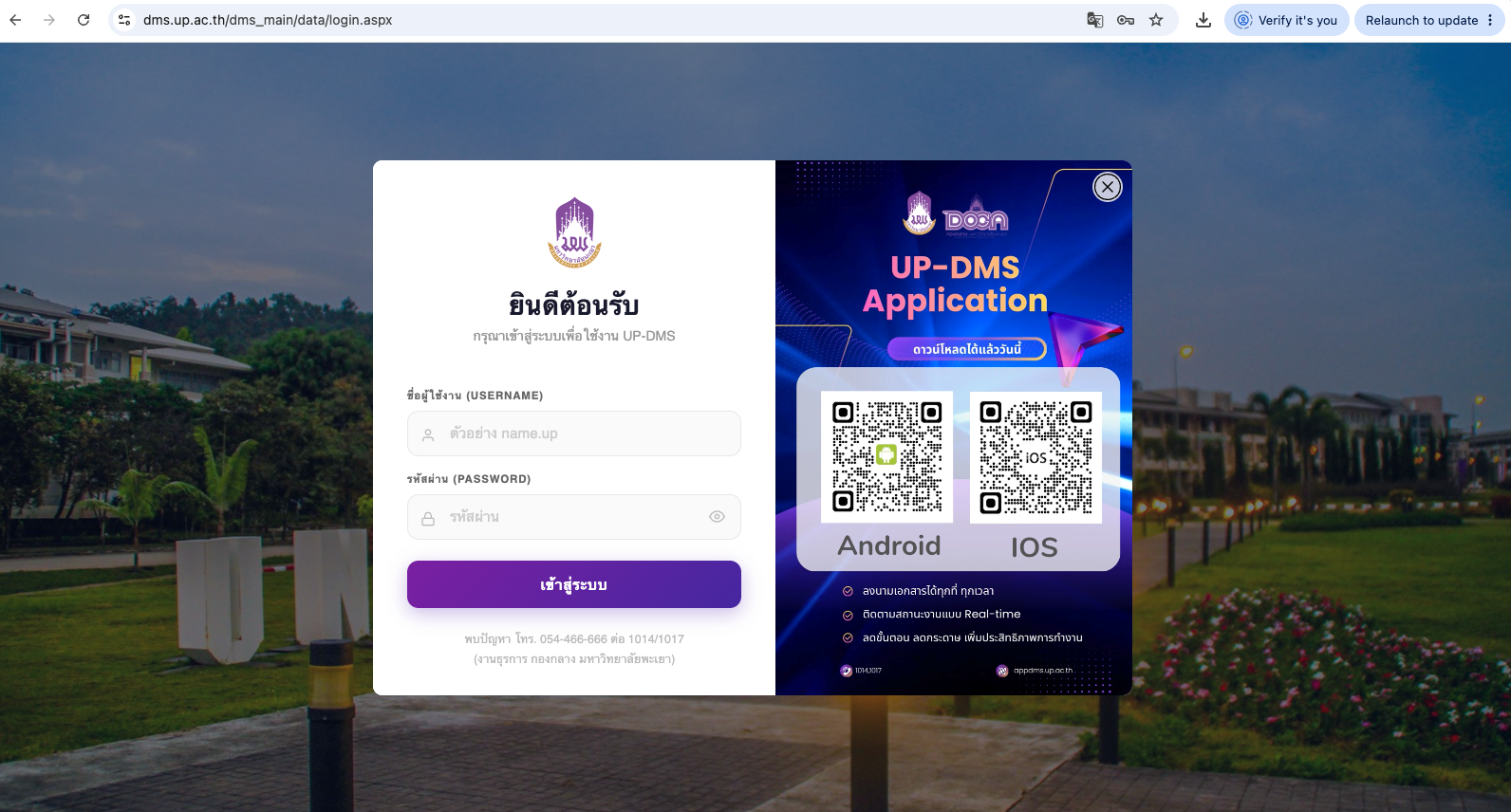
UP-Digital Document Management System
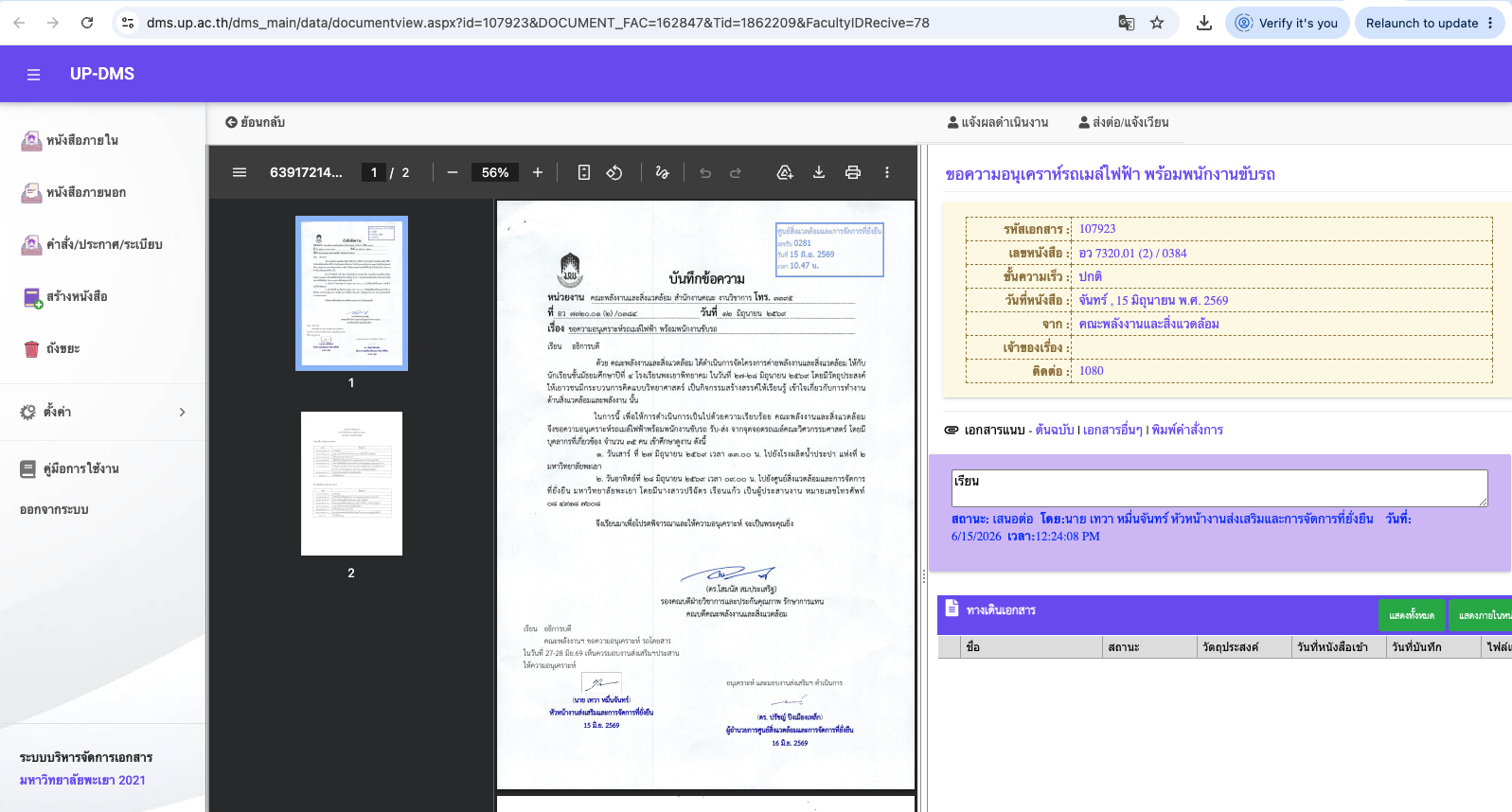
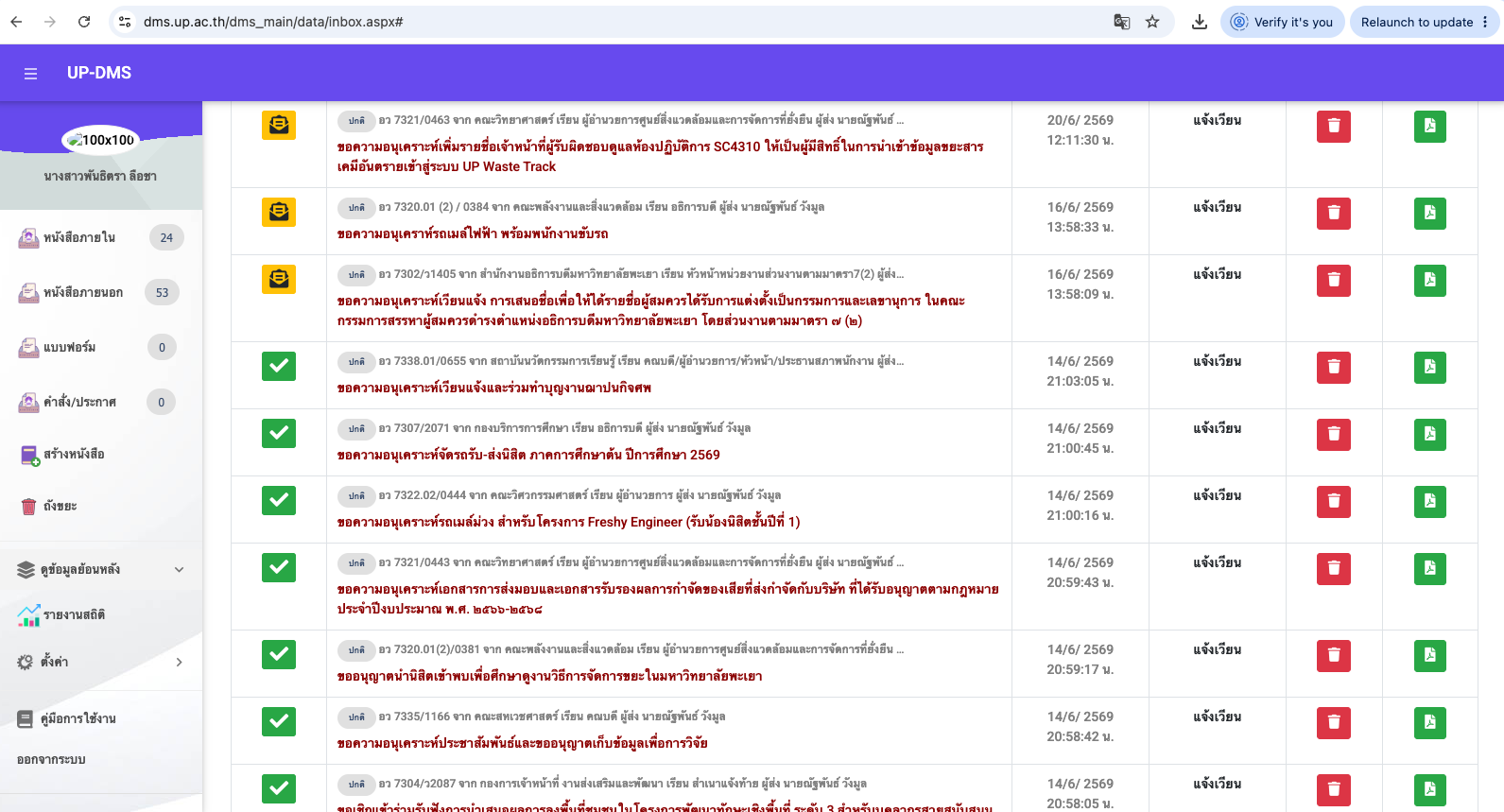
Online documentation system via IT network
This institution-wide deployment has the potential to reduce paper usage by up to 32.55 million sheets, equivalent to 142 tons, and decrease greenhouse gas emissions by approximately 163 tonCO2e. By transitioning from physical paperwork to an institution-wide electronic workflow with E-Signatures, the university has successfully digitalized 100% of its administrative document routing across all faculties and units. This initiative has reduced annual paper consumption by approximately 80%, equivalent to preventing the harvesting of 3,617 trees and mitigating approximately 163 tons of CO2 equivalent (tCO2e) emissions annually. In 2025, UP-DMS was expected to reduce paper consumption by up to 24.11 million sheets (equivalent to 105 tons) and decrease greenhouse gas emissions by up to 120 tonCO2e.Report on the Use of the University of Phayao Document Management System (2025)
0
Internal Documents/Subject
0
External Documents/Subject
0
Paper Saved/Sheets
0
Cost Saved/Baht
Other Key Initiatives to Reduce Paper Consumption
E-Meeting Document System — In a recent year, more than 915,362 sheets of paper were reduced through the implementation of an e-meeting document system across every conference. Meeting reports for each conference are also submitted online, leading the university toward a smart office. E-Lecture / UP Office 365 — All lecture handouts are converted into electronic files accessible to every student. Assignments, including final theses, are submitted online, and e-books are available online so students do not need to visit the library. E-Procurement / E-Bidding — By applying e-procurement and e-bidding, tons of wasted paper are reduced annually through the replacement of hard-copy documents with online submissions, while also making it easier for suppliers to submit their documents without corruption. QR Codes Instead of Paper — The university uses QR codes to publicize or provide information instead of paper.Using Two-Sides of Paper
University of Phayao has a policy for faculties and agencies to participate in the Green Office assessment of the Department of Environmental Quality Promotion, which includes indicators on paper usage. By reducing paper use and encouraging two-sided printing, documents are inspected before printing every time. University of Phayao also supports paper recycling to reduce resource usage and greenhouse gas emissions by transforming used paper into university souvenir packaging boxes. By 2025, the university can reduce paper waste by up to 3 tons per year through this initiative.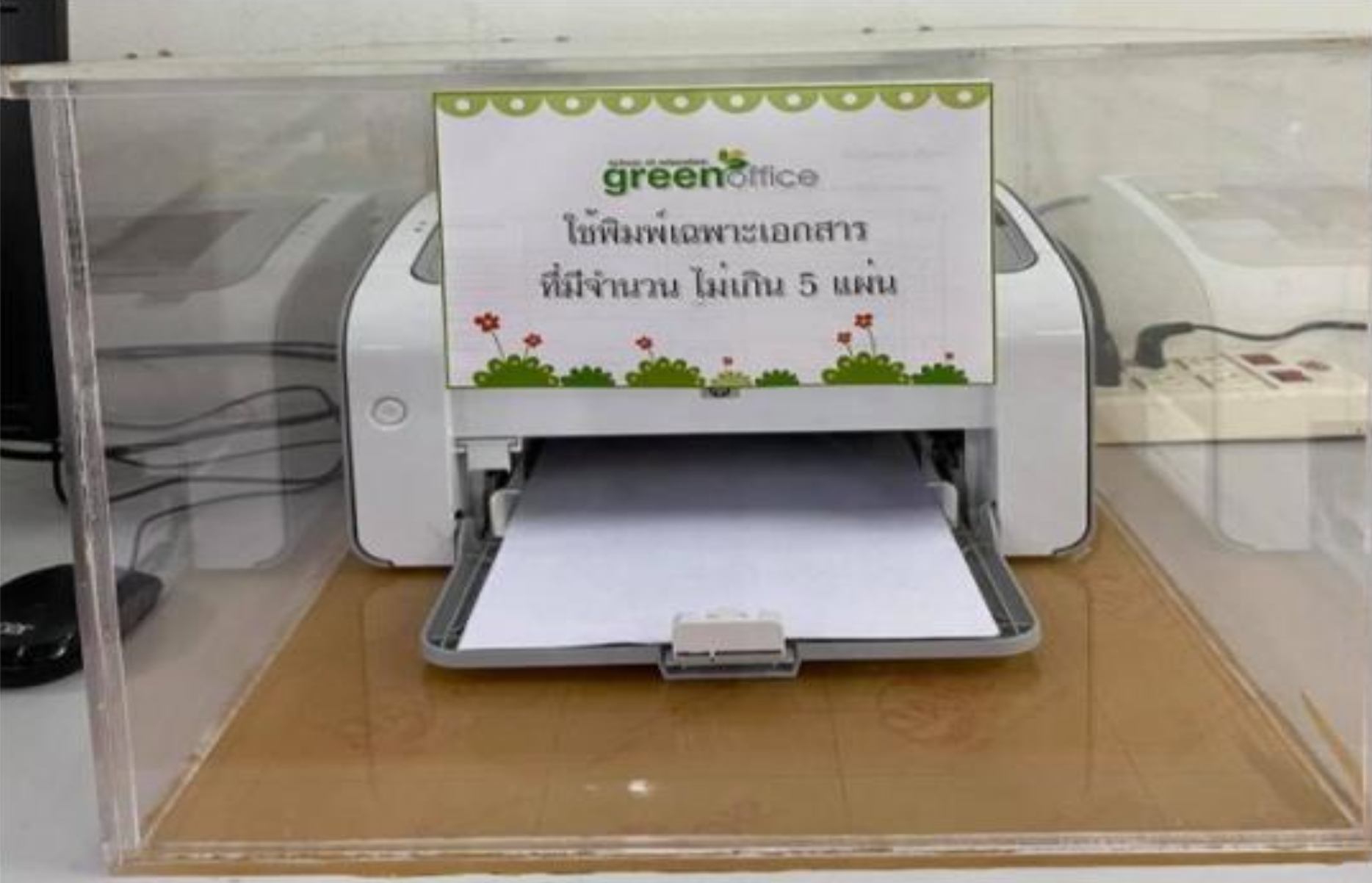
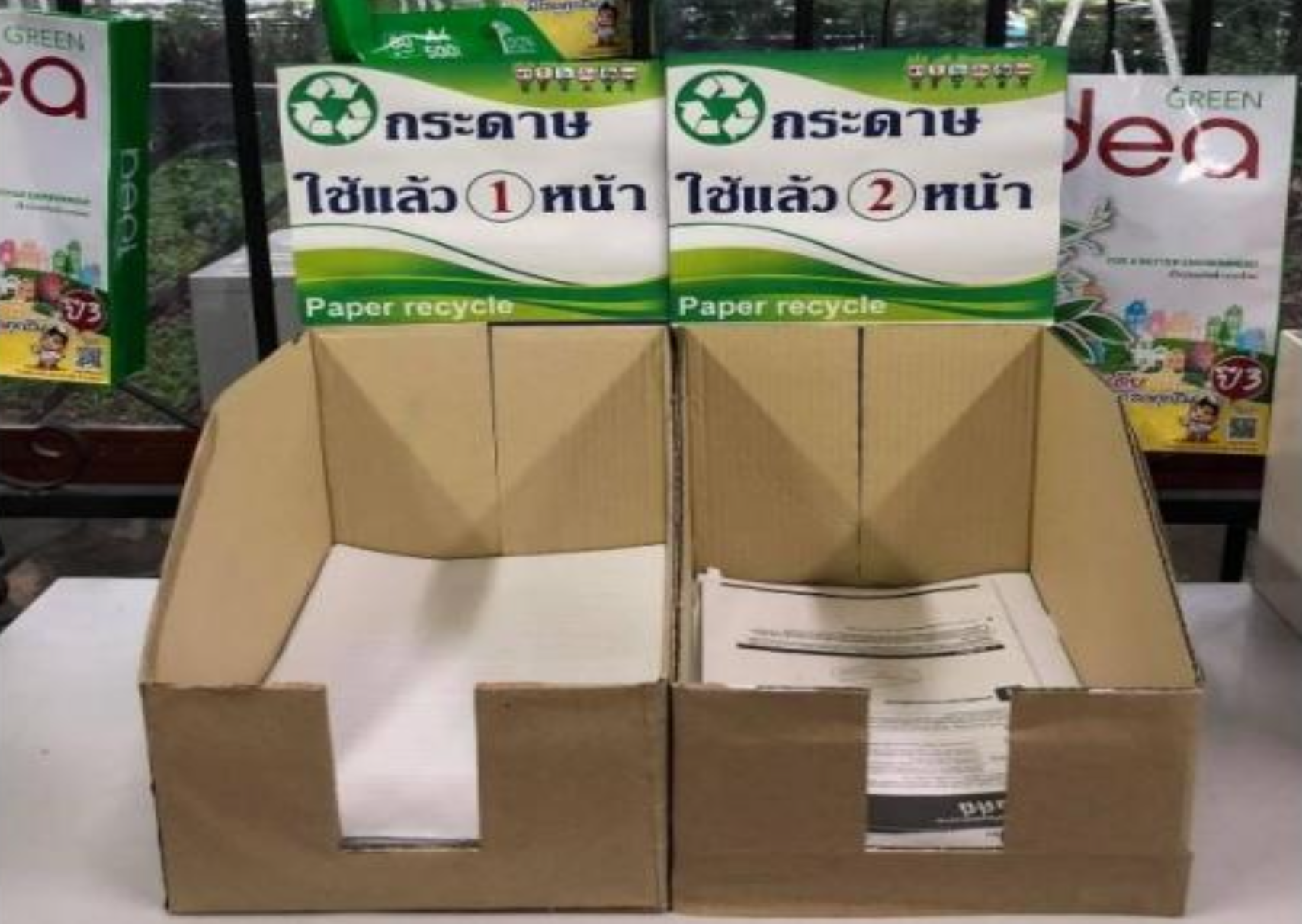
Cost-effective way to use paper through two-sided printing and paper recycling