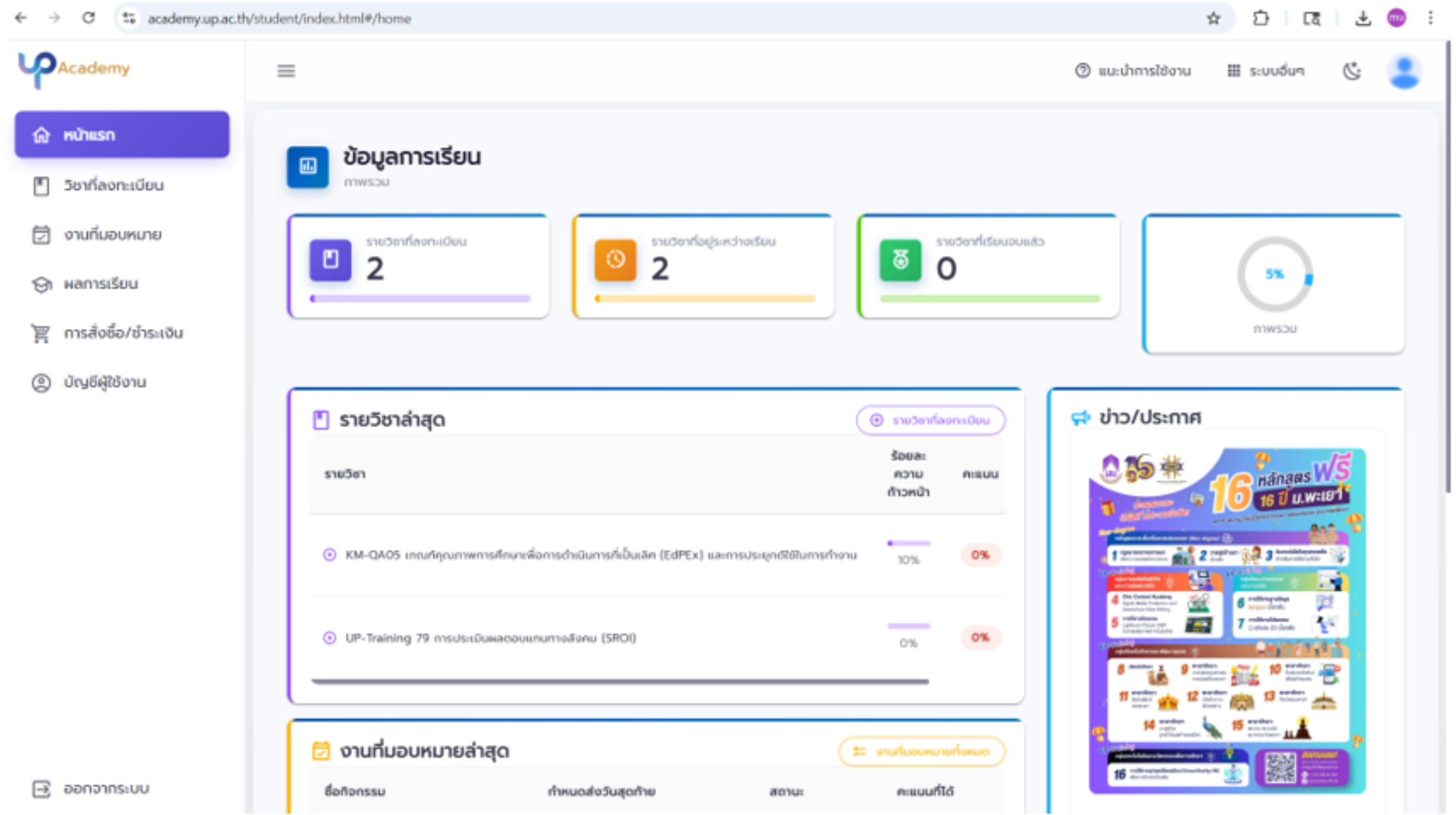
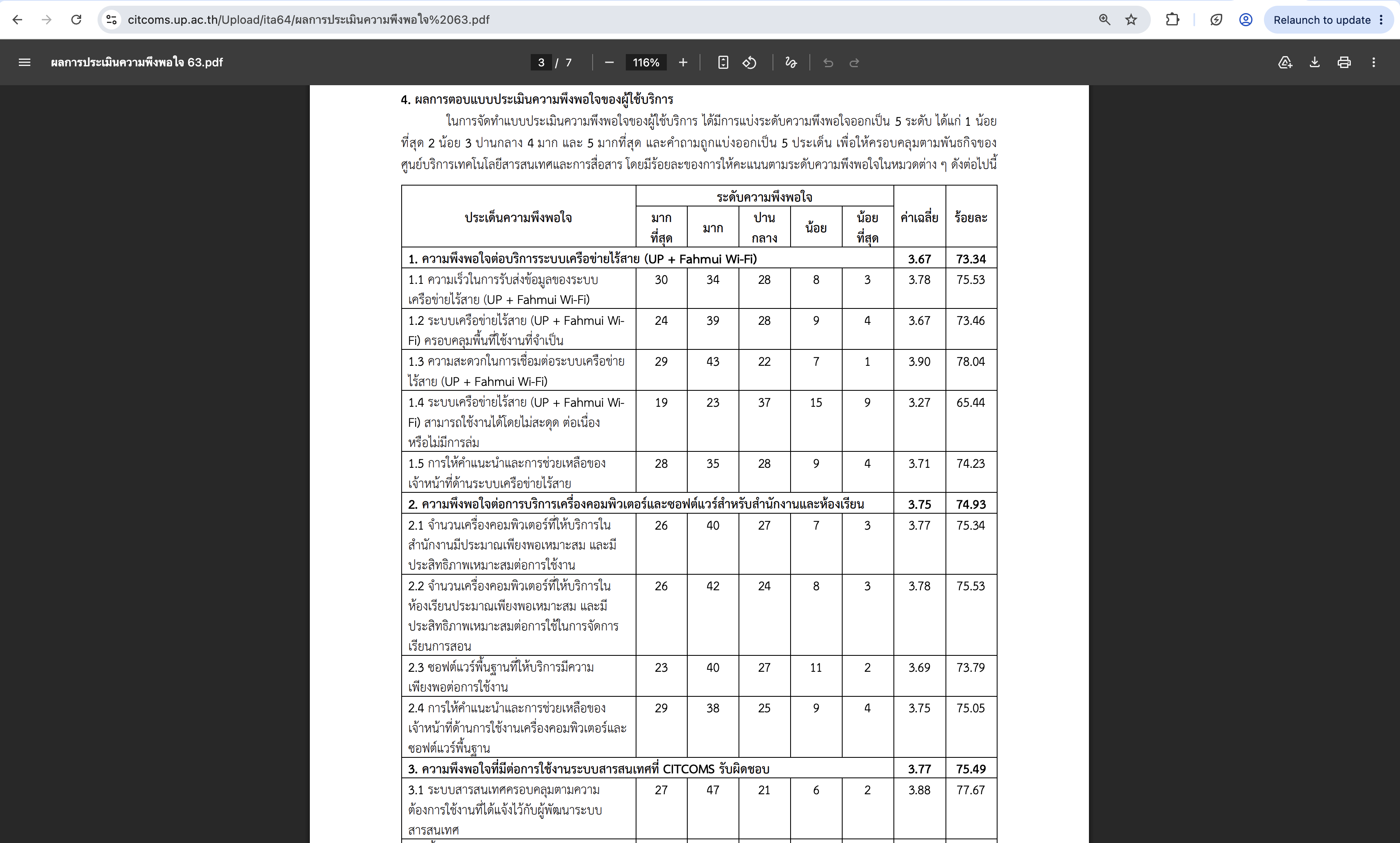
LMS-Enabled Digital Literacy Program
Digital literacy at the University of Phayao is implemented through coordinated, campus-wide programs led by key technological and academic infrastructure units, primarily the Center of Information Technology and Communication Services (CITCOMS) and the Center of Library and Learning (UP Library). The university leverages its institutional Learning Management System (UP LMS) to embed digital competencies into the academic ecosystem, supporting sustainable education and paperless administrative workflows.Key programs conducted via the UP LMS platform include:
1. Mandatory Digital Literacy via General Education (GE) Online Modules
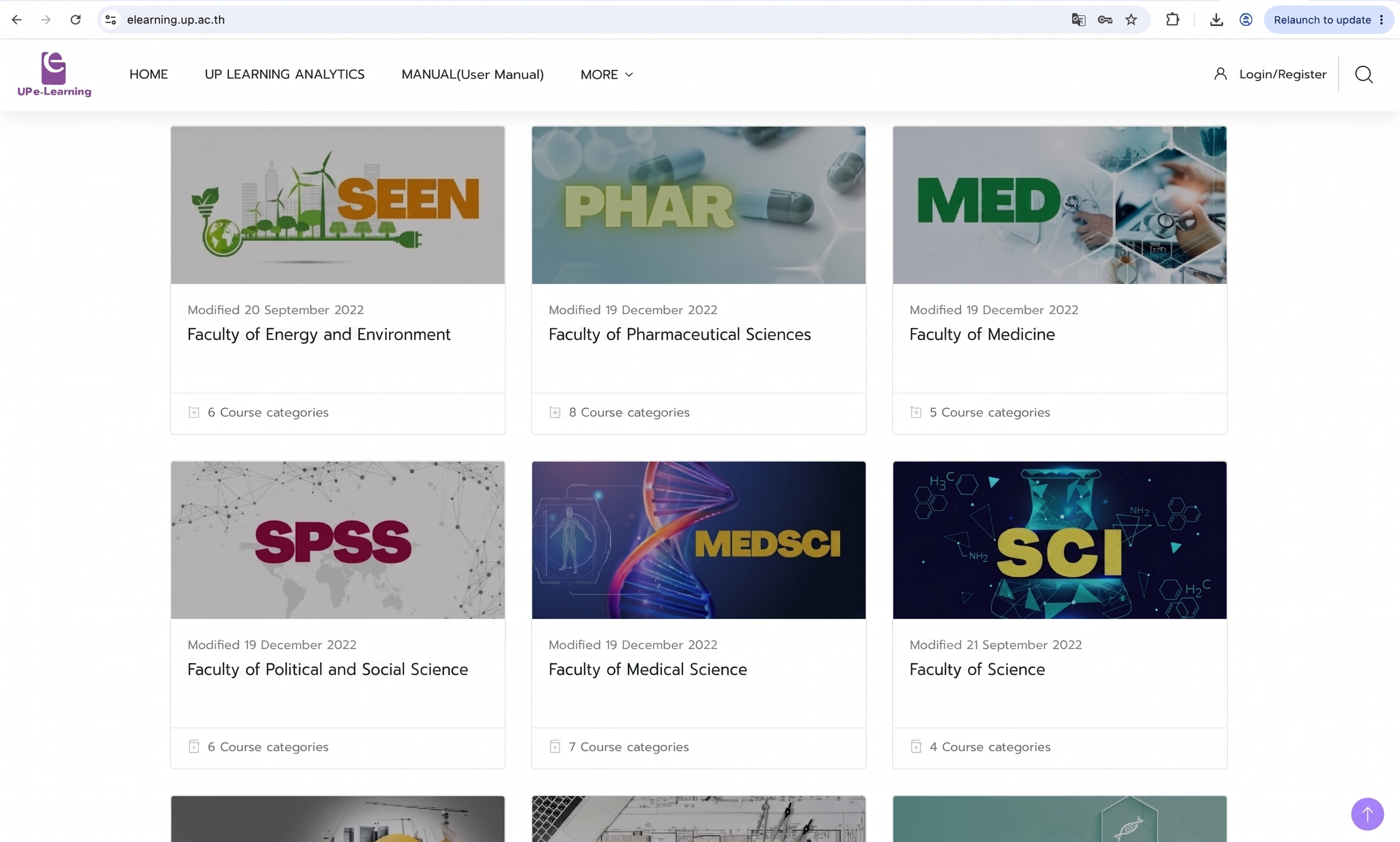
The university utilizes the UP LMS platform to deliver mandatory General Education (GE) courses in Digital Literacy and Modern Communication in fully online or hybrid formats. Reaching over 8,000 undergraduate students per semester across all faculties, this program ensures that all students — regardless of their discipline — attain essential competencies in digital tool usage, online safety, information evaluation, and collaborative technologies.The institutional UP LMS gateway supporting flexible, digital learning entry points for all faculties.
Source: https://elearning.up.ac.th/
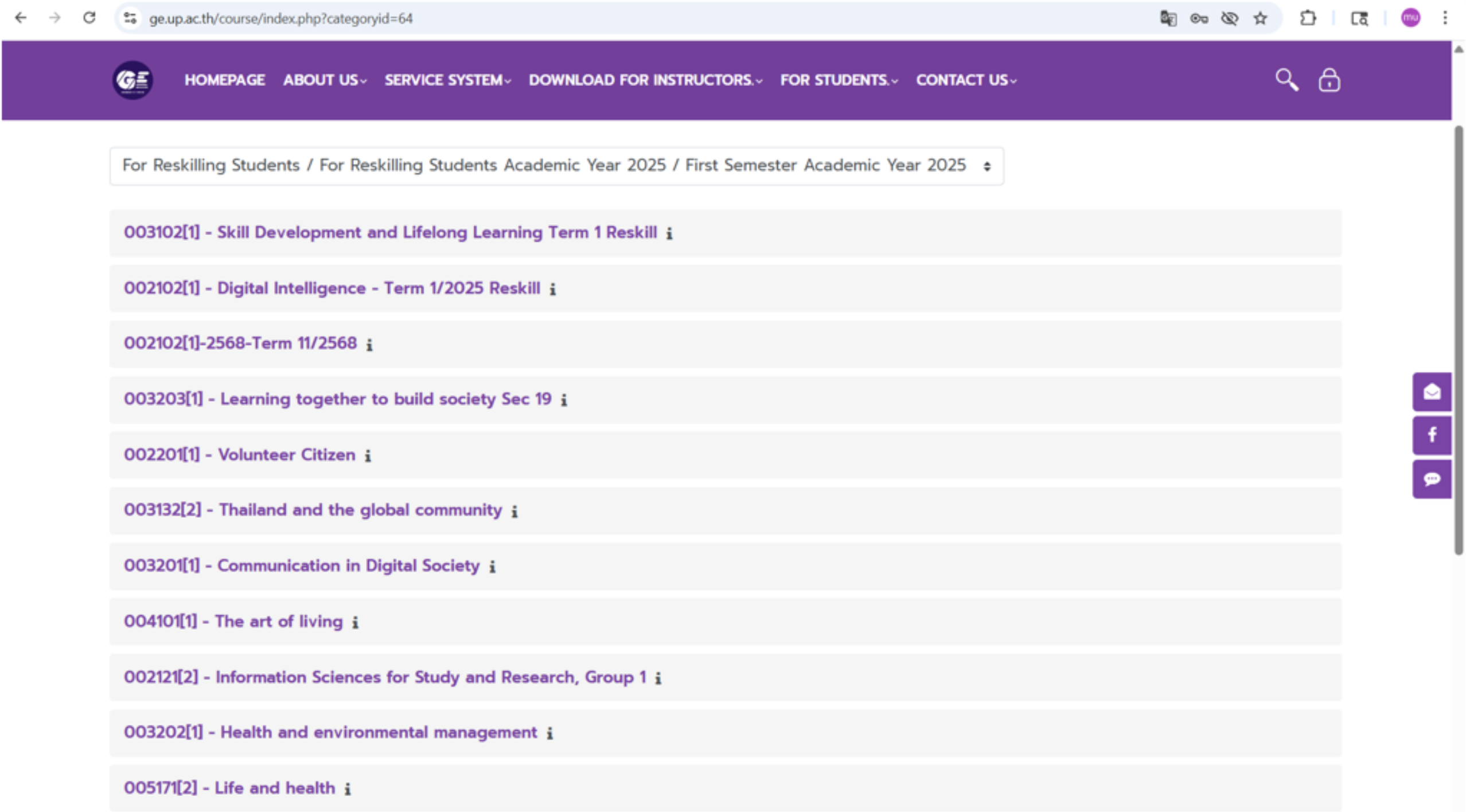
Inside the mandatory GE online module on UP LMS, showing digital citizenship and security learning contents.
Source: https://ge.up.ac.th/course/index.php?categoryid=64
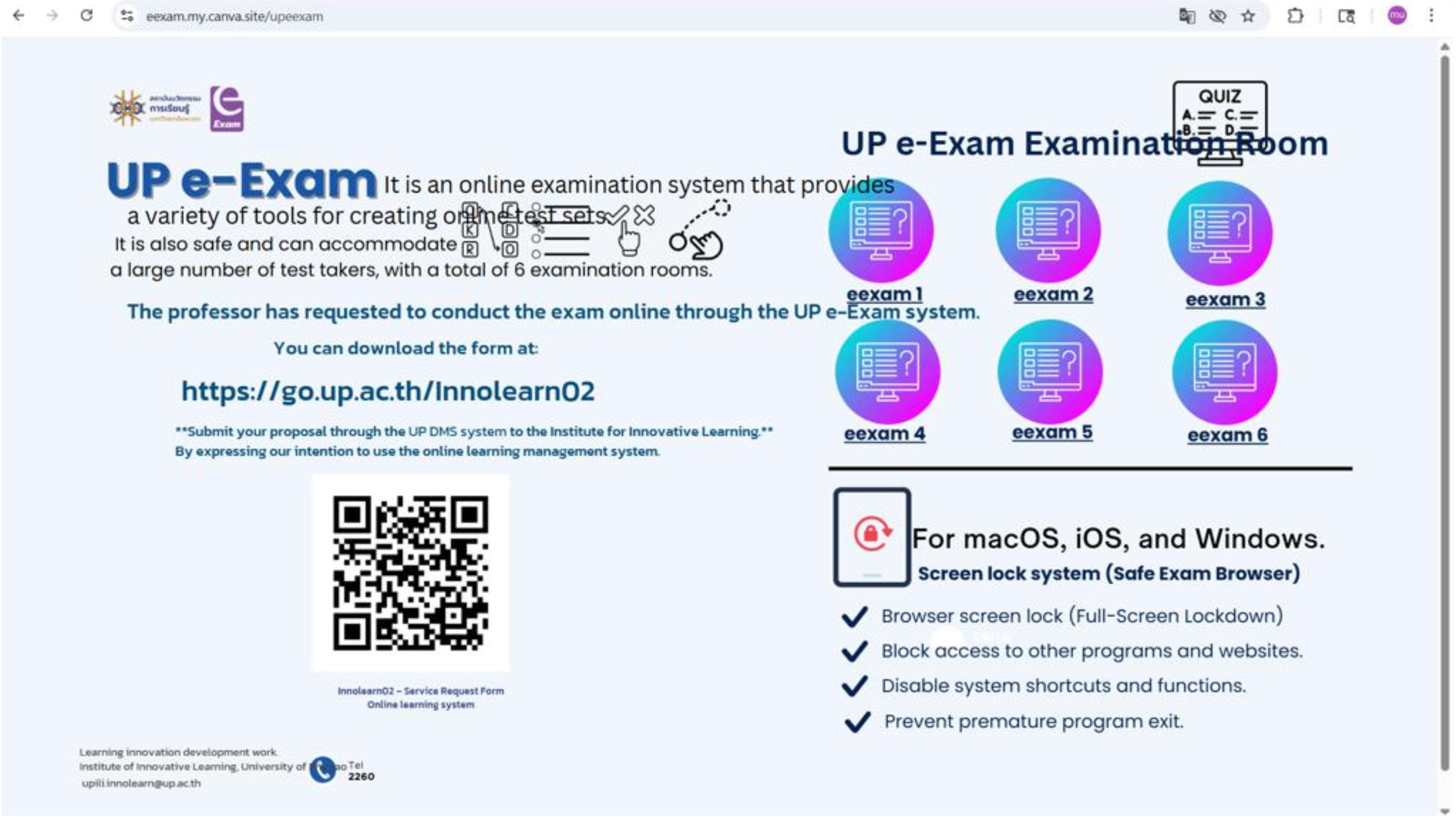
LMS-enabled online assessment interfaces, including interactive quizzes and competency checkpoints.
Source: https://eexam.my.canva.site/upeexam
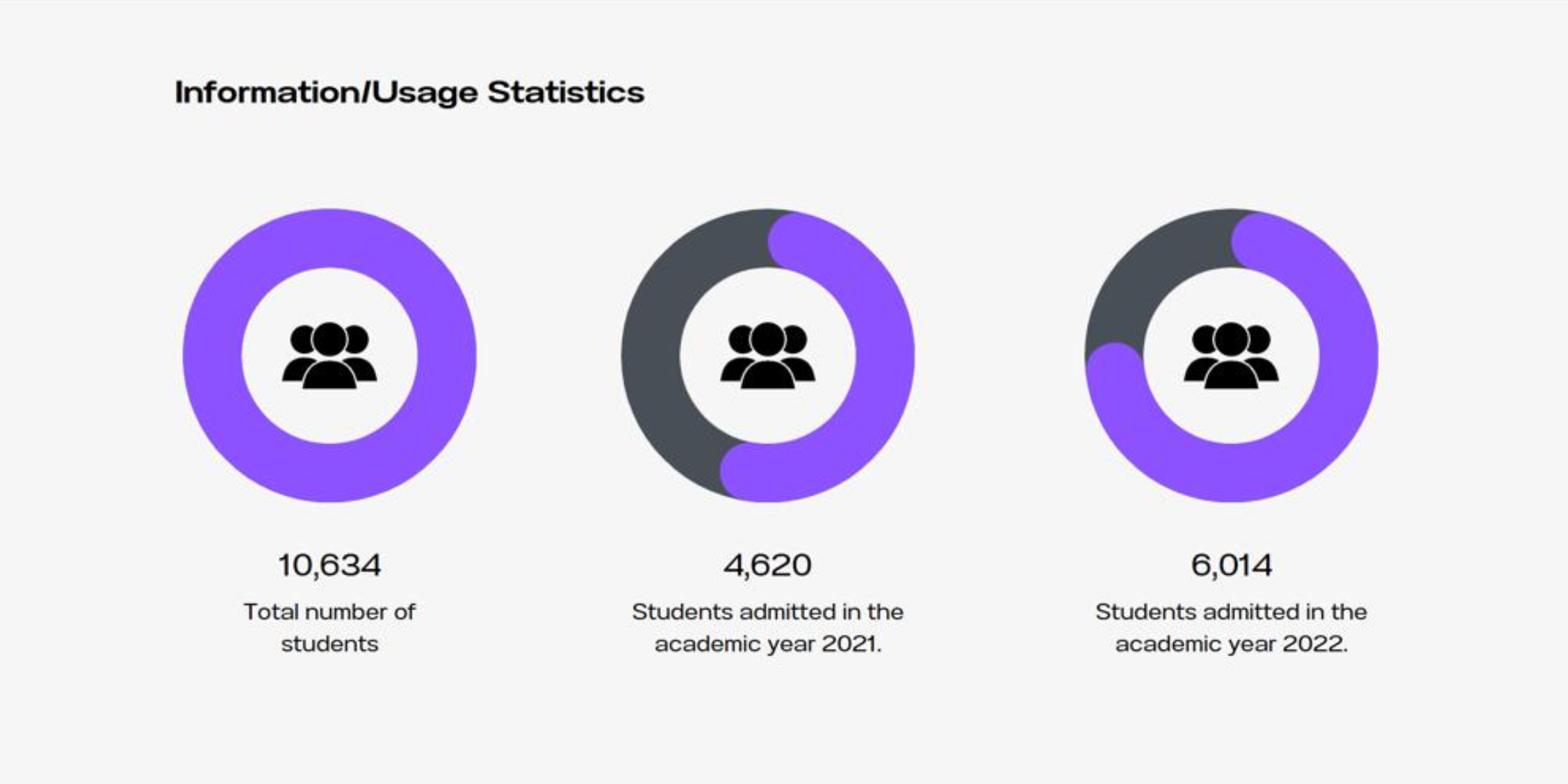
The institutional learning analytics dashboard monitoring active engagement of over 8,000 students per semester.
2. LMS-Based IT Competency Assessment for Freshmen
Before or during their first semester, all incoming freshmen at the University of Phayao are required to undergo a baseline digital literacy training and assessment program managed by CITCOMS. Hosted entirely on the UP LMS, this program features self-paced learning video modules, interactive quizzes, and a standardized IT competence exam. Students must clear these modules to ensure they can efficiently navigate the university's digital infrastructure.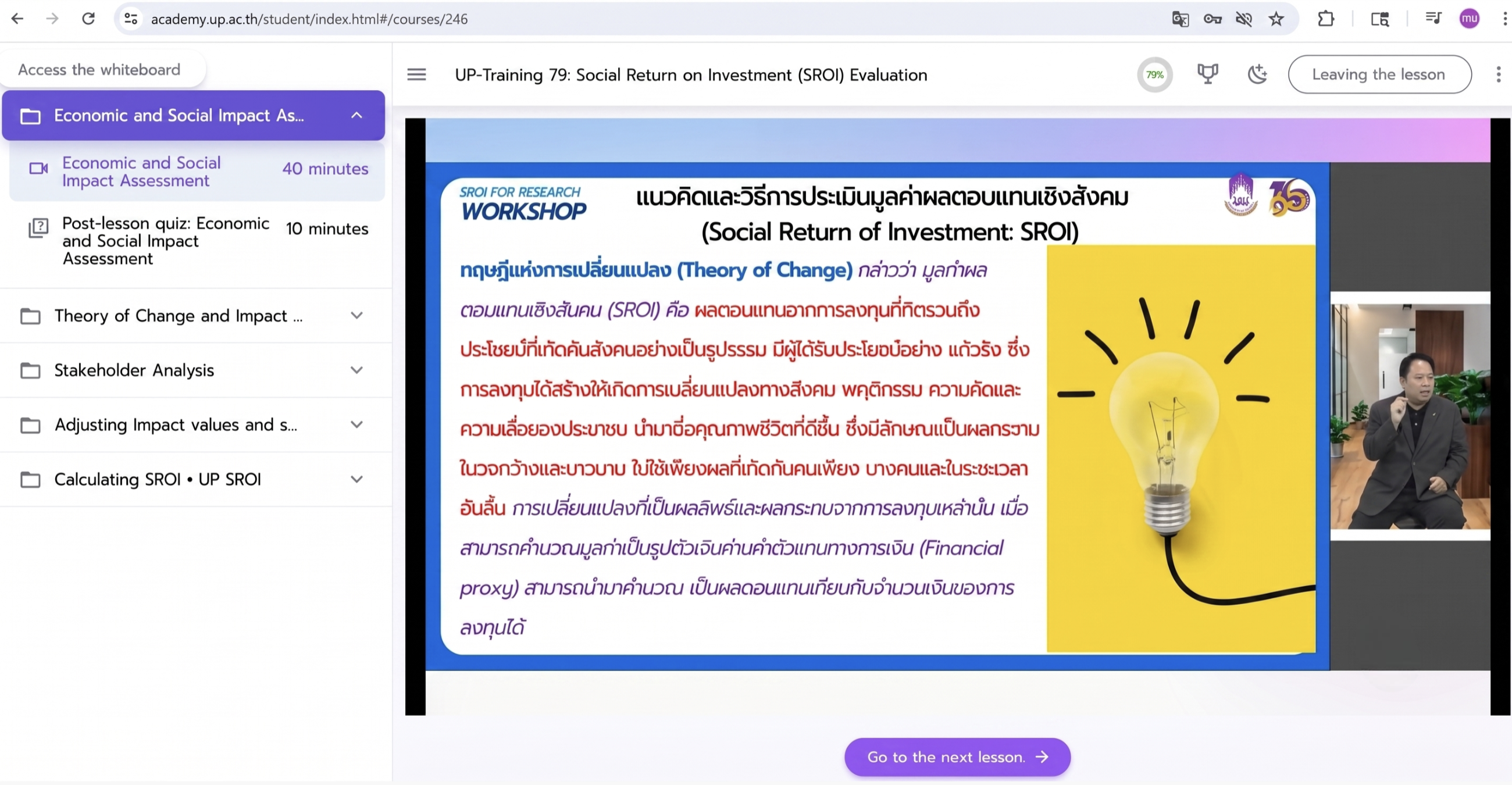
LMS-based self-paced digital literacy training modules and interactive pre-tests for newly enrolled students.
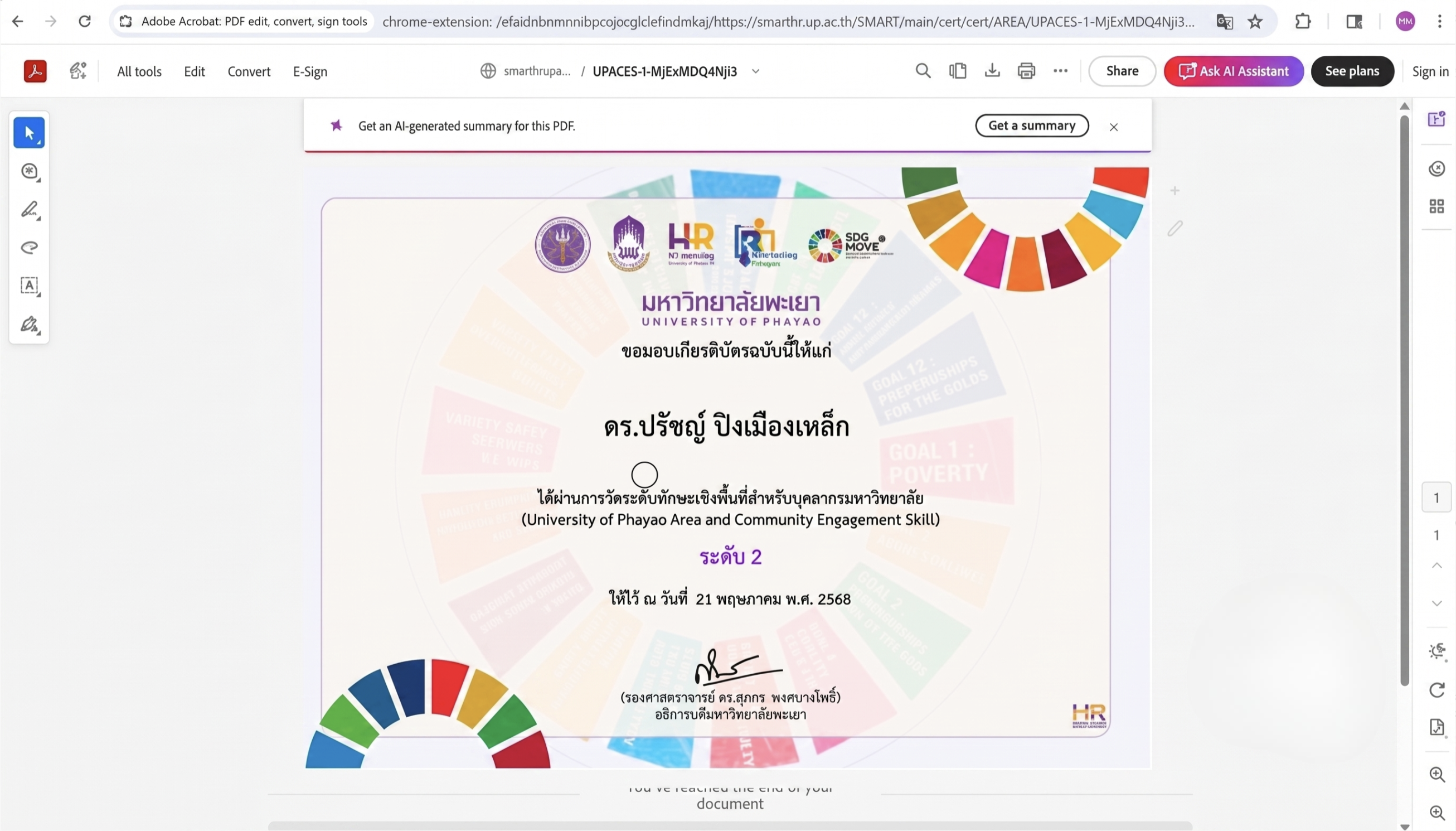
Automated paperless validation showing sample e-badges/certificates and real-time freshmen completion statistics.
3. Virtual Academic Research & Advanced Information Literacy Training
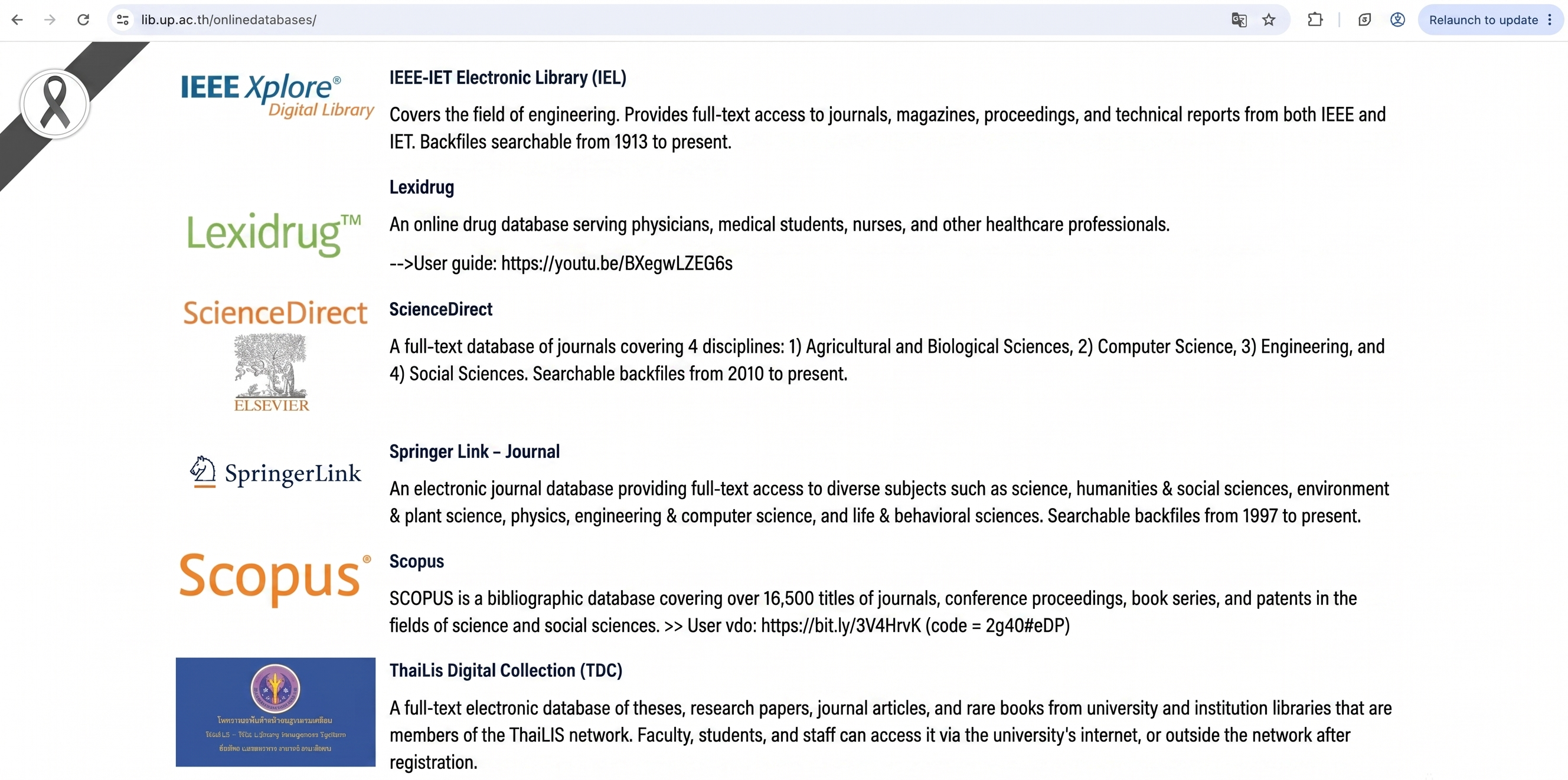
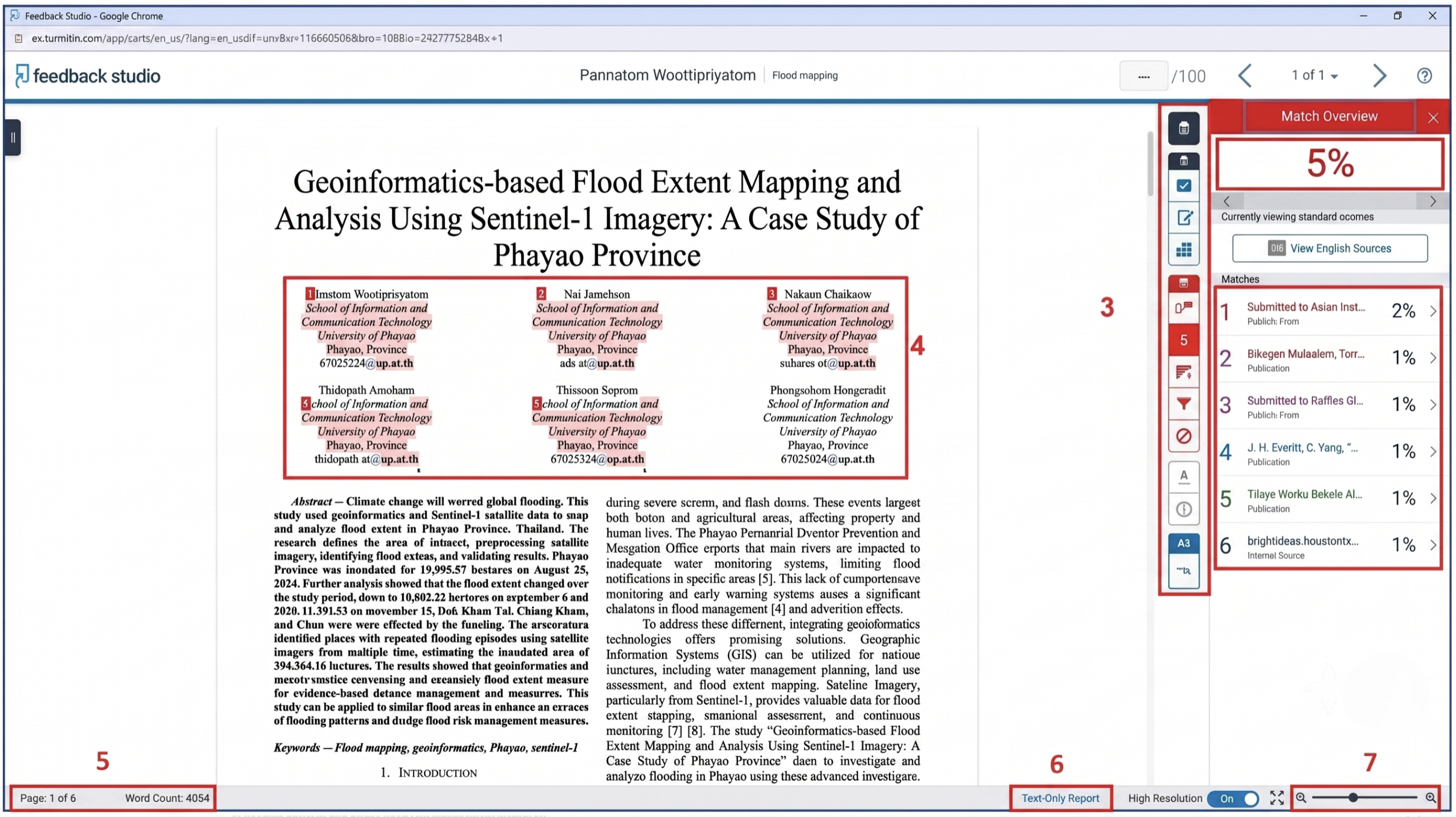
The Center of Library and Learning (UP Library) provides online instructional programs via LMS networks to train students and staff on exploiting global academic infrastructure. This includes remote access setup for international electronic databases (e-journals and e-books), utilizing the Online Public Access Catalog (OPAC), managing digital repositories, and training on plagiarism detection tools (e.g., Turnitin). This program promotes equitable remote access, significantly reducing physical library commuting and paper printing.Advanced information literacy and online academic research training modules provided via institutional digital networks.
Source: https://lib.up.ac.th/onlinedatabases/
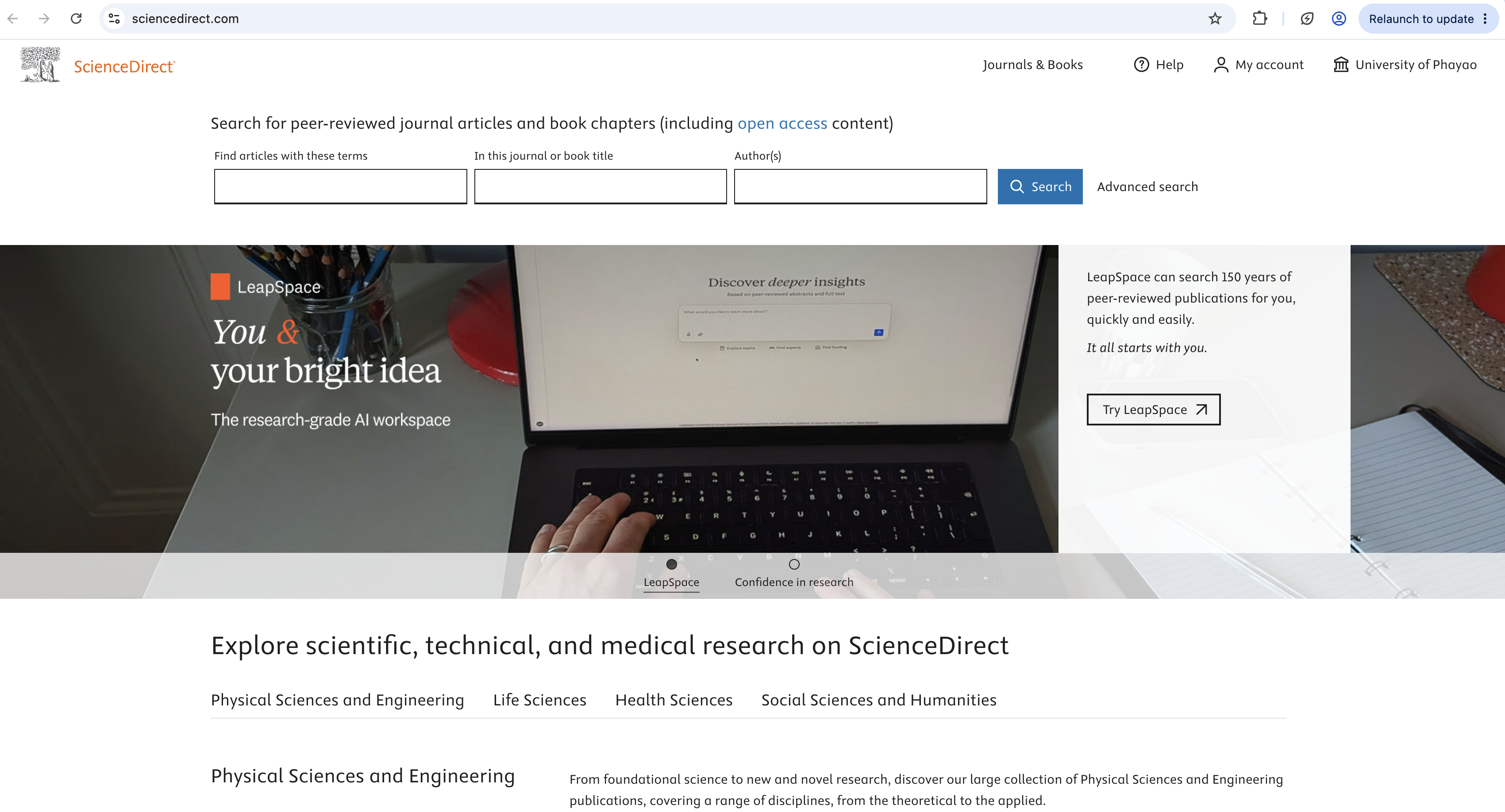
LMS-integrated plagiarism detection infrastructure (Turnitin) and digital repositories promoting paperless academic evaluation.
Source: https://lib.up.ac.th/turnitin/
4. Cybersecurity Awareness and Digital Citizenship Training for Staff
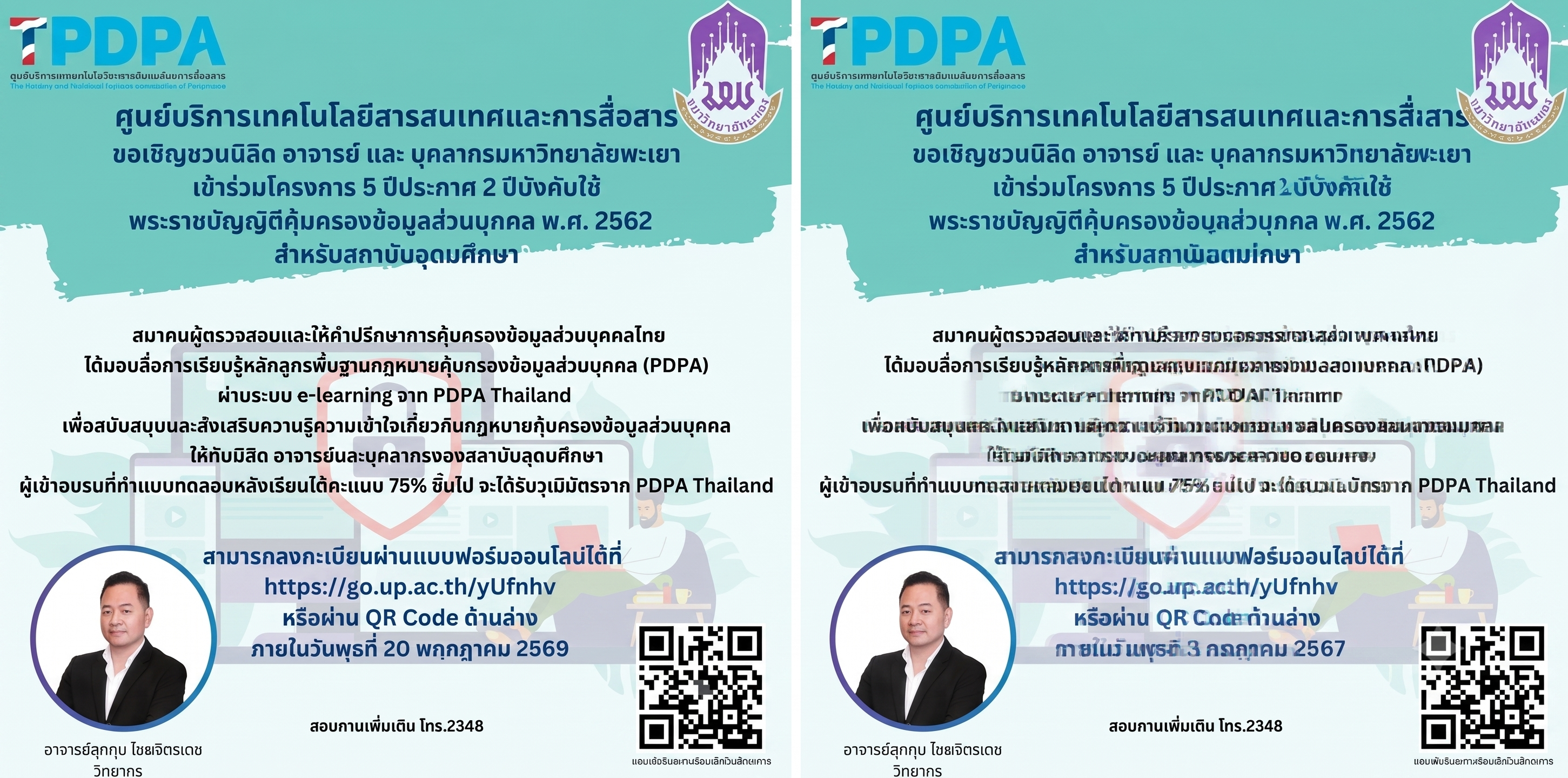
To maintain a secure digital campus, CITCOMS hosts cybersecurity awareness micro-learning modules on the UP LMS. These modules cover topics such as data privacy, phishing defense, cloud security, and ethical digital citizenship. Both academic and administrative staff (covering over 90% of total university personnel) participate in these courses through the institutional training portal, supporting the university's transition toward secure, paperless, and sustainable administrative workflows.Micro-learning modules on UP LMS, covering critical security topics including data privacy, phishing defense, and digital citizenship for university personnel.
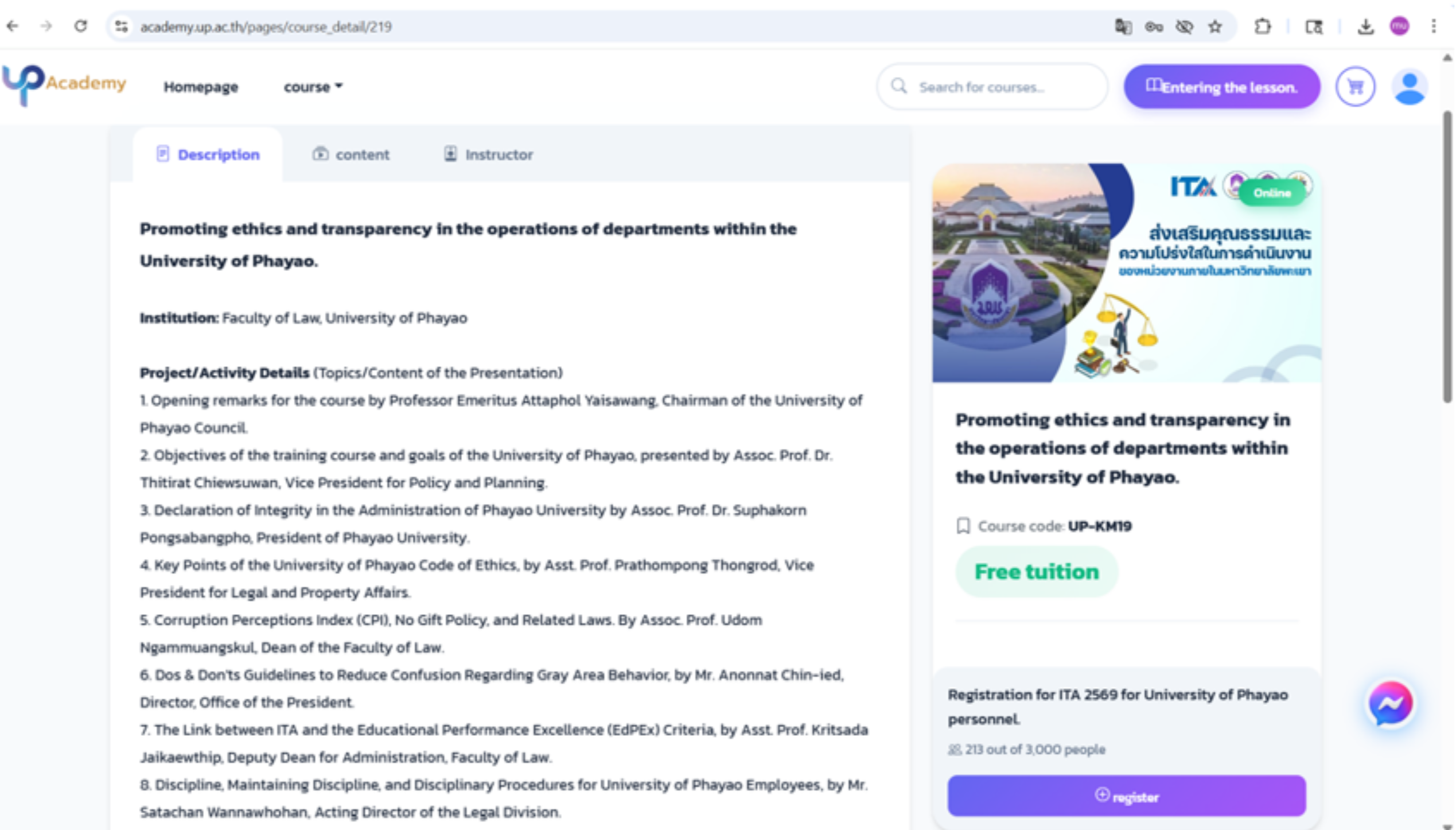
5. Program Evaluation and Continuous Improvement (PDCA Cycle)
To ensure the effectiveness of the programs, the University of Phayao continuously monitors and evaluates user performance via the UP Learning Analytics Dashboard. Student passing rates in IT assessments and staff completion rates in cybersecurity modules are reviewed annually. Feedback and performance metrics are strictly utilized to update learning materials and assessment criteria each academic year, aligning the campus with ever-evolving global digital trends and emerging security challenges.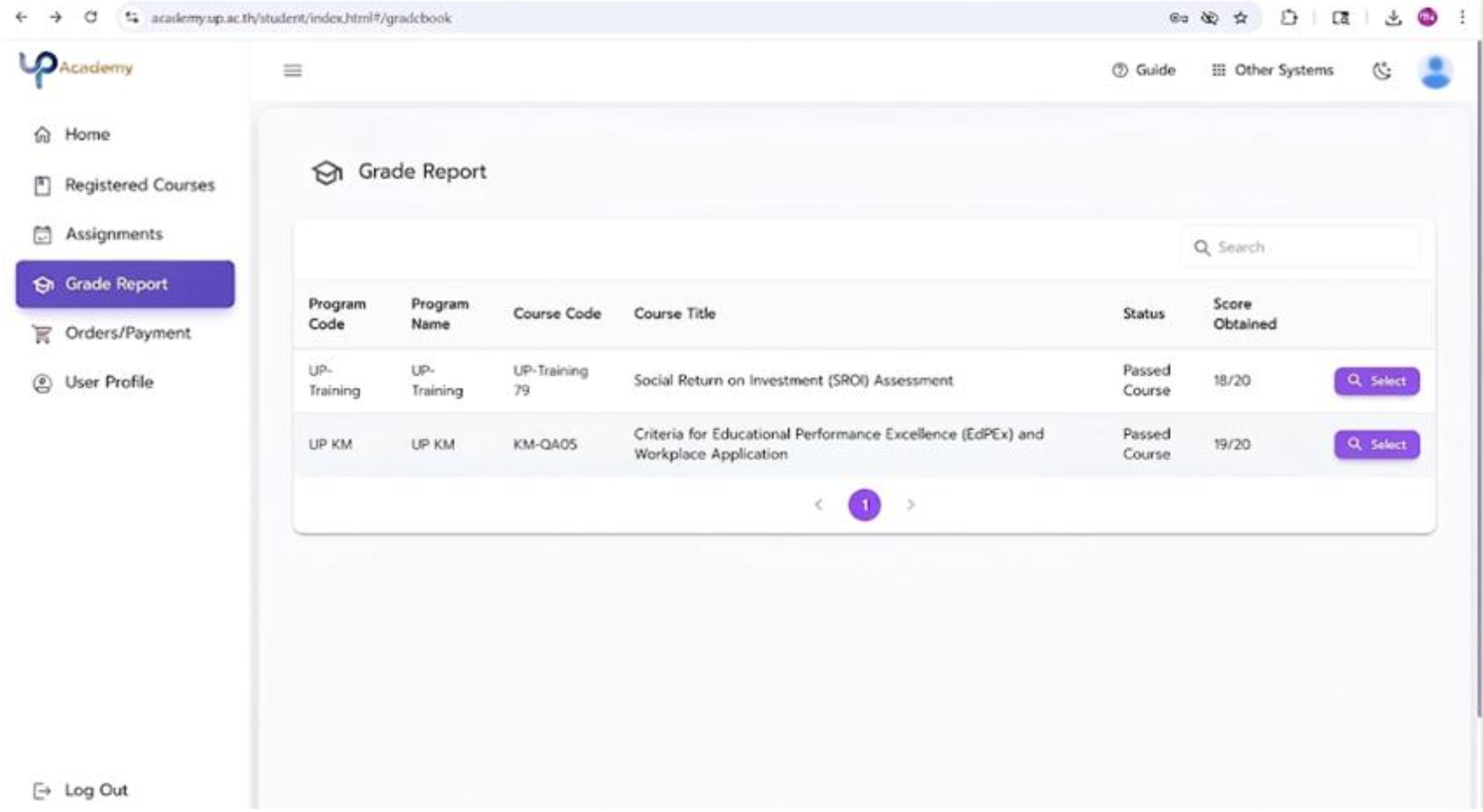
Real-time academic telemetry and student progression metrics captured via the UP Learning Analytics system to monitor program effectiveness.