Toxic Waste Treatment Process
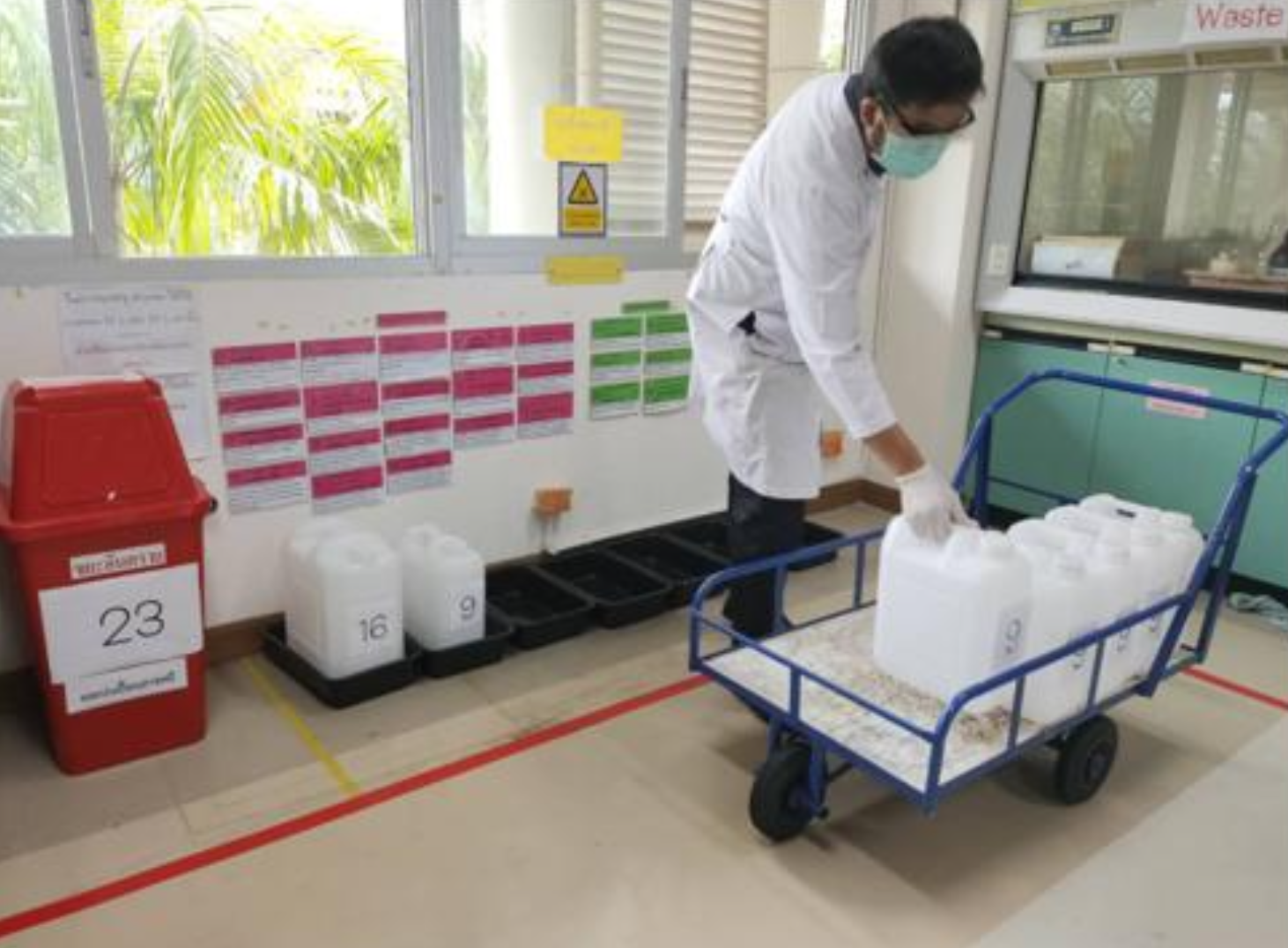
At campus, all hazardous waste — excluding chemical substances from laboratories — must be disposed of into a red bin before being sent to the hazardous waste storage building, where all waste must be segregated according to its physical and chemical properties. This hazardous waste is stored off the ground, in containers, and under cover, to prevent any leakage to the ground. The university also records the volume of hazardous waste generated each day as part of its waste management collection process.
Total Volume of Toxic Waste
In 2026, the toxic waste of University of Phayao is approximately 30.86 tons, divided into 16.53 tons of infectious waste from hospitals, 14.13 tons of lab chemicals, 0.05 tons of electronic waste, and 0.15 tons of other waste such as light bulbs and electrical equipment. Compared to the previous year, toxic waste decreased from 41.57 tons to 30.86 tons — a reduction of 10.71 tons. In 2025, toxic waste was divided into 24.68 tons of infectious waste, 15.67 tons of lab chemicals, 0.28 tons of electronic waste, and 0.94 tons of other waste such as light bulbs and electrical equipment.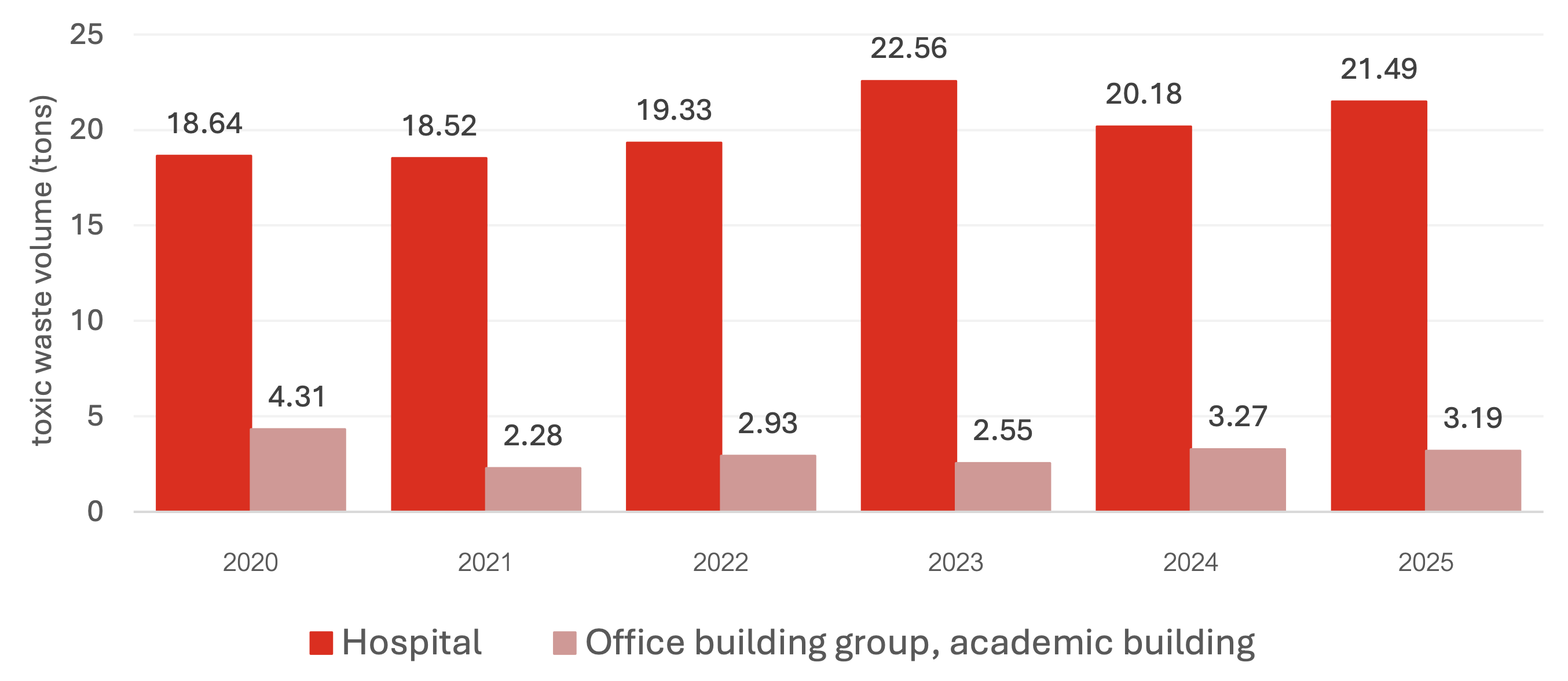
The amount of toxic waste at University of Phayao from 2020 – 2025, by source (Hospital, Office building group/academic building)
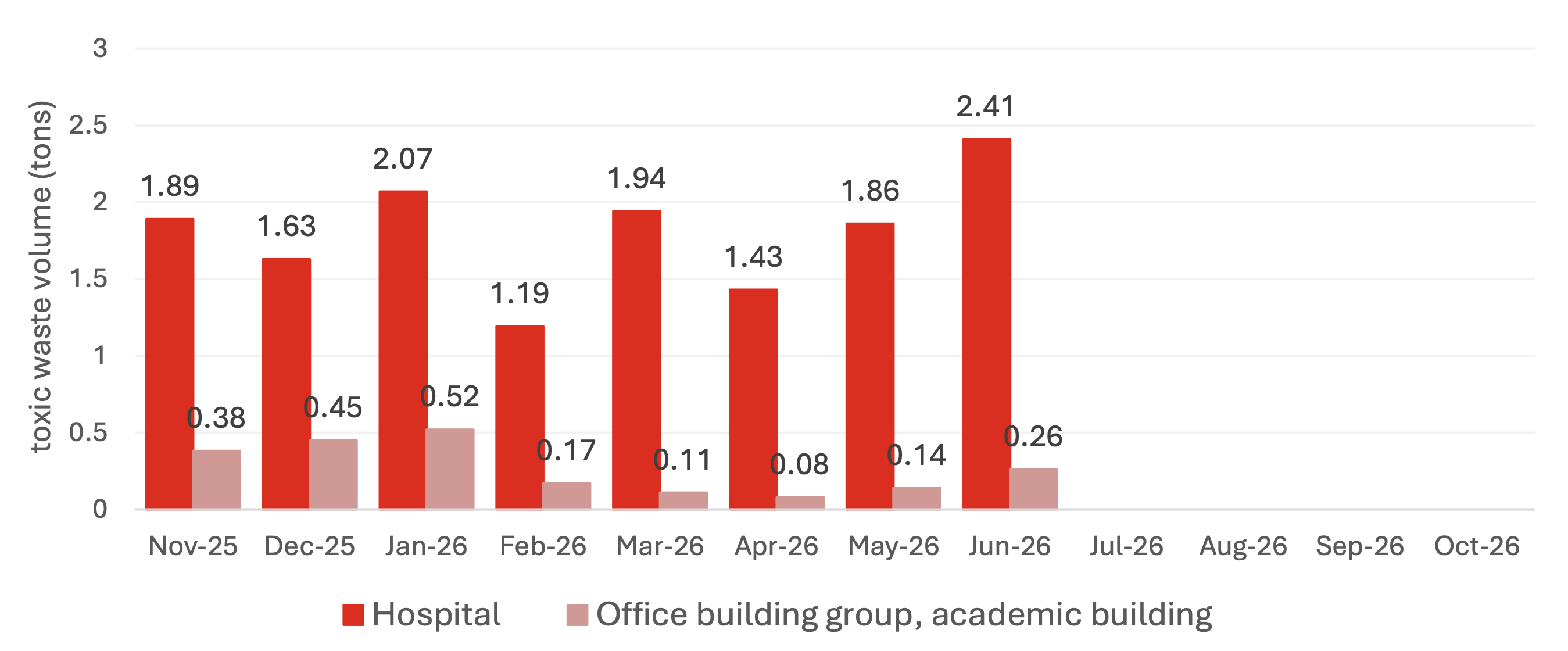
The amount of toxic waste at University of Phayao from Nov 2025 – Jun 2026, by source (Hospital, Office building group/academic building)
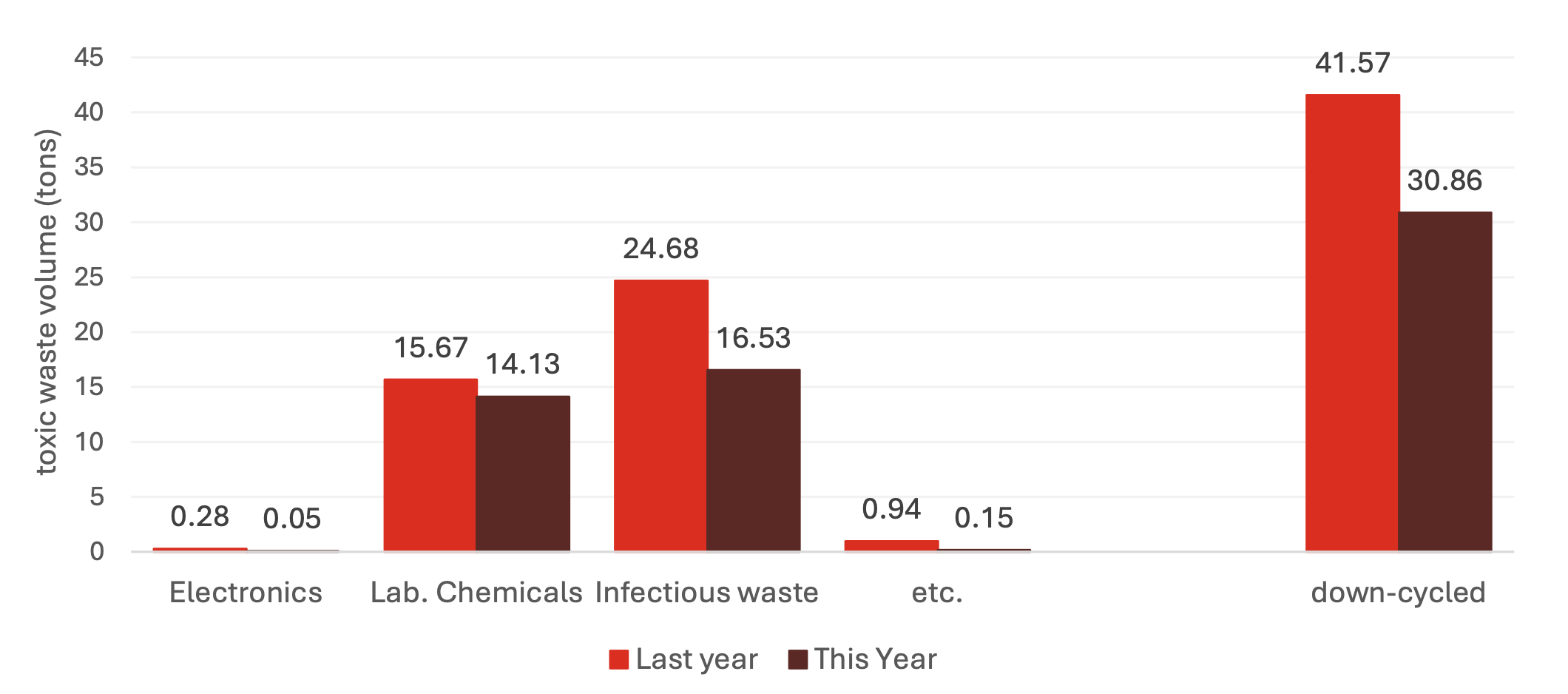
Toxic waste volume by category, last year (2025) compared to this year (2026)
Target: 100% of toxic waste generated at University of Phayao is treated in standard practice.
Result: In 2026, 100% of toxic waste generated at University of Phayao has been treated in standard practice.
At campus, all hazardous waste — excluding chemical substances from laboratories — must be disposed of into a red bin before being sent to the hazardous waste storage building, where all waste is segregated according to its physical and chemical properties. This hazardous waste is stored off the ground, in containers, and under cover to prevent any leakage to the ground. The volume of hazardous waste is also recorded each day as part of the university's waste management collection process.Toxic Waste Management System
The main concept of the system is chemical substance collection — based on ignitability, corrosivity, reactivity, and toxicity — along with proper storage and disposal of waste. The system continues to be improved and developed under the standard of the Enhancement of Safety Practice of Research Laboratory in Thailand (ESPReL), and consists of three steps: waste segregation, waste storage and collection, and waste treatment. To ensure that hazardous waste is handled in a way that protects human health and the environment, hazardous waste containers are provided to all laboratories according to a laboratory request form, which is one category in the university's Hazardous Waste Segregation Manual.The Toxic Waste Composition of University of Phayao
University of Phayao can manage 100% of toxic waste (hazardous waste, electronic waste, infectious waste). Of the total 30.85 tons of toxic waste, infectious waste from hospitals accounts for 53.56% (16.53 tons, sent to S. Ruangroj Co., Ltd.), lab chemicals account for 45.79% (14.13 tons, sent to Recycle Engineering Co., Ltd.), and electronic waste accounts for 0.16% (0.05 tons, sent to AIS and PTT GC).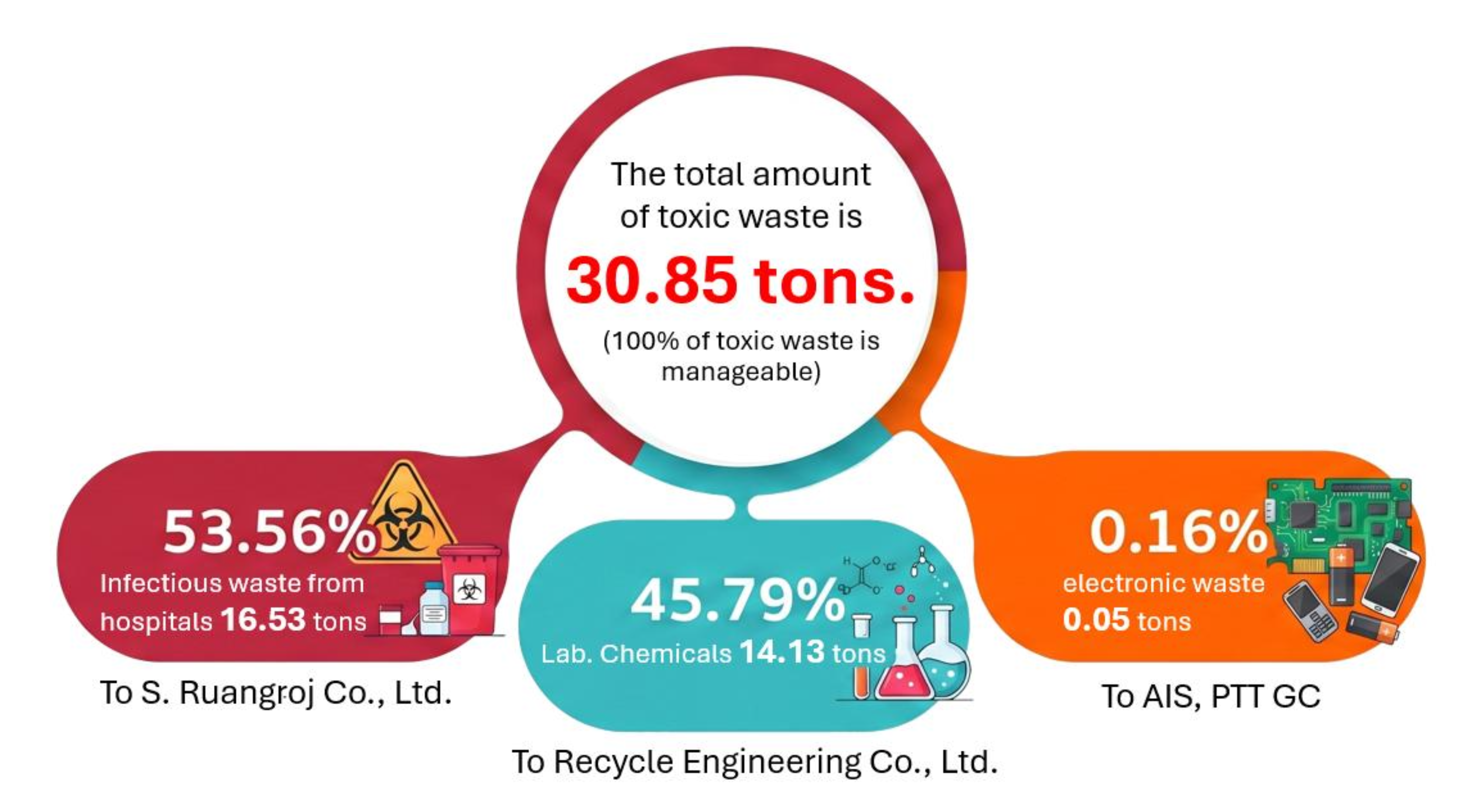
The toxic waste composition of University of Phayao — 30.85 tons, 100% manageable
Hazardous Waste Management
Hazardous waste refers to used materials, deteriorated products, and contaminated items that contain hazardous substances which are toxic, flammable, corrosive, radioactive, or pathogenic to living organisms and the environment. A large amount of community hazardous waste is generated on campus, such as batteries, cellphone batteries, fluorescent tubes, paint buckets, and spray cans. This waste can cause harm or contaminate the environment during storage, transportation, and disposal, so the university isolates it from general waste for proper disposal. Management of solid, liquid, and gaseous hazardous waste is directed by University of Phayao across 8 faculties spread throughout the university districts. Every faculty is provided with a Temporary Waste Storage to safely store hazardous waste received from the labs where it originates until it is picked up by the authorized company, as well as 1–3 trained technicians who give instructions on waste packaging and labeling and complete documentation in compliance with national and international regulations. In 2025, 1,527 students and staff at University of Phayao attended training and preparation programs on the hazardous waste management system, held twice a year for all university laboratory staff. All laboratories within the university implement this system.Infectious Waste from Hospitals
Infectious waste at University of Phayao comes from two main sources: the University of Phayao Hospital, and the office building group and academic buildings of the university. In 2025, the hospital generated 21.49 tons of infectious waste, while office and academic buildings generated 3.19 tons, for a total of 24.68 tons. In 2026, this decreased to 14.42 tons from the hospital and 2.11 tons from office and academic buildings, for a total of 16.53 tons.| No. | Sources of infectious waste | Waste Quantity (ton) | |
|---|---|---|---|
| 2025 | 2026 | ||
| 1. | University of Phayao Hospital | 21.49 | 14.42 |
| 2. | Office building group, academic building of University of Phayao | 3.19 | 2.11 |
| Total Waste Quantity: | 24.68 | 16.53 | |
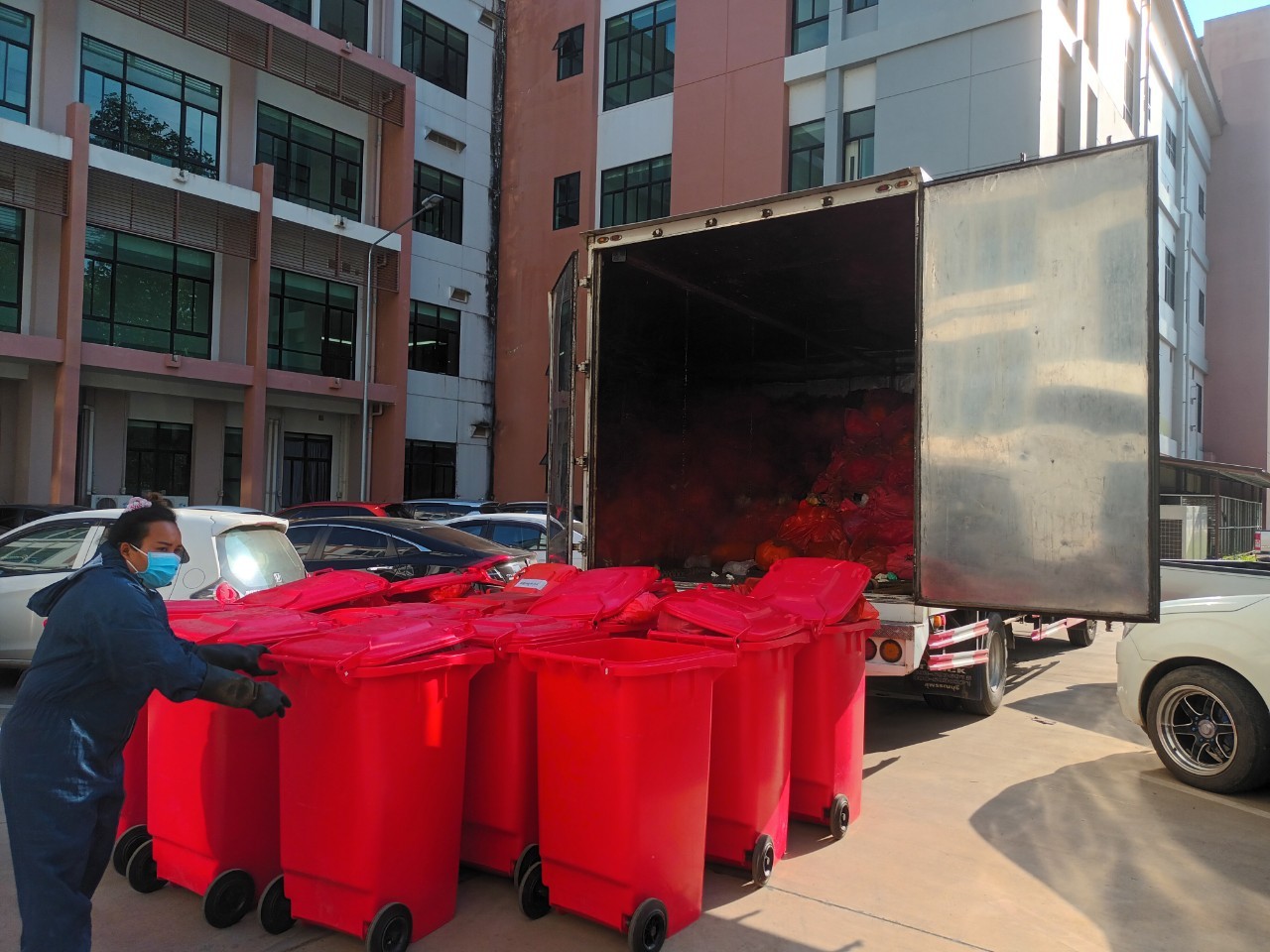
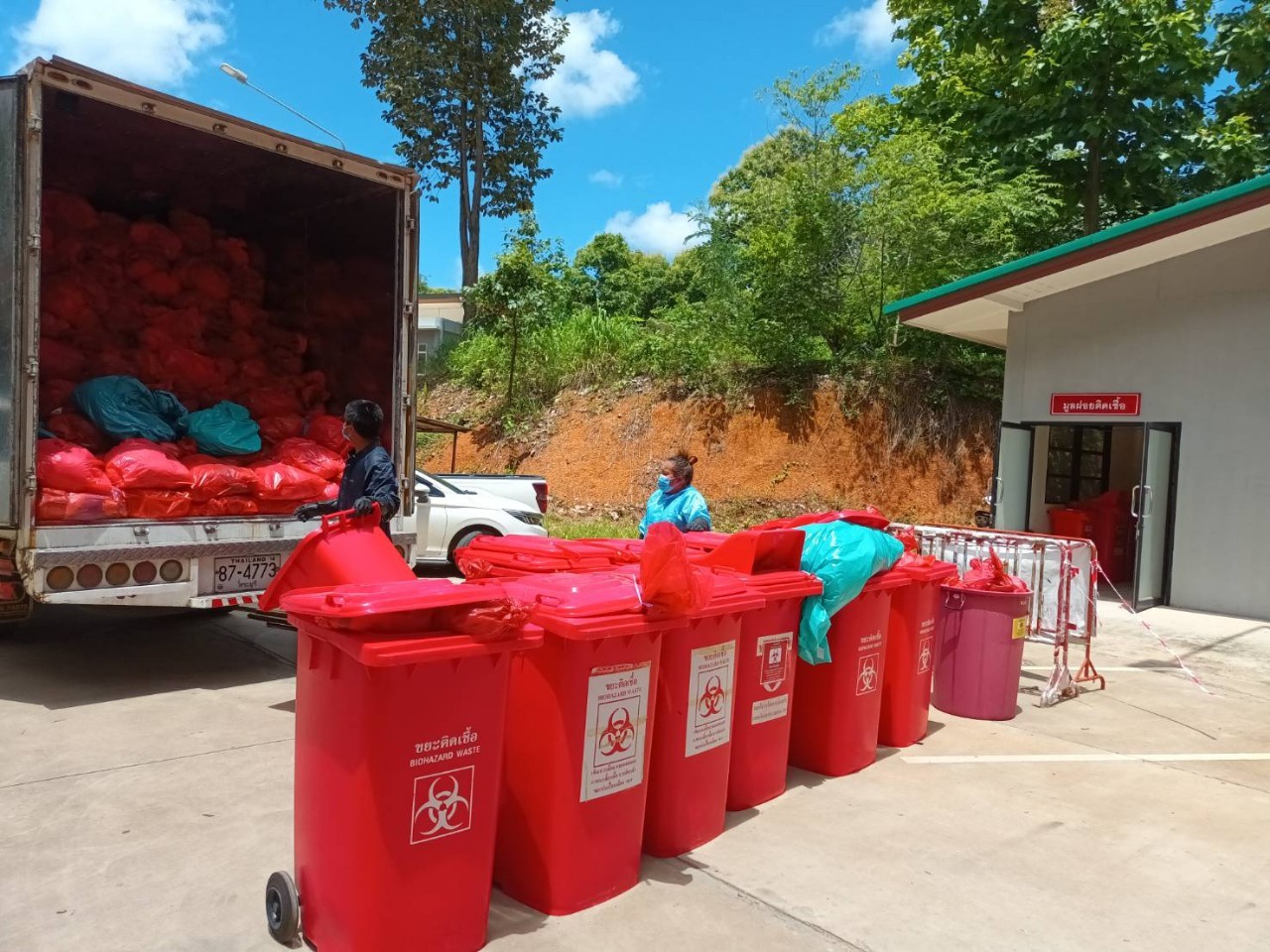
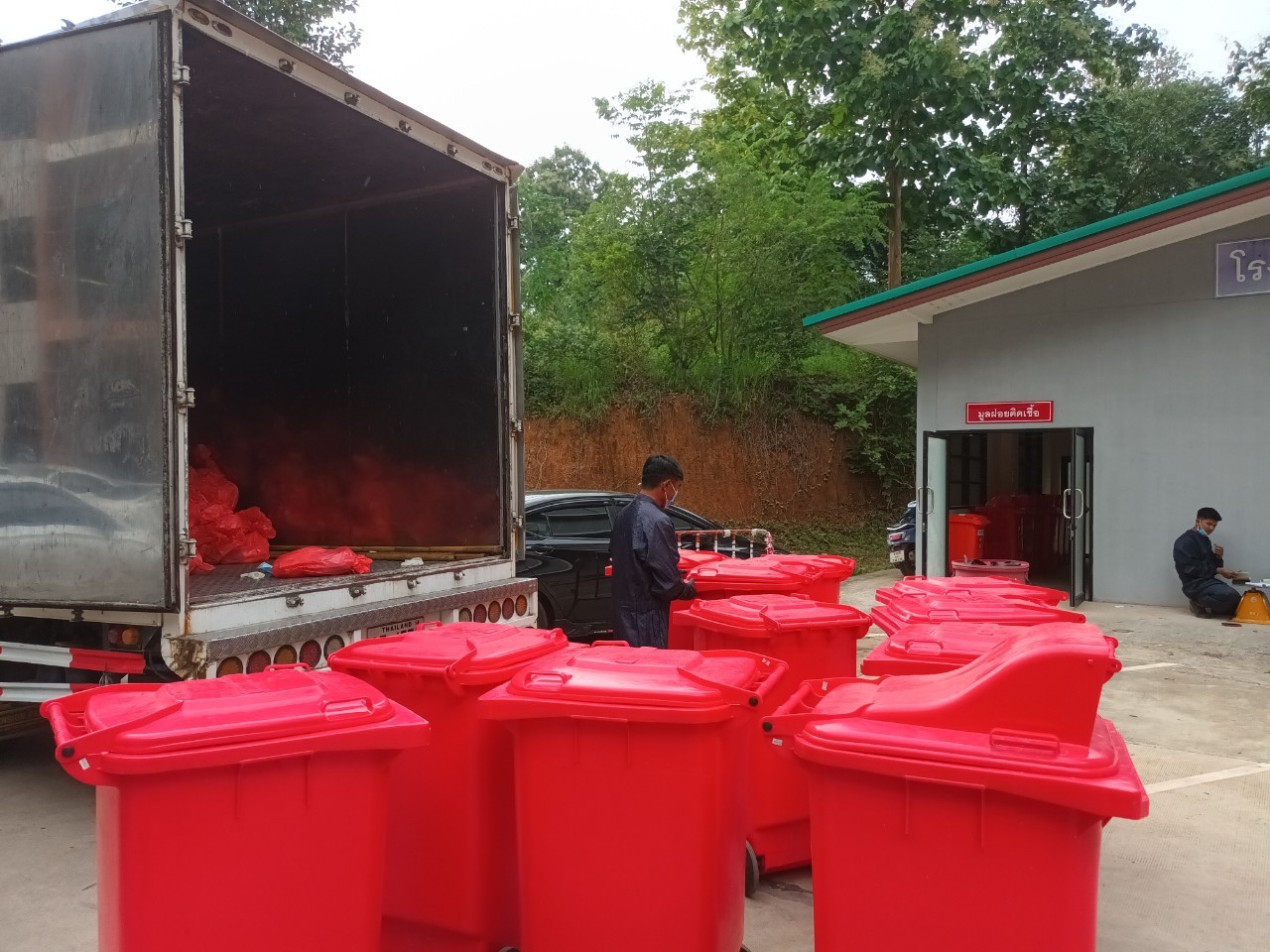
Infectious waste collection and transport at University of Phayao
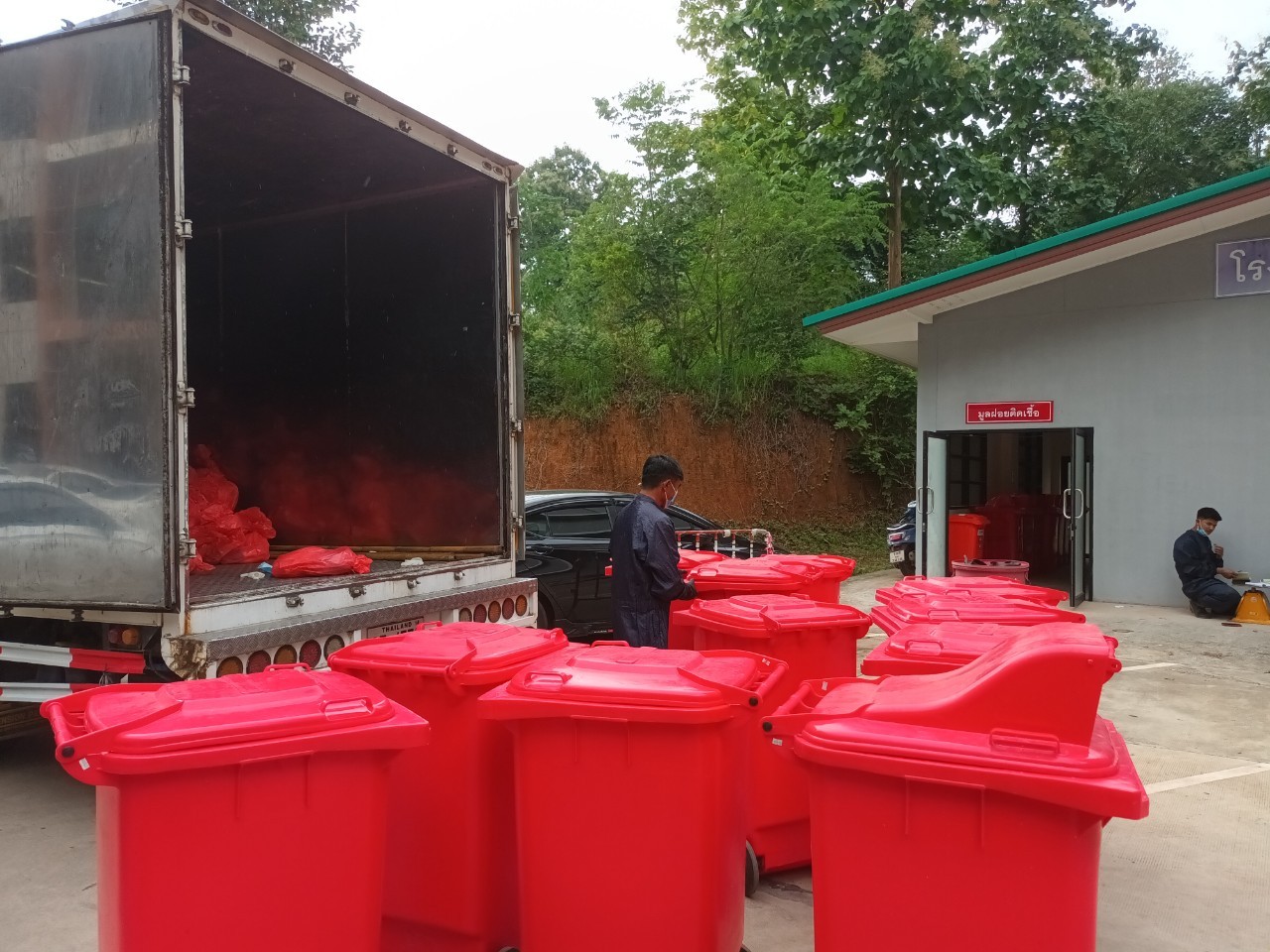
The infectious waste of University of Phayao is approximately 20–25 tons per year, which has been collected and disposed of efficiently. The university is able to dispose of this waste according to academic principles 100%. For the management of infectious waste, the university hires S. Ruangroj Co., Ltd. to collect and dispose of it according to academic principles every year. Infectious waste is defined as waste contaminated with germs in sufficient quantity or concentration to cause disease. University of Phayao has established the following procedures for infectious waste disposal:- At least one infectious waste point is provided by each faculty, with red trash cans labeled "infectious waste" for face masks, ATK test kits, and rubber gloves to be disposed of. Items should be disinfected with a disinfectant, such as bleach combined with water or 70% alcohol.
- Assigned faculty members change the infected waste bags: staff wear face masks, rubber gloves, and boots before collecting infectious waste, take the bag out of the bin, tie it tightly, and disinfect around the bag, then stack a second layer of bags, tie it tightly, and sterilize again.
- The waste is transferred to the infectious waste drop point located at the building behind the parking area to await pickup.
- The waste is transported to the infectious waste storage building located at the University of Phayao Hospital, where S. Ruangroj Co., Ltd. collects and disposes of it according to academic principles every year.
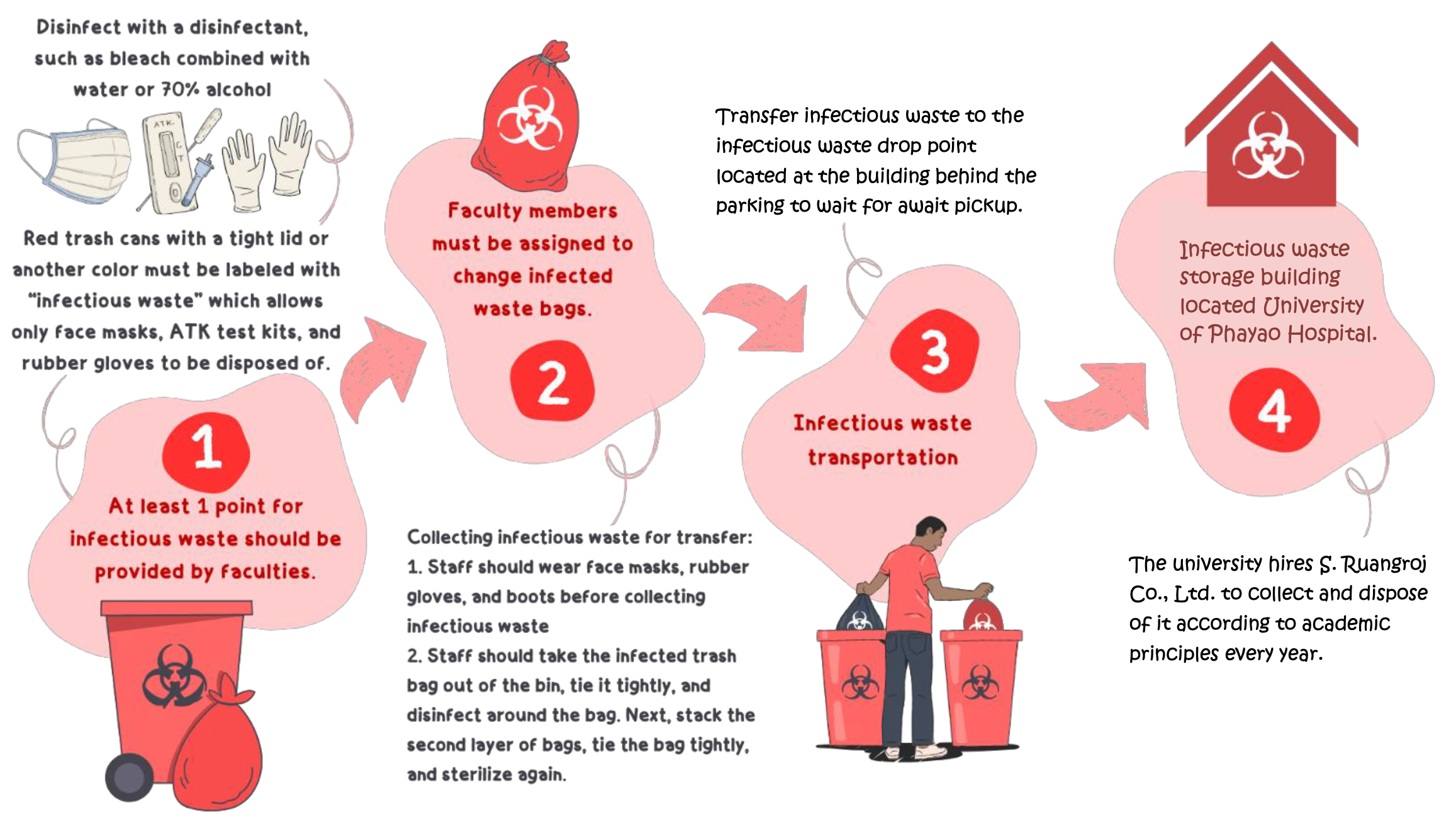
Procedures for disposing of infectious waste at University of Phayao