Building Health Collaboration Networks from Local to National Levels
The University of Phayao builds partnerships with health institutions at both the local and national levels to expand access to healthcare services, strengthen workforce capacity, and promote preventive health systems.
- Local-Level Collaboration Health inequality remains a significant challenge in Phayao Province, particularly among Hmong and Iu Mien ethnic communities living in mountainous areas. These communities face barriers to healthcare access due to geographical distance, shortages of healthcare personnel, and language barriers.
To address these challenges, the University of Phayao, in collaboration with the Phayao Provincial Administrative Organization, implemented the Village Doctor Project. The initiative developed a training curriculum integrating modern public health knowledge with local wisdom, while creating a new employment opportunity through the Women Telemed initiative. Women in local communities were trained to serve as community health providers and coordinators for telemedicine services.
The project generated a Social Return on Investment (SROI) of 2.8, demonstrating tangible social value. It has helped ethnic communities access healthcare services more conveniently, reduce travel time, decrease health inequalities, and improve access to medical services through telemedicine.
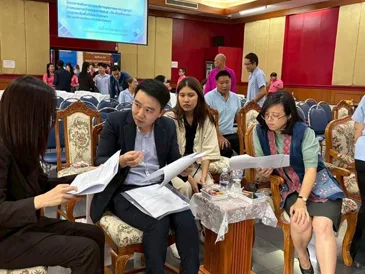
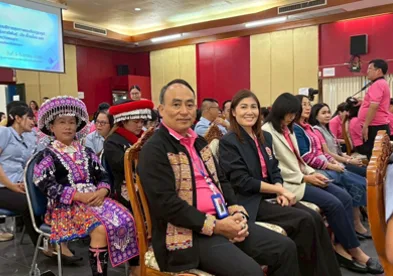
Figure: Village Doctor Project
In addition, the University implements the One School One SDG initiative to support Thailand’s transition toward an aging society. The School of Allied Health Sciences developed an integrated elderly care system in Mae Chai District, Phayao Province.
The initiative identified 85 older adults with dementia, 18 homebound and bedridden older adults, as well as a shortage of caregivers in the community. To address these challenges, the project trained 32 community caregivers, achieving 106.67% of the target. It also established a dementia prevention program, a home-visit system, and an elderly database.
These interventions have enabled older adults to receive continuous care and improved well-being, while generating a Social Return on Investment (SROI) of 1.18, indicating that the social value generated by the project exceeded the value of the investment.
-National-Level Collaboration At the national level, the University of Phayao signed a Memorandum of Understanding (MOU) with the Department of Thai Traditional and Alternative Medicine, Ministry of Public Health, to advance education, research, and innovation in Thai traditional and alternative medicine. The collaboration also focuses on strengthening the capacity of health professionals and transferring knowledge to local communities.
The University also hosted the 5th National Conference on Thai Traditional Medicine and Public Health Research, bringing together a network of more than 11 educational institutions, professional health organizations, and more than 600 participants, with over 100 research studies presented.
The conference strengthened collaborative networks, facilitated knowledge exchange, and promoted the translation of research findings into practical applications to support the development of Thailand’s health system.
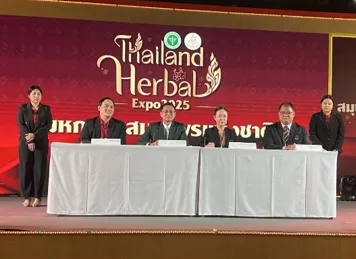
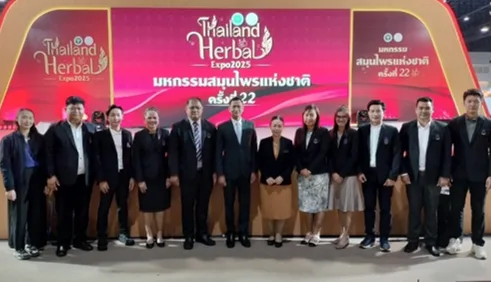
Figure: Memorandum of Understanding (MOU) with the Department of Thai Traditional and Alternative Medicine, Ministry of Public Health
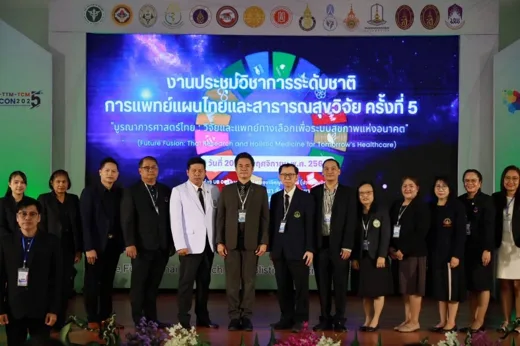
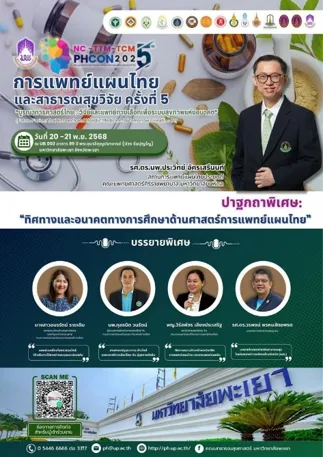
Figure: The 5th National Conference on Thai Traditional Medicine and Public Health Research