The University opens significant religious, historical, and public health-related sites to students, personnel, and the general public for visitation and worship free of charge. These include:
Phra Phuttha Phuchakarak, the official Buddha image of the University of Phayao, is an 18.30-meter-high Buddha image in the Naga-protected posture, with a lap width of 9 meters. Its design is based on the Naga-protected Buddha images of Kharaha City dating from the 18th Buddhist century. The statue is located on a hill behind the Phaya Ngam Mueang Auditorium and serves as a spiritual center for the University community and the general public.
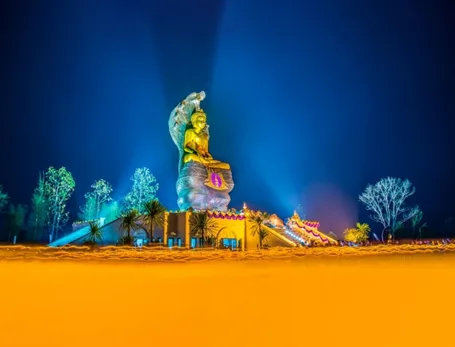
Figure: Phra Phuttha Phuchakharak
The Royal Monument of King Naresuan the Great was established as a spiritual and commemorative site honoring the royal benevolence and heroic deeds of King Naresuan the Great.
The monument stands 4.40 meters high and depicts the King performing the ceremonial act of pouring water as a declaration of independence. The site is also open to external organizations and members of the public for ceremonies and public activities.
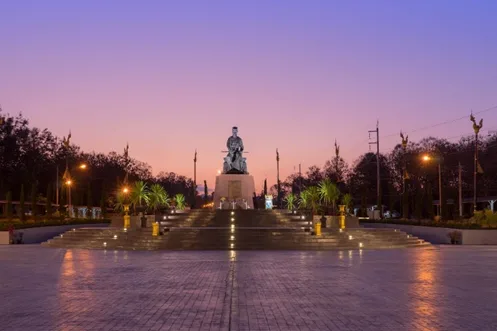
Figure: King Naresuan the Great Monument
The Royal Monument of Prince Mahidol Adulyadej, the Prince Father, and Princess Srinagarindra, the Princess Mother, was established to honor their contributions and promote awareness of their significant roles in the development of medicine and public health in Thailand.
The site provides opportunities for students, university personnel, and members of the public to learn about their royal contributions and to draw inspiration from their principles and initiatives as examples for their daily lives and professional practice.
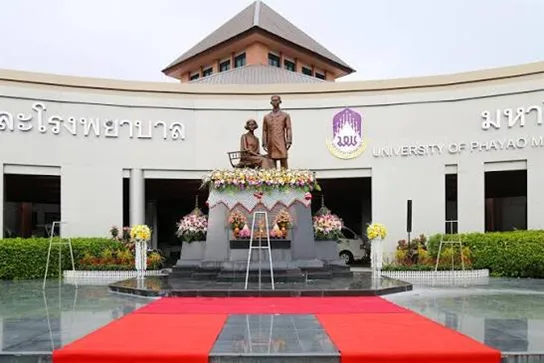
Figure: Monument of Prince Mahidol Adulyadej, the Father of Thai Medicine, with Princess Srinagarindra
These sites serve not only as memorials, but also as learning spaces for exploring Thai history, religion, society, and cultural values.
The University of Phayao is committed to preserving and transmitting intangible cultural heritage through initiatives that connect the University with temples, government agencies, educational institutions, local cultural practitioners, and communities.
A key initiative is the Tan Khao Mai Sai Bat Luang Tradition, which the University revived in 2007 after the tradition had gradually disappeared. The University has continued to organize the tradition annually.
In 2025, the University held the event on 13 January 2025, bringing together university administrators, personnel, students, and members of the public to participate in the procession of sacred rice and the Tan Khao Mai Sai Bat Luang ceremony.
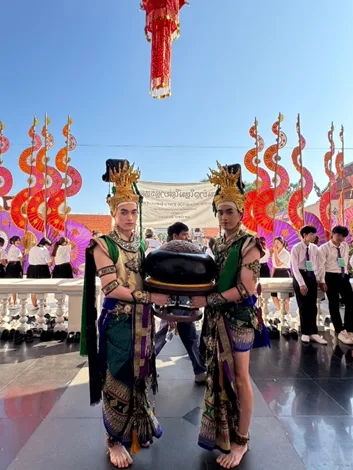
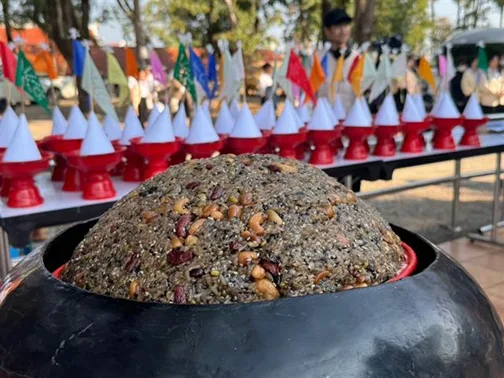
Figure: The Tan Khao Mai Sai Bat Luang Tradition
The University also organizes the “Rice Harvesting and Threshing: The Lanna Way of Life” activity at the Sufficiency Economy Learning Center and Demonstration Rice Field of the University of Phayao. The activity aims to transmit knowledge of traditional rice farming practices, local rice varieties, and rituals associated with Mae Phosop, guardian spirits, and rice-field deities through hands-on learning and practical participation.
The rice harvested through the activity is subsequently used in the Tan Khao Mai Sai Bat Luang Tradition, creating a direct connection between the preservation of traditional agricultural knowledge and the continuation of religious and cultural traditions.
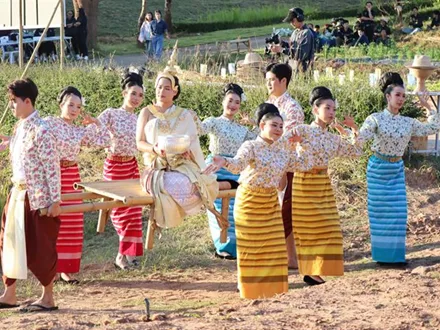
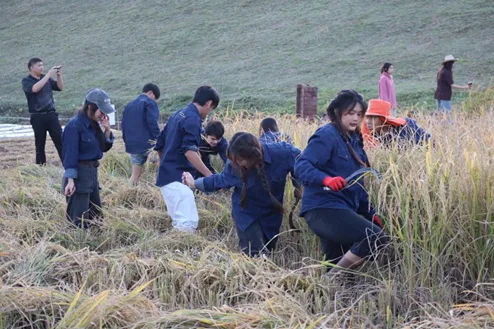
Figure: “Rice Harvesting and Threshing: The Traditional Way of Life of the Lanna People”
Another important cultural initiative is the “Pha Hohm Phra That Chom Thong Procession”, which was held for the 10th time in 2025 through collaboration among the University, Phayao Province, Phayao Municipality, government agencies, the private sector, and local communities.
Students from various faculties participated by creating traditional Lanna-style ceremonial offerings, joining the procession, and presenting cultural performances, thereby contributing to the preservation and transmission of local cultural heritage through active community participation.
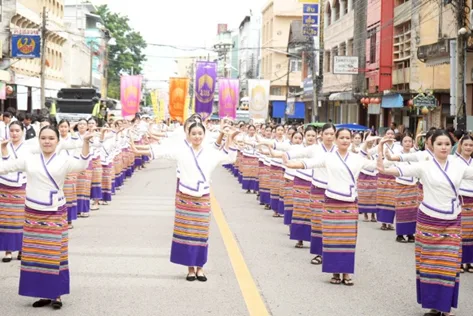
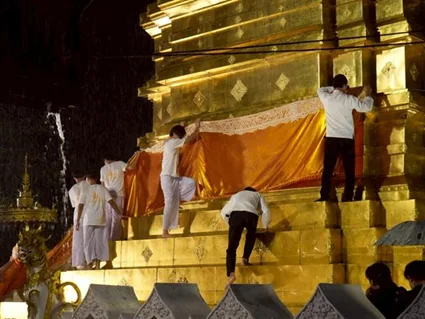
Figure: The Tradition of Procession of Cloth to Enshrine Phra That Chom Thong
These continuous efforts help prevent the loss of local traditions and knowledge while creating mechanisms for the transmission of cultural identity from one generation to the next.