
The University has established sustainable mobility targets under the University Development Strategic Plan 2024–2028 and its goal of becoming a Carbon Neutral University. As part of this commitment, the University has transitioned its internal shuttle bus system from fossil-fuel-powered vehicles to electric buses.
The University currently operates 30 electric buses, representing 100% of its internal shuttle fleet, providing free transportation for students, personnel, and visitors.
This system helps reduce reliance on private vehicles, minimize air and noise pollution, and is expected to reduce greenhouse gas emissions by approximately 3,000 tonnes of carbon dioxide equivalent (tCO₂e) per year.
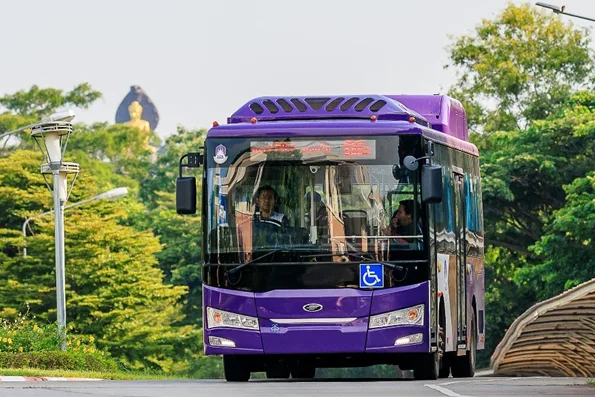
Figure: EV UP BUS
The University uses the UP BusTransit system to track bus locations in real time, while also collecting data on travel distances, electricity consumption, and estimated greenhouse gas emissions compared with fossil-fuel-powered vehicles.
These data are used to monitor transportation system performance and continuously inform planning and improvements, supporting more efficient and sustainable mobility across the University.
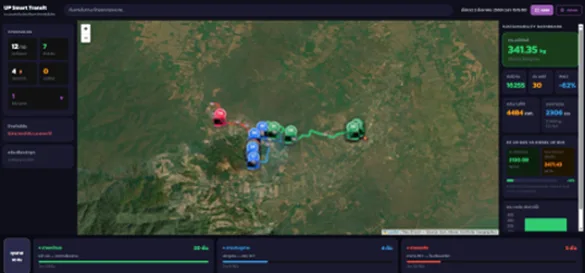
Figure: UP BusTransit System
In addition, the University has installed electric vehicle (EV) charging stations, designated restricted-access areas for private vehicles, and implemented parking management measures to reduce the number of vehicles operating within the campus.
These measures further support the University’s transition toward low-carbon and sustainable transportation, while helping to create a safer and more environmentally friendly campus environment.
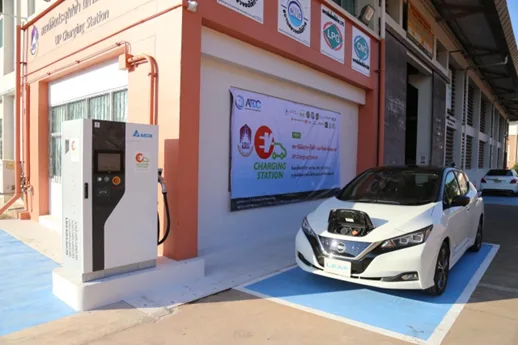
Figure: Electric Vehicle (EV) Charging Stations