In 2025, the University of Phayao continuously provided short courses and vocational training for external participants, such as:
- Online training courses offered by the School of Engineering for engineers, university students, and the general public to develop specialized knowledge and skills.
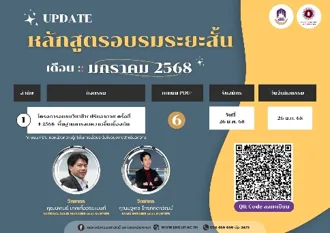
Figure 5: Online Short-Course Training by the School of Engineering
- Green skills practical Training Practical training on local resource base management, a six-task curriculum, held from May 20–23, 2025, with 50 participants from 14 organizations. Participants gained both theoretical and practical knowledge in conserving and managing local resources, which they could apply to their work and sustainable community development.
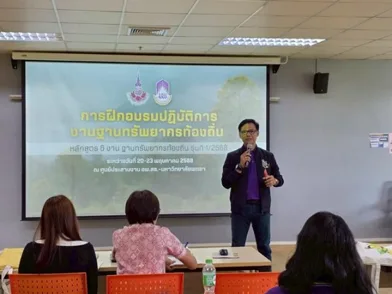
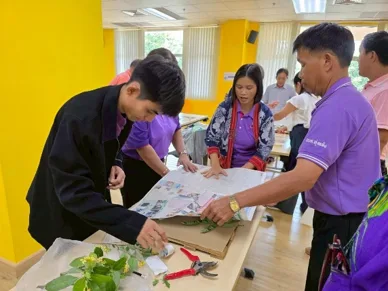
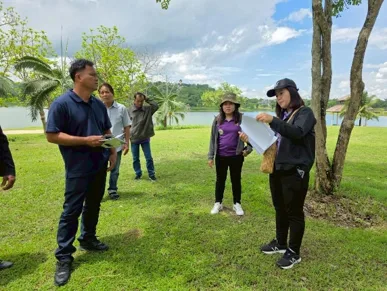
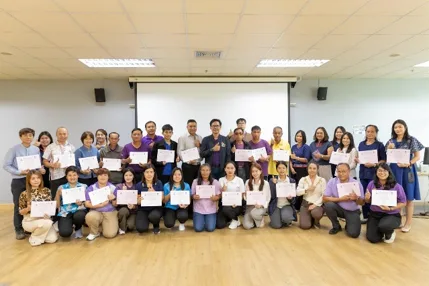
Figure 6: Practical Training on Local Resource Base Management
The University of Phayao provides open lifelong learning measures for students, university students, personnel, alumni, professionals, external organizations, and the general public, with the aim of reducing limitations related to student status, cost, time, and place of learning.
-UP Academy and Online Learning Resources
The Learning Innovation Institute, in collaboration with the Information and Communication Technology Service Center, developed UP Academy as a digital learning resource for people of all ages. Learners can study anytime and anywhere and select courses according to their interests or career needs.
The platform provides lessons and short courses for students, university students, personnel, and the general public. Those who complete the requirements can receive online certificates free of charge. This initiative supports digital skills development, upskilling, reskilling, and workforce preparation aligned with labor market needs.
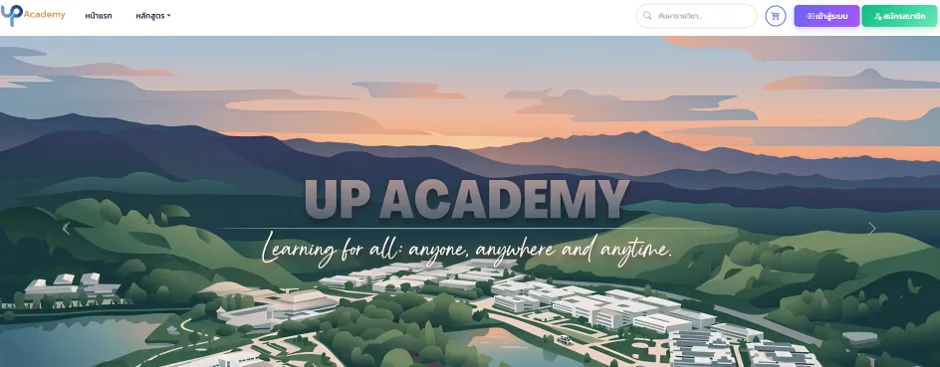
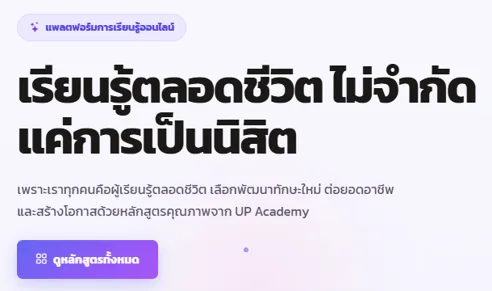
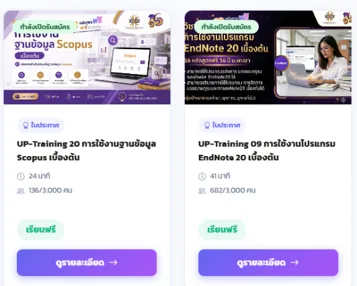
Figure 1: UP ACADEMY
- Opening Learning Resources to the Public
The University of Phayao provides the Library and Learning Center for external users and alumni, allowing them to access the facilities for reading, studying, and research free of charge. This includes access to the library, learning centers, computers, and educational equipment in accordance with the established criteria.
These measures ensure that the University’s resources are not limited to students and personnel, but can also support public learning and reduce inequality in access to information resources and technology.